
The Pioneering Work of Harlow’s Rhesus Monkeys
The field of developmental psychology owes a significant debt to the groundbreaking, and at times controversial, research conducted by Harry Harlow on infant rhesus monkeys. His experiments, primarily carried out in the mid-20th century, challenged prevailing theories of infant care and attachment, offering profound insights into the fundamental needs of young primates for comfort, security, and social connection. Prior to Harlow’s work, the dominant view, heavily influenced by behaviorism, emphasized the importance of feeding as the primary driver of infant-mother bonding. The prevailing belief was that an infant would become attached to the caregiver who provided nourishment. Harlow’s meticulously designed studies aimed to systematically dismantle this notion and uncover the true nature of the infant-primate bond.
Harlow’s experimental setup, while now viewed with ethical scrutiny, was revolutionary for its time. He isolated newborn rhesus monkeys from their mothers, providing them with surrogate mothers constructed from wire and cloth. These surrogates were designed to offer different forms of “care.” One surrogate was equipped with a feeding bottle, representing the traditional view of the mother’s primary role. Another, made of soft, terrycloth, offered no nourishment but provided tactile comfort. The stark contrast between these two surrogates was the linchpin of Harlow’s hypothesis: if feeding were the sole determinant of attachment, the infant would gravitate towards the wire mother. Conversely, if comfort and warmth played a more significant role, the infant would seek out the cloth mother. The results of these early experiments were overwhelmingly clear and profoundly impactful, laying the foundation for a new understanding of primate development.
The Wire Mother Versus The Cloth Mother
The initial phase of Harlow’s research focused on presenting newborn rhesus monkeys with two distinct surrogate mothers. The first, the “wire mother,” was a utilitarian construction of bent wire, designed solely to hold a milk bottle. This surrogate represented the behaviorist perspective, where the provision of food was considered the cornerstone of maternal attachment. The second surrogate, the “cloth mother,” was meticulously crafted from soft terrycloth, offering no nutritional value. This surrogate was intended to provide tactile comfort, a physical softness that mimicked the feel of a biological mother’s fur. The design was elegant in its simplicity, allowing for a direct comparison of the infants’ responses based on their primary needs.
When introduced to these surrogates, the infant monkeys displayed an immediate and consistent preference for the cloth mother. They would spend the vast majority of their time clinging to the soft, warm surrogate, deriving a sense of security and comfort from its presence. Even when hunger pangs drove them to the wire mother for nourishment, they would quickly return to the cloth mother, reinforcing the idea that comfort, not just sustenance, was a critical factor in their attachment. This behavior directly contradicted the prevailing theories that prioritized feeding as the primary determinant of the infant-caregiver bond, signaling a significant paradigm shift in the understanding of primate psychology. The tactile comfort provided by the cloth mother offered a profound sense of security, a crucial element that Harlow argued was essential for healthy emotional development.
The Significance of Tactile Stimulation
Harlow’s experiments unequivocally demonstrated the paramount importance of tactile stimulation in the development of infant attachment. The rhesus monkey infants’ unwavering preference for the cloth mother, even when the wire mother provided sustenance, highlighted that physical contact and warmth were not mere secondary benefits but fundamental requirements for establishing a secure bond. This finding challenged the prevailing behaviorist view, which posited that attachment was primarily learned through reinforcement, specifically through the association of the mother with food. Harlow’s work suggested that a deeper, more innate drive for comfort and security was at play, a drive that transcended the basic need for nourishment.
The implications of this discovery extended far beyond the laboratory. It provided a powerful argument for the crucial role of maternal responsiveness and physical affection in human infant development. The soft, reassuring touch of a caregiver, the act of holding and cuddling, was shown to be a vital component in fostering a sense of safety and well-being in young primates. This understanding has since informed pediatric care practices, emphasizing the importance of skin-to-skin contact, swaddling, and frequent physical interaction between infants and their caregivers, particularly in the crucial early stages of life. The innate desire for comfort and security, as revealed by these monkey studies, underscores the biological imperative for nurturing touch.
A fascinating related article that delves into the complexities of attachment in infant rhesus monkeys can be found at this link: Unplugged Psychology. This article explores the critical role of maternal presence and the impact of early social experiences on the development of attachment behaviors in these primates, shedding light on the broader implications for understanding attachment in humans.
Examining the Long-Term Consequences of Social Isolation

Beyond the initial exploration of surrogate mothers, Harlow’s research delved into the devastating consequences of social deprivation and isolation on infant rhesus monkeys. These experiments, while ethically fraught, were designed to understand the critical importance of early social interaction for healthy psychological development. By depriving young monkeys of peer interaction and maternal care for extended periods, Harlow aimed to observe the lasting effects of such omissions on their social, emotional, and behavioral functioning. The insights gleaned from these studies were stark and provided undeniable evidence for the necessity of a rich social environment during critical developmental windows.
The monkeys subjected to isolation exhibited profound and enduring deficits. They struggled to form normal social relationships, displaying aggression, fearfulness, and an inability to engage in typical play behaviors. Their capacity for normal sexual functioning was also severely impaired, and when they did reproduce, their parenting skills were often severely lacking, with some mothers neglecting or even harming their own offspring. These observations painted a grim picture of the long-term repercussions of insufficient social input, highlighting that development is not solely a matter of individual growth but is deeply intertwined with the social context in which it occurs. The suffering of these animals served as a somber testament to the critical role of social connection in shaping a healthy and functional individual.
The “Rehabilitation” Attempts and Their Limitations
Following the initial period of isolation, Harlow and his team attempted to “rehabilitate” the socially deprived monkeys by introducing them to others who had been raised normally. These rehabilitation efforts, however, met with limited success, further underscoring the profound and often irreversible damage caused by early social deprivation. Monkeys who had experienced extended isolation struggled to integrate into social groups. They often exhibited exaggerated fear responses, an inability to interpret social cues, and a propensity for aggression. Their attempts at social interaction were frequently clumsy and inappropriate, leading to rejection by their peers and further social exclusion.
Even when introduced to younger, more malleable monkeys, the isolated individuals found it difficult to develop adequate social skills. While some rudimentary forms of interaction could be observed, the depth and complexity of normal social bonds remained elusive. These findings suggested that there were critical periods in development during which social experiences were essential for the formation of fundamental social competencies. Failure to provide these experiences during these windows resulted in lasting impairments that proved incredibly difficult to overcome. The rehabilitation attempts, while well-intentioned, ultimately served to highlight the critical nature of early social input and the profound challenges of reversing its absence.
The Irreversible Nature of Early Deprivation
The most sobering finding from Harlow’s isolation experiments was the apparent irreversibility of the damage caused by early social deprivation. While some minor improvements could be observed with later social exposure, the fundamental deficits in social behavior, emotional regulation, and relational capacity persisted throughout the monkeys’ lives. This suggested that the early years of life are a critically sensitive period for social and emotional development. Experiences during this time lay the groundwork for future social functioning, and a lack of adequate stimulation during these formative periods can lead to lasting impairments.
The implications of this for human development were profound and, at the time, deeply unsettling. It suggested that neglect, abuse, or a lack of nurturing social interaction in early childhood could have devastating long-term consequences, impacting an individual’s ability to form healthy relationships, regulate their emotions, and navigate the complexities of social life. While human resilience is undoubtedly greater than that of rhesus monkeys, Harlow’s work provided a stark warning about the importance of providing a safe, nurturing, and socially rich environment for children during their most vulnerable years. The study served as a powerful impetus to re-evaluate societal approaches to childcare and to prioritize early intervention and support for children at risk of developmental adversity.
The Role of Peer Interaction in Development

Harlow’s research extended beyond the mother-infant dyad to investigate the crucial role of peer interaction in the development of young rhesus monkeys. Recognizing that a healthy social life involves more than just maternal attachment, he designed experiments to isolate infants from their mothers but allow them to interact with peers. These “peer-raised” monkeys provided valuable insights into how social learning and the development of social skills occur through interactions with other young individuals. The findings from these studies demonstrated that the presence of peers was vital for developing essential social competencies, including play, aggression management, and the ability to form social hierarchies.
These monkeys, despite being separated from their mothers, were able to develop a range of social behaviors through their interactions with one another. They engaged in play fighting, learned to communicate through body language, and established social dominance. This contrasted sharply with the monkeys who were completely isolated, highlighting that social interaction with peers, even in the absence of maternal care, offered a crucial pathway for development. It underscored that attachment is not a monolithic construct but a multifaceted process influenced by various social relationships, with peer interaction playing a distinct and indispensable role.
Developing Social Skills Through Play and Interaction
The peer-raised rhesus monkeys in Harlow’s studies provided a living testament to the power of social learning. Despite lacking maternal guidance, they actively engaged with each other, developing a repertoire of social behaviors through constant interaction. Play, in particular, emerged as a critical component of this developmental process. Young monkeys engaged in various forms of rough-and-tumble play, which, while seemingly chaotic, served as a vital training ground for developing physical coordination, learning social boundaries, and understanding the nuances of aggression and submission within a group context.
Through this constant interaction, they learned to read each other’s intentions, to signal their own intentions, and to navigate the complex social dynamics of a primate group. They learned how to assert themselves, how to yield to others, and how to resolve conflicts. These were not innate behaviors but skills that were acquired and refined through direct experience with their peers. The contrast with the socially isolated monkeys was striking; the peer-raised individuals, while still exhibiting some deficits compared to those with maternal care, were far more capable of social functioning and exhibited a greater capacity for forming relationships. This underscored that a significant portion of social development is a learned process, facilitated by the opportunities for interaction with others.
The Foundation for Future Social Competence
The social skills learned during the peer-raising phase proved to be foundational for the rhesus monkeys’ future social competence. While the absence of maternal comfort did result in some emotional and behavioral challenges, the ability to interact effectively with peers provided a crucial scaffold for navigating the complexities of adult social life. These monkeys were generally more adept at forming social bonds with other monkeys, participating in group activities, and establishing their place within the social hierarchy. This was in stark contrast to the severely impaired social functioning observed in the completely isolated monkeys, who often remained maladjusted and unable to integrate into normal social groups.
The research indicated that while maternal attachment provided a primary sense of security and emotional regulation, peer interaction offered the essential skills for functioning within a social community. It was through these early peer relationships that the monkeys developed the tools necessary for cooperation, competition, and the formation of stable social structures. This finding has significant implications for understanding human social development, suggesting that opportunities for early peer interaction, whether in playgroups, preschools, or simply through playdates, are vital for fostering well-rounded, socially competent individuals. The ability to connect and interact with others from an early age lays the groundwork for lifelong social success.
The Enduring Ethical Debate and the Legacy of Harlow’s Studies
Harry Harlow’s research, while undeniably influential in shaping our understanding of attachment and social development, has also been a subject of considerable ethical debate. The methods employed, particularly the prolonged isolation of infant monkeys and the creation of artificial surrogates, have raised serious questions about animal welfare and the moral permissibility of such experiments. Critics argue that the suffering inflicted on the animals was excessive and that alternative research methodologies could have yielded similar insights with less harm. The image of the distressed infant monkeys clinging to wire surrogates has become a powerful symbol of the ethical quandaries inherent in some forms of scientific inquiry.
Despite these ethical concerns, the legacy of Harlow’s studies is undeniable. His work fundamentally shifted the paradigm in developmental psychology, moving away from purely behaviorist explanations towards a more nuanced understanding that acknowledged the profound importance of emotional, social, and psychological factors. The insights gained have had a lasting impact on child-rearing practices, therapeutic interventions for children, and our understanding of the consequences of neglect and abuse. The debate surrounding his experiments continues to inform discussions about ethical research practices, pushing for greater consideration of animal welfare while also acknowledging the potential for significant scientific advancement.
Critiques of Animal Welfare in the Experiments
The ethical criticisms leveled against Harry Harlow’s experiments are significant and warrant careful consideration. A primary concern revolves around the deliberate infliction of psychological distress on infant rhesus monkeys. The isolation experiments, in particular, involved separating newborns from their mothers and subjecting them to prolonged periods of solitude, a condition known to cause severe emotional and behavioral problems in primates. The creation of “motherless monkeys” was intended to study the effects of deprivation, but the resulting suffering of the animals is undeniable. Critics argue that the potential scientific gains did not justify the anguish experienced by these young creatures.
Furthermore, the use of surrogate mothers, while a necessary experimental manipulation, also raised ethical questions. While the intention was to provide a form of “care,” the artificial nature of these surrogates and the eventual removal of infants from their biological mothers represented a disruption of natural maternal bonding processes. The long-term consequences for the monkeys, including their impaired social and reproductive capacities, were also a source of ethical concern, as these animals were subjected to lifelong challenges as a result of their experimental treatment. The debate often centers on whether the scientific knowledge gained could have been achieved through less harmful means or if the severity of the conditions imposed on the animals crossed an unacceptable ethical threshold.
Contributions to Our Understanding of Attachment
Despite the ethical controversies, the scientific contributions of Harlow’s rhesus monkey studies to the understanding of attachment are profound and far-reaching. His work provided irrefutable empirical evidence that attachment is not solely driven by the satisfaction of biological needs, such as hunger, but is fundamentally rooted in the need for comfort, security, and emotional connection. The preference of infant monkeys for the soft, cloth surrogate over the wire mother, even when the latter provided nourishment, was a pivotal finding that challenged decades of established theory. This demonstrated that a “contact comfort” was a primary motivator for attachment, suggesting an innate psychological drive for closeness and reassurance.
This insight revolutionized developmental psychology and infant care. It underscored the critical importance of maternal responsiveness, physical affection, and nurturing touch in fostering healthy emotional development. The emphasis shifted from a purely behaviorist perspective to a more psychodynamic and attachment-based view, recognizing the profound impact of early relationships on an individual’s lifelong well-being. Harlow’s work laid the groundwork for subsequent research by figures like John Bowlby and Mary Ainsworth, whose theories further elaborated on the nature of attachment styles and their long-term implications. The legacy of his research continues to inform our understanding of human infant development, child psychotherapy, and the importance of secure relationships in fostering resilience and mental health.
Recent research on infant rhesus monkey attachment has shed light on the complexities of social bonds in primates. This study highlights the significance of maternal presence in fostering secure attachments, which can have lasting effects on behavior and emotional development. For further insights into related topics, you can explore an article that discusses the implications of early attachment experiences on later social interactions by visiting this link. Understanding these dynamics not only enhances our knowledge of primate behavior but also offers valuable perspectives on human attachment theories.
The Long Shadow of the “Motherless Monkeys”
| Metric | Description | Value/Observation |
|---|---|---|
| Subject | Infant rhesus monkeys | 12 individuals |
| Age at start | Age of infants when study began | 1 week old |
| Attachment Figures | Types of surrogate mothers used | Wire mother with food, Cloth mother without food |
| Time spent on cloth mother | Average time infant monkeys spent clinging to cloth surrogate | Approximately 17 hours/day |
| Time spent on wire mother | Average time infant monkeys spent clinging to wire surrogate | Approximately 1 hour/day |
| Behavioral response to threat | Infants’ reaction when exposed to a frightening stimulus | Clung to cloth mother for comfort |
| Separation distress | Behavioral signs when separated from surrogate mother | Crying, agitation, searching behavior |
| Exploratory behavior | Amount of exploration in presence of surrogate mother | Increased exploration when cloth mother present |
| Study duration | Total length of observation period | 4 weeks |
The experiments conducted by Harry Harlow have left an indelible mark on the field of developmental psychology, but they have also cast a long shadow due to their ethical implications. The term “motherless monkeys” has become synonymous with the controversial nature of his research, representing a painful reminder of the suffering inflicted on sentient beings in the pursuit of scientific knowledge. While the insights gained have been invaluable, the ethical cost has been a subject of continuous debate and reflection, prompting a re-evaluation of the balance between scientific advancement and animal welfare. The legacy of these studies is therefore a complex one, marked by both groundbreaking discoveries and profound ethical questions that continue to resonate today.
The impact of Harlow’s work extends beyond academic circles, influencing public perception of animal experimentation and the ethics of scientific research. It has spurred the development of more stringent ethical guidelines and review processes for animal research, emphasizing the need for careful consideration of animal welfare and the exploration of alternative methods. The debate surrounding the “motherless monkeys” serves as a crucial reminder that scientific progress must be pursued with a deep sense of responsibility and a commitment to minimizing harm. The lessons learned from these controversial studies continue to shape the ethical landscape of scientific inquiry, ensuring that the pursuit of knowledge is guided by compassion and respect for all living beings.
Implications for Human Child-Rearing Practices
The findings from Harlow’s studies had a transformative impact on human child-rearing practices. Prior to his research, the prevailing view often emphasized a detached, discipline-focused approach to parenting, with a strong emphasis on independent feeding and minimal physical contact. Harlow’s demonstration of the crucial role of “contact comfort” and the profound negative effects of social deprivation led to a paradigm shift. Pediatricians, psychologists, and child development experts began to advocate for increased physical affection, responsiveness, and nurturing between parents and infants.
This translated into recommendations for practices such as holding infants more frequently, engaging in skin-to-skin contact, and prioritizing emotional bonding alongside physical care. The understanding that infants have a fundamental need for security and comfort, not just sustenance, informed the development of attachment theory and influenced parenting advice globally. The long shadow of the “motherless monkeys” ultimately illuminated the critical importance of a warm, secure, and responsive caregiver-child relationship for healthy human development, shaping a more compassionate and evidence-based approach to raising children.
The Ongoing Ethical Reckoning in Research
The ethical controversies surrounding Harlow’s experiments have fueled an ongoing reckoning within the scientific community regarding animal research. The vivid and disturbing imagery associated with the “motherless monkeys” has served as a potent catalyst for change, prompting a deeper and more critical examination of the ethical frameworks governing animal experimentation. This has led to the implementation of more rigorous ethical review boards, the development of the “3Rs” principle (Replacement, Reduction, and Refinement) for animal use, and a greater emphasis on the justification of animal models based on the potential scientific benefits weighed against the potential harm to the animals.
Furthermore, the debates have encouraged the exploration and development of non-animal research methods, such as in vitro studies, computer modeling, and human-based research approaches. While animal models remain invaluable for certain areas of scientific inquiry, the ethical challenges raised by Harlow’s work have fostered a commitment to minimizing their use and ensuring that when they are employed, it is done with the utmost consideration for animal welfare. The legacy of the “motherless monkeys” continues to serve as a cautionary tale and an inspiration for ethical advancements in scientific research, pushing for a future where scientific progress and ethical responsibility are inextricably linked.
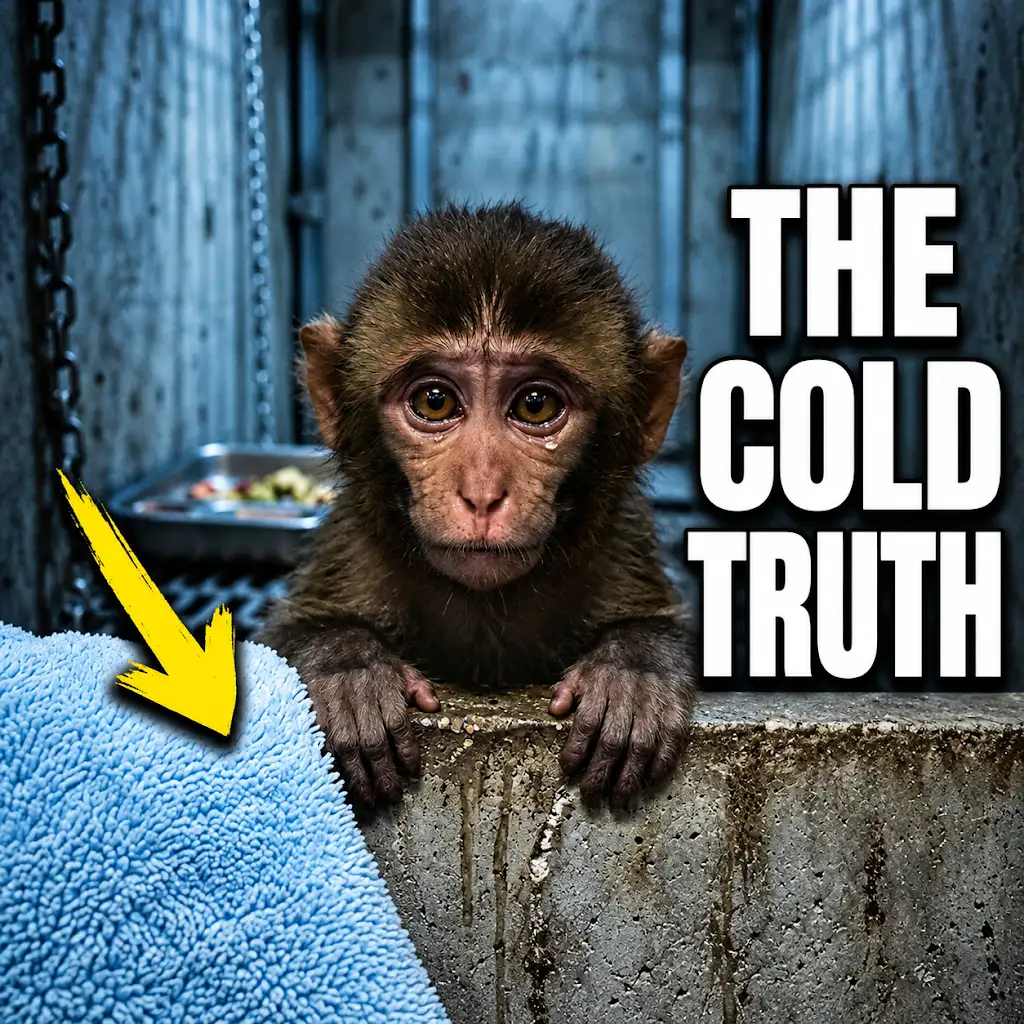
The Dark Reality of the Monkey Comfort Experiment
FAQs
What is the purpose of the infant rhesus monkey attachment study?
The purpose of the study is to investigate the attachment behaviors of infant rhesus monkeys and their caregivers to better understand the development of attachment relationships in primates.
How are the attachment behaviors of infant rhesus monkeys observed in the study?
The attachment behaviors are observed through methods such as proximity seeking, contact maintenance, and distress upon separation from the caregiver, which are indicative of attachment bonds.
What are some key findings from the infant rhesus monkey attachment study?
Some key findings include the importance of early interactions with caregivers in forming secure attachments, the impact of separation on the monkeys’ behavior, and the similarities between human and primate attachment patterns.
How do researchers analyze the data collected in the infant rhesus monkey attachment study?
Researchers analyze the data by quantifying behaviors, conducting statistical analyses to identify patterns, and comparing the results to established attachment theories to draw conclusions about the monkeys’ attachment relationships.
What are the implications of the infant rhesus monkey attachment study for understanding human attachment?
The study provides valuable insights into the evolutionary roots of attachment behaviors, the impact of early experiences on attachment formation, and the similarities in attachment processes between humans and primates, contributing to our understanding of human attachment development.