The study of primate cognition, particularly in monkeys, has yielded profound insights into the nature of intelligence, social behavior, and the evolutionary roots of human psychology. Early researchers, often driven by a desire to understand animal behavior in its own right and by its potential to illuminate human faculties, embarked on ambitious experiments. These investigations, spanning over a century, have not only expanded our knowledge of monkey minds but have also fundamentally shaped our understanding of ourselves. From basic learning principles to complex social dynamics and even the rudiments of language, monkey psychology experiments have been instrumental in charting the landscape of non-human cognition.
Early Forays into Primate Learning and Behavior
The initial wave of monkey psychology research was largely rooted in the burgeoning field of behaviorism. Scientists sought to understand fundamental principles of learning by observing how monkeys responded to stimuli and rewards. These early studies, while sometimes limited by their strict focus on observable behavior, laid crucial groundwork for subsequent, more complex investigations.
The Influence of Behaviorism
Behaviorist psychologists like Edward Thorndike, though primarily working with cats, also conducted early work on primates. His “puzzle box” experiments, adapted for monkeys, demonstrated the principle of trial and error learning. Monkeys learned to manipulate levers or pull strings to escape a confined space and obtain a reward. This work contributed to the understanding of instrumental conditioning, where behavior is strengthened or weakened by its consequences. B.F. Skinner, another towering figure in behaviorism, also utilized various animal models, including monkeys, in his operant conditioning experiments. By systematically manipulating reinforcement schedules, Skinner explored how specific behaviors could be learned and maintained, insights that would later be applied to understanding more complex animal actions. The focus was on the observable stimulus-response relationship and the role of reinforcement in shaping behavior.
Investigations into Sensory Perception and Motor Skills
Beyond basic learning, early researchers also delved into the sensory capabilities and motor skills of monkeys. Experiments examined their visual acuity, color perception, and ability to discriminate between different shapes and sizes. Studies on their dexterity and capacity for tool use, even in rudimentary forms, began to hint at their cognitive flexibility. These investigations, often observational or involving simple discrimination tasks, provided a foundational understanding of how monkeys interacted with their environment through their senses and physical actions.
The history of monkey psychology experiments is a fascinating journey that has contributed significantly to our understanding of animal behavior and cognition. One notable article that delves deeper into this subject is available at Unplugged Psychology, which explores various landmark studies involving primates and their implications for both psychology and ethics in research. This resource provides valuable insights into the methodologies used and the ethical considerations that have evolved over time in the field of animal psychology.
The Dawn of Cognitive Research and Social Dynamics

As psychological research evolved beyond strict behaviorism, so too did the approaches to studying monkey cognition. The focus shifted towards understanding internal mental processes, problem-solving abilities, and the intricate social structures that characterize primate life. This era saw the rise of comparative psychology, where monkey behavior was increasingly compared to that of humans to identify commonalities and differences.
Insight Learning and Problem Solving
A significant departure from pure behaviorism came with the work of Wolfgang Köhler and his studies on chimpanzees, which heavily influenced primate research more broadly. While Köhler’s focus was on great apes, the principles of insight learning—the sudden understanding of a solution to a problem—began to be explored in monkeys as well. Researchers designed increasingly complex tasks that required monkeys to strategize and plan, moving beyond simple trial-and-error. These experiments involved challenges like reaching for out-of-reach food by stacking boxes or using tools, demonstrating a capacity for novel problem-solving that suggested more than just learned associations.
Social Learning and Imitation
The social nature of monkeys became a central theme in research. Studies began to investigate how monkeys learned from observing others. This included experiments on social facilitation, where the presence of other monkeys enhanced performance, and, more importantly, social learning and imitation. Researchers observed how young monkeys acquired foraging techniques or social behaviors by watching their mothers and peers. Experiments were designed to show a monkey how to perform a task, and then observe if another monkey could learn it through observation alone, revealing the importance of social transmission of knowledge.
Early Investigations into Communication and Social Cognition
While not as sophisticated as later studies, early research also touched upon the rudiments of communication and social cognition. Observations of vocalizations, gestures, and facial expressions within monkey groups provided initial insights into their signaling systems. Researchers began to explore concepts like dominance hierarchies and social alliances, recognizing that understanding these social structures was crucial to understanding individual behavior.
Landmark Experiments and Key Discoveries
The mid-to-late 20th century witnessed a golden age of monkey psychology research, marked by innovative experimental designs and groundbreaking discoveries. These studies moved beyond basic learning to explore more complex cognitive abilities, social intelligence, and the very foundations of communication.
Harlow’s Attachment Studies and Social Development
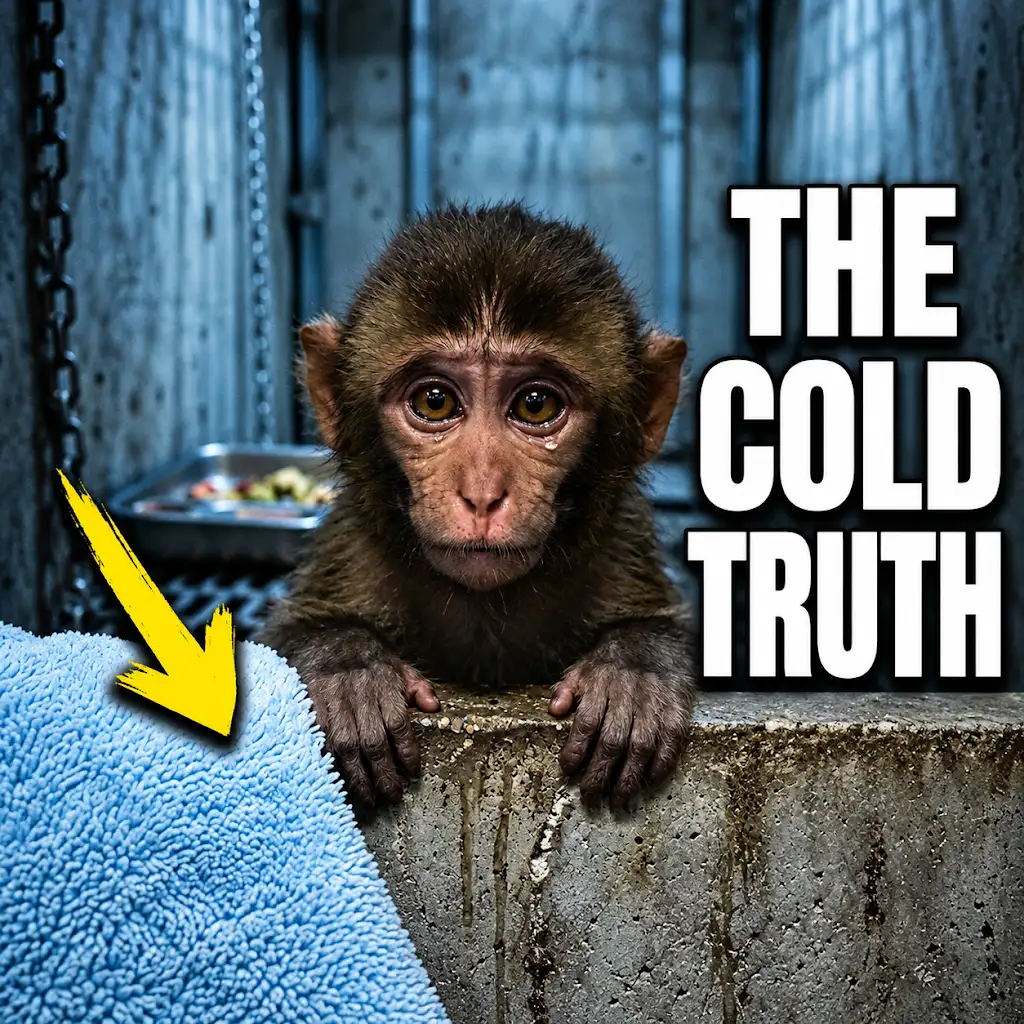
Harry Harlow’s seminal work on rhesus monkeys at the University of Wisconsin revolutionized our understanding of attachment and social development. His experiments famously demonstrated the crucial role of “contact comfort” in infant development, challenging the prevailing behaviorist view that mothers were primarily important for providing food. Harlow’s “surrogate mothers”—one made of wire that provided nourishment and another made of soft cloth that offered comfort—showed that infant monkeys overwhelmingly preferred the cloth mother, clinging to her even when the wire mother provided milk. This research had profound implications for understanding infant-parent bonding, maternal deprivation, and the long-term consequences of social isolation, impacting fields from developmental psychology to child-rearing practices.
Köhler’s Primate Problem Solving and Tool Use
While Köhler’s initial work was with chimpanzees, the principles he uncovered about insight learning and problem-solving resonated deeply within the broader primate research community. Subsequent experiments with monkeys, using more intricate puzzles and challenges, continued to explore their capacity for strategic thinking. These studies involved tasks requiring monkeys to use tools to access rewards, to plan sequences of actions, and to understand cause-and-effect relationships, further illuminating their cognitive flexibility.
The Development of Object Permanence and Memory
Building on Piaget’s work with human infants, researchers also explored object permanence and working memory in monkeys. Experiments involved hiding objects from view and observing whether the monkeys remembered their location and searched for them. These studies revealed that monkeys, like human infants, develop an understanding that objects continue to exist even when they are not visible, and that they possess the capacity to retain information in their short-term memory.
Social Intelligence and Theory of Mind
A particularly exciting area of research emerged around the concept of social intelligence. Scientists began to investigate whether monkeys possessed a “theory of mind”—the ability to attribute mental states, such as beliefs, intentions, and knowledge, to others. Experiments explored whether monkeys could understand what another individual could see, or whether they could anticipate the actions of others based on their perceived intentions. While the extent of theory of mind in monkeys is still debated, these studies have provided compelling evidence for sophisticated social reasoning. For example, studies on competitive food tasks revealed that monkeys would conceal food from dominant individuals, suggesting an understanding of what the dominant monkey could and could not see.
Language, Communication, and Abstract Thought
Perhaps the most ambitious and controversial area of monkey psychology research has been the exploration of their capacity for language and abstract thought. These investigations, often involving extensive training and complex experimental paradigms, have pushed the boundaries of what we believed non-human animals were capable of.
Teaching Monkeys Sign Language and Lexigrams
In the 1960s and 70s, a series of landmark experiments attempted to teach monkeys, particularly chimpanzees and then some monkey species, to communicate using human language. The Gardners’ work with the chimpanzee Washoe, who learned American Sign Language, and the Premack’s work with the chimpanzee Sarah, who used plastic tokens (lexigrams) to represent words, were highly influential. While these studies were initially met with excitement, later analyses highlighted the challenges in differentiating true linguistic understanding from operant conditioning responses to visual symbols. Nevertheless, they sparked crucial debates about the defining characteristics of language and the cognitive prerequisites for its acquisition.
Understanding Abstract Concepts and Symbolism
Beyond language itself, researchers explored monkeys’ ability to grasp abstract concepts and use symbols. Experiments involved training monkeys to associate abstract symbols with objects or actions, and then testing their ability to generalize these associations or to use the symbols in novel combinations. These studies aimed to assess their capacity for symbolic representation, a key component of higher-level cognition. For instance, monkeys were trained to associate a specific symbol with a particular quantity, and then tested on their ability to match that symbol to the correct quantity, demonstrating an understanding of numerical concepts.
Working Memory and Cognitive Control
More recent research has employed sophisticated neuroscientific techniques to investigate the neural underpinnings of working memory and cognitive control in monkeys. Studies using fMRI and electrophysiology have identified brain regions and neural circuits involved in holding information in mind, inhibiting impulsive responses, and flexibly switching between tasks. These findings are not only crucial for understanding monkey cognition but also for shedding light on the homologous brain structures and processes in humans, offering insights into cognitive disorders.
The history of monkey psychology experiments reveals fascinating insights into animal behavior and cognition, shedding light on the complexities of primate minds. One notable article that delves into this topic is available at Unplugged Psychology, where you can explore various studies that have shaped our understanding of primate intelligence and social structures. These experiments not only highlight the similarities between humans and monkeys but also raise important ethical questions regarding the treatment of animals in research.
Enduring Legacy and Future Directions
| Year | Researcher(s) | Experiment | Key Findings | Significance |
|---|---|---|---|---|
| 1930s | Harry Harlow | Attachment and Maternal Separation | Monkeys preferred cloth surrogate mothers over wire ones, highlighting the importance of comfort in attachment. | Revolutionized understanding of social and emotional development in primates and humans. |
| 1950s | Harry Harlow | Social Isolation Studies | Monkeys raised in isolation showed severe social deficits and abnormal behaviors. | Demonstrated critical periods for social development and effects of deprivation. |
| 1960s | Michael Gazzaniga & Roger Sperry | Split-Brain Research on Monkeys | Showed lateralization of brain function and how hemispheres process information independently. | Advanced understanding of brain specialization and cognition. |
| 1970s | Frans de Waal | Social Behavior and Empathy | Observed reconciliation and empathy behaviors among monkeys. | Provided evidence of complex social emotions in primates. |
| 1980s | Robert Sapolsky | Stress and Social Hierarchy | Studied effects of social status on stress hormone levels in monkeys. | Linked social environment to physiological health outcomes. |
The history of monkey psychology experiments is a testament to the enduring human curiosity about the minds of other species. The discoveries made have not only enriched our understanding of primates but have also profoundly impacted our perception of human uniqueness and our place in the natural world.
Impact on Human Psychology and Behaviorism
The insights gained from monkey experiments have had a ripple effect across various fields of psychology. The principles of learning and conditioning established through these studies provided foundational knowledge for behavior therapy and educational interventions. Harlow’s work on attachment fundamentally altered our understanding of child development and the importance of early social experiences. The investigations into social cognition and communication continue to inform our understanding of human social interactions and the evolution of language.
Ethical Considerations and Advancements in Methodology
As the field has progressed, so too have the ethical considerations surrounding animal research. The recognition of primate sentience and the complexity of their social lives has led to stricter ethical guidelines and a greater emphasis on non-invasive research methods. Modern research often utilizes observational studies, cognitive tasks that minimize stress, and advancements in neuroimaging to gather data. The focus has shifted towards understanding the welfare of the animals while still pursuing valuable scientific knowledge.
Bridging the Gap Between Primate and Human Cognition
Future research in monkey psychology promises to further bridge the gap between primate and human cognition. By employing increasingly sophisticated experimental designs, advanced neuroimaging techniques, and comparative genomics, scientists aim to pinpoint the specific evolutionary pathways that led to the unique cognitive abilities of humans. Understanding the similarities and differences in cognitive architecture between monkeys and humans can illuminate the biological basis of intelligence, consciousness, and social behavior, offering a deeper understanding of what it truly means to be human. The ongoing exploration of primate minds continues to be a crucial endeavor, not just for the sake of understanding other animals, but ultimately, for a more complete understanding of ourselves.
The Dark Reality of the Monkey Comfort Experiment
FAQs
What are some key historical monkey psychology experiments?
Some key historical monkey psychology experiments include Harry Harlow’s studies on maternal separation and social isolation in rhesus monkeys, Wolfgang Köhler’s research on insight learning in chimpanzees, and Edward Thorndike’s work on instrumental conditioning with monkeys.
How have monkey psychology experiments contributed to our understanding of behavior and cognition?
Monkey psychology experiments have provided valuable insights into various aspects of behavior and cognition, such as social attachment, learning processes, problem-solving abilities, memory, and decision-making. These studies have helped researchers better understand the similarities and differences between human and non-human primate behavior.
What ethical considerations have been raised regarding monkey psychology experiments?
Ethical considerations regarding monkey psychology experiments include concerns about animal welfare, the use of invasive procedures, the potential for physical and psychological harm to the animals, and the need for proper housing and care. Researchers must adhere to strict ethical guidelines and regulations when conducting experiments involving monkeys.
How have monkey psychology experiments influenced the field of psychology?
Monkey psychology experiments have had a significant impact on the field of psychology by providing valuable data on various psychological processes, such as learning, memory, motivation, and emotion. These studies have helped shape theories and models of behavior and cognition, contributing to our overall understanding of the human mind.
What are some current trends in monkey psychology research?
Some current trends in monkey psychology research include the use of advanced neuroimaging techniques to study brain activity, the investigation of social cognition and communication in monkeys, the exploration of the effects of environmental enrichment on behavior, and the development of new experimental paradigms to study complex cognitive processes in non-human primates.