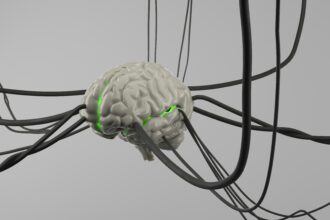
You carry a shadow. It’s a persistent echo, a phantom limb where a person, a connection, used to be. This is the landscape of family loss, a terrain you navigate with a grief that feels both intensely personal and strangely universal. You’ve likely heard the platitudes, the well-meaning advice that often falls flat. This isn’t about erasing the pain, but about understanding its contours, its lingering sensations, and learning to live with the absence, to heal the phantom limb that loss leaves behind.
You experience family loss not just as a void, but as an active presence. It’s the silence where laughter used to reside, the empty chair at the table, the memories that flicker, sharp and sudden, triggered by a scent, a song, a turn of phrase. This isn’t a wound that visibly bleeds, but one that aches deeply, a phantom sensation that proves the reality of what is no longer there.
Understanding Phantom Sensations
You might feel a sudden urge to call a parent who is gone, to share a piece of news or seek counsel. This isn’t forgetfulness; it’s the ingrained habit of connection, the neurological pathways that still expect a response. You might find yourself anticipating their reaction to something, their opinions, their presence. These are not signs of denial but echoes of a deeply embedded bond.
The Absence Becomes a Presence
The absence of a loved one can be more palpable than their physical presence ever was. You develop a heightened awareness of their not-being. You see reminders everywhere, and the world, in some subtle way, recalibrates around their absence. This can manifest as a constant, low-grade hum of sadness, punctuated by moments of intense pain.
Differentiating Grief from Trauma
It is important to distinguish between the natural process of grief and the impact of trauma. While both involve loss, trauma can complicate healing. Were there unresolved issues, sudden or violent circumstances surrounding the loss? These factors can create a more complex wound that requires a different approach to healing.
Healing from the phantom limb of family loss can be a profound journey, often requiring both time and support. For those seeking guidance on navigating this emotional landscape, an insightful resource can be found in the article titled “Navigating Grief: Understanding the Phantom Limb of Family Loss.” This article offers practical strategies and emotional insights that can aid individuals in processing their grief and finding a path toward healing. To explore this valuable resource, visit here.
Reconstructing Your Internal Landscape
When a family member is lost, a significant part of your internal landscape is altered. They were not just an external figure; they were woven into the fabric of your identity, your beliefs, your understanding of the world. Healing involves the meticulous, often painstaking, work of reassembling that internal map.
The Relational Self
A substantial portion of your identity is often built upon your relationships. Who you are is, in part, defined by your role within your family. You are a sibling, a child, a parent, a grandchild. The loss of a family member severs a thread in this tapestry, leaving you to ponder who you are now in that particular relational context.
Reinterpreting Memories
Your memories are not static. They are reinterpreted through the lens of subsequent experiences. The loss forces you to re-examine and re-contextualize past interactions, words spoken, and unsaid. This can be a difficult process, involving confronting ambiguities and perhaps even inaccuracies you previously overlooked.
Adjusting Your Future Projections
You likely made future plans that included this loved one. Holidays, celebrations, even mundane daily routines. Their absence necessitates a recalibration of these projections. You must learn to envision a future that exists without their participation, a daunting task that requires immense mental flexibility.
Acknowledging and Validating Your Grief

You have been told, implicitly or explicitly, that grief has a timeline, that you should “move on.” These expectations can make you feel as though your grief is either too much or not enough. Validating your own experience, without judgment, is a crucial step towards healing.
The Myth of Stages
Forget the neat, linear stages of grief. Your experience is likely messier, more cyclical. You might revisit feelings of anger, bargaining, and denial years after the initial loss. This is not a sign of failure but a testament to the enduring power of your bond.
Permission to Feel
Grant yourself permission to feel the full spectrum of emotions. Sadness, anger, confusion, relief, guilt – all are valid responses. There is no “right” way to grieve, and your feelings are your own, deserving of acknowledgment.
External Validation and its Limits
While external validation can be helpful, it also has its limitations. Friends and family may offer comfort, but they cannot fully inhabit your grief. Ultimately, the validation must come from within, a quiet acceptance of your own truth.
Navigating the Practicalities of Absence

Beyond the emotional toll, family loss brings practical challenges. You might inherit responsibilities, financial matters, or simply the absence of support systems you once relied upon. Addressing these practicalities, while emotionally taxing, is a necessary part of rebuilding.
Inheriting Responsibilities
Loss often means stepping into roles or taking on tasks previously handled by the departed. This can feel overwhelming, especially when you are simultaneously processing your grief. Prioritize and seek assistance where possible.
Financial and Legal Realities
There are often financial and legal implications to family loss. You may need to navigate wills, estates, insurance, and other bureaucratic processes. This can be a source of significant stress, but confronting these tasks can also provide a sense of agency and control in an otherwise chaotic period.
The Evolving Support System
Your support system may shift after a loss. Some relationships may deepen, while others may fade. You may need to actively cultivate new connections or rely more heavily on existing ones. Be clear about your needs and communicate them honestly.
Healing from the phantom limb of family loss can be an incredibly challenging journey, as it often leaves individuals grappling with profound grief and a sense of emptiness. Many find solace in understanding the emotional and psychological aspects of their experience, which can be explored in a related article that offers insights and coping strategies. For those seeking guidance on this path, the article can be found here, providing valuable resources to help navigate the complexities of loss and foster healing.
Rebuilding Without Forgetting
| Healing Method | Description |
|---|---|
| Therapy | Seeking professional help to process emotions and learn coping strategies. |
| Support Groups | Joining a community of individuals who have experienced similar loss to share experiences and find comfort. |
| Self-Care | Engaging in activities that promote mental and emotional well-being, such as exercise, meditation, and hobbies. |
| Memorializing | Creating a tribute or memorial to honor the memory of the lost family member. |
| Communication | Openly discussing feelings with trusted friends and family members to process grief. |
Healing the phantom limb is not about amputating the memory or the love. It’s about learning to carry the absence in a way that allows you to live fully. It’s about transforming the pain into something that can coexist with joy and purpose.
Integrating the Loss
The goal is not to forget, but to integrate the loss into your life story. This involves finding ways to honor the memory of your loved one while still moving forward. It’s about creating new narratives that acknowledge their impact without being defined solely by their absence.
Creating New Rituals
Old family rituals may no longer be feasible. You can, however, create new ones that acknowledge the void while still fostering connection and continuity. This might involve a quiet moment of remembrance on a special date, a particular dish prepared in their honor, or a shared story told among remaining family members.
Finding Meaning in the Absence
This may be the most challenging aspect of healing. Can you find any meaning in your loss? Perhaps it has taught you about resilience, about the preciousness of life, or about the depth of your own capacity for love. This is not about fabricating positivity, but about seeking genuine lessons and growth even in the midst of profound sorrow.
The Ongoing Nature of Healing
You must understand that healing is not a destination but an ongoing process. There will be good days and difficult days. The phantom limb may still ache, but over time, the pain will likely transform. It may become a dull throb, a gentle reminder of love, rather than an acute agony. You are not broken; you are evolving, adapting, and finding a new way to be in the world, carrying your losses not as burdens, but as integral parts of who you have become.
FAQs
What is phantom limb pain in the context of family loss?
Phantom limb pain in the context of family loss refers to the emotional and psychological pain experienced after the loss of a family member. It is the feeling of emptiness, longing, and grief that persists even after the physical presence of the family member is no longer there.
What are some common symptoms of phantom limb pain in family loss?
Common symptoms of phantom limb pain in family loss include intense sadness, feelings of emptiness, difficulty concentrating, changes in appetite, sleep disturbances, and a sense of longing for the deceased family member.
How can one begin to heal from the phantom limb pain of family loss?
Healing from the phantom limb pain of family loss involves acknowledging and processing the grief, seeking support from friends, family, or a therapist, engaging in self-care activities, and finding ways to honor and remember the deceased family member.
Is it possible to fully recover from the phantom limb pain of family loss?
While the pain of family loss may never fully disappear, it is possible to find ways to cope with the grief and integrate the loss into one’s life. With time, support, and self-care, individuals can learn to live with the pain and find moments of peace and acceptance.
What are some resources available for those experiencing phantom limb pain from family loss?
There are various resources available for those experiencing phantom limb pain from family loss, including support groups, grief counseling services, online forums, and self-help books. Additionally, reaching out to friends, family, or mental health professionals can provide valuable support and guidance during the healing process.