
The story of Harry Harlow’s experiments with rhesus monkeys is a deeply unsettling chapter in the history of psychology, yet it unequivocally illuminates a fundamental truth about the nature of development: the profound and indispensable role of maternal love. These experiments, conducted in the mid-20th century, were designed to understand the origins of attachment, specifically to challenge the prevailing behaviorist belief that attachment was primarily driven by the satisfaction of physiological needs, such as hunger. Harlow’s meticulous and, by modern standards, ethically abhorrent methodology revealed that comfort, warmth, and social interaction were far more critical to healthy development than mere sustenance. The consequences of his surrogate mothers’ lack of tactile comfort and social responsiveness painted a stark and enduring picture of the devastation wrought by maternal deprivation, solidifying the scientific understanding of love as a biological imperative, not a luxury.
The Genesis of a Controversial Inquiry
Harlow’s work emerged at a time when psychoanalytic theory, particularly the idea of “love as drive reduction,” held significant sway. This perspective posited that infants became attached to their mothers because mothers provided food, thus satisfying the infant’s hunger drive. The mother was seen as a source of reinforcement, and the attachment was an indirect consequence of feeding. While this theory explained some aspects of infant behavior, it failed to account for the intense emotional bonds observed between mothers and infants, even when mothers were not the primary providers of food. Harlow, a psychologist at the University of Wisconsin-Madison, was driven by a desire to empirically test these prevailing theories and to understand the fundamental nature of affection and social bonding. He sought to create controlled conditions that would isolate variables and allow for a clear assessment of what truly constituted maternal care and its impact on infant development.
Challenging the Reinforcement Theory
The dominant behaviorist perspective at the time suggested that an infant’s attachment to its mother was a learned behavior, reinforced by the mother’s role as the provider of nourishment. This theory, often referred to as the “cupboard love” theory, implied that the mother was loved simply because she dispensed milk. Harlow found this explanation insufficient to explain the deep emotional connection he observed in primate infants. He questioned whether the act of feeding alone was sufficient to foster the complex emotional bonds that seemed crucial for healthy social and psychological development. He envisioned experimental setups that could directly test the importance of comfort and contact versus the mere provision of sustenance. This intellectual curiosity, coupled with a desire for rigorous empirical evidence, set the stage for a series of experiments that would profoundly alter our understanding of early development, even as they ignited widespread ethical debate.
The Harlow monkey experiment, which demonstrated the importance of comfort and emotional support in the development of young primates, has significant implications for understanding attachment and social behavior in humans. A related article that delves deeper into the effects of early maternal separation on psychological development can be found at this link. This article explores how the findings from Harlow’s research continue to influence contemporary psychology and our understanding of attachment theory.
Constructing the Surrogate Mothers

Harlow’s most famous experiments involved creating artificial mothers out of wire and cloth. These surrogates were designed to isolate the variables of contact comfort and nourishment, allowing him to observe which factor the infant monkeys preferred and sought out for comfort. The construction of these surrogates was central to his hypothesis that tactile comfort and emotional security would be prioritized over mere nutritional needs.
The Wire Mother and the Cloth Mother
The core of Harlow’s experimental design lay in two distinct surrogate mothers. One was a simple wire frame, equipped with a feeding bottle that provided milk. This surrogate represented the prevailing theoretical notion of the mother as a dispenser of food and primary reinforcer. The second surrogate was also constructed from a wire frame but was covered in soft terrycloth, providing a surface that was warm and yielding to the touch. This “cloth mother” did not provide food but was intended to offer tactile comfort and a sense of security. The infant monkeys, separated from their biological mothers shortly after birth, were placed in environments where they had access to both surrogates. This arrangement allowed Harlow to observe which mother the infant monkeys chose to cling to, and for how long, under various conditions.
Variable Manipulations for Clearer Insights
Beyond the basic wire and cloth surrogates, Harlow and his team introduced further variations to refine their understanding. In some setups, the cloth mother was the sole source of food, while the wire mother offered only comfort. In others, the wire mother provided food and the cloth mother offered comfort. These manipulations were crucial for definitively demonstrating that the preference was not for the mother that provided nourishment, but for the one that provided comfort. Furthermore, different levels of “realism” and comfort were explored, with some cloth mothers being more intricately detailed than others. The experiments also involved introducing frightening stimuli to the infant monkeys, allowing researchers to observe which surrogate mother they would seek for refuge. This systematic variation of conditions was designed to strip away any ambiguity and to isolate the specific qualities of maternal care that elicited attachment.
The Devastating Impact of Maternal Deprivation

The results of Harlow’s experiments were stark and deeply disturbing. The infant monkeys raised with the surrogate mothers, particularly those with only the wire mother or with limited contact with the cloth mother, exhibited severe developmental deficits. These deficits were not limited to social behavior but extended to emotional regulation, cognitive function, and the ability to form relationships. The experiments provided undeniable evidence that the absence of a nurturing, responsive, and physically comforting maternal figure had catastrophic consequences for a primate’s ability to thrive.
The Preference for Comfort: A Clear Indicator
Consistently, the infant monkeys spent significantly more time clinging to the cloth mother, even when the wire mother was the sole source of nourishment. This preference was evident from the very first hours of their lives. When presented with fear-inducing stimuli, such as a loud noise or a toy robot, the monkeys would immediately flee to the cloth mother for solace, burying their faces in its soft surface. Only after feeling secure and comforted by the cloth mother would they venture out to obtain milk from the wire mother, quickly returning to the embrace of their soft surrogate. This behavior directly contradicted the “cupboard love” theory, demonstrating that the infant’s drive for comfort and security was a primary motivator for attachment, overriding the simple satisfaction of hunger.
The Long-Term Scars: Social and Emotional Impairment
The long-term consequences for the infant monkeys raised in isolation or with only inanimate surrogates were profound and tragic. These “surrogate-raised” monkeys, when introduced to other monkeys, exhibited extreme social maladjustment. They were often aggressive, withdrawn, or incapable of interacting appropriately with their peers. Female monkeys raised without adequate maternal care often became abusive mothers themselves, neglecting or even harming their own offspring. Male monkeys struggled with courtship and mating rituals, often exhibiting inappropriate sexual behaviors or complete disinterest. The experiments highlighted a critical window for social and emotional development, and the failure to receive adequate maternal input during this period resulted in irreparable damage. This demonstrated that attachment was not merely about survival but about the development of a healthy, functional individual capable of navigating social complexities and forming meaningful relationships.
The Unveiling of Love’s True Nature
Harlow’s experiments, despite their ethical controversies, fundamentally reshaped our understanding of love and attachment. They moved the discourse away from purely behavioral explanations and firmly established the biological and psychological necessity of emotional connection. The research provided compelling evidence that maternal love, characterized by warmth, responsiveness, and consistent contact, is not an optional add-on to development but a critical component, as vital as nutrition.
Love as a Biological Imperative, Not a Byproduct
The results emphatically demonstrated that attachment is not simply a learned response to food provision. Instead, Harlow argued that the drive for contact comfort is an innate, biological imperative. This drive is crucial for survival, not just in the immediate sense of physical safety, but in the broader sense of fostering the emotional and social capacities necessary for thriving. The experiments provided a scientific basis for the intuitive understanding that a mother’s touch, her presence, and her responsiveness are fundamental to a child’s sense of security and well-being. This marked a significant shift in psychological theory, moving towards a more holistic view of development that integrated emotional and social needs alongside physiological ones.
Implications for Human Development and Child-Rearing Practices
The implications of Harlow’s work for human child-rearing were immense and continue to resonate today. The experiments provided a strong scientific rationale for practices that emphasize parental bonding, skin-to-skin contact, and responsive caregiving. They underscored the importance of emotional support and security in a child’s formative years, warning against the detrimental effects of isolation and emotional neglect. While direct application to human ethics is impossible due to the nature of the experiments, the findings strongly influenced policies and attitudes towards infant care, adoption, and the understanding of the impact of early life experiences on long-term mental health. The research served as a powerful cautionary tale, emphasizing that a child’s need for love and connection is as essential as their need for food and shelter.
The Harlow monkey experiment provided significant insights into the importance of emotional bonds and attachment in early development, highlighting the necessity of nurturing relationships for healthy psychological growth. A related article that delves deeper into the implications of these findings can be found at Unplugged Psych, where it explores how attachment theory has evolved and its relevance in understanding human behavior. This connection between early experiences and later emotional well-being underscores the critical role that caregiving plays in shaping individuals.
Ethical Reckoning and Lasting Legacy
| Aspect | Details |
|---|---|
| Experimenter | Harry Harlow |
| Subject | Infant Rhesus Monkeys |
| Year Conducted | 1950s |
| Purpose | To study the nature of attachment and bonding |
| Method | Monkeys were given a choice between a wire “mother” that provided food and a cloth “mother” that provided comfort |
| Key Finding | Monkeys preferred the cloth mother for comfort over the wire mother that provided food |
| Conclusion | Comfort and emotional security are more important than just food in forming attachment |
| Impact on Psychology | Challenged behaviorist views that attachment is solely based on feeding; emphasized the importance of caregiving and affection in social development |
The Harlow monkey experiments are undeniably a landmark in the history of psychology, but they are also a profound ethical stain. The suffering inflicted upon the infant monkeys has led to significant reforms in animal research ethics. However, the scientific insights gained from these controversial studies are undeniable and continue to inform our understanding of human development and the critical importance of maternal love.
The Ethical Crossroads: Suffering for Science
The most significant criticism leveled against Harlow’s experiments revolves around the ethical treatment of the animals. The rhesus monkeys endured immense psychological distress, isolation, and profound social and emotional deficits. They were deliberately deprived of normal maternal care, subjected to fear-inducing stimuli, and their long-term suffering was a direct consequence of the research design. This has led to ongoing debates about the balance between scientific advancement and animal welfare, prompting the development of stricter ethical guidelines and review boards for research involving animals. While the data gathered was groundbreaking, the cost in terms of animal suffering is a heavy burden on the legacy of these experiments.
A Paradigm Shift in Understanding Love
Despite the ethical concerns, Harlow’s experiments undeniably revolutionized the field of developmental psychology. They provided irrefutable evidence that attachment is driven by the need for comfort and security, not just nourishment. This shifted the focus from a purely behavioral explanation to one that acknowledged the critical role of emotional bonds. The legacy of Harlow’s work is a testament to the power of empirical investigation, even when conducted through ethically challenging means, to reveal fundamental truths about the human (and primate) condition. It solidified the scientific understanding that maternal love is not a secondary concern but a foundational element for healthy, thriving individuals. The echoes of his wire and cloth mothers continue to remind us of the profound, life-shaping power of a mother’s embrace.
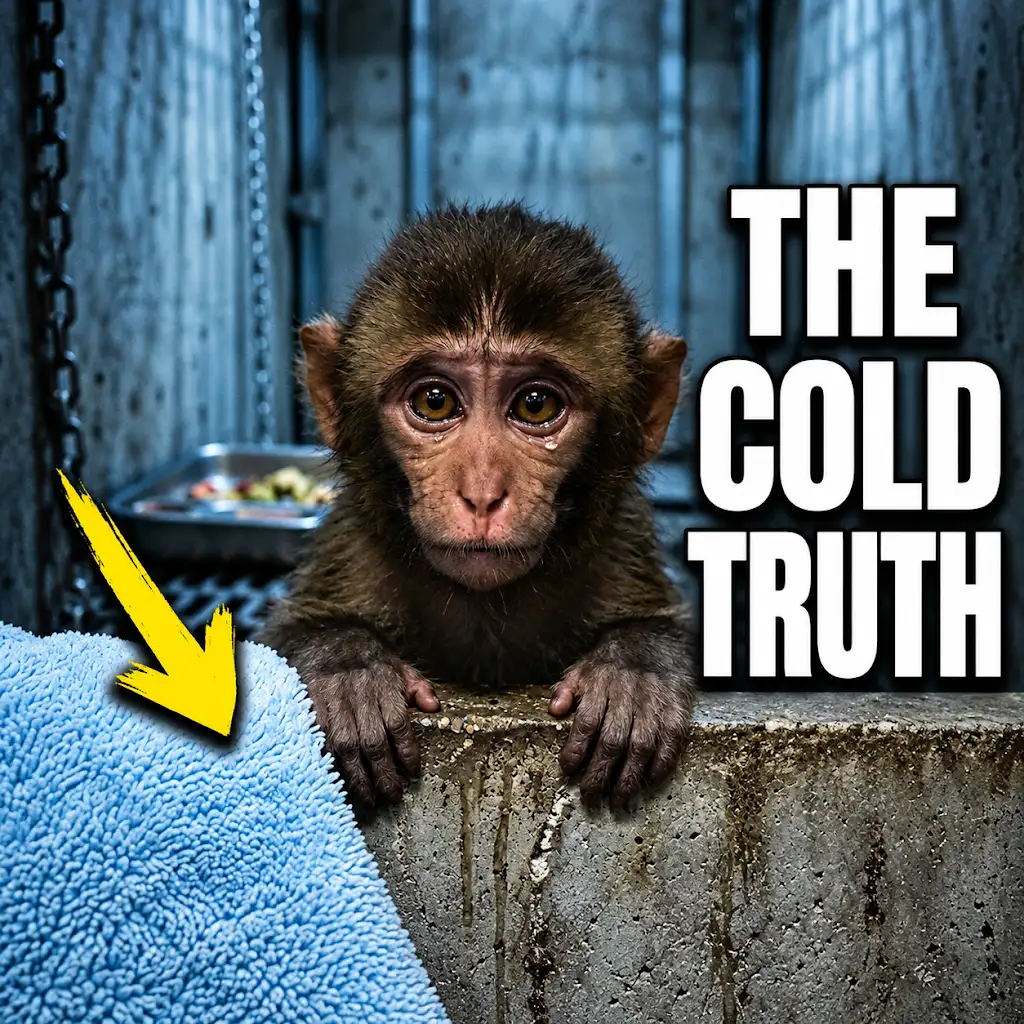
The Dark Reality of the Monkey Comfort Experiment
FAQs
What was the purpose of the Harlow monkey experiment?
The Harlow monkey experiment aimed to study the effects of social isolation and the importance of contact comfort in the development of infant monkeys.
What did the Harlow monkey experiment prove about the importance of contact comfort?
The experiment demonstrated that contact comfort, such as cuddling and physical touch, is crucial for the emotional and social development of infant monkeys, even more so than access to food.
How did the Harlow monkey experiment impact our understanding of maternal bonding?
The experiment showed that maternal bonding is not solely based on the provision of nourishment but also on the emotional connection and physical contact between the mother and the infant.
What were some of the negative effects observed in monkeys deprived of contact comfort in the Harlow experiment?
Monkeys deprived of contact comfort in the experiment exhibited behaviors such as social withdrawal, self-harm, and difficulty forming relationships with other monkeys, indicating the detrimental effects of isolation on their emotional well-being.
What ethical concerns were raised as a result of the Harlow monkey experiment?
The experiment raised ethical concerns regarding the treatment of animals in research, particularly in terms of subjecting them to emotional distress and deprivation for the sake of scientific study.