
The Little Albert experiment, a cornerstone of early behavioral psychology, has long been held up as a definitive demonstration of classical conditioning in humans. Conducted by John B. Watson and Rosalie Rayner in 1920, the study involved conditioning an infant, famously known as Little Albert, to fear a white rat. While its historical significance is undeniable, a critical examination reveals profound ethical and methodological flaws that undermine its scientific validity and continue to spark debate within the psychological community. This analysis will delve into these shortcomings, questioning the very foundations of what was once considered a groundbreaking piece of research.
The most significant and enduring criticism of the Little Albert experiment lies in its egregious ethical violations. At its core, the study treated an infant as a mere subject, disregarding his inherent rights and well-being in pursuit of psychological knowledge. This lack of ethical consideration permeates every stage of the experiment, from the recruitment of Albert to the long-term consequences of his conditioning.
The Questionable Acquisition of Little Albert
The very circumstances under which Albert was recruited for the experiment are deeply troubling. While Watson and Rayner claimed Albert was an orphan from the hospital ward, details surrounding his guardianship and consent are murky at best.
The Absence of Informed Consent
In modern ethical standards, informed consent is paramount. For an infant, this is obviously impossible. The ethical responsibility then shifts to a parent or legal guardian. However, the available documentation offers little assurance that any guardian truly understood the nature, risks, and potential consequences of the experiment. The lack of a clearly documented and informed consent process raises serious questions about the voluntariness of Albert’s participation. Was he truly in a situation where his caregiver could refuse without repercussions? The historical context of orphanages and institutional care at the time often involved a power imbalance that could have coerced participation.
The Vulnerability of the Subject
Infants are inherently vulnerable. They are unable to articulate their distress, understand the experimental procedures, or withdraw their consent. Placing a child in a situation designed to induce fear and distress without adequate safeguards or the ability to opt-out represents a severe breach of the duty of care expected from researchers. The experiment capitalized on this vulnerability, using Albert as a tool rather than protecting him as a human being.
The Deliberate Induction of Fear and Distress
The core methodology of the experiment involved systematically inducing fear in a young child. This was achieved by pairing a neutral stimulus (the white rat) with a fear-inducing stimulus (a loud, jarring noise).
The Harmful Nature of the Conditioning
The deliberate creation of a phobia in an infant is ethically indefensible by today’s standards, and even by the more relaxed ethical norms of the early 20th century, it was highly questionable. Watson and Rayner were not simply observing a natural phenomenon; they were actively engineering a psychological disturbance. The long-term psychological impact of such conditioning on Albert, particularly without any attempt at deconditioning, is a grave concern.
The Lack of Deconditioning Procedures
Perhaps the most glaring ethical oversight is the absence of any attempt to reverse the learned fear response. After conditioning Albert to fear the rat, and by extension other furry objects, Watson and Rayner left the child with these debilitating phobias. This abandonment of the subject’s well-being post-experiment is a profound ethical failure. A responsible researcher would have sought to alleviate the distress caused, not simply report on its successful creation.
The Little Albert experiment, conducted by John B. Watson and Rosalie Rayner in the early 20th century, has been widely criticized for its ethical flaws and methodological shortcomings. For a deeper understanding of these issues, you can explore a related article that discusses the implications of the experiment and its impact on psychological research. This article can be found at Unplugged Psychology, where you will find a comprehensive analysis of the ethical considerations and the legacy of the Little Albert study.
Methodological Weaknesses: Undermining Scientific Rigor
Beyond the ethical quagmire, the Little Albert experiment is plagued by significant methodological flaws that call into question the reliability and generalizability of its findings. These weaknesses cast doubt on the scientific rigor of the study and its claim to definitive proof.
The Unclear Identity and Characteristics of Little Albert
The identity and pre-existing psychological state of Little Albert remain subjects of considerable debate and uncertainty, impacting the interpretation of the results.
The “Orphan” Status and its Implications
As mentioned, Albert’s background as an “orphan” from the hospital ward is vague. This raises questions about his developmental history, any potential pre-existing anxieties, or neurological conditions that might have made him more susceptible to fear conditioning. Without a clear understanding of his baseline psychological state, it is difficult to attribute his fear response solely to the conditioning procedure.
The Potential for Pre-existing Fears
It is possible that Albert already harbored a fear of rats or similar stimuli. While Watson and Rayner reported that Albert showed no fear of the rat initially, their assessment might have been superficial. Infants are complex, and their reactions can be nuanced. If a pre-existing fear was present, the experiment would have merely amplified it rather than creating it de novo, weakening the claim of a direct causal link between the conditioning and the fear.
The Issue of Stimulus Generalization: A Question of Scope
The experiment demonstrated stimulus generalization, where Albert’s fear extended beyond the white rat to other furry objects. However, the extent and nature of this generalization are also subject to scrutiny.
The Ambiguity of Generalization
While Albert showed fear towards a rabbit, a dog, and a sealskin coat, the descriptions of his reactions are not always precise. The intensity and consistency of these generalized fears are not meticulously documented. Furthermore, the stimuli used for generalization testing were varied, and the conditions under which they were presented are not fully detailed, making it difficult to draw definitive conclusions about the breadth of the generalization.
The Potential for Other Contributing Factors
It is possible that Albert’s generalized fear was not solely a product of the conditioning. Other factors present in his environment or his interactions with the researchers could have contributed to his aversions. The controlled environment of the laboratory, the presence of strangers, and the unusual nature of the experimental setup might have created a general sense of unease that was then misattributed to the conditioned stimuli.
The Lack of Control Group and Baseline Data
A fundamental principle of experimental design is the use of control groups and robust baseline data to isolate the effect of the independent variable. The Little Albert experiment fell short on both fronts.
The Absence of a Control Infant
Ideally, a control infant would have been exposed to the same experimental environment and stimuli, minus the fear conditioning, to establish a baseline against which to compare Albert’s reactions. Without a control group, it is impossible to definitively state that Albert’s fear response was solely due to the conditioning and not some other factor related to his participation in the experiment.
Insufficient Baseline Assessment
While some initial observations of Albert’s reactions to stimuli were made, these were not as comprehensive or systematic as would be required in modern research. A more thorough assessment of his baseline emotional responses to various stimuli, including furry objects, would have provided a stronger foundation for evaluating the impact of the conditioning.
The Short Duration of the Experiment and Long-Term Follow-up
The Little Albert experiment was conducted over a relatively short period, and there was no systematic follow-up to assess the long-term effects of the conditioning.
The Transient Nature of the Fear
It is plausible that Albert’s fears were transient and would have diminished over time, especially if he had been removed from the stressful experimental environment. The experiment captured a snapshot of his conditioned fear, but it did not provide information about its persistence or potential extinction.
The Missing Deeper Psychological Inquiry
The experiment focused on a single behavioral response. It did not delve into the deeper psychological mechanisms that might have been at play, nor did it explore the potential for other learned behaviors or emotional responses that might have resulted from the traumatic experience. The lack of longitudinal data leaves a significant gap in our understanding of the true impact of the study on Albert.
The “Fuzzy” Science: Reproducibility and Ambiguities
The scientific value of the Little Albert experiment is further diminished by issues of reproducibility and inherent ambiguities in the reporting of its findings.
The Difficulty of Replication
A cornerstone of scientific validity is the ability for a study to be replicated by other researchers. The Little Albert experiment, due to its ethical concerns and methodological flaws, is not replicable in its original form. Even attempts to replicate the principles of fear conditioning in infants have been met with significant ethical hurdles and have yielded more nuanced results than Watson and Rayner’s claims.
The Subjectivity of Observation
The descriptions of Albert’s reactions, while presented as objective observations, often carry a degree of subjectivity. The interpretation of an infant’s cry, whimpering, or avoidance behavior can be influenced by the observer’s expectations. Without rigorous standardization of behavioral measures and independent blind raters, the reliability of these observations is questionable.
The Influence of Researcher Bias
Watson and Rayner were proponents of behaviorism, which emphasized observable behavior. It is possible that their strong theoretical stance influenced their interpretation of Albert’s behavior, leading them to see evidence of conditioning where other interpretations might be possible. The desire to confirm their hypothesis could have unconsciously biased their observations.
The Legacy of a Flawed Foundation: Ethical and Methodological Lessons

Despite its severe shortcomings, the Little Albert experiment has served as a cautionary tale and a catalyst for change within the field of psychology. Its flaws, when examined critically, offer invaluable lessons for future research.
The Evolution of Ethical Guidelines
The ethical outcry surrounding the Little Albert experiment, though delayed, contributed significantly to the development of stringent ethical guidelines for research involving human subjects, particularly vulnerable populations like children. Principles of informed consent, beneficence, and non-maleficence are now deeply ingrained in research ethics boards and institutional review processes.
The Importance of Methodological Rigor
The methodological weaknesses highlighted in this analysis underscore the critical importance of robust experimental design, including the use of control groups, precise measurement of variables, and appropriate statistical analysis. Researchers are now more aware of the need for objective data collection and the potential for confounding variables.
The Nuance of Human Psychology
The experiment’s simplistic portrayal of fear conditioning has been challenged by subsequent research that emphasizes the complex interplay of biological, cognitive, and environmental factors in the development of psychological responses. Modern psychology recognizes that human behavior is not merely a product of stimulus-response associations.
The Little Albert experiment, conducted by John B. Watson and Rosalie Rayner, has been widely criticized for its ethical shortcomings and methodological flaws. These issues raise important questions about the validity of the findings and the implications for psychological research. For a deeper understanding of these concerns, you can explore a related article that discusses the ethical dilemmas in psychological experiments, which can be found here. This resource provides valuable insights into how the lessons learned from the Little Albert study continue to shape ethical standards in psychology today.
Beyond Little Albert: Re-evaluating Classical Conditioning in Humans
| Flaw | Description | Impact on Experiment | Notes |
|---|---|---|---|
| Lack of Control Group | No comparison group to validate results | Reduces reliability of conclusions about conditioning | Without a control, it’s unclear if fear was due to conditioning or other factors |
| Unclear Ethical Standards | No informed consent and potential harm to the child | Raises ethical concerns and questions about experiment validity | Experiment would not meet modern ethical guidelines |
| Small Sample Size | Only one subject (Little Albert) was tested | Limits generalizability of findings | Results may not be representative of broader population |
| Subject’s Health and Emotional State | Albert was reportedly emotionally unstable and possibly ill | May have influenced his reactions independently of conditioning | Confounds interpretation of fear responses |
| Inconsistent Methodology | Variations in stimuli and timing during conditioning | Reduces experimental control and replicability | Hard to determine cause-effect relationship |
| Failure to Extinguish Fear | No attempt to decondition or remove fear response | Ethical issue and incomplete study of conditioning process | Long-term effects on subject unknown |
While the Little Albert experiment remains a historical touchstone, a critical analysis reveals it to be a flawed demonstration. Modern understanding of classical conditioning in humans is far more nuanced and ethically informed.
Modern Approaches to Fear Conditioning Research
Contemporary research on fear conditioning in humans employs sophisticated methodologies and adheres to strict ethical protocols. Studies often focus on implicit fear learning, using less intrusive methods and ensuring the well-being of participants. The focus has shifted from inducing overt distress to understanding the underlying neural mechanisms and cognitive processes involved in fear acquisition and extinction.
The Role of Cognitive Factors
Unlike the purely behaviorist interpretation of the Little Albert experiment, modern psychology acknowledges the significant role of cognitive factors in fear conditioning. Expectations, attributions, and individual differences in threat perception all play a crucial part in how individuals learn to fear stimuli. Simply pairing a neutral stimulus with an aversive one does not guarantee a specific or lasting fear response without considering these cognitive elements.
The Importance of Deconditioning and Intervention
In line with ethical considerations, modern research on fear conditioning often includes components of deconditioning or extinction. Therapies like exposure therapy, which are rooted in principles of classical conditioning, focus on gradually reducing fear responses through controlled exposure and the formation of new, non-fearful associations. This stands in stark contrast to the abandonment of Little Albert with his induced phobias.
In conclusion, while the Little Albert experiment holds a significant place in the history of psychology, its scientific and ethical integrity has been severely compromised by fundamental flaws. A critical analysis reveals a study that prioritized experimental goals over the well-being of its subject, employed questionable methodologies, and ultimately provided a limited and potentially misleading understanding of human fear conditioning. The legacy of Little Albert lies not in its definitive findings, but in the crucial ethical and methodological lessons it imparts, reminding us of the responsibility and rigor required when exploring the complexities of the human mind.
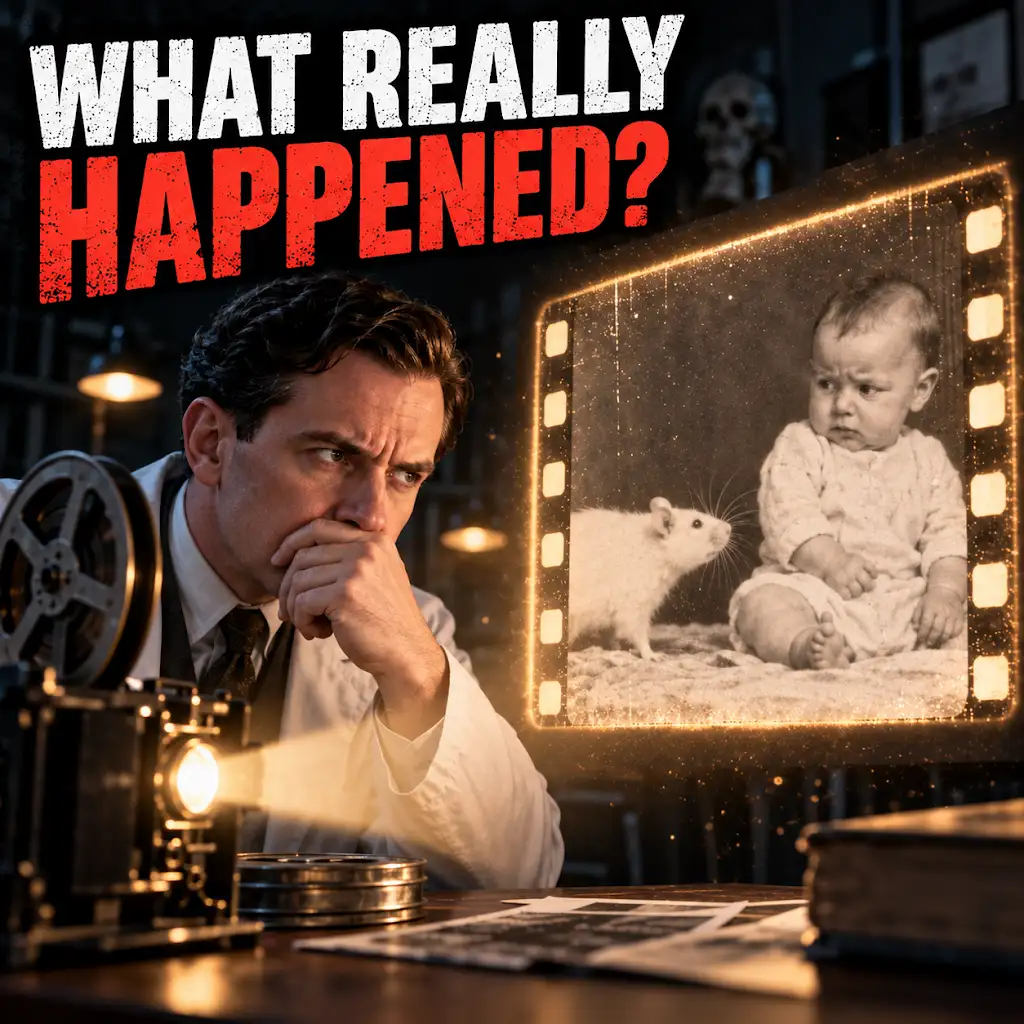
The Little Albert Experiment May Not Have Worked
FAQs
What was the Little Albert experiment?
The Little Albert experiment was a study conducted by John B. Watson and Rosalie Rayner in 1920, which aimed to demonstrate that fear could be conditioned in humans through classical conditioning.
What were some flaws in the Little Albert experiment?
Some of the flaws in the Little Albert experiment include lack of informed consent, ethical concerns regarding the treatment of the child, and the fact that the study lacked proper follow-up to assess the long-term effects on Little Albert.
Was the Little Albert experiment considered ethical?
No, the Little Albert experiment is widely criticized for its unethical treatment of the child subject, Little Albert. The study involved inducing fear in a young child without his or his mother’s consent, which raises serious ethical concerns.
What were the implications of the Little Albert experiment?
The Little Albert experiment had significant implications for the field of psychology, as it demonstrated the principles of classical conditioning. However, the ethical issues surrounding the study have also led to increased scrutiny and regulation of research involving human subjects.
How has the Little Albert experiment influenced modern psychology?
The Little Albert experiment has influenced modern psychology by highlighting the importance of ethical considerations in research involving human subjects. It has also contributed to the development of guidelines and regulations to ensure the protection of participants in psychological studies.