You stand at the precipice of something new. Not just a new film, but a new way of understanding the world around you. You are about to embark on a journey, not as a passive observer, but as an active participant, a co-creator. “Exploring the Third Wave: A Documentary Experiment” isn’t just a title; it’s an invitation, a challenge, and a promise. You’ve heard the whispers, seen the trailers, and perhaps felt that undeniable pull towards a different kind of storytelling. Now, it’s time to dive in.
This isn’t your grandfather’s documentary. Forget the somber voice-overs, the neatly packaged narratives, and the pronouncements of undeniable truth. The Third Wave isn’t about presenting facts; it’s about fostering understanding. It’s about acknowledging the inherent subjectivity of experience and the fluid nature of reality. It’s an experiment, yes, but an experiment designed to illuminate, to provoke, and ultimately, to empower you.
The Genesis of the Experiment: Why Now?
You might be asking yourself, why now? What makes this particular moment ripe for a documentary experiment like this? The answer, you’ll discover, is woven into the fabric of our contemporary lives. We live in an era of unprecedented information saturation, a deluge of data that can often feel overwhelming, contradictory, and, frankly, a little disorienting. Traditional documentary forms, with their established structures and authoritative voices, sometimes struggle to keep pace with this evolving landscape.
The Echo Chamber and the Search for Authenticity
You’ve likely experienced it yourself. The comforting hum of your personalized online bubble, where algorithms serve you more of what you already believe, reinforcing your existing perspectives. This echo chamber, while convenient, can breed a dangerous complacency, a gradual erosion of empathy for those who hold different views. “The Third Wave” aims to break free from this self-imposed confinement. It seeks to introduce you to voices you might not otherwise encounter, perspectives that might challenge your assumptions, and experiences that might resonate on a deeper, more human level. It’s a deliberate attempt to pierce through the curated realities and find something raw, something authentic.
The Rise of Participatory Culture
Look around you. Social media, citizen journalism, crowdfunding – we are more interconnected and more empowered to contribute than ever before. You are no longer just a consumer of media; you are a potential creator, a commentator, a collaborator. This shift towards a participatory culture is a fundamental force shaping our information ecosystem. “The Third Wave” recognizes this evolution and seeks to harness its potential, not by simply showcasing user-generated content, but by integrating it into a deeper, more meaningful dialogue.
The Third Wave experiment documentary offers a fascinating exploration of group dynamics and authority, drawing parallels to historical events and psychological studies. For those interested in delving deeper into the psychological principles at play, a related article can be found at Unplugged Psychology, which discusses the implications of social influence and conformity in contemporary settings. This resource provides valuable insights that complement the themes presented in the documentary.
Deciphering the “Third Wave”: A Conceptual Framework
The term “Third Wave” itself hints at a departure from what came before. To truly appreciate the experiment, you need to understand the waves it’s building upon. Think of it as a progression, an evolution in how we conceive of and engage with documentary filmmaking.
The First Wave: The Objective Gaze
Imagine the early days of documentary. Think of Robert Flaherty, his attempts to capture “truth” on film, often through staged narratives that presented a romanticized, albeit sometimes controversial, view of indigenous cultures. This was the First Wave – characterized by a perceived objectivity, a belief that the filmmaker could present an unvarnished reality. The camera was often seen as a neutral observer, a detached eye documenting the world as it was.
Pioneers and their Principles
You’ll see echoes of this in films that aimed for a comprehensive portrayal of a subject, believing that by meticulously collecting evidence and presenting it in a logical sequence, they could arrive at an objective truth. The emphasis was on the filmmaker’s authority, their ability to interpret and convey that truth to the audience.
The Limits of Objectivity
However, as time progressed, so did critical thinking. The idea of pure objectivity began to unravel. You started to question: whose perspective is being shown? What biases are inherent in the framing and editing? The First Wave, while groundbreaking, ultimately revealed its limitations. You realized that every act of observation is influenced by the observer.
The Second Wave: The Subjective Lens
The Second Wave acknowledged the inherent subjectivity of filmmaking. Think of the cinéma vérité movement, with its hand-held cameras, direct address, and a focus on capturing moments as they unfolded. Filmmakers like the Maysles brothers or Jean Rouch invited you into their subjects’ lives, often blurring the lines between observer and participant. The emphasis shifted from presenting an objective truth to exploring a subjective experience.
Embracing the Personal
This wave celebrated the filmmaker’s personal involvement, their emotional connection to the subject matter. It wasn’t about hiding the camera’s presence, but about using it as a tool to forge a deeper connection, to reveal the filmmaker’s own journey alongside their subject’s.
The Rise of the Authorial Voice
The Second Wave gave greater prominence to the filmmaker’s unique voice and perspective. You began to see films that were deeply personal, that reflected the filmmaker’s own beliefs, doubts, and interpretations. This was a move away from the detached observer and towards the filmmaker as an active interpreter.
The Third Wave: Collaborative Creation and Fluid Realities
And then there’s the Third Wave. This is where you come in. The Third Wave doesn’t just acknowledge subjectivity; it embraces collaboration. It understands that truth isn’t something to be unearthed and presented, but something that is actively constructed through dialogue, through shared experience, and through a willingness to question and adapt.
The Dissolution of Boundaries
In the Third Wave, the lines between filmmaker and subject, between creator and audience, begin to blur. You are no longer just watching a story; you are invited to participate in its unfolding. This isn’t about simply adding comments or sharing a post; it’s about a more profound level of engagement, where your input can genuinely shape the narrative.
Embracing Uncertainty and Multiple Perspectives
The Third Wave is comfortable with ambiguity. It doesn’t offer neat conclusions or definitive answers. Instead, it invites you to grapple with complexity, to consider multiple perspectives, and to arrive at your own understanding. It recognizes that reality itself is fluid, constantly being reshaped by our individual and collective experiences.
The Experiment Unpacked: How it Works
So, how does “Exploring the Third Wave” translate this conceptual framework into a tangible experience? This is where the “experiment” truly comes to life, and where your active participation becomes paramount.
Interactive Narratives and Branching Paths
Forget linear storytelling. This documentary is designed with you in mind, offering interactive elements that allow you to influence the direction of the narrative. You might encounter moments where you are presented with a choice, a question, or a decision that will lead you down a different path of exploration.
Making Your Mark on the Story
Imagine being presented with two different interviews on a particular topic. Your choice of which one to delve into deeper will open up a unique set of follow-up questions and perspectives. This isn’t a gimmick; it’s a deliberate attempt to mirror the way you navigate information in your own life, making choices that shape your understanding.
The Ripple Effect of Your Decisions
Your decisions have consequences within the documentary. Choosing to explore one aspect of a subject might lead you to a different set of characters, challenges, or insights than if you had chosen another. This creates a sense of agency and ownership over your viewing experience.
Crowdsourced Content and Collaborative Storytelling
The Third Wave thrives on the collective intelligence and creativity of its audience. You are not just a viewer; you are a potential contributor. The experiment actively solicits your input, your experiences, and your perspectives.
Your Voice Matters: Submitting Your Stories
You might be prompted to share your own experiences related to a particular theme, to upload a short video clip, or to answer a question that resonates with you. These submissions are not simply appended to the end; they are carefully curated and woven into the fabric of the documentary, enriching the narrative for everyone.
Building a Shared Understanding
By contributing your voice, you become part of a larger conversation. You help to build a shared understanding of complex issues, bringing diverse experiences to the forefront. This is the power of crowdsourced storytelling – transforming individual voices into a collective chorus.
Real-Time Engagement and Evolving Narratives
This experiment isn’t a static artifact; it’s a living, breathing entity. The narrative can evolve in real-time, responding to the collective input and engagement of its audience.
The Dynamic Nature of Truth
You’ll witness how the documentary can shift and adapt based on the ongoing dialogue. New perspectives emerge, previously unseen connections are made, and the understanding of the subject matter deepens through this dynamic process.
The Community as a Co-Author
In essence, you, the audience, become a co-author of the documentary. Your engagement, your questions, and your contributions actively shape the ongoing narrative, making each viewing experience potentially unique.
The Subject Matter: Diverse and Unconventional
“Exploring the Third Wave” doesn’t shy away from complexity. The subjects it tackles are often nuanced, multifaceted, and rarely fit into neat boxes. You’ll encounter a range of human experiences, from the deeply personal to the broadly societal.
Unpacking the Nuances of Identity
You’ll be invited to explore the fluid and evolving nature of identity in the modern world. This isn’t about assigning labels, but about understanding the myriad ways individuals define themselves and navigate societal expectations.
Personal Journeys of Self-Discovery
Witness the stories of individuals who are actively questioning and redefining their identities, challenging traditional norms and forging their own paths. You’ll see the vulnerability and courage involved in this process.
Societal Shifts and Their Impact
Explore how broader societal changes, from technological advancements to evolving social attitudes, are shaping our collective understanding of identity. You’ll see how these macro trends play out on a micro, personal level.
Navigating the Digital Landscape
The digital realm has fundamentally reshaped how we interact, communicate, and understand the world. This documentary delves into the profound impact of this digital revolution on our lives.
The Paradox of Connection
You’ll explore the paradox of being more connected than ever, yet potentially feeling more isolated. Witness how online interactions can both foster community and create new forms of social distance.
The Ethics of Information and Influence
Grapple with the ethical implications of our digital lives – the spread of misinformation, the power of algorithms, and the influence of digital platforms on our thoughts and behaviors. You’ll be encouraged to critically examine your own digital footprint.
Examining the Future of Human Interaction
Looking ahead, “The Third Wave” probes the evolving nature of human connection in an increasingly complex and interconnected world.
Redefining Community in a Globalized Age
Explore how concepts of community are being redefined in a globalized world, transcending geographical boundaries and digital spaces. You’ll see examples of innovative forms of human connection emerging.
The Role of Technology in Shaping Our Relationships
Consider the profound influence of technology on our relationships – from the evolution of dating to the future of work and family life. You’ll be prompted to think about how we can harness technology to foster deeper, more meaningful connections.
The Third Wave experiment documentary offers a fascinating look into the dynamics of group behavior and authority, which can be further explored in a related article that delves into the psychological principles behind such experiments. For those interested in understanding the implications of social influence and conformity, this insightful piece provides a comprehensive analysis. You can read more about it in this related article that complements the themes presented in the documentary.
Your Role in the Experiment: Beyond Passive Consumption
This is where the true power of the Third Wave lies: your active role. You are not simply a recipient of information; you are an essential component of the documentary’s existence and evolution.
Becoming an Active Participant
You are encouraged to move beyond the passive role of a viewer. Engage with the content, ask questions, and be open to new perspectives. Your attentiveness is the foundation upon which the experiment is built.
Engaging with the Interactive Elements
Actively use the interactive features. Make your choices deliberately, explore the branching paths, and see how your decisions shape your journey through the documentary. This is your opportunity to actively construct your own understanding.
Reflecting and Responding
Take the time to reflect on what you are seeing and experiencing. Consider how it resonates with your own life and beliefs. The documentary is designed to spark dialogue, both internally and externally.
Contributing to the Ongoing Narrative
Your contributions are not optional; they are integral to the success of this experiment. The more you engage, the richer and more dynamic the documentary becomes.
Sharing Your Perspectives and Experiences
Don’t hesitate to share your own stories, insights, and reflections. Whether it’s through text, video, or other media, your voice adds a vital dimension to the collective narrative.
Fostering Dialogue and Community
Engage with other viewers. Participate in discussions, share your interpretations, and build a community around the exploration of these complex themes. The dialogue itself is a crucial part of the experiment.
The Ethical Considerations and Responsibilities
As you embrace your role, it’s important to be mindful of the ethical considerations involved in this collaborative form of storytelling.
Respecting Diverse Voices and Experiences
Approach all contributions with respect and an open mind. Recognize that everyone brings their own unique perspective, shaped by their own experiences.
Navigating the Landscape of Subjectivity
Understand that in the Third Wave, there is no single, definitive truth. Embrace the multiplicity of perspectives and the inherent subjectivity of human experience. Your goal is understanding, not necessarily agreement.
Contributing Authentically and Thoughtfully
When you choose to contribute, do so authentically and thoughtfully. Your genuine engagement is what makes this experiment meaningful and impactful.
The Future of Storytelling: A Glimpse Through the Third Wave
“Exploring the Third Wave: A Documentary Experiment” is more than just a film; it’s a manifesto for a new era of storytelling. It’s a testament to the power of collaboration, the beauty of subjectivity, and the ever-evolving nature of human understanding. As you step into this experiment, you are not just watching a documentary; you are participating in its creation, its evolution, and its very definition. You are a part of the wave. And as the wave builds, it promises to carry us all towards a deeper, more nuanced, and ultimately, more meaningful way of seeing the world. You are on the cusp of something extraordinary. Embrace it. Explore it. Be a part of it.
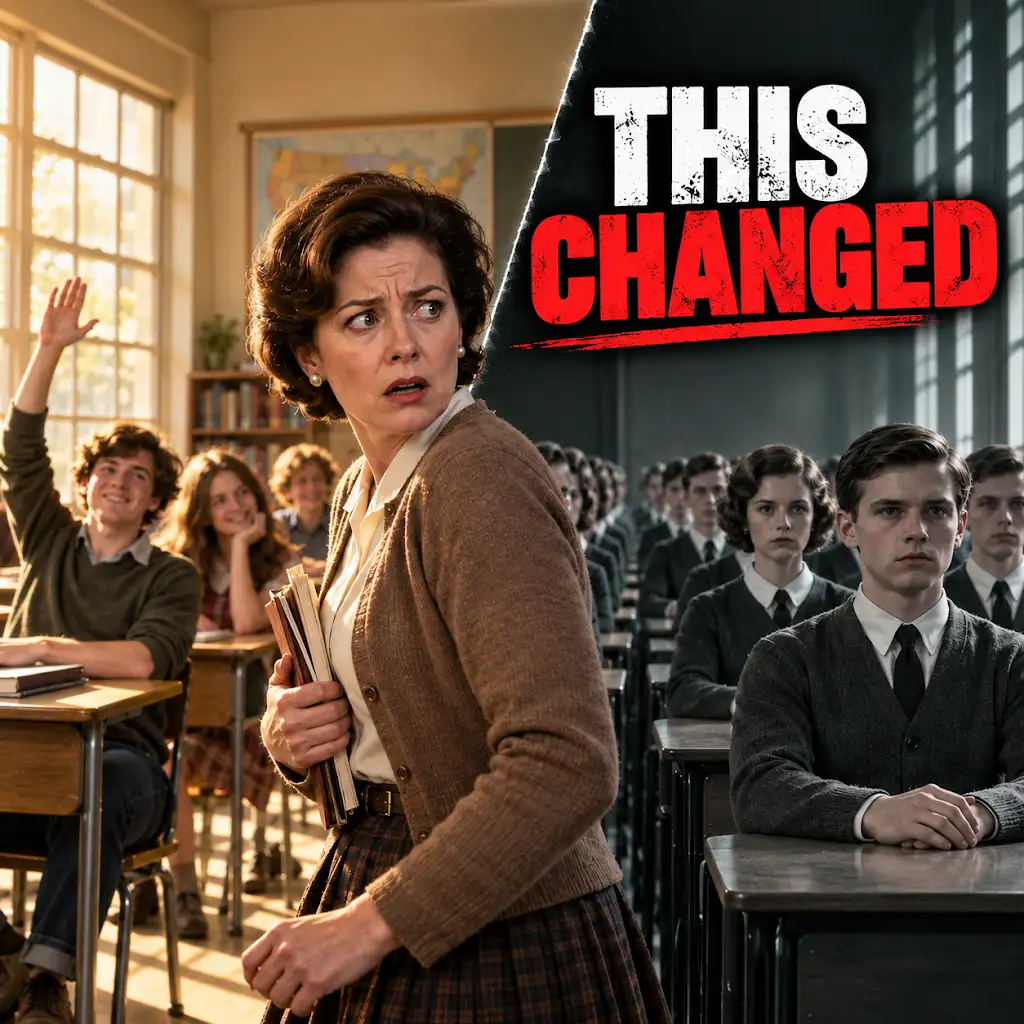
They Started With Rules. Then Students Began Policing Each Other
FAQs

What is the Third Wave experiment documentary about?
The Third Wave experiment documentary explores an infamous social experiment conducted by high school teacher Ron Jones in 1967, where he created a totalitarian regime within his classroom to demonstrate the appeal of fascism.
When was the Third Wave experiment conducted?
The Third Wave experiment was conducted in 1967 by Ron Jones, a high school teacher at Cubberley High School in Palo Alto, California.
What were the results of the Third Wave experiment?
During the Third Wave experiment, students quickly became obedient and enthusiastic followers of the strict rules and hierarchy imposed by Ron Jones, showcasing how easily individuals can be swayed by authoritarian ideologies.
Was the Third Wave experiment based on a true story?
Yes, the Third Wave experiment was based on a true story and was later adapted into a documentary to shed light on the dangers of conformity and the allure of authoritarianism.
What lessons can be learned from the Third Wave experiment documentary?
The Third Wave experiment documentary serves as a cautionary tale about the power of group dynamics, the dangers of blind obedience, and the importance of critical thinking in resisting oppressive ideologies.