You stand on the precipice of discovery, a seasoned explorer armed with curiosity and a thirst for understanding. Your mission: to chart the fascinating history of third wave classroom experiments. Forget dusty textbooks and rote memorization; you’re about to delve into a period of pedagogical innovation, a time when learning transformed from passive reception to active, hands-on engagement. This isn’t just about science labs; it’s about a broader evolution in how you, as an educator, have learned to facilitate genuine understanding.
Before you can truly appreciate the third wave, you must understand the fertile ground from which it sprouted. This wasn’t a sudden eruption; it was a gradual unfolding, a response to the limitations of earlier approaches. Your journey begins by looking back, examining the pedagogical currents that set the stage for this revolutionary shift.
The Dawn of Experimental Learning: Early Innovations
Even before the term “third wave” was coined, glimpses of this interactive future were appearing. You’ll find pioneers who recognized the power of doing.
The Enlightenment and the Rise of Empiricism
Consider the Enlightenment thinkers. Their emphasis on reason and empirical observation, while not always directly applied in the classroom, laid a philosophical groundwork. The idea that knowledge is best acquired through direct experience, through questioning and testing, was slowly percolating. You can see this reflected in early scientific societies and their demonstrations, which, in a nascent form, were experimental learning in action. Imagine the wonder of witnessing an early electrical experiment for the first time, the sparks flying, the tangible proof of unseen forces. This was the beginning of making the abstract tangible.
Froebel and the Kindergarten Movement
Friedrich Froebel, the visionary behind the kindergarten, offers another crucial precursor. His “gifts” and “occupations” were designed to engage young children through playful, sensory exploration. You can visualize his intention: children manipulating blocks, weaving, and engaging with natural materials. This wasn’t just about fun; it was about learning through manipulation, through building and creating. Froebel understood that early childhood education was a prime arena for hands-on discovery, a philosophy that would echo through later pedagogical movements.
Pestalozzi and the Importance of Sensory Experience
Johann Heinrich Pestalozzi, another influential educator, championed the idea that learning should begin with the senses. He advocated for object lessons, where students learned about the world by directly interacting with physical objects. You can imagine Pestalozzi carefully guiding his students through an examination of a stone, a plant, or a tool, encouraging them to observe, describe, and classify. This was a departure from purely verbal instruction, a move towards engaging the whole child in the learning process.
The First Wave: Behaviorism and the Structured Experiment
The first wave of educational reform, largely influenced by behaviorist psychology, offered a more structured approach to experimentation, even if it was often prescriptive. You’ll see how this wave, while emphasizing observable outcomes, also introduced a more systematic approach to scientific inquiry.
Skinner and Operant Conditioning in the Classroom
B.F. Skinner’s work on operant conditioning had a significant impact. While not directly about “experiments” in the modern sense, his principles of reinforcement and shaping behavior found their way into classroom management and the design of learning tasks. You can see how this translated into carefully sequenced steps in a lesson, where correct responses were rewarded, leading students through a predictable path to mastery. This was about predictable outcomes, about shaping learning through clear stimuli and responses.
The “Instructional Objectives” and Measurable Outcomes
This era saw a strong emphasis on clearly defined instructional objectives and measurable outcomes. Experiments were designed to demonstrate specific principles and to produce quantifiable results that could be assessed. You can picture laboratories filled with standardized equipment, where students followed precise protocols to achieve predetermined results. The focus was on verifying established scientific laws rather than on open-ended exploration.
Drill and Practice: The Mechanization of Learning
While not strictly an experiment, the widespread use of drill and practice exercises, often facilitated by early teaching machines or worksheets, can be seen as a mechanistic form of learning. The idea was to reinforce knowledge through repetition and immediate feedback. You can imagine rows of students diligently completing similar tasks, their progress charted through a series of correct answers. This was about proficiency through repetition, a precursor to more dynamic learning.
The Second Wave: Cognitive Revolution and the Rise of Constructivism
The second wave marked a significant paradigm shift, moving away from purely behaviorist principles to embrace cognitive psychology and the burgeoning ideas of constructivism. This is where you start to see the seeds of genuine inquiry taking root.
Piaget and the Stages of Cognitive Development
Jean Piaget’s groundbreaking work on cognitive development provided a new lens through which to view how children learn. He emphasized that children actively construct their understanding of the world through interaction and exploration. You can visualize Piaget observing children, noting how their thinking evolves through distinct stages, and how their engagement with the environment is crucial to this development. His theories highlighted the importance of allowing children to discover concepts for themselves, rather than simply being told.
Bruner and the “Discovery Learning” Movement
Jerome Bruner’s concept of “discovery learning” directly influenced the second wave. He argued that students learn best when they are allowed to discover knowledge for themselves through exploration and problem-solving. You can imagine Bruner advocating for learning experiences where students are presented with a problem or a phenomenon and are encouraged to investigate, experiment, and draw their own conclusions. This was a direct challenge to the passive reception of information.
Vygotsky and the Zone of Proximal Development (ZPD)
Lev Vygotsky’s concept of the Zone of Proximal Development (ZPD) added another layer of sophistication. He proposed that learning occurs most effectively when students are challenged to perform tasks slightly beyond their current abilities, with the support of more knowledgeable others (teachers or peers). You can picture a classroom where collaborative activities and guided inquiry are paramount, where the teacher acts as a facilitator, scaffolding student learning within their ZPD. This emphasized the social and collaborative aspects of learning.
The Third Wave classroom experiment, conducted by Ron Jones in 1967, serves as a compelling case study in understanding group dynamics and authoritarianism. For those interested in exploring the psychological implications and historical context of this experiment, a related article can be found at Unplugged Psychology, which delves into the lessons learned from such social experiments and their relevance in today’s society.
The Emergence of the Third Wave: Embracing Complexity and Authenticity
Now, you arrive at the heart of your exploration: the third wave. This period is characterized by a deeper understanding of learning as a complex, dynamic, and deeply personal process. The limitations of earlier approaches became clearer, and educators sought more authentic and engaging ways to foster understanding.
The Rise of Inquiry-Based Learning
The third wave truly blossomed with the widespread adoption of inquiry-based learning. This approach places the student at the center of the learning process, empowering them to ask questions, investigate, and construct their own knowledge. You can see this as a direct evolution from the discovery learning of the second wave, but with a greater emphasis on student agency and intellectual curiosity.
Student-Driven Questioning and Hypothesis Formation
In a third wave classroom, the learning journey often begins with a question posed by a student. You can visualize students brainstorming, debating, and refining their initial curiosities into testable hypotheses. This is a departure from the teacher-defined learning objectives of earlier eras. The focus shifts from verifying existing knowledge to generating new understanding. The classroom becomes a space where “I wonder…” is a more powerful starting point than “Today we will learn about…”.
Designing and Conducting Authentic Investigations
Third wave experiments are rarely cookbook recipes. Instead, students are encouraged to design and conduct their own investigations, often with open-ended outcomes. You can imagine students wrestling with experimental design, considering variables, choosing appropriate materials, and troubleshooting unexpected results. This hands-on experience fosters critical thinking, problem-solving skills, and a deeper appreciation for the scientific process itself. The emphasis is on the process of discovery, not just the final answer.
Collaborative Exploration and Peer Learning
Collaboration is a cornerstone of third wave pedagogy. Students often work in groups, sharing ideas, challenging each other’s assumptions, and collectively constructing knowledge. You can picture diverse groups of students huddled around a lab bench, discussing their findings, debating interpretations, and learning from each other’s perspectives. This not only enhances understanding but also develops crucial social and communication skills. The classroom becomes a mini-research community.
The Third Wave classroom experiment, conducted by Ron Jones in 1967, serves as a powerful example of how group dynamics can influence behavior and beliefs. For those interested in exploring the broader implications of such social experiments, a related article can provide valuable insights into the psychological mechanisms at play. You can read more about these concepts in the article found here, which delves into the effects of authority and conformity in educational settings.
Integrating Technology for Enhanced Exploration
Technology played a transformative role in facilitating third wave classroom experiments, moving beyond simple simulations to offer new avenues for data collection, analysis, and visualization.
Data Logging and Real-Time Analysis
The advent of affordable and user-friendly data loggers revolutionized experimental science in the classroom. You can visualize students using sensors to measure temperature, light intensity, pH, or motion in real-time, observing trends as they emerge. This allowed for more complex and dynamic experiments that were previously impossible. The abstract concepts of rates of change and correlations become visible and tangible.
Simulations and Virtual Laboratories
While not a replacement for hands-on work, sophisticated simulations and virtual laboratories offered valuable supplementary tools. You can imagine students using these to explore scenarios that are too dangerous, expensive, or time-consuming to conduct in a physical lab. These tools allowed for repeated experimentation and the exploration of extreme conditions, broadening the scope of what could be investigated.
Digital Tools for Data Visualization and Communication
Third wave classrooms embraced digital tools for data visualization and communication. Students learned to create graphs, charts, and presentations to share their findings, developing essential skills for communicating scientific information effectively. You can picture students using software to create dynamic visualizations of their experimental data, transforming raw numbers into compelling narratives of discovery. This democratized the process of scientific communication.
Project-Based Learning and Authentic Problem-Solving
The third wave saw a significant embrace of project-based learning (PBL), where experiments were often embedded within larger, authentic projects that addressed real-world problems.
Connecting Science to Real-World Issues
PBL encouraged students to apply scientific principles and experimental methods to tackle relevant issues, from environmental sustainability to community health. You can imagine students designing experiments to test the effectiveness of different water filtration methods or investigating the impact of local pollution on plant growth. This gave learning a sense of purpose and relevance.
Multidisciplinary Investigations
Third wave experiments within PBL often transcended traditional subject boundaries, integrating science with technology, engineering, art, and mathematics (STEAM). You can picture students designing and building a device to solve a specific problem, requiring them to conduct scientific experiments to inform their engineering choices. This fostered a more holistic and integrated understanding of knowledge.
Developing 21st-Century Skills through Experiential Learning
The focus of PBL was not just on content mastery but on developing essential 21st-century skills such as critical thinking, creativity, collaboration, and communication. You can see how the process of conducting an experiment as part of a larger project inherently cultivates these skills. The classroom became a training ground for future innovators and problem-solvers.
Challenges and Continuities: The Evolving Landscape of Experimentation
Your exploration wouldn’t be complete without acknowledging the challenges and enduring legacies of the third wave. Not all classrooms embraced these changes uniformly, and the quest for effective pedagogical approaches continues.
Equity and Access in Experimental Learning
Ensuring equitable access to high-quality experimental learning opportunities remained a significant challenge. You can imagine disparities in funding, resources, and teacher training leading to unequal experiences for students. The ideal of every student engaging in authentic experimentation faced the reality of varied school environments.
Bridging the Resource Gap
The cost of equipment, materials, and technology can be a barrier. You can see efforts to bridge this gap through grants, community partnerships, and the creative use of readily available materials. The challenge lies in making these rich learning experiences accessible to all, regardless of socioeconomic background.
Teacher Professional Development and Support
Effective implementation of third wave pedagogy requires teachers who are confident and skilled in facilitating inquiry. You can visualize the ongoing need for robust professional development programs that equip educators with the knowledge and strategies to guide student-led investigations. Without proper support, teachers might revert to more traditional methods.
The Ongoing Debate: Balancing Structure and Freedom
The balance between providing sufficient structure and allowing for student freedom in experimental design is a perpetual discussion. You can picture the tension between ensuring learning objectives are met and allowing for the serendipity of genuine exploration.
The Role of the Teacher as Facilitator and Guide
The teacher’s role evolved from dispenser of knowledge to facilitator and guide. You can imagine the skill required to ask probing questions, offer targeted support, and steer students back on track without dictating the process. This is a nuanced art.
Assessment in an Inquiry-Rich Environment
Developing assessment methods that accurately reflect student learning in an inquiry-rich environment is an ongoing challenge. You can envision the shift from standardized tests to more authentic assessments that capture the depth of understanding and the development of critical skills. The focus moves from what students know to how they think and act.
The Legacy and Future Directions
The third wave has left an indelible mark on education. Its principles continue to inform current pedagogical practices and inspire future innovations.
The Enduring Value of Hands-On Experience
The fundamental realization that learning is best when it is active and experiential remains a core tenet. You can see how the third wave solidified the understanding that doing is learning.
Adapting to New Technologies and Pedagogies
As technology continues to advance and our understanding of learning deepens, the principles of the third wave will undoubtedly evolve. You can imagine future iterations of experimental learning incorporating even more immersive technologies and personalized learning pathways, while still holding true to the spirit of inquiry and authentic engagement. The journey of exploration in the classroom is far from over.
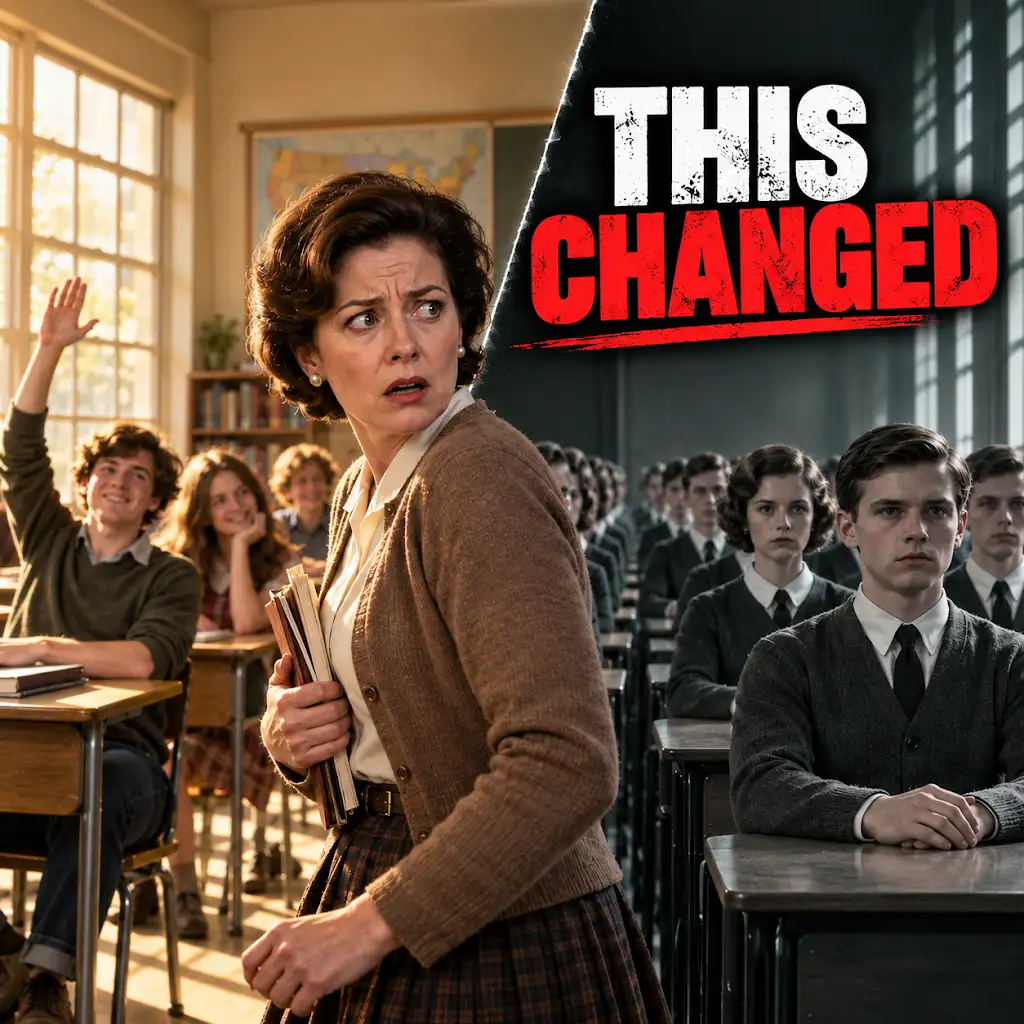
They Started With Rules. Then Students Began Policing Each Other
FAQs
What is the Third Wave classroom experiment?
The Third Wave classroom experiment was a social experiment conducted by high school teacher Ron Jones in 1967 to demonstrate the appeal of fascism and the dangers of groupthink.
How did the Third Wave experiment unfold?
During the experiment, Ron Jones implemented strict rules and a sense of unity among his students, leading to the emergence of a fascist-like movement within the classroom.
What were the outcomes of the Third Wave experiment?
The experiment quickly spiraled out of control as students became increasingly obedient and fanatical, showcasing the power of manipulation and the potential for authoritarianism to take hold in a seemingly ordinary setting.
What lessons can be learned from the Third Wave experiment?
The Third Wave experiment serves as a cautionary tale about the susceptibility of individuals to authoritarian ideologies and the importance of critical thinking, independent thought, and vigilance against group dynamics that can lead to harmful behaviors.
How has the Third Wave experiment influenced education and psychology?
The Third Wave experiment has been studied in the fields of education and psychology to understand the mechanisms behind conformity, obedience, and the allure of authoritarianism, highlighting the need for ethical considerations in teaching and the promotion of democratic values in society.