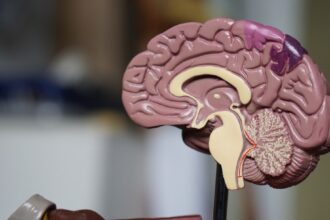
You, as a conscious entity, experience the world through a complex interplay of neural networks. Among these, the Default Mode Network (DMN) stands out as a crucial, yet often subconscious, orchestrator of your internal landscape. Imagine your brain as a bustling city. While you’re actively navigating the streets (attending to external tasks), there’s a constant hum of background activity – the city’s infrastructure, its residents going about their daily lives, the internal dialogues of its inhabitants. This background hum, this persistent internal monologue, is largely the domain of your DMN.
The Anatomy of Self-Reflection: Key Nodes of the DMN
To understand the DMN, you must first become acquainted with its primary architectural components. These interconnected brain regions work in concert, forming a dynamic network that influences your sense of self and your interpretation of reality.
Medial Prefrontal Cortex (mPFC): The Executive of Self
The mPFC, located at the front of your brain, plays a pivotal role in self-referential thought. It’s where you process information about yourself, your desires, your past experiences, and your future aspirations. When you reflect on your personality, ponder your motivations, or even just think about what you want for dinner, your mPFC is highly active. Consider it the central command center for your personal narrative, constantly updating and refining the story of “you.”
Posterior Cingulate Cortex (PCC) and Precuneus: The Memory and Imagination Hubs
Further back, the PCC and precuneus are intricately linked to memory retrieval and episodic simulation. When you reminisce about a past vacation, or vividly imagine a future event, these regions are heavily engaged. They allow you to mentally time-travel, constructing detailed scenarios that contribute to your sense of personal history and your ability to plan for what’s to come. Think of them as the brain’s internal projector, capable of replaying past events and pre-living future possibilities.
Angular Gyrus and Temporoparietal Junction (TPJ): The Socializers and Perspective-Takers
The angular gyrus and TPJ are crucial for social cognition and understanding the perspectives of others. They allow you to empathize, to infer the intentions of those around you, and to navigate complex social situations. These areas contribute to your understanding of yourself in relation to others, forging the interpersonal aspects of your identity. Imagine them as your brain’s social antennae, constantly tuning into the nuances of human interaction.
Medial Temporal Lobe (MTL): The Repository of Personal History
While often discussed in conjunction with the DMN, the MTL, including the hippocampus, is intrinsically linked to memory formation and retrieval. Your personal experiences, the very fabric of your autobiography, are heavily reliant on the MTL. The DMN draws upon these memories to construct your ongoing narrative of self. Without the MTL, your DMN would lack the rich tapestry of personal history upon which to operate.
The concept of the default mode network (DMN) has garnered significant attention in recent years, particularly in relation to experiences of ego death often reported during deep meditative states or psychedelic experiences. A fascinating article that explores the intricate relationship between the DMN and ego dissolution can be found on Unplugged Psych, which delves into how alterations in brain activity during these states can lead to profound shifts in self-perception. For more insights, you can read the article here: Unplugged Psych.
The DMN’s Everyday Influence: How it Shapes Your Reality
Your DMN is not a dormant network, but rather a perpetually active system that subtly, and sometimes overtly, shapes your perceptions, thoughts, and behaviors. It’s the silent architect of your internal world.
Self-Referential Processing: The Constant “I”
Every time you engage in self-reflection, whether consciously or unconsciously, your DMN is at work. It’s the engine behind your metacognition – your ability to think about your own thoughts. This constant stream of self-referential processing solidifies your sense of individual identity, your unique place in the world. It’s what allows you to differentiate yourself from others and to maintain a consistent understanding of “who you are.”
Mind-Wandering and Future Planning: The Internal Simulator
When your attention is not directed towards an external task, your DMN often takes over, leading to mind-wandering – that state where your thoughts drift from one idea to another. While often perceived as unproductive, mind-wandering, driven by the DMN, is crucial for creativity, problem-solving, and future planning. It allows you to simulate hypothetical situations, rehearse potential conversations, and mentally prepare for upcoming events. You are, in essence, running internal simulations of your life.
Social Cognition and Empathy: Navigating the Human Landscape
Your ability to understand and interact with others is deeply intertwined with DMN activity. When you try to understand someone else’s feelings, predict their behavior, or put yourself in their shoes, your DMN is highly engaged. It allows you to construct internal models of other people’s minds, facilitating effective social interaction and empathy. Without this capacity, your social world would be a bewildering and isolating place.
The Concept of Ego Death: Dissolving the Self

The term “ego death” often evokes dramatic imagery, but in a neuroscientific context, it refers to a profound subjective experience characterized by a temporary dissolution of the sense of self, personal identity, and the boundaries between oneself and the external world. While often associated with psychedelic experiences, similar states can be induced through intense meditation, spiritual practices, or even certain psychological traumas.
DMN Deactivation: The Neural Correlate of Ego Dissolution
Emerging research primarily points to reduced activity within the DMN as a key neural correlate of ego death. Imagine your “I” as a highly structured edifice, meticulously constructed and maintained by your DMN. When the DMN’s activity diminishes, this edifice begins to crumble. The constant self-referential chatter, the meticulous archiving of personal memories, and the projections of future self all quiet down, leading to a profound shift in consciousness.
Psilocybin and the Quieting of the Self
Studies involving psychedelic compounds like psilocybin have consistently shown significant reductions in DMN activity. When you ingest psilocybin, the intricate orchestration of your DMN, which typically binds together your sense of self, becomes less coherent. This allows for a temporary loosening of ego boundaries, a sensation often described as merging with the environment or experiencing a profound interconnectedness. Your internal projector no longer dominates the screen, allowing other, previously subdued, sensory and cognitive inputs to take center stage.
Meditation and the Stillness Within
Long-term meditators also exhibit altered DMN activity, particularly during deep states of meditation. Through sustained practice, individuals can learn to disengage from the incessant stream of self-referential thought that the DMN typically generates. This practice can lead to moments of profound stillness, where the sense of a separate, distinct self temporarily recedes. It’s not a complete shutdown, but rather a re-calibration, a shift in the perceived salience of DMN-driven thoughts.
Beyond the “Self”: The Subjective Experience of Ego Death
While the neural correlates are compelling, the subjective experience of ego death is what truly defines it. You, the experiencer, witness a radical shift in your perception of “you.”
Loss of Personal Boundaries: Merging with the Universal
During ego death, the distinct boundaries between your internal world and the external environment blur. The sensation of being a separate, encapsulated individual diminishes. You might feel a profound sense of unity with everything around you, a merging with nature, or an interconnectedness with all sentient beings. This is where the metaphor of the individual drop returning to the ocean becomes particularly resonant.
Dissolution of Narrative Self: A Break in the Story
Your personal history, your aspirations, your anxieties – the entire narrative you’ve constructed about yourself – may temporarily dissipate. The “story of you” pauses, allowing for a perspective unburdened by past regrets or future worries. This can be disorienting, but also incredibly liberating. It’s as if the book of your life, which you were constantly editing and updating, is momentarily closed.
Transcendence of Temporal Perception: Beyond Past and Future
The usual linear perception of time often dissolves during ego death. Past and future lose their distinct definitions, and you may experience an intense focus on the present moment, a feeling of timelessness. The constant mental time-travel orchestrated by the DMN is temporarily suspended, leaving you anchored solely in the “now.”
The Potential Implications: Reconstructing Your Worldview

The temporary disruption of the DMN and the experience of ego death, while potentially unsettling, can have profound and lasting impacts on your worldview and personal growth.
A Fresh Perspective: Unbinding from Old Patterns
By momentarily stepping outside the confines of your usual self-narrative, you gain an opportunity to re-evaluate your beliefs, values, and assumptions. Old habits of thought, ingrained perspectives, and limiting beliefs, often reinforced by the DMN’s consistent operations, can be momentarily suspended, opening the door for new insights and a fresh perspective on life. You return from the experience with a new set of lenses through which to view your reality.
Reduced Self-Focus: Cultivating Compassion
The temporary dissolution of the ego can lead to a sustained reduction in self-focus, shifting attention outward towards others and the broader world. This often translates to increased empathy, compassion, and altruistic behavior. When the “I” is less pronounced, the “we” becomes more apparent.
Enhanced Creativity and Problem Solving: Breaking Mental Barriers
By disrupting the brain’s default operating mode, ego death can foster heightened creativity and novel problem-solving abilities. The usual mental frameworks and associative pathways are temporarily deconstructed, allowing for new connections and unexpected insights to emerge. Imagine shaking a kaleidoscope – the pieces rearrange into new, unexpected, and often beautiful patterns.
Integration and Lasting Change: The Art of Re-Entry
The true benefit of ego death lies not in the experience itself, but in the integration of its insights into your waking life. This requires careful reflection, processing, and a conscious effort to incorporate new perspectives and behaviors. Without proper integration, the experience can remain a fleeting, albeit intense, memory, rather than a catalyst for genuine transformation. The challenge lies in bringing the wisdom gained during the DMN’s temporary silence back into the bustling city of your everyday consciousness.
Recent research has explored the intricate relationship between the default mode network and experiences of ego death, shedding light on how these phenomena may influence our perception of self. For a deeper understanding of this connection, you can refer to a related article that discusses the implications of altered states of consciousness on the brain’s functioning. This article provides valuable insights into how the default mode network plays a crucial role in shaping our sense of identity and self-awareness. To read more about this fascinating topic, visit this article.
Navigating the Terrain: Considerations and Cautions
| Metric | Default Mode Network (DMN) | Ego Death | Relation/Notes |
|---|---|---|---|
| Brain Regions Involved | Medial prefrontal cortex, posterior cingulate cortex, angular gyrus | Reduced activity in DMN regions, especially medial prefrontal cortex | Ego death is associated with decreased DMN activity |
| Functional Connectivity | High intrinsic connectivity within DMN during rest | Disrupted or decreased DMN connectivity during ego dissolution | Lower DMN connectivity correlates with ego loss experiences |
| Neurotransmitter Activity | Normal glutamate and GABA balance | Increased serotonin 2A receptor activation (e.g., via psychedelics) | Psychedelic-induced ego death linked to serotonin receptor modulation affecting DMN |
| Subjective Experience | Self-referential thought, mind-wandering | Loss of self-boundaries, unity with environment | Ego death involves suppression of self-referential processing by DMN |
| Measured via | fMRI, resting-state connectivity analysis | fMRI, EEG, subjective questionnaires (e.g., Ego Dissolution Inventory) | Neuroimaging combined with subjective reports to study ego death |
| Typical Activity Level | High during rest, low during task-focused activity | Markedly decreased during peak ego death states | DMN suppression is a hallmark of ego death |
While the exploration of the DMN and ego death offers fascinating insights into consciousness, it’s paramount to approach these topics with an informed and cautious perspective.
The Role of Context and Set/Setting: Guiding the Experience
The conditions under which ego death is experienced significantly influence its outcome. For psychedelic-induced ego death, the “set” (your mindset, expectations, and intentions) and “setting” (the physical and social environment) are critical determinants of psychological safety and beneficial outcomes. Unprepared or unsupported experiences can be overwhelming and potentially traumatic. Think of it as embarking on a deep-sea dive; the right equipment and a skilled guide are essential for a safe and fruitful expedition.
Potential Risks and Vulnerabilities: Acknowledging the Shadow
While ego death can be transformative, it’s not without potential risks. Individuals with pre-existing mental health conditions may be particularly vulnerable to adverse reactions, including anxiety, paranoia, or psychosis, especially with unsupervised psychedelic use. The dismantling of the ego, even temporarily, can be profoundly unsettling if not approached with proper support and psychological resilience. You wouldn’t dismantle a complex machine without understanding its blueprints, and the human mind is infinitely more intricate.
Ethical Considerations: Responsible Exploration
The increasing interest in the DMN and ego death, particularly in the context of psychedelic research, necessitates rigorous ethical considerations. Ensuring informed consent, providing adequate psychological support, and adhering to strict safety protocols are paramount to responsible scientific inquiry and therapeutic application. As you delve into these profound aspects of human consciousness, you bear a responsibility to approach them with respect and prudence.
In conclusion, your Default Mode Network is a fundamental aspect of your conscious experience, shaping your sense of self, your memories, and your interactions with the world. The temporary dissolution of this network, as seen in instances of ego death, offers a profound glimpse into the nature of consciousness, with the potential to reframe your understanding of yourself and your place within the universe. However, like any exploration into the depths of the unknown, it demands careful consideration, preparation, and respect for the intricate workings of the human mind.

WATCH NOW ▶️ SHOCKING: Why Your World Suddenly Feels Like a Set
FAQs
What is the default mode network (DMN)?
The default mode network is a group of interconnected brain regions that show higher activity when a person is at rest and not focused on the outside world. It is associated with self-referential thinking, daydreaming, and mind-wandering.
How is the default mode network related to the sense of self?
The DMN is believed to play a key role in maintaining the sense of self or ego by supporting processes like autobiographical memory, self-reflection, and internal dialogue. It helps create a continuous narrative of personal identity.
What is ego death in the context of neuroscience?
Ego death refers to a temporary loss or dissolution of the sense of self or ego. It is often described in spiritual or psychedelic experiences where the boundaries between self and environment seem to dissolve.
How does the default mode network change during ego death experiences?
During ego death or similar altered states, activity and connectivity within the DMN typically decrease. This reduction is thought to disrupt the usual self-referential processing, leading to a diminished or altered sense of self.
Can understanding the DMN and ego death have therapeutic benefits?
Yes, research suggests that modulating the DMN through practices like meditation or psychedelic therapy may help reduce rigid self-focused thinking patterns, potentially benefiting conditions like depression, anxiety, and PTSD by promoting psychological flexibility and ego dissolution.