You stand on the hallowed grounds of Cubberley High School, a place that whispers tales of innovation and bold experiments. But there’s a particular chapter in its history that truly ignites the imagination: the Third Wave Experiment. This wasn’t just another academic endeavor; it was a radical reimagining of what education could be, a leap into the unknown driven by a desire to equip students for a future that was rapidly, and unpredictably, unfolding. Prepare yourself, because we’re about to dive deep into this fascinating, and at times controversial, period.
To understand the Third Wave Experiment, you first need to grasp the context from which it emerged. The late 20th century was a period of profound societal and technological shifts. The world was becoming increasingly interconnected, information was exploding, and the traditional models of education, built for a more static industrial age, were beginning to show their limitations. Cubberley High School, under the leadership of forward-thinking educators, recognized this burgeoning gap between the classroom and the real world.
The Seeds of Discontent: Traditional Education’s Shortcomings
You might recall the prevailing educational landscape of the time. It was often characterized by a teacher-centric approach, where knowledge was dispensed from a podium to a room full of largely passive learners. Textbooks were the primary source of information, and memorization was often prioritized over critical thinking or problem-solving. While this system had served its purpose for generations, a growing unease permeated the educational community. Educators observed that students, while capable of reciting facts, struggled to apply that knowledge in practical, innovative ways. They were being prepared for a world that was already on its way out.
The Industrial Age Mindset: A Legacy of Standardization
Think back to the factory model of education that had become deeply entrenched. Schools were often organized like assembly lines, with students moving through standardized curricula at a predetermined pace. The emphasis was on producing a uniform product, a graduate ready for a predictable career path. But the dawn of the information age, with its rapid technological advancements and the rise of the service and knowledge economies, rendered this model increasingly obsolete. You were witnessing the beginnings of a tectonic shift, and Cubberley High School was determined not to be left behind.
The “Why” Behind Cubberley’s Bold Move
The educators at Cubberley didn’t just see problems; they saw opportunities. They believed that education needed to evolve, to become more dynamic, more relevant, and more empowering for students. They envisioned a learning environment that fostered creativity, collaboration, and the ability to navigate complexity. The Third Wave, named after Alvin Toffler’s influential book that described the transition from industrial society to a post-industrial, “third wave” civilization, was their answer. It was a declaration that Cubberley was ready to surf the wave of change, not be drowned by it.
The Third Wave experiment at Cubberley High School, conducted by Ron Jones in 1967, serves as a powerful illustration of how easily individuals can be influenced by group dynamics and authoritarian structures. For those interested in exploring the psychological implications of this experiment further, a related article can be found at Unplugged Psychology, which delves into the lessons learned from this fascinating yet troubling social experiment.
The Pillars of the Third Wave: Core Principles in Action
The Third Wave Experiment wasn’t a single, monolithic program. It was a constellation of interconnected ideas and practices designed to fundamentally alter the student experience. The core principles were ambitious, aiming to dismantle old structures and build something entirely new.
Deconstructing the Classroom: Breaking Down Walls and Hierarchies
One of the most striking aspects of the Third Wave was its rejection of the traditional classroom as the sole locus of learning. Cubberley sought to break down the physical and intellectual barriers that often confined education.
The Flexible Learning Environment: Beyond the Desks and Chalkboards
Imagine walking into a Cubberley classroom during this era. You wouldn’t necessarily see rows of desks facing a teacher. Instead, you might encounter modular furniture that could be reconfigured for group work, individual study, or presentations. The emphasis was on creating spaces that facilitated different modes of learning and interaction. Technology was integrated not as an add-on, but as a fundamental tool for research, creation, and communication.
The Student as Protagonist: Shifting from Passive Receiver to Active Creator
The most profound shift was in the perception of the student. No longer were you merely a recipient of information. You were encouraged to be a co-creator of your own learning journey. This meant taking ownership of your studies, pursuing your interests, and actively engaging with the material. Teachers transitioned from being dispensers of knowledge to facilitators, mentors, and guides, helping you navigate your explorations.
Interdisciplinary Learning: Weaving a Tapestry of Knowledge
The Third Wave recognized that real-world problems rarely adhere to neat academic boundaries. To address this, the experiment embraced interdisciplinary learning, breaking down the silos that often separated subjects.
Thematic Units: Connecting the Dots Across Disciplines
Instead of studying history, English, and science in isolation, you might find yourself participating in a thematic unit that explored, for example, “The Impact of the Industrial Revolution.” This would involve delving into the historical context, analyzing literature from the era, understanding the scientific and technological advancements, and even exploring the economic and social ramifications. The goal was to see how different fields of knowledge intertwined and informed one another.
Project-Based Learning: Tackling Real-World Challenges
A cornerstone of interdisciplinary learning was project-based learning. You weren’t just reading about concepts; you were applying them. This often involved working in teams to tackle authentic problems, whether it was designing a sustainable energy solution, creating a public awareness campaign, or developing a business plan. These projects demanded critical thinking, problem-solving, collaboration, and a deep understanding of how different disciplines contributed to a holistic solution.
Technology Integration: A Tool for Empowerment and Exploration
Cubberley High School was not afraid of the burgeoning digital age. Technology was seen as a powerful tool to enhance learning, broaden access to information, and prepare students for a tech-driven world.
The Dawn of the Digital Classroom: Computers and Connectivity
You might remember the excitement, and perhaps the trepidation, of seeing computers become more commonplace in schools. Cubberley was at the forefront of integrating these tools. Students gained access to online resources, learned to use various software applications, and began to communicate and collaborate digitally. This was a significant departure from the traditional reliance on textbooks and handwritten assignments.
Digital Literacy as a Core Competency: Navigating the Information Superhighway
The Third Wave understood that simply having access to technology wasn’t enough. Students needed to develop digital literacy – the ability to effectively and critically find, evaluate, use, and create information using digital technologies. This involved learning about online safety, understanding the nuances of digital communication, and developing skills in digital content creation. You were being equipped not just to consume information, but to actively participate in the digital world.
The Student Experience: A Transformative Journey
What was it actually like to be a student at Cubberley High School during the Third Wave Experiment? For many, it was a period of profound personal growth and intellectual awakening. It was a chance to move beyond the confines of rote learning and discover a passion for discovery.
Embracing Autonomy: Taking the Reins of Your Education
The shift towards student autonomy was perhaps the most significant aspect for those experiencing it firsthand. You were given more agency, more choice, and more responsibility for your learning.
Personalized Learning Pathways: Charting Your Own Course
While not always a fully individualized experience, the Third Wave allowed for more personalized learning pathways. Based on your interests and aptitudes, you could often choose projects, electives, or even the pace at which you tackled certain material. This sense of control fostered a greater sense of investment and motivation. You were no longer just going through the motions; you were actively shaping your academic journey.
Developing Self-Direction and Accountability: The Power of Choice
With greater autonomy came greater accountability. You had to learn to manage your time, set your own goals, and take responsibility for meeting them. This was a crucial skill for life beyond high school, where self-direction and intrinsic motivation are paramount. The Third Wave provided a safe environment to cultivate these essential qualities.
The Power of Collaboration: Learning Together, Growing Together
The emphasis on collaboration was a stark contrast to the often solitary nature of traditional schooling. Working with peers on complex projects taught invaluable lessons in teamwork, communication, and conflict resolution.
Teamwork as a Learning Strategy: Synergy in Action
You learned that by pooling your diverse skills and perspectives, you could achieve more than you ever could alone. Group projects became opportunities to leverage each other’s strengths, to learn from different approaches, and to develop a shared sense of accomplishment. This wasn’t just about completing an assignment; it was about the process of collective problem-solving.
The Art of Communication and Negotiation: Building Bridges
Effective communication and negotiation became essential skills. You had to articulate your ideas clearly, listen actively to your peers, and find common ground. These are skills that transcend the classroom and are vital for success in any professional or personal setting. The Third Wave provided a practical training ground for these interpersonal dynamics.
Real-World Relevance: Bridging the Gap Between School and Life
Perhaps the most enduring legacy of the Third Wave was its success in making learning relevant. Students felt a tangible connection between what they were studying and the world around them.
Internships and Community Projects: Learning in the Wild
The experiment often extended beyond the school walls. Internships, community service projects, and partnerships with local organizations provided invaluable real-world experience. You might have spent time working at a local business, volunteering at a non-profit, or contributing to a community initiative. These experiences offered practical application of your classroom knowledge and exposed you to different career paths and societal challenges.
Developing a Sense of Purpose: Making a Difference
By engaging with real-world issues and contributing to tangible outcomes, you developed a stronger sense of purpose. You saw how your learning could have a positive impact on the world, fostering a deeper sense of engagement and motivation. The Third Wave helped you understand that education wasn’t just about getting a good grade; it was about becoming an informed, engaged, and contributing member of society.
Challenges and Criticisms: Navigating the Uncharted Waters
No radical experiment is without its challenges and criticisms, and the Third Wave at Cubberley High School was no exception. Stepping outside the established norms inevitably invited scrutiny and resistance.
The Skeptics’ Chorus: Doubts and Concerns
Not everyone embraced the Third Wave with open arms. There were valid concerns and criticisms that needed to be addressed.
The Fear of the Unknown: Resistance to Change
Change, especially significant pedagogical change, often breeds apprehension. Some parents, teachers, and even students expressed concerns about the departure from traditional methods, fearing that students might not be adequately prepared for standardized tests or college admissions that still largely adhered to older models.
Concerns about Rigor and Standards: Is This Real Learning?
A common criticism was the question of rigor. Critics worried that the emphasis on student-led learning and interdisciplinary projects might dilute the depth of subject matter or lead to a less rigorous academic experience. The perception was that if it wasn’t taught in a traditional lecture format, it might not be as academically sound.
The Practical Hurdles: Implementation and Resources
Beyond philosophical debates, the Third Wave faced significant practical challenges in its implementation.
Resource Allocation and Teacher Training: The Demands of Innovation
Implementing such a transformative program required substantial investment in resources, technology, and ongoing professional development for teachers. Teachers needed to be retrained to adopt new pedagogical approaches, and the school needed to acquire new technologies and adapt its physical spaces. This was a demanding undertaking.
The Balancing Act: Standardized Testing vs. Experiential Learning
One of the persistent challenges was the tension between the demands of standardized testing and the goals of the Third Wave. While the experiment aimed to foster a deeper, more holistic understanding, students still needed to perform well on tests that often assessed more traditional knowledge. Finding the right balance was a constant negotiation.
The Third Wave experiment at Cubberley High School is a fascinating case study in social psychology that demonstrates the power of group dynamics and authority. For those interested in exploring similar themes, an insightful article can be found at Unplugged Psychology, which delves into the implications of such experiments on our understanding of conformity and obedience. This connection highlights the ongoing relevance of the lessons learned from the Third Wave experiment in today’s society.
The Legacy of the Third Wave: Echoes of Innovation
| Metric | Value | Description |
|---|---|---|
| Experiment Duration | 5 days | Length of the Third Wave experiment conducted at Cubberley High School |
| Participants | Approximately 30 students | Number of students actively involved in the experiment |
| Start Date | April 1967 | Month and year when the experiment began |
| Teacher Leading | Ron Jones | History teacher who initiated the experiment |
| Objective | Demonstrate the appeal of fascism | Main goal of the Third Wave experiment |
| Outcome | Experiment halted early | Stopped after students showed extreme conformity and enthusiasm |
While the specific implementation of the Third Wave Experiment at Cubberley High School might have evolved over time, its impact and legacy are undeniable. It stands as a testament to the power of bold vision and the willingness to innovate in the pursuit of better education.
A Blueprint for the Future: Lessons Learned and Principles Endured
The Cubberley Third Wave wasn’t a fleeting fad. It provided valuable lessons and insights that continue to inform educational practices today. The emphasis on student-centered learning, interdisciplinary approaches, and technology integration are now widely recognized as crucial components of effective 21st-century education.
The Evolution of Pedagogy: From Then to Now
You can see the echoes of the Third Wave in many modern educational movements. Project-based learning, inquiry-based learning, and the integration of technology are no longer fringe ideas but are increasingly becoming mainstream. Cubberley was a pioneer, laying the groundwork for many of the pedagogical shifts we see in schools today.
The Enduring Importance of Student Empowerment
The core principle of empowering students to take ownership of their learning remains as relevant as ever. The Third Wave demonstrated that when students are given agency, supported in their explorations, and encouraged to think critically, they are capable of achieving remarkable things. This commitment to student empowerment continues to be a guiding star for educators.
The Cubberley Spirit: A Beacon of Educational Courage
Cubberley High School’s Third Wave Experiment serves as a powerful reminder of what can be achieved when educators are willing to challenge the status quo and embrace innovation. It was a period of bold experimentation, of pushing boundaries, and of a deep commitment to preparing students not just for a career, but for a life of lifelong learning and meaningful contribution. You can still feel that spirit of courage and foresight when you think of Cubberley’s groundbreaking Third Wave.
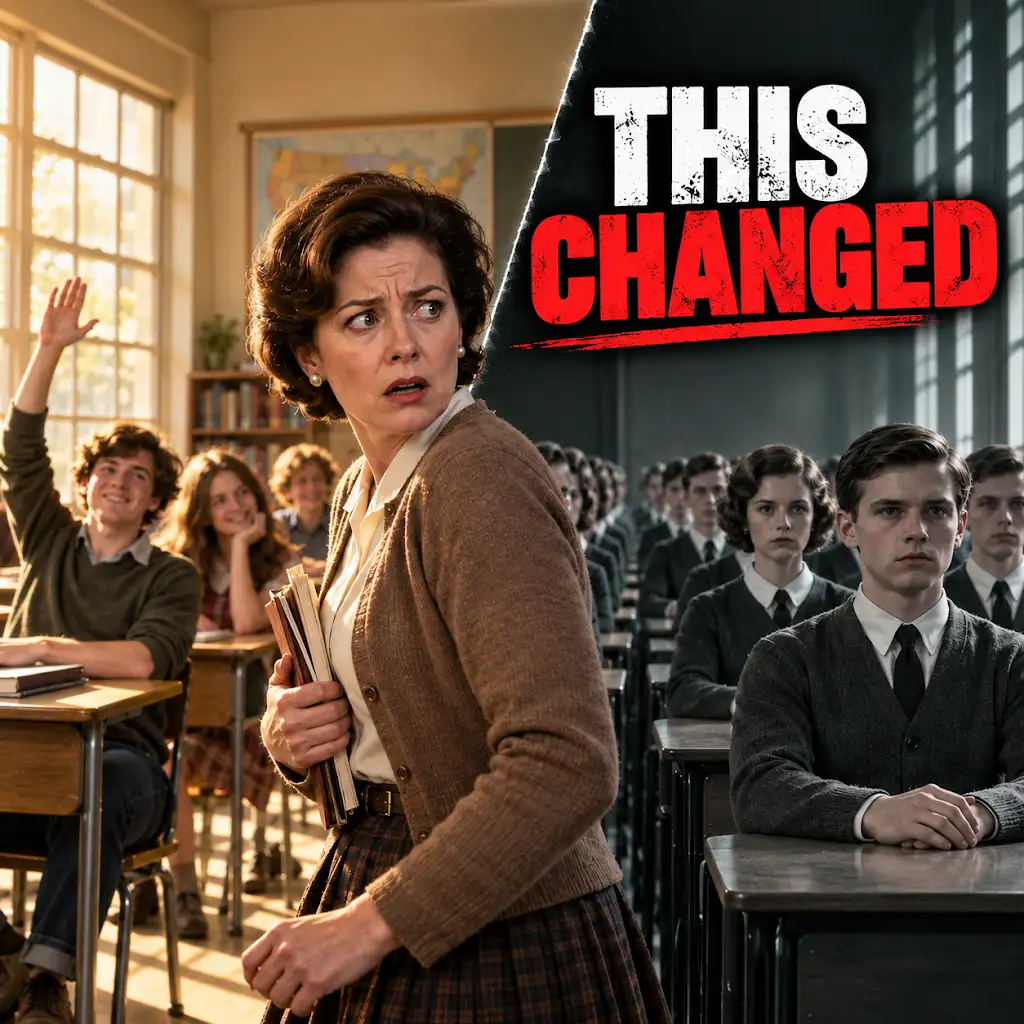
They Started With Rules. Then Students Began Policing Each Other
FAQs
What was the Cubberley High School Third Wave experiment?
The Cubberley High School Third Wave experiment was a social experiment conducted by history teacher Ron Jones in 1967 to demonstrate the appeal of fascism and the dangers of groupthink.
How did the Third Wave experiment unfold?
During the experiment, Ron Jones implemented strict rules and a sense of discipline in his classroom, leading to students forming a strong sense of unity and conformity. The experiment quickly escalated as students began to exhibit behaviors similar to those seen in fascist regimes.
What were the outcomes of the Third Wave experiment?
The Third Wave experiment resulted in students showing increased obedience, conformity, and loyalty to the group. Some students even reported feeling a sense of superiority over others who were not part of the experiment.
What lessons were learned from the Third Wave experiment?
The Third Wave experiment highlighted the power of group dynamics and the ease with which individuals can be influenced to adopt extreme beliefs and behaviors. It served as a cautionary tale about the dangers of unchecked authority and the importance of critical thinking.
How did the Third Wave experiment impact education and psychology?
The Third Wave experiment sparked discussions about the role of authority, conformity, and group psychology in education. It also raised ethical questions about the use of social experiments in academic settings and the responsibility of educators to promote independent thinking and individuality.