The intricate dance of the mind, the way in which we learn and react to the world around us, is a subject that has captivated thinkers for centuries. One of the most fundamental and influential frameworks for understanding this process is classical conditioning, a phenomenon that reveals the remarkable power of association. Through a series of carefully designed experiments, scientists have demonstrated how neutral stimuli can, through repeated pairings with naturally occurring responses, evoke those very responses themselves. This article will delve into the foundational principles of classical conditioning, exploring its origins, key components, and the profound implications it holds for understanding behavior, both in its most basic forms and in its complex manifestations within human experience.
The story of classical conditioning is inextricably linked to the groundbreaking work of Ivan Pavlov, a Russian physiologist whose initial research was not even focused on learning. Pavlov was, in fact, studying the digestive system of dogs. His meticulous observations, however, led him down an unexpected path, uncovering a fundamental principle of behavior that would reshape our understanding of the mind.
Unforeseen Observations in the Laboratory
Pavlov’s primary interest lay in the salivary reflex. He aimed to quantify the amount of saliva dogs produced when presented with food. To do this, he surgically equipped the dogs with tubes to collect saliva, allowing him to measure its flow precisely. During his experiments, Pavlov noticed a peculiar phenomenon. Long before the food was actually delivered, the dogs began to salivate. This occurred when they heard the footsteps of the assistant who typically brought their food, or when they saw the food bowl, or even just the sight of the laboratory coats worn by the researchers. These were not innate responses to the food itself, but rather learned anticipations.
The Unconditioned Stimulus and Response: Nature’s Blueprint
Pavlov recognized that the dogs’ natural, unlearned responses were triggered by stimuli that had an inherent biological significance. The food, in this context, was a prime example.
The Unconditioned Stimulus (UCS): The Innate Trigger
The food presented to the dogs was the Unconditioned Stimulus (UCS). This is any stimulus that, without prior learning, naturally and automatically elicits a response. In the case of Pavlov’s dogs, the food was something they inherently desired and that triggered a physiological reaction. Other examples of UCS could include a loud noise that causes a startle response or a painful stimulus that leads to withdrawal. The UCS is the biological foundation upon which learning is built in classical conditioning.
The Unconditioned Response (UCR): The Automatic Reaction
The salivation that occurred when the dogs were presented with the food was the Unconditioned Response (UCR). This is the naturally occurring, unlearned reaction to the UCS. It is an automatic, involuntary response that does not require any previous experience or training. The UCR is a direct consequence of the UCS. In essence, the UCS causes the UCR. Understanding this fundamental pair is the first step in grasping the mechanics of classical conditioning.
Introducing the Conditioned Pair: The Birth of Association
Pavlov’s brilliance lay in his systematic approach to understanding these anticipatory salivations. He hypothesized that these responses were learned through association and devised an experimental paradigm to test this. He introduced a new stimulus, one that initially had no inherent connection to salivation.
The Neutral Stimulus (NS): A Blank Slate
Pavlov chose a variety of stimuli that were initially neutral for the dogs, meaning they did not elicit salivation. These could include things like the ringing of a bell, a metronome’s ticking, or the flashing of a light. This Neutral Stimulus (NS) was crucial because it represented a stimulus that, in its own right, held no biological significance for the salivation reflex. It was essentially a blank slate, ready to be imprinted with meaning through association.
The Conditioning Process: Pairing for Potency
The core of Pavlov’s experiment involved a deliberate process of pairing. He would present the neutral stimulus (e.g., the ringing of a bell) and immediately follow it with the unconditioned stimulus (the food). This sequence was repeated numerous times.
Acquisition: Building the Association
The period during which the neutral stimulus is repeatedly paired with the unconditioned stimulus is known as acquisition. This is where the learning takes place. Initially, the bell would ring, and the dogs would show no salivation. The food would then be presented, and they would salivate. However, with each successive pairing, the dogs began to associate the bell with the impending arrival of food. The neutral stimulus was gradually acquiring the power to elicit a response.
Generalization: Broadening the Response
Once an association has been established, it is not uncommon for similar stimuli to also elicit the conditioned response. This phenomenon is called generalization. For example, if a dog was conditioned to salivate at the sound of a specific bell, it might also salivate to a slightly different pitched bell, or even a similar ringing sound. The dog is generalizing the learned response to stimuli that share some characteristics with the original conditioned stimulus. This highlights that the learned association is not always rigidly confined to the exact stimulus used during conditioning.
Discrimination: Refining the Association
Conversely, discrimination is the process by which an organism learns to differentiate between the conditioned stimulus and other similar stimuli that do not predict the unconditioned stimulus. Through continued exposure and reinforcement (or lack thereof), the organism learns to respond only to the specific conditioned stimulus. For instance, if the dog hears the original bell and then receives food, but hears a slightly different bell and does not receive food, it will eventually learn to discriminate between the two sounds and only salivate to the bell that signals food. Discrimination allows for more precise and adaptive behavioral responses.
In exploring the principles of classical conditioning, one can gain deeper insights by referring to a related article that delves into the foundational experiments conducted by Ivan Pavlov. His work with dogs demonstrated how a neutral stimulus could evoke a conditioned response when paired with an unconditioned stimulus. For a comprehensive understanding of these concepts and their applications, you can read more in this article: Classical Conditioning Explained.
The Emergence of Conditioned Responses: The Learned Reaction
As the acquisition phase progressed, a significant transformation occurred. The once neutral stimulus began to evoke a response similar to the unconditioned response, but now elicited by a previously neutral stimulus.
The Conditioned Stimulus (CS): The Learned Signal
After repeated pairings, the neutral stimulus, which was initially incapable of eliciting salivation, transformed into the Conditioned Stimulus (CS). This is the stimulus that, after being repeatedly paired with the UCS, comes to elicit a learned response. In Pavlov’s experiments, the bell became the CS. It was no longer neutral; it had become a signal for the impending UCS. The CS is the key element that bridges the gap between an innate reflex and a learned behavior.
The Conditioned Response (CR): The Acquired Behavior
The salivation that occurred in response to the ringing bell alone, without the presence of food, was the Conditioned Response (CR). This is the learned reaction to the conditioned stimulus. The CR is often very similar, if not identical, to the UCR, but it is now triggered by the CS. The CR demonstrates that an association has been formed, and the organism has learned to anticipate the UCS based on the presence of the CS. The power of classical conditioning lies in this ability to create new stimulus-response relationships.
Extinction and Spontaneous Recovery: The Fading and Re-emergence of Learned Behavior

While classical conditioning establishes new associations, these learned behaviors are not necessarily permanent. They can fade and, surprisingly, can sometimes reappear.
Extinction: The Withering of the Association
Extinction occurs when the conditioned stimulus (CS) is repeatedly presented without the unconditioned stimulus (UCS). In Pavlov’s experiment, if the bell were rung many times without any food being presented, the dogs would gradually stop salivating to the bell. The learned association weakens, and the CS eventually loses its ability to elicit the CR. This process demonstrates that the learned behavior is dependent on the continued pairing of the CS and UCS. It’s not about forgetting, but rather about the unlearning of the association.
Spontaneous Recovery: The Unexpected Return
Perhaps one of the most intriguing aspects of classical conditioning is spontaneous recovery. This phenomenon occurs when, after a period of extinction, the conditioned stimulus is presented again, and the conditioned response reappears, though often at a weaker intensity than before. This suggests that the learned association, while weakened during extinction, is not entirely eliminated. The neural pathways for the association may remain dormant and can be reactivated. This highlights the persistent nature of learned associations and their potential to resurface.
Applications of Classical Conditioning: Beyond the Laboratory

The principles of classical conditioning extend far beyond the controlled environment of a laboratory. They play a significant role in shaping a wide range of behaviors and experiences in humans and animals alike.
Phobias: The Power of Negative Associations
One of the most widely cited applications of classical conditioning is in the development of phobias. A phobia is an intense, irrational fear of a particular object or situation. For example, someone who has had a traumatic experience involving dogs (e.g., being bitten) might develop a phobia of dogs. The painful experience (UCS) elicits a fear response (UCR). If this traumatic experience occurs in the presence of a neutral stimulus, such as seeing a specific breed of dog (NS), then over time, that breed of dog can become a conditioned stimulus (CS) that elicits fear (CR) even when there is no actual danger present. This illustrates how classical conditioning can lead to maladaptive emotional responses.
Advertising and Marketing: Shaping Consumer Behavior
The world of advertising and marketing heavily relies on the principles of classical conditioning to influence consumer behavior. Advertisers often pair their products (NS) with stimuli that evoke positive emotions and desirable feelings (UCS). For instance, a car advertisement might feature beautiful scenery, happy families, or exciting music. The positive emotions associated with these elements (UCR) become linked to the car (CS), leading consumers to develop positive feelings towards the product (CR) and increasing the likelihood of purchase. The goal is to associate the product with pleasant experiences, making it more appealing.
Taste Aversions: A Biological Advantage
Classical conditioning plays a vital role in survival, particularly in the development of taste aversions. If an organism consumes a food that makes it ill (UCS), it will develop a strong aversion to the taste of that food (CR) even if the illness was caused by something else entirely. This is a powerful adaptive mechanism that helps organisms avoid potentially poisonous substances. For example, if someone eats seafood and subsequently gets food poisoning, they are likely to develop a strong aversion to seafood, even if the food poisoning was unrelated to the seafood itself. This demonstrates the evolutionary significance of rapid and robust learning through association.
Therapy and Behavior Modification: Harnessing the Power of Learning
Understanding classical conditioning has also been instrumental in developing therapeutic interventions for a variety of behavioral and psychological issues.
Systematic Desensitization: Gradual Exposure and Relaxation
Systematic desensitization is a therapeutic technique used to treat phobias and anxiety disorders. It involves gradually exposing individuals to their feared stimuli (CS) while simultaneously teaching them relaxation techniques. By pairing the feared stimulus with a state of relaxation (which acts to inhibit the fear response), the individual gradually learns to associate the feared stimulus with calmness rather than anxiety. This process essentially works to extinguish the conditioned fear response by counter-conditioning it with a new, incompatible response.
Aversion Therapy: Unlearning Undesirable Behaviors
Aversion therapy is another therapeutic application, though it is used more cautiously today. It involves pairing an undesirable behavior (CS) with a noxious or unpleasant stimulus (UCS), such as a mild electric shock or a foul-smelling substance. The goal is to create a strong negative association with the undesirable behavior, leading to its reduction or elimination. For example, it has been used to treat smoking or alcohol dependence by pairing the act of smoking or drinking with an unpleasant consequence.
In exploring the fascinating world of behavioral psychology, one can gain deeper insights into classical conditioning through a related article that delves into its principles and experiments. The article provides a comprehensive overview of how this learning process was famously demonstrated by Ivan Pavlov with his experiments on dogs. For those interested in understanding the nuances of this foundational concept, you can read more about it in this informative piece on Unplugged Psychology. This resource not only explains the mechanisms behind classical conditioning but also discusses its implications in various real-life scenarios.
The Enduring Legacy of Classical Conditioning
| Metric | Description | Example from Classical Conditioning Experiment |
|---|---|---|
| Unconditioned Stimulus (US) | Stimulus that naturally and automatically triggers a response | Food presented to a dog |
| Unconditioned Response (UR) | Unlearned, naturally occurring response to the US | Salivation in response to food |
| Neutral Stimulus (NS) | Stimulus that initially produces no specific response | Bell sound before conditioning |
| Conditioned Stimulus (CS) | Previously neutral stimulus that, after association with US, triggers a conditioned response | Bell sound after conditioning |
| Conditioned Response (CR) | Learned response to the conditioned stimulus | Salivation in response to bell sound |
| Acquisition | Phase where the CS and US are paired to establish conditioning | Repeated pairing of bell and food |
| Extinction | Reduction of CR when CS is presented without US | Bell rung repeatedly without food, salivation decreases |
| Spontaneous Recovery | Reappearance of CR after a rest period following extinction | Salivation returns when bell is rung after a break |
| Generalization | Response to stimuli similar to the CS | Salivating to a tone similar to the bell |
| Discrimination | Ability to distinguish between CS and other stimuli | No salivation to a different tone than the bell |
Ivan Pavlov’s meticulous observations of his canine subjects laid the groundwork for a profound understanding of how learning occurs through association. Classical conditioning, with its fundamental components of UCS, UCR, NS, CS, and CR, provides a powerful framework for explaining a vast array of behaviors, from simple reflexes to complex emotional responses. The concepts of acquisition, generalization, discrimination, extinction, and spontaneous recovery further illuminate the dynamic nature of learned associations. Beyond the laboratory, the principles of classical conditioning are evident in our everyday lives, influencing our fears, our preferences, and our interactions with the world around us. The enduring legacy of Pavlov’s work is a testament to the remarkable power of association in shaping who we are and how we behave. It underscores the intricate and often unconscious ways in which our experiences mold our reactions, reminding us that the world is a rich tapestry of learned connections.
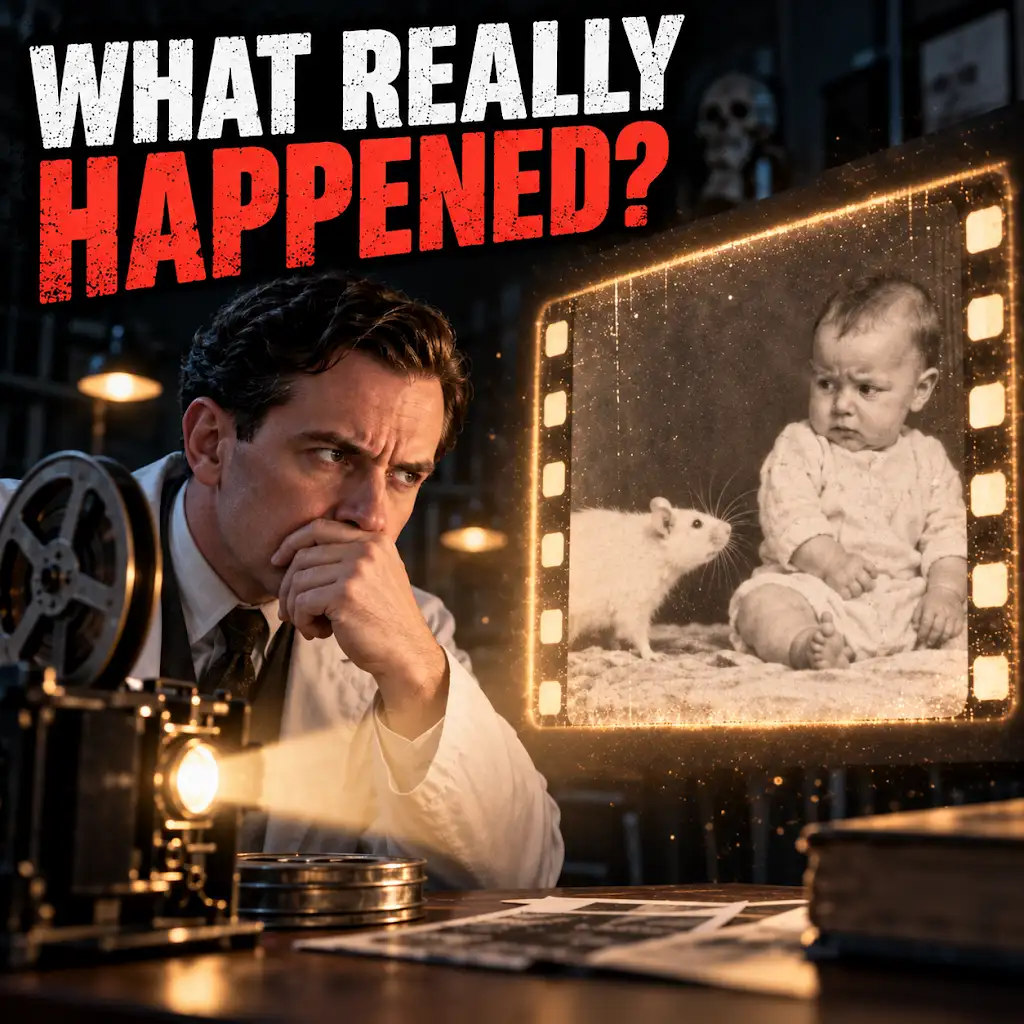
The Little Albert Experiment May Not Have Worked
FAQs
What is classical conditioning?
Classical conditioning is a type of learning in which a neutral stimulus comes to elicit a response after being paired with a stimulus that naturally elicits that response.
Who is known for pioneering classical conditioning?
Ivan Pavlov, a Russian physiologist, is known for pioneering classical conditioning through his famous experiment with dogs.
How does classical conditioning work?
Classical conditioning works by associating a neutral stimulus with an unconditioned stimulus to create a conditioned response.
What was the setup of Pavlov’s classical conditioning experiment with dogs?
In Pavlov’s experiment, a bell (neutral stimulus) was rung before presenting food (unconditioned stimulus) to dogs, eventually leading the dogs to salivate (conditioned response) at the sound of the bell alone.
What are some real-life examples of classical conditioning?
Real-life examples of classical conditioning include advertising jingles creating positive associations with products and a fear response triggered by a specific sound or smell due to past experiences.