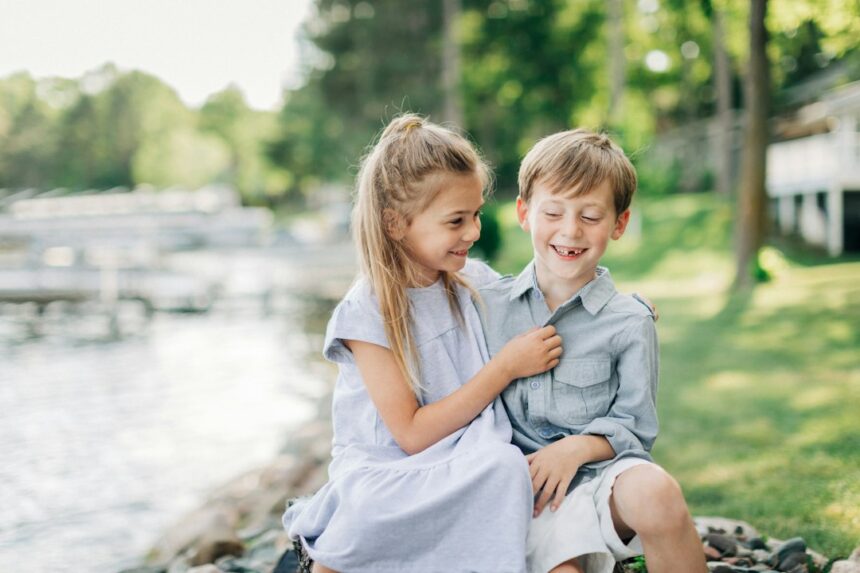
The seemingly simple question of whether siblings can have different childhoods opens a complex window into the intricate tapestry of family dynamics. While bound by shared genetics and often by shared living spaces, each child within a family navigates a unique developmental path. This divergence is not merely a superficial difference in preferences or personality; it is a profound exploration of how external factors, internal predispositions, and the very structure of familial relationships contribute to the construction of individual experiences. Understanding these variations is crucial for fostering empathy, managing expectations, and appreciating the distinct journeys that shape each member of a family.
The Illusion of Shared Experience
The common assumption is that growing up in the same household, with the same parents, and under the same roof equates to a shared childhood. However, this perspective often overlooks the multitude of subtle and significant ways in which individual experiences diverge. It is a comforting narrative, perhaps, to envision siblings as having walked the exact same path, but reality is far more nuanced. The very act of being an individual, with a unique consciousness and a distinct place within the family constellation, guarantees a degree of experiential difference.
Birth Order and Its Ripple Effects
The position a child occupies within the sibling hierarchy is one of the most widely recognized contributors to differing childhoods. Birth order theory, though sometimes debated in its rigidity, points to predictable patterns of influence. The firstborn child, often thrust into the role of a mini-parent, may experience greater parental attention and expectation. They might be more responsible, more compliant, or conversely, more rebellious as they test boundaries. Their childhood might be characterized by a sense of burden or privilege, depending on parental handling.
The middle child, in contrast, can find themselves in a position of negotiation and compromise. They may develop strong interpersonal skills, acting as a peacemaker or a diplomat within the family. Their childhood might be marked by a feeling of being overlooked, or conversely, a sense of freedom from the intense scrutiny often placed on the eldest or youngest. They learn to carve out their own space and identity, often developing a strong sense of independence.
The youngest child often benefits from a more relaxed parental approach, having older siblings who have already paved the way. They may be more carefree, more indulged, or perhaps more likely to seek attention through humor or playfulness. Their childhood could be a vibrant exploration, with less pressure and more opportunities for spontaneous discovery. However, they may also face challenges in asserting their independence or in being taken seriously as they mature.
The Shadow of Age Gaps
The age difference between siblings also plays a pivotal role. A substantial age gap can create distinct childhoods, almost as if the older sibling experienced one family era and the younger sibling a later iteration. The older sibling might have memories of different parenting styles, different societal norms, or even different family members (perhaps grandparents who were present for the elder but not the younger). Their experiences can be shaped by the developmental stage of their parents at the time of their upbringing, leading to vastly different levels of parental energy, patience, and available resources.
For instance, parents might be young and energetic with their first child, while more settled and perhaps more anxious with their subsequent children. Conversely, parents might be more established and financially secure with later children, providing opportunities not available to their firstborn. This can lead to disparities in access to extracurricular activities, educational resources, or even simply the quality of time spent with parents. The older sibling might be the guinea pig for parental experiments in discipline and child-rearing, while the younger sibling benefits from refined strategies and a more confident approach.
Parental Styles and Individual Responses
The way parents interact with each child is inherently unique. Even within the same household, parents may adopt slightly different approaches to discipline, affection, and encouragement for each child. This can be influenced by the child’s temperament, their perceived needs, or even the parents’ own evolving personalities and experiences. A child who is naturally more outgoing might receive different encouragement than one who is shy and introverted. A child who struggles academically might receive more focused support than one who excels with ease.
Furthermore, parental fatigue or stress can impact their interactions. A parent who is exhausted from work or dealing with personal challenges might have less patience or emotional availability for one child compared to another. This is not necessarily intentional or malicious, but it is a reality that shapes the child’s perception of their parents and their place within the family. The child who experiences a parent at their most relaxed and engaged will have a different memory of their upbringing than the child who primarily witnesses a parent under strain.
Siblings often share the same household and parents, yet they can experience vastly different childhoods due to a variety of factors such as personality, birth order, and parental attention. This intriguing phenomenon is explored in depth in the article “Can Siblings Have Different Childhoods?” which discusses how individual experiences and perceptions shape each sibling’s unique upbringing. For more insights on this topic, you can read the article here: Can Siblings Have Different Childhoods?.
The Influence of External Environments
While family dynamics are central, the influence of the external world cannot be understated in shaping individual childhoods. Each child, even within the same family, encounters different social circles, different educational experiences, and different formative events that leave their unique imprint. These external factors interact with the internal family environment to create a complex web of influences.
The Schoolhouse Divide
The educational journey of siblings can diverge significantly. They may attend different schools, either by choice or circumstance, exposing them to different curricula, teaching styles, and peer groups. The social dynamics of their respective schools will also differ, influencing their friendships, their social skills, and their sense of belonging. A child who thrives in a large, boisterous public school might have a vastly different experience than one who flourishes in a smaller, more structured private setting.
Even if siblings attend the same school, their grade levels and the specific cohorts they are a part of will present different social landscapes. The friendships formed in elementary school are often quite different from those forged in middle or high school. The academic pressures and social hierarchies shift, and each child navigates these changes at their own pace and with their own unique set of challenges and opportunities. The teachers they encounter, the subjects they gravitate towards, and the extracurricular activities they pursue all contribute to distinct educational narratives.
The Neighborhood and Beyond
The geographical location of the home, the specific neighborhood, and the broader community all play a role. Siblings may have different friends who live in different areas, leading them to explore different parts of the town or city. Their exposure to diverse cultures, socioeconomic strata, and local events can vary based on their personal interests and the opportunities presented by their immediate surroundings.
For example, one sibling might be encouraged to participate in local sports leagues, while another might be drawn to the arts scene in a different part of town. Their interactions with neighbors, the safety of their play areas, and the general atmosphere of their immediate environment can all contribute to a sense of differing childhoods. A child who grows up in a bustling urban environment will have a different set of experiences than one who grows up in a quiet, rural setting, even if they share the same family home.
The Shifting Sands of Time
The historical and societal context in which each child grows up is another crucial factor. Even a few years can represent significant societal shifts. The technology available, the prevailing social attitudes, and the major world events experienced during a child’s formative years can leave an indelible mark. A child who grew up in the pre-internet era will have a fundamentally different experience of childhood than one who has never known a world without ubiquitous digital connectivity.
The economic climate can also create disparities. Siblings born a few years apart might experience vastly different levels of economic prosperity within their family, influencing their access to resources and their overall sense of security. Major political events, cultural movements, or even technological advancements can shape the zeitgeist of a particular period, and siblings born into different periods will absorb these influences in distinct ways.
The Impact of Individual Temperament and Personality
Beyond external influences and familial roles, each child arrives in the world with a unique set of inherent traits and predispositions. These innate characteristics significantly shape how they perceive and interact with their environment, leading to profoundly different childhoods.
Innate Disposition and Worldview
From birth, children exhibit varying temperaments. Some are naturally more outgoing and sociable, while others are more introverted and reserved. Some are highly sensitive to stimuli, while others are more robust. These innate dispositions influence how a child approaches new situations, forms relationships, and copes with stress.
A highly sensitive child might find the same family gathering overwhelming that a more laid-back sibling enjoys. A naturally curious child might explore their surroundings more adventurously, while a more cautious child might stick closer to familiar territory. These inherent differences mean that even when exposed to the same experiences, their internal processing and emotional responses will diverge, creating unique subjective realities.
The Development of Interests and Passions
As children grow, their individual interests and passions begin to blossom. These are often shaped by a combination of innate curiosity, external exposure, and the reinforcement they receive from their environment. One sibling might develop a deep passion for science and technology, while another might be drawn to literature and the arts.
These diverging interests lead to different sets of friends, different extracurricular activities, and different ways of spending their free time. The child who spends hours in the library will have a different set of knowledge and experiences than the child who is always on the sports field. These passions become integral to their identity and shape the narrative of their childhood.
Coping Mechanisms and Resilience
Each child develops their own unique coping mechanisms for dealing with challenges and setbacks. These can be influenced by their temperament, their parental guidance, and their personal experiences. One sibling might be adept at problem-solving and seeking solutions, while another might be more inclined to withdraw or express their distress more overtly.
The resilience of each child also varies. How they bounce back from disappointment, failure, or conflict will shape their overall childhood experience. A child who is naturally resilient might view a difficult situation as a learning opportunity, while a less resilient child might internalize it as a personal failing. These differences in emotional regulation and coping strategies contribute to the distinct emotional landscape of each sibling’s childhood.
The Dynamic of Sibling Relationships
The relationship between siblings themselves is a powerful force that shapes individual childhoods. The interactions, the rivalries, the support systems, and the shared memories all contribute to a unique familial ecosystem.
The Shifting Power Dynamics
The interplay between siblings is rarely static. Power dynamics can shift based on age, personality, and specific circumstances. An older sibling might initially hold a position of authority, but as the younger sibling matures, this balance can change. These power struggles and negotiations are formative experiences that teach valuable lessons about social interaction, compromise, and assertion.
The sibling relationship can also be a source of conflict and competition. Whether it’s over parental attention, material possessions, or even perceived successes, these rivalries can be intense and can shape a child’s sense of self-worth and their approach to interpersonal relationships. Learning to navigate these conflicts is a crucial part of developing social competence.
The Bond of Shared History and Inside Jokes
Despite any differences, siblings share a unique bond forged through a common history. They are witnesses to each other’s growth, triumphs, and tribulations. This shared history creates a reservoir of inside jokes, unspoken understandings, and a sense of belonging that is unparalleled.
These shared memories become the bedrock of their individual narratives, interwoven with their personal experiences. The family vacations, the childhood games, the holiday traditions – these are all experiences that, while individually perceived, contribute to a collective familial narrative that each sibling draws upon. This shared past can be a source of comfort, support, and a unique form of validation.
The Role of Support and Mentorship
Siblings can also serve as crucial sources of support and mentorship for one another. An older sibling might offer advice or guidance to a younger sibling facing a particular challenge. A younger sibling might bring a fresh perspective or a sense of optimism that lifts the spirits of an older sibling.
This peer-to-peer support system is distinct from parental guidance and can be incredibly influential in shaping a child’s development. The advice received from a sibling, the encouragement offered, or even the simple act of solidarity can have a profound impact on a child’s self-esteem and their ability to navigate the complexities of life. This mutual reliance and companionship are essential components of their diverging yet interconnected childhoods.
Siblings often share the same household and parents, yet their childhood experiences can differ significantly due to various factors such as personality, age gaps, and parental attention. This intriguing phenomenon is explored in depth in a related article that discusses how individual perceptions and unique interactions within the family shape each sibling’s upbringing. For more insights on this topic, you can read the article here. Understanding these differences can provide valuable perspectives on family dynamics and personal development.
Conclusion: Appreciating the Individuality Within the Collective
| Metric | Description | Example Data | Source/Study |
|---|---|---|---|
| Parental Treatment Variability | Degree to which parents treat siblings differently | 60% of families report differential treatment | Journal of Family Psychology, 2018 |
| Individual Temperament Differences | Variation in siblings’ personality traits affecting experiences | Temperament scores vary by 25-40% among siblings | Child Development Research, 2020 |
| Birth Order Impact | Influence of birth order on childhood experiences | Firstborns report higher parental expectations (70%) | Developmental Psychology, 2019 |
| Peer Group Influence | Effect of different social circles on siblings’ development | 80% of siblings have distinct peer groups by age 12 | Social Psychology Quarterly, 2021 |
| Life Events Exposure | Different significant events experienced by siblings | 40% of siblings experience unique major life events | Family Studies Journal, 2017 |
The exploration of differing sibling childhoods reveals a fundamental truth: while families are units of shared experience, each individual within that unit navigates a distinct path. The interplay of birth order, age gaps, parental styles, external environments, individual temperaments, and the dynamics of sibling relationships conspires to create unique narratives for each child. Recognizing and appreciating these differences is not about assigning blame or fostering envy; it is about fostering empathy, understanding, and a deeper connection within the family.
By acknowledging that siblings do not experience identical childhoods, we can move beyond simplistic assumptions and embrace the complexity of human development. This understanding allows for more tailored support, more effective communication, and a richer appreciation for the diverse strengths and perspectives that each individual brings to the family unit. It highlights that while the roots may be shared, the branches reach out in unique and beautiful directions, each bearing the fruit of its own individual journey. The tapestry of family is not woven with threads of identical color and texture, but rather with a vibrant and intricate interplay of distinct hues and patterns, each contributing to the overall beauty and strength of the whole. Embracing this individuality within the collective is key to fostering healthy relationships and a deeper understanding of what it truly means to grow up.

100% Same Genes, Different Minds: The Dark Psychology of the Genain Quadruplets
FAQs
1. Can siblings have different childhoods?
Yes, siblings can have different childhoods based on factors such as birth order, age gap, family dynamics, and individual personalities.
2. How do birth order and age gap contribute to siblings having different childhoods?
Birth order can influence the roles and responsibilities siblings take on, while a significant age gap may result in different experiences and interactions with parents and each other.
3. What role do family dynamics play in shaping siblings’ childhood experiences?
Family dynamics, such as parental involvement, communication styles, and parenting strategies, can greatly impact how siblings experience their childhoods differently.
4. Can individual personalities within a family lead to siblings having different childhoods?
Yes, siblings with different personalities may have varying interests, preferences, and reactions to situations, which can result in unique childhood experiences.
5. How can external factors outside the family contribute to siblings having different childhoods?
External factors like social influences, school environments, friendships, and life events can also play a role in shaping siblings’ childhoods differently.