The Silent Scrutiny: Why You Hesitate When Others Are Present
You’re walking through a bustling train station, the air thick with the scent of coffee and hurried footsteps. Suddenly, you see it – a man stumbles, dropping his briefcase and scattering papers across the floor. He looks flustered, his face flushing. Your immediate instinct might be to help, to rush forward and offer assistance. But then you notice. Several other people have also witnessed the event. Some glance over, a flicker of concern in their eyes, then quickly look away. Others are engrossed in their phones, seemingly oblivious. A few exchange a brief, unreadable look. And you? You hesitate. Your impulse to act is suddenly tempered by the unspoken observation of others. This, in essence, is the bystander effect in action. It’s that strange, often uncomfortable phenomenon where the presence of others diminishes your likelihood of intervening in an emergency or a situation requiring help. You are less likely to help when there are many potential helpers around than when you are alone. This isn’t a sign of inherent callousness or a lack of empathy; rather, it’s a complex psychological process that plays out in the social dynamics of public spaces. Understanding why this happens is the first step to overcoming it, both in your own actions and in fostering a more responsive society.
The bystander effect is a fascinating psychological phenomenon that highlights how individuals are less likely to offer help in emergency situations when other people are present. A related article that delves deeper into this topic can be found at Unplugged Psych, where the complexities of human behavior in public places are explored, shedding light on the factors that contribute to this intriguing effect.
Unpacking the Psychological Roots of Inaction
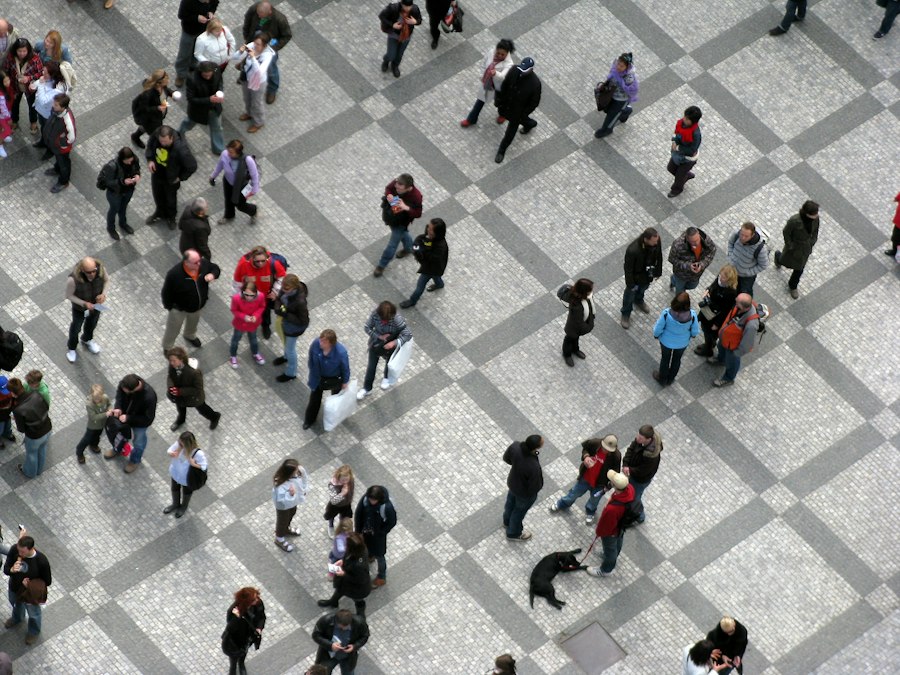
The bystander effect isn’t a single, monolithic cause, but rather a confluence of psychological mechanisms that can lead to inaction. These interwoven factors can create a powerful inertia, making it difficult to break free from the collective stillness. Understanding these underlying principles is crucial because it depersonalizes the phenomenon, revealing it as a predictable human response rather than a personal failing. It’s about understanding the subtle, often unconscious, ways our minds process social cues and the pressure of the crowd.
Diffusion of Responsibility: The Burden Shared is the Burden Ignored
Perhaps the most significant driver of the bystander effect is the diffusion of responsibility. Imagine a crisis unfolds. If you are the only one witnessing it, the entire burden of deciding whether to act, and how to act, falls squarely on your shoulders. You are the sole potential rescuer. However, when others are present, that responsibility begins to spread, or diffuse, amongst everyone. Your individual sense of obligation to act is diluted by the presence of others who could also potentially help. Your brain might unconsciously reason: “If I don’t do anything, surely someone else will.” This thought process, while seemingly logical, can lead to a collective paralysis where no one takes the initiative. The greater the number of bystanders, the greater the diffusion of responsibility, and the less likely any single individual is to feel personally accountable. This can be particularly potent in large, anonymous crowds where the sense of personal connection to the situation, and to the other bystanders, is minimal.
Pluralistic Ignorance: The Illusion of Indifference
Another powerful factor is pluralistic ignorance. This occurs when individuals look to the reactions of others to gauge the severity of a situation and decide how to respond. If everyone else appears calm or unconcerned, even if they are inwardly worried, you might interpret their outward composure as a sign that the situation isn’t that serious. You might think, “No one else is reacting, so it must not be an emergency.” This creates a dangerous feedback loop. Because no one is acting, everyone assumes no one thinks it’s necessary to act, leading to a shared, but ultimately incorrect, perception of normalcy. You might be feeling a knot of anxiety in your stomach, but if you see a dozen other people scrolling through their phones, you might dismiss your own unease as an overreaction. This phenomenon is particularly prevalent in situations where the emergency is ambiguous or not immediately obvious.
Evaluation Apprehension: The Fear of Social Judgment
The fear of social judgment, or evaluation apprehension, also plays a significant role. You might be hesitant to intervene because you’re worried about what others will think of your actions, especially if your intervention is perceived as unnecessary or awkward. What if you try to help and make things worse? What if your attempt at assistance is clumsy or inappropriate? What if you misinterpret the situation entirely and embarrass yourself? These anxieties, though often unspoken, can be powerful deterrents. You might imagine the stares of others, the whispered comments, the potential for ridicule. This fear of negative evaluation can freeze you in place, making inaction seem like the safer, less socially risky option. You might stand back, observing, rather than risk public misstep.
Recognizing the Signs: When and Where the Bystander Effect is Most Pronounced
The bystander effect isn’t an abstract concept confined to laboratory experiments; it manifests in very real-world scenarios. Identifying the situations where it is most likely to occur can help you become more aware of your own potential to fall prey to it, and thus more prepared to counteract it. These are environments where social cues are complex, and the presence of others can inadvertently create a climate of inaction.
The Urban Jungle: Crowds and Anonymity
Large, anonymous crowds are fertile ground for the bystander effect. Think of a busy city street, a crowded shopping mall, or a packed concert. In these environments, you are surrounded by strangers, making it harder to feel a personal connection or a sense of collective responsibility. The sheer number of people can make any single individual feel insignificant, and their potential contribution to helping seem negligible. The anonymity also reduces the social pressure to conform to helpful norms, as the consequences of not helping are less likely to be directly felt or observed by people you know. You can disappear into the crowd, and so can your inaction.
Ambiguous Emergencies: When Danger Isn’t Clear-Cut
The bystander effect is particularly potent when the nature of the emergency is ambiguous. Is that person collapsing on the sidewalk genuinely ill, or are they simply drunk? Is the shouting argument a domestic dispute or just boisterous friends? When it’s unclear whether intervention is truly needed, people are more likely to defer to the perceived judgment of others. If no one else seems alarmed, you might assume it’s not a real emergency, even if your gut feeling tells you otherwise. This ambiguity allows for the diffusion of responsibility and pluralistic ignorance to take hold more easily. The lack of clear signals for help can create a space for doubt and hesitation.
The Role of Social Norms and Group Dynamics
Social norms within a group can also significantly influence behavior. If a particular social circle or public space has a norm of non-intervention or a perception of self-reliance, individuals are more likely to conform to that norm. This can be subtle, a shared unspoken understanding of how to behave in public. Conversely, in groups where a norm of helpfulness is established, the bystander effect might be less pronounced. Understanding the prevailing social dynamics of a given situation is key to recognizing how they might be influencing your own inclination to act. This includes the visible behavior of influential individuals or groups within the crowd.
Overcoming the Inertia: Strategies for Becoming an Engaged Bystander
Recognizing the bystander effect is only half the battle. The crucial next step is learning how to overcome it and become a more active and helpful participant in public spaces. This isn’t about being a superhero; it’s about making conscious choices to break through the psychological barriers that can lead to inaction. These strategies empower you to be the change, even when others are hesitant.
Direct Intervention: The Power of One Clear Action
The most straightforward way to counteract the bystander effect is to act directly. If you witness a situation requiring help, and you feel reasonably safe to do so, take the initiative. Your action can be a powerful catalyst. By stepping forward, you can break the spell of inaction and signal to others that intervention is appropriate. This doesn’t necessarily mean performing heroic deeds. It could be as simple as asking, “Are you okay?” or offering a hand. Your direct action can shift the social dynamic, making it easier for others to follow your lead. It can override the diffusion of responsibility by making you the one taking ownership, even if temporarily.
The “Bystander Intervention” Technique: Delegating and Directing
When direct intervention feels overwhelming or unsafe, a powerful alternative is the “bystander intervention” technique, often referred to as ‘assigning responsibility.’ Instead of simply calling for help in a general way, you can directly address specific individuals. For example, in a crowd, instead of shouting, “Someone call 911!”, you can point to a person and say, “You in the blue jacket, please call 911.” This strategy is highly effective because it clearly assigns responsibility, eliminating the diffusion effect. It also provides clear instructions, overcoming the ambiguity that can lead to hesitation. By directing your request to a specific person, you make it harder for them to ignore your plea.
Educating Yourself and Others: Fostering a Culture of Helpfulness
Awareness is a potent weapon against the bystander effect. The more people understand these psychological principles, the more likely they are to recognize and counteract them in themselves and others. Educating yourself is the first step, but sharing this knowledge is equally important. Talk to friends, family, and colleagues about the bystander effect. Encourage discussions about emergency preparedness and helpfulness in public. When you see someone else acting to help, acknowledge and thank them. By promoting a culture where intervention is seen as normal and valued, you can create environments where the bystander effect is less likely to take hold. This can involve spreading awareness through social media, community workshops, or even simple conversations.
The bystander effect is a fascinating psychological phenomenon that highlights how individuals are less likely to offer help in emergencies when others are present. A related article that delves deeper into this topic can be found on Unplugged Psych, where various factors influencing this behavior are explored. Understanding the dynamics of the bystander effect can provide valuable insights into human behavior in public places, making it essential reading for anyone interested in psychology. For more information, you can check out the article here.
The Broader Impact: Building More Responsive Communities
| Metric | Description | Typical Values / Findings | Source / Study |
|---|---|---|---|
| Number of Bystanders | Count of people present during an emergency in a public place | 1 to 20+ individuals | Latané & Darley (1968) |
| Response Rate | Percentage of bystanders who intervene or help | Less than 20% when 5+ bystanders present; up to 75% when alone | Latané & Nida (1981) |
| Time to Intervention | Average time taken for a bystander to act | Longer with more bystanders; average 60 seconds alone vs. 180 seconds with 4 others | Fischer et al. (2011) |
| Diffusion of Responsibility | Degree to which individuals feel less personal responsibility as group size increases | Increases proportionally with group size | Latané & Darley (1970) |
| Effect of Ambiguity | Likelihood of intervention decreases if situation is unclear | Intervention drops by approx. 30% in ambiguous situations | Fischer et al. (2011) |
| Presence of Others’ Reactions | Influence of others’ behavior on individual response | People less likely to help if others appear unconcerned | Latané & Darley (1968) |
| Gender Differences | Variation in helping behavior between males and females | Females more likely to seek help; males more likely to intervene physically | Eagly & Crowley (1986) |
Understanding and actively working to overcome the bystander effect has implications far beyond individual encounters. It contributes to the creation of more resilient, safer, and more compassionate communities. When individuals are empowered to act, the collective capacity to respond to crises and to support those in need is significantly strengthened. This isn’t just about preventing harm; it’s about fostering a sense of interconnectedness and shared responsibility that enriches the social fabric.
The Ripple Effect of Intervention: Inspiring Action in Others
Your decision to intervene, even in a small way, can have a profound ripple effect. When people witness someone else acting with courage and compassion, it can inspire them to do the same in future situations. Your action can normalize helpful behavior and create a precedent for others to follow. This is how positive social change begins – one courageous act at a time. Overcoming the bystander effect in yourself contributes to a broader cultural shift, making our public spaces more responsive and supportive for everyone. You become a model for what it means to be an engaged member of society.
Creating a Culture of Proactive Care: Beyond the Emergency
The principles learned from understanding the bystander effect can extend beyond acute emergencies. They can inform how we interact with each other in everyday situations, fostering a culture of proactive care and mutual support. This might involve checking in on neighbors, offering assistance to someone struggling with groceries, or simply being more mindful and observant of the needs of those around you. By consciously choosing to be present and responsive, you contribute to a more caring and connected society, where help is not just an emergency response but a consistent aspect of community life. This cultivates a sense of belonging and shared humanity.

The Kitty Genovese Story That Changed Psychology—But Was It True?
FAQs
What is the bystander effect in public places?
The bystander effect in public places refers to the phenomenon where individuals are less likely to offer help to a victim when other people are present. This diffusion of responsibility can lead to inaction and a decreased likelihood of intervention.
What factors contribute to the bystander effect in public places?
Several factors contribute to the bystander effect in public places, including the number of people present, the ambiguity of the situation, the cohesiveness of the group, and the perceived level of danger. These factors can influence individuals’ decisions to intervene or not.
How can the bystander effect be reduced in public places?
The bystander effect can be reduced in public places through awareness and education. Encouraging individuals to take personal responsibility, providing clear guidelines on how to respond in emergencies, and promoting a culture of helping others can help combat the bystander effect.
What are some real-life examples of the bystander effect in public places?
Real-life examples of the bystander effect in public places include the murder of Kitty Genovese in 1964, where numerous witnesses failed to intervene or call for help, as well as various incidents of bullying, harassment, and accidents where bystanders chose not to assist the victims.
How does the bystander effect impact public safety and well-being?
The bystander effect can have negative implications for public safety and well-being by creating a culture of apathy and inaction. When individuals are less likely to intervene in emergencies or situations requiring assistance, it can lead to increased harm, delayed response times, and a lack of support for those in need.