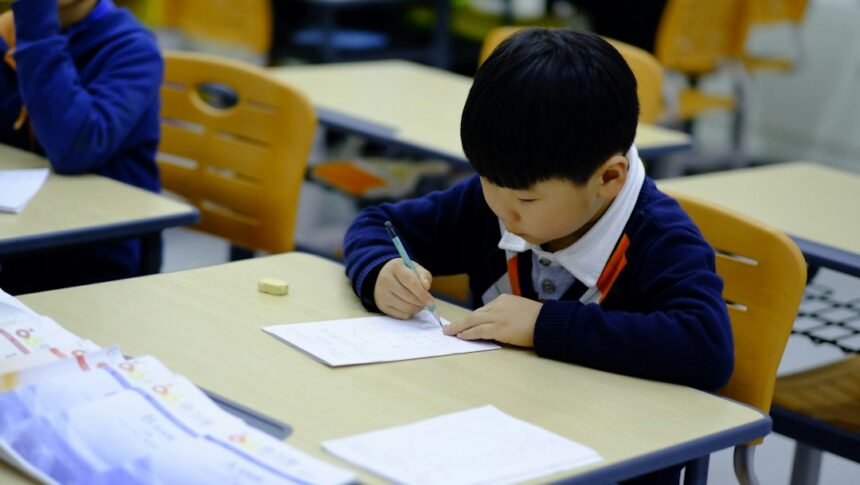
Developing strong reasoning skills in first graders is a cornerstone of their academic and lifelong success. At this crucial developmental stage, children are naturally curious and eager to learn, making it an ideal time to introduce activities that foster logical thinking, problem-solving, and critical analysis. Rather than relying on rote memorization, the focus shifts to understanding why things work the way they do. This article explores a variety of fun and engaging activities designed to boost reasoning IQ in first graders, transforming learning into an enjoyable exploration. By incorporating these strategies into daily routines, educators and parents can help young learners build a robust foundation for future intellectual growth.
The Building Blocks of Early Reasoning
Before delving into specific activities, it’s essential to understand what constitutes reasoning at the first-grade level. Reasoning, in this context, refers to the ability to think logically, make connections, draw inferences, and solve problems. For young children, this often manifests as identifying patterns, classifying objects, understanding cause and effect, and making predictions. These foundational skills are not innate but are nurtured through experience and targeted practice. The key is to present these concepts in a playful and accessible manner, allowing children to discover and learn at their own pace.
Understanding Cause and Effect
One of the most fundamental aspects of reasoning is grasping the relationship between actions and their consequences. First graders are beginning to understand that if they do one thing, another thing will happen as a result. This understanding is crucial for developing foresight and making informed decisions. Simple, everyday observations can be transformed into powerful learning opportunities.
Everyday Experiments
Everyday household activities can be turned into impromptu science lessons that highlight cause and effect. For instance, when watering a plant, a child can observe that the plant perks up. Conversely, if a plant is not watered, it wilts. Discussing these observations helps children connect the action (watering) with the outcome (a healthy or unhealthy plant). Similarly, experimenting with magnets – showing how they attract or repel – demonstrates clear cause and effect. Dropping different objects from a height and observing which ones fall faster or bounce higher also provides tangible examples. The act of prediction, asking “What do you think will happen when we drop this feather and this stone?” further enhances their reasoning by encouraging them to anticipate outcomes based on prior knowledge and observations.
Pattern Recognition and Sequencing
Identifying and extending patterns is a visual and logical reasoning skill that underpins many areas of learning, including math, language, and music. First graders can learn to recognize simple patterns in colors, shapes, sounds, and movements, and then predict what comes next. This ability to see order in the world around them is a key component of logical thinking.
Creative Construction with Blocks
Building with blocks is a classic activity that offers numerous opportunities for pattern recognition. Children can be encouraged to create patterns with different colored blocks, such as red, blue, red, blue, and then asked to continue the pattern. This can be extended to more complex patterns involving shapes, sizes, or even the orientation of the blocks. For example, a tower could have a pattern of large block, small block, large block, small block. Beyond simple repetition, children can also engage in creating alternating patterns or even more complex ABAB or ABCABC sequences. The tactile nature of blocks makes the abstract concept of patterns concrete and enjoyable. They can also be encouraged to build based on a described pattern, requiring them to translate verbal instructions into a physical creation.
Research on reasoning IQ in first graders highlights the importance of cognitive development at an early age. A related article that delves deeper into this topic can be found at Unplugged Psychology, where various studies and insights are shared about how reasoning skills can be nurtured in young children. Understanding these concepts can help educators and parents foster an environment that promotes critical thinking and problem-solving abilities in early learners.
Engaging Through Playful Puzzles and Games
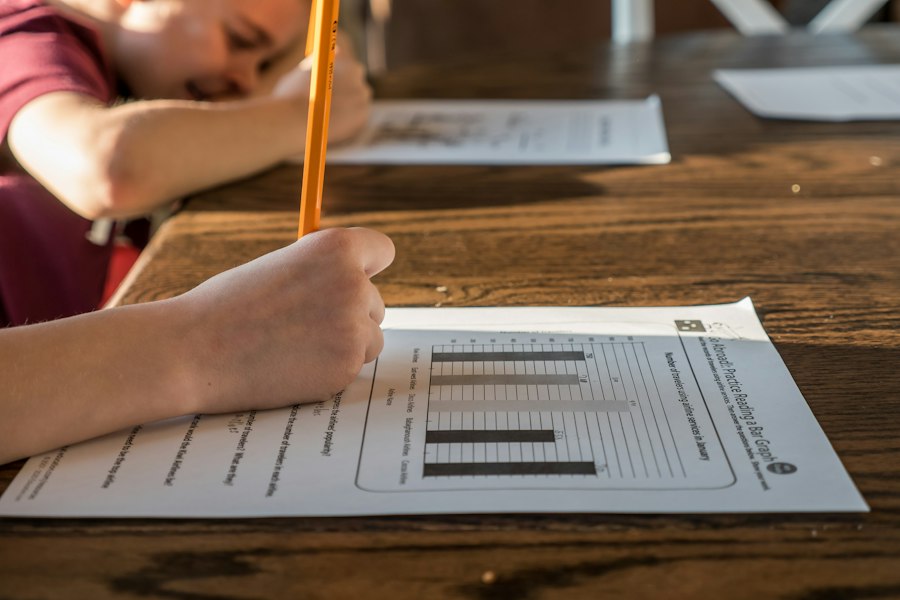
Puzzles and games are inherently enjoyable for young children, and they provide an excellent platform for developing reasoning skills without feeling like a chore. These activities often require strategic thinking, problem-solving, and the ability to anticipate future moves, all of which contribute to a higher reasoning IQ.
Logic Puzzles for Little Minds
Logic puzzles, even simplified versions, can be incredibly beneficial for first graders. These puzzles encourage children to think critically, eliminate possibilities, and arrive at a solution through deductive reasoning. The key is to present puzzles that are age-appropriate in complexity and theme.
Story-Based Mysteries
Creating simple story-based mysteries can captivate young minds and foster deductive reasoning. For instance, a teacher or parent could present a scenario like: “Three friends, Lily, Tom, and Sarah, each brought a different snack for snack time: an apple, a banana, and crackers. Lily doesn’t like bananas, and Tom brought the fruit. Who brought which snack?” By providing clues and guiding the child to eliminate possibilities, they learn to piece together information to arrive at the correct answer. This can be done verbally, with pictures, or even using small objects representing the children and snacks. The narrative element makes the puzzle more engaging, and the process of elimination is a powerful reasoning tool.
Board Games and Card Games
Many popular board games and card games are fantastic tools for developing reasoning skills. They require children to plan ahead, consider different strategies, and adapt to changing circumstances. The element of competition, even in a friendly way, can also be motivating.
Strategic Card Games
Simple card games like “Go Fish” or “Memory” (also known as “Concentration”) can build important reasoning skills. In “Go Fish,” children need to remember which cards other players have asked for, as well as the cards they themselves have already collected. This helps develop working memory and inferential skills – if someone asks for a specific card, they likely have others of the same rank. “Memory” directly exercises visual memory and pattern recognition as children try to find matching pairs. More complex games like “Crazy Eights” introduce strategic thinking as children decide which cards to play and when, considering what their opponents might have or play next. The visual appeal of cards and the inherent fun of playing a game make these activities highly effective.
Cultivating Curiosity Through Exploration and Inquiry
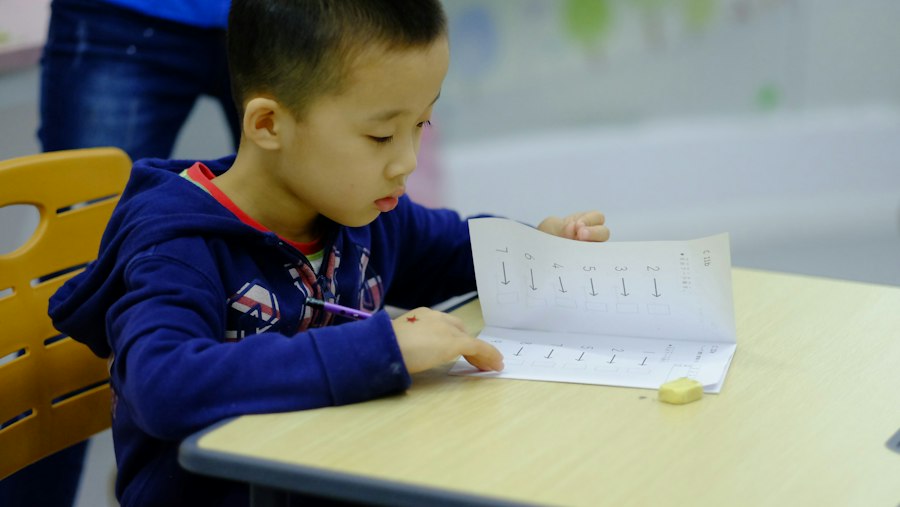
Fostering a sense of curiosity is paramount in nurturing reasoning abilities. When children are encouraged to ask questions, explore their surroundings, and seek answers, they are actively engaging their reasoning minds. This investigative approach transforms them into active learners rather than passive recipients of information.
Hands-On Science Experiments
Science experiments provide a tangible and exciting way for first graders to explore cause and effect, make predictions, and draw conclusions. The hands-on nature of these activities makes abstract scientific concepts more accessible and memorable.
Simple Kitchen Science
Many simple science experiments can be conducted using common household items, making them accessible for both home and classroom settings. For example, the classic baking soda and vinegar volcano demonstrates a chemical reaction with a visible and dramatic outcome. Asking children to predict what will happen when the two ingredients are mixed and then discussing why it happens encourages scientific reasoning. Another engaging experiment involves observing how different objects float or sink in water. Providing a variety of objects – a coin, a cork, a leaf, a crayon – and asking children to predict their buoyancy before testing them allows for hypothesis formation and testing. Discussing the properties of the objects that contribute to their floating or sinking (e.g., density, air pockets) introduces basic scientific reasoning.
Nature Walks and Observation
The natural world is a treasure trove of learning opportunities for developing reasoning skills. Nature walks encourage observation, comparison, classification, and an understanding of ecological relationships.
Backyard Detectives
Transforming a backyard or local park into a “detective agency” can be a highly engaging way to encourage observation and classification. Equip children with magnifying glasses and simple observation checklists. They can be asked to find five different types of leaves, three different insects, or observe the patterns on a ladybug’s shell. Encouraging them to sort their findings – grouping leaves by shape, insects by how they move, or stones by color – hones their classification skills. Discussions about how plants grow, why birds build nests, or the role of bees in pollination introduce basic ecological reasoning. The open-ended nature of exploring nature allows children to follow their own lines of inquiry, fostering independent thinking and problem-solving.
Developing Language and Critical Thinking
Language and critical thinking are intrinsically linked. The ability to articulate thoughts, understand instructions, and interpret information is fundamental to reasoning. Activities that strengthen verbal skills and encourage critical analysis of information are crucial for boosting a child’s reasoning IQ.
Storytelling and Retelling
Engaging with stories is a powerful way to build comprehension, sequencing skills, and the ability to infer meaning. By actively participating in storytelling and retelling, children develop their narrative skills and their understanding of plot, character, and resolution.
Character Analysis and Prediction
When reading stories, pause at key moments and ask children to predict what might happen next. This encourages them to think about character motivations and potential plot developments. After the story, ask them to retell it, focusing on the sequence of events and the characters’ feelings. This reinforces their understanding of narrative structure. For more advanced reasoning, prompt discussions about why characters acted the way they did. For example, “Why do you think the wolf wanted to eat the little pigs?” or “What could the princess have done differently to avoid the dragon?” This encourages them to think critically about character decisions and consequences. Visual aids, such as creating story maps or drawing scenes from the story, can further support comprehension and recall, aiding their ability to analyze and synthesize information.
Questioning Techniques and Active Listening
Encouraging children to ask thoughtful questions and to listen attentively to answers is a cornerstone of developing critical thinking. This involves teaching them how to ask good questions and how to process the information they receive.
The “Why” Game and “What If” Scenarios
Dedicate time to simply asking “why.” When a child states something, respond with “Why do you think that is?” or “Why is that important?” This prompts them to articulate their reasoning and delve deeper into their understanding. Similarly, present “What if” scenarios related to everyday situations or story elements. “What if it rained all day tomorrow? What would we do?” or “What if the character in the story didn’t have their magic wand? How would they solve their problem?” These prompts encourage flexible thinking and the ability to explore alternative solutions and outcomes. Active listening can be practiced by having one child tell a short story or describe an object, and then another child must summarize what they heard or ask clarifying questions. This ensures they are processing the information and not just waiting for their turn to speak.
Research on cognitive development in early childhood has shown that reasoning skills play a crucial role in the academic success of first graders. A related article discusses various methods to enhance these skills through engaging activities and games. For those interested in exploring this topic further, you can read more about it in this insightful piece on cognitive growth and learning strategies for young children. Check it out here.
Integrating Reasoning into Everyday Learning
| Metric | Description | Typical Range for First Graders | Measurement Method |
|---|---|---|---|
| Verbal Reasoning Score | Ability to understand and reason using concepts framed in words | 85 – 115 (IQ scale) | Standardized verbal IQ tests (e.g., WPPSI, WISC) |
| Non-Verbal Reasoning Score | Ability to analyze and solve problems using visual and spatial reasoning | 85 – 115 (IQ scale) | Pattern recognition and puzzle-based tests |
| Logical Reasoning | Capacity to identify patterns and logical sequences | Average to above average for age | Age-appropriate logic puzzles and sequencing tasks |
| Working Memory | Ability to hold and manipulate information temporarily | Average span: 3-4 items | Digit span and memory games |
| Processing Speed | Speed at which reasoning tasks are completed | Varies widely; average completion time for simple tasks: 30-60 seconds | Timed reasoning tests |
Reasoning skills are not developed in isolation; they are best integrated into all aspects of a child’s learning experience. By consistently applying reasoning principles across various subjects and daily activities, children internalize these skills and develop them into habitual ways of thinking.
Math Concepts and Problem Solving
Mathematics is a natural playground for reasoning. Beyond basic arithmetic, introducing mathematical concepts that require logical deduction and problem-solving can significantly boost a child’s reasoning IQ.
Building with Shapes and Spatial Reasoning
Activities involving shapes and spatial reasoning are excellent for developing logical thinking. Children can be asked to identify shapes in their environment, sort them by attributes (number of sides, straight or curved edges), and then use them to build structures. Puzzles that involve fitting shapes together, like tangrams or pattern blocks, require children to understand spatial relationships and to think logically about how different pieces can combine to form a whole. Introducing simple measurement activities, such as comparing the lengths of objects or estimating how many blocks fit across a table, also engages their reasoning skills as they make comparisons and justify their estimations.
Language Arts and Comprehension
Language arts provide ample opportunities for developing reasoning through reading, writing, and speaking. Understanding the nuances of language, interpreting meaning, and constructing coherent arguments are all critical reasoning skills.
Sequencing Events in Stories and Creating Narratives
As mentioned previously, sequencing events in stories is a fundamental reasoning skill. This can be extended to having children create their own simple narratives. Provide prompts like “Once upon a time, there was a ________ who wanted to _________. One day, he/she encountered a _________, and had to _________. In the end, _________.” This encourages them to think about cause and effect, character motivation, and plot resolution in their own creative expressions. When children write their own stories, they are actively constructing logical sequences of events and developing their understanding of how ideas connect. Offering feedback that focuses on the clarity of their narrative and the logical flow of events can further refine their reasoning abilities.
By consistently weaving these fun and engaging activities into the fabric of a first grader’s learning journey, parents and educators can effectively cultivate a strong foundation for reasoning. This approach not only enhances their academic performance but also equips them with essential life skills, empowering them to become confident, critical thinkers capable of navigating the complexities of the world.

The Famous IQ Study That Fooled the World
FAQs
What is the average IQ score for first graders?
The average IQ score for first graders is around 90-110, which is considered to be within the normal range.
Can IQ tests accurately measure reasoning abilities in first graders?
IQ tests can provide a general indication of a first grader’s reasoning abilities, but they may not capture the full range of a child’s cognitive skills and potential.
How can parents help improve their first grader’s reasoning IQ?
Parents can help improve their first grader’s reasoning IQ by engaging in activities that promote critical thinking, problem-solving, and logical reasoning, such as puzzles, games, and reading challenging books.
Are there any factors that can influence a first grader’s reasoning IQ?
Factors such as genetics, environment, education, and nutrition can all play a role in influencing a first grader’s reasoning IQ.
Should first graders be formally tested for IQ levels?
Formally testing first graders for IQ levels is not typically recommended, as IQ scores can be influenced by various factors and may not accurately reflect a child’s true cognitive abilities at such a young age.