
The Harlow Experiment, a series of studies conducted by psychologist Harry Harlow in the mid-20th century, remains a cornerstone in the understanding of primate social development and attachment. While lauded for its groundbreaking insights into the crucial role of maternal affection and social interaction, the experiment has also been a persistent subject of ethical and methodological critique. This article undertakes a scholarly examination of these concerns, dissecting the profound ethical dilemmas raised by the deprivation protocols and the inherent methodological limitations that temper the conclusions drawn from these controversial studies.
Ethical Breaches and the Moral Compass of Research
The Harlow Experiment’s most significant and enduring criticism centers on its profound ethical transgressions. The very design of the studies necessitated the infliction of severe psychological distress upon infant rhesus monkeys, leading to what many consider unacceptable levels of suffering. This raises fundamental questions about the moral obligations of researchers towards their animal subjects and the ethical boundaries that should govern scientific inquiry, particularly when the potential for harm is high.
The Moral Cost of Maternal Deprivation
At the heart of the ethical debate lies the core methodology of maternal deprivation. Harlow deliberately separated infant monkeys from their biological mothers shortly after birth, a process that inflicted immediate and observable trauma. The infants were then raised in isolation or with surrogate mothers made of wire or cloth. This separation was not a fleeting inconvenience but a prolonged and profound disruption of the natural maternal bond, a bond essential for the emotional and social development of young primates. The consequences were devastating, leading to extreme social withdrawal, aggression, self-harm, and an inability to form normal social relationships later in life. Scholars and animal welfare advocates alike have argued that the suffering inflicted upon these animals was not justified by the scientific knowledge gained, especially considering the rudimentary ethical frameworks and oversight available at the time. The concept of animal welfare, as understood today, was nascent, yet the observable distress of the infant monkeys was undeniable and, for many, morally reprehensible. The research, therefore, serves as a stark reminder of how scientific curiosity, unchecked by robust ethical considerations, can lead to considerable harm.
The Surrogate Mother Controversy: Comfort vs. Cruelty
The iconic “surrogate mothers” – one wire, one cloth – were central to Harlow’s investigation into the nature of attachment. While the cloth mother, providing comfort and warmth, was invariably preferred over the wire mother, offering only nourishment, the very existence and use of these surrogates remain ethically contentious. The intention was to isolate the variable of comfort from that of sustenance. However, critics argue that these inanimate, unfeeling surrogates, however soft, could never replicate the complex, reciprocal interactions of a living mother. The prolonged reliance on these artificial constructs for social bonding, while informative about the importance of comfort, also involved subjecting infant primates to a fundamentally unnatural and impoverished social environment. This deliberate creation of an inadequate substitute for maternal care, while scientifically illuminating, carried a heavy ethical burden, as it knowingly exposed the infants to a form of social deprivation that would have lasting negative consequences. The ethical debate is not merely about the intent of the experimenters but about the impact of their methods on the well-being of the subjects.
The Long-Term Impact on Research Ethics
The Harlow Experiment became a watershed moment in the evolution of research ethics, particularly in animal research. The widespread dissemination of the experimental results, accompanied by growing public awareness and concern for animal welfare, spurred significant changes in scientific governance. Institutional Animal Care and Use Committees (IACUs), federal regulations, and increasingly stringent ethical review processes can, in part, be traced back to the controversies surrounding studies like Harlow’s. This serves as a double-edged sword: the experiment’s ethical shortcomings ultimately contributed to the development of more humane research practices, yet the suffering it caused remains a difficult historical fact. The legacy of the Harlow Experiment thus forces a continuous re-evaluation of the balance between scientific advancement and the moral imperative to minimize harm to sentient beings.
The Harlow experiment, which explored the importance of comfort and emotional support in the development of infant monkeys, has sparked considerable scholarly debate regarding its ethical implications and the validity of its findings. A related article that provides a comprehensive critique of Harlow’s methodology and its impact on the field of psychology can be found at this link. This article delves into the ethical considerations of animal research and discusses how Harlow’s work has influenced our understanding of attachment and social development in both animals and humans.
Methodological Hurdles and the Limits of Generalizability

Beyond the ethical quagmire, the Harlow Experiment also faced significant methodological challenges that impact the interpretation and generalizability of its findings. These issues relate to the experimental design, the specific population studied, and the potential for confounding variables to influence the outcomes. A thorough scholarly critique must acknowledge these limitations to fully appreciate the scope and boundaries of the knowledge gained.
The Purity of Isolation: Confounding Variables and Unintended Consequences
A primary methodological concern revolves around the “purity” of the isolation employed. While Harlow aimed to isolate the effects of maternal deprivation, the experimental conditions likely introduced numerous confounding variables. For instance, the wire mother, while providing food, was also inherently less comforting and potentially more frightening. Similarly, the lack of peer interaction during early development, not just maternal deprivation, contributed to the profound social deficits observed. The monkeys were deprived not only of maternal touch but also of the complex social learning that occurs through interaction with siblings and other young monkeys. This multifaceted deprivation makes it challenging to isolate the precise causal factors responsible for the observed behavioral abnormalities. It is possible that the observed issues were a result of a combination of factors, rather than solely the absence of a specific type of maternal interaction. The artificiality of the laboratory setting, while necessary for control, also created an environment far removed from natural primate social structures, further complicating the interpretation of the results.
The Rhesus Monkey as a Proxy: Species-Specific Insights and Human Relevance
A significant point of contention lies in the generalizability of findings from rhesus monkeys to other primate species, particularly humans. While rhesus monkeys share some biological similarities with humans, they are not direct analogues. Their social structures, cognitive abilities, and developmental trajectories differ in crucial ways. Critics argue that extrapolating the results of the Harlow Experiment directly to human infant attachment and development is an oversimplification. Human attachment is a far more complex phenomenon, influenced by a wider range of cognitive, cultural, and interpersonal factors that cannot be fully replicated or studied in a rhesus monkey model. While the experiment provided valuable insights into the fundamental need for comfort and social interaction, its direct applicability to the nuances of human parental care and child development remains debatable. The reliance on a single, albeit extensively studied, primate species limits the universality of the conclusions drawn.
The Measurement of Attachment: Behavioral Observations and Subjective Interpretation
The measurement of attachment in the Harlow Experiment relied heavily on observable behaviors, such as proximity to the surrogate mother, distress upon separation, and social interactions. While these are important indicators, they are not without their limitations. The interpretation of these behaviors can be subjective, and what constitutes “attachment” can be defined in various ways. Furthermore, the artificial environment of the laboratory may have elicited behaviors that are not representative of how these monkeys would behave in a natural setting. The focus on quantitative behavioral data, while providing empirical evidence, may have overlooked the qualitative richness and complexity of primate social and emotional experiences. The very definition and operationalization of attachment within the experimental parameters can be seen as a methodological constraint, potentially limiting the depth of understanding.
The Unfolding Legacy: Lessons Learned and Enduring Debates

The Harlow Experiment, despite its ethical and methodological criticisms, has undeniably shaped the field of developmental psychology and primatology. Its enduring legacy lies not only in its controversial findings but also in the ongoing debates it continues to inspire, pushing researchers to refine their ethical standards and methodological approaches.
The Primacy of Affection: A Paradigm Shift in Understanding Attachment
Harlow’s research unequivocally demonstrated the critical importance of tactile stimulation and affection in the development of infant primates. Prior to his work, the dominant theory of attachment, espoused by behaviorists, emphasized the role of nourishment as the primary basis for the mother-infant bond. Harlow’s experiments decisively challenged this view, showing that comfort, warmth, and social interaction were equally, if not more, crucial. This paradigm shift had profound implications for understanding human child-rearing practices, leading to greater emphasis on responsive parenting, nurturing touch, and emotional bonding. The experiment provided compelling evidence that meeting basic physiological needs alone was insufficient for healthy psychological development.
The Social Imperative: Beyond Maternal Bonding
While the focus was often on maternal deprivation, the Harlow Experiment also highlighted the vital role of peer interaction and social engagement for healthy development. Monkeys raised in isolation, even with surrogate mothers, exhibited severe social deficits when introduced to their peers. This underscored the fact that attachment is not solely a dyadic relationship but a broader social phenomenon that requires engagement with a wider social network. The inability of these isolated monkeys to form friendships, engage in play, or learn appropriate social behaviors emphasized the long-term consequences of social deprivation beyond the early maternal bond. This aspect of the research contributed to a more holistic understanding of social development, recognizing the interconnectedness of various social relationships.
The Continuing Dialogue: Evolving Ethical Frameworks
The ethical controversies surrounding the Harlow Experiment have been instrumental in the ongoing evolution of ethical guidelines for animal research. The studies served as a catalyst for the development of stricter regulations, oversight committees, and a greater emphasis on the “three Rs”: Replacement, Reduction, and Refinement of animal use in research. While the ethical landscape has changed dramatically since the time of Harlow’s experiments, the debates sparked by his work continue to inform contemporary discussions about animal welfare, the justification of animal models in research, and the moral responsibility of scientists. The legacy of the Harlow Experiment compels researchers to constantly question the ethical implications of their work and to seek out the most humane and effective research methods.
Reinterpreting the Findings: A Nuanced Perspective
A critical scholarly analysis necessitates a nuanced reinterpretation of the Harlow Experiment’s findings, moving beyond a simplistic acceptance or outright rejection. By acknowledging both its groundbreaking contributions and its inherent limitations, a more balanced understanding can be achieved.
The Indispensable Role of Contact Comfort: A Foundation for Affection
The most undeniable contribution of the Harlow Experiment is the robust demonstration of the primacy of contact comfort in infant attachment. The consistent preference for the cloth surrogate over the wire surrogate, even when the wire provided nourishment, unequivocally established that tactile stimulation and emotional security are fundamental drivers of bonding. This finding has been replicated and expanded upon in numerous studies across species, solidifying the understanding that a responsive, nurturing physical presence is a cornerstone of healthy development. The experiment provided empirical evidence for what many intuitively understood but lacked scientific validation for, shifting the focus of developmental psychology towards the emotional and relational aspects of care.
The Limitations of the “Wire Mother”: A Single Dimension of Deprivation
While the cloth mother served as a vital source of comfort, the wire mother, representing sustenance, introduced a methodological complexity that warrants careful consideration. The inherent harshness and lack of any comforting qualities of the wire mother meant that the “nourishment” condition was not simply a neutral baseline. Instead, it was a potentially aversive experience in itself, separate from the lack of comfort. This raises the question of whether the observed behaviors were solely due to the absence of the cloth mother’s comforting properties, or also influenced by the negative aspects of the wire mother’s presence. A more refined experimental design might have utilized a wire mother that was still a source of nourishment but less overtly distressing, allowing for a clearer differentiation of variables.
The Intertwined Nature of Social and Maternal Deprivation: A Complex Interplay
The Harlow Experiment’s focus on maternal deprivation, while central, often overshadowed the equally significant impact of peer deprivation. The infant monkeys were not only separated from their mothers but also raised in isolated environments, largely devoid of social interaction with other young primates. This lack of peer play and social learning contributed significantly to the severe social deficits observed. It is likely that the profound behavioral abnormalities were a result of a complex interplay between maternal deprivation and social isolation, rather than solely the absence of a mother figure. Future research, building upon Harlow’s work, has often explored these interconnected factors more explicitly, acknowledging that healthy development is contingent on a rich and varied social environment.
The Harlow experiment, which explored the importance of maternal attachment in rhesus monkeys, has been the subject of extensive scholarly critique, particularly regarding its ethical implications and the validity of its findings. A related article that delves into these critiques can be found at Unplugged Psych, where the author discusses the broader impact of Harlow’s work on our understanding of attachment theory and its application in human psychology. This examination not only highlights the controversies surrounding the experiment but also emphasizes the need for ethical considerations in psychological research.
The Ethical Imperative for Future Research
| Aspect | Details | Scholarly Critique | Implications |
|---|---|---|---|
| Experiment Subject | Infant Rhesus Monkeys | Criticized for ethical concerns regarding animal welfare | Raised awareness about ethical treatment in animal research |
| Methodology | Choice between wire mother with food and cloth mother without food | Some argue the artificial setup limits ecological validity | Highlighted importance of comfort and contact in attachment |
| Findings | Monkeys preferred cloth mother for comfort over wire mother with food | Debated whether findings fully translate to human attachment | Influenced theories on emotional bonding and attachment |
| Long-term Effects | Monkeys showed social deficits and abnormal behaviors | Critics note difficulty in isolating variables affecting behavior | Informed understanding of social development and deprivation |
| Ethical Considerations | Use of maternal deprivation and isolation | Widely regarded as unethical by modern standards | Contributed to development of stricter animal research guidelines |
The lasting impact of the Harlow Experiment compels a continuous re-examination of the ethical considerations that must guide all research involving animal subjects. The lessons learned from its controversies serve as a potent reminder of the responsibilities inherent in scientific inquiry.
The Need for Justification and Proportionality: Weighing Benefits Against Harm
Contemporary ethical frameworks for animal research emphasize the principle of proportionality. Any research that involves potential harm to animal subjects must be rigorously justified by the potential scientific or societal benefits. The magnitude of the harm inflicted must be weighed against the significance of the knowledge to be gained. In the context of the Harlow Experiment, many argue that the suffering inflicted upon the infant monkeys was disproportionate to the insights gained, especially when considering the limitations of generalizability and the availability of alternative, less harmful research methodologies. This principle necessitates a constant and critical evaluation of research proposals, ensuring that the pursuit of knowledge does not come at an unacceptable moral cost.
The Evolution of Animal Welfare Standards: Towards Refinement and Replacement
The ethical shortcomings of the Harlow Experiment have directly contributed to the development of more stringent animal welfare standards. The “three Rs” – Replacement, Reduction, and Refinement – have become guiding principles in ethical animal research. Researchers are encouraged to seek out alternative methods that do not involve live animals whenever possible (Replacement). When animal use is unavoidable, efforts must be made to minimize the number of animals used (Reduction) and to refine experimental procedures to reduce pain, suffering, and distress (Refinement). The legacy of Harlow’s work underscores the importance of these evolving standards and the ongoing commitment to improving the ethical landscape of scientific research.
The Enduring Moral Question: When Does Curiosity Become Cruelty?
The Harlow Experiment continues to provoke a fundamental moral question: when does scientific curiosity cross the line into cruelty? This question is not easily answered and requires ongoing societal and scientific dialogue. The experiment serves as a stark reminder that scientific advancement must be tempered by empathy and a profound respect for the well-being of all sentient beings. The pursuit of knowledge should never justify the infliction of gratuitous suffering. As our understanding of animal sentience and consciousness deepens, so too must our ethical responsibilities and the rigor with which we approach research that impacts their lives. The lessons from Harlow’s controversial studies remain vitally relevant, urging a constant vigilance in upholding the highest ethical standards in scientific inquiry.
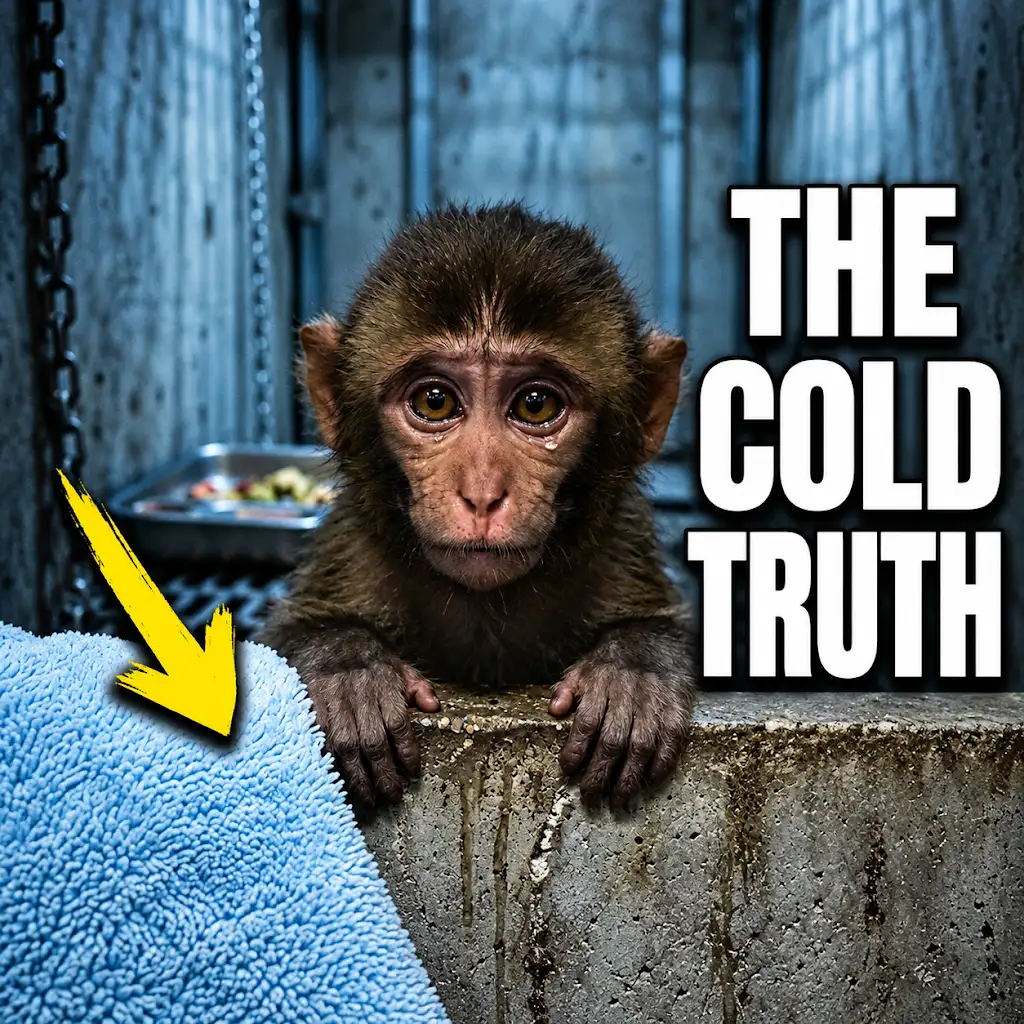
The Dark Reality of the Monkey Comfort Experiment
FAQs
What was the Harlow experiment?
The Harlow experiment was a series of studies conducted by psychologist Harry Harlow in the 1950s and 1960s that involved rhesus monkeys and investigated the effects of maternal separation and social isolation on their behavior and development.
What were the main findings of the Harlow experiment?
The main findings of the Harlow experiment were that infant monkeys preferred contact with a soft, comforting surrogate mother over a wire mother that provided food. The study also showed that monkeys raised in isolation exhibited abnormal behaviors and social deficits later in life.
What are some criticisms of the Harlow experiment?
Some criticisms of the Harlow experiment include ethical concerns regarding the treatment of the monkeys, the potential for long-lasting psychological harm inflicted on the animals, and the generalizability of the findings to human behavior and development.
How has the Harlow experiment influenced the field of psychology?
The Harlow experiment has had a significant impact on the field of psychology by highlighting the importance of social and emotional bonds in early development, challenging previous beliefs about the primacy of food in attachment relationships, and sparking further research on the effects of early maternal separation.
What are some alternative research methods that have been used to study attachment and social development?
Alternative research methods that have been used to study attachment and social development include longitudinal studies following children from infancy to adulthood, observational studies of parent-child interactions in naturalistic settings, and neuroimaging studies examining brain activity during social interactions.