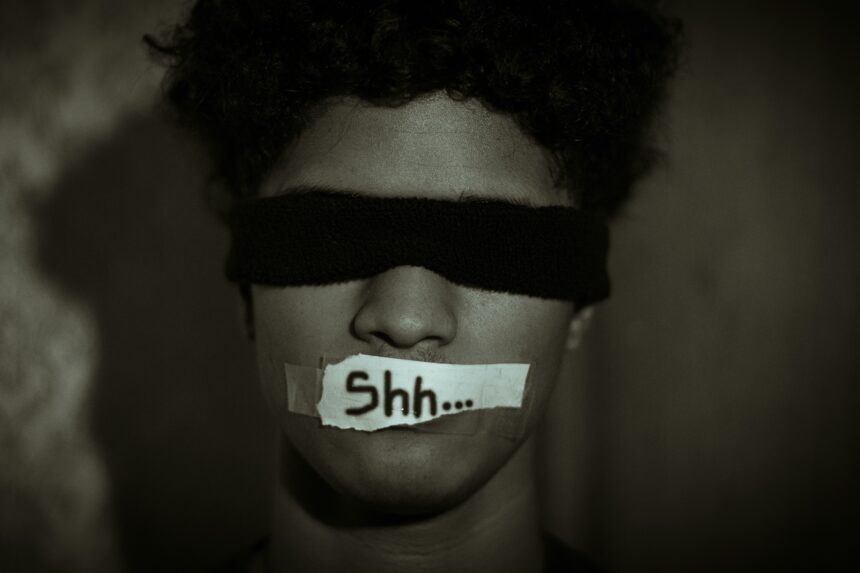
You’re sitting in your living room, the day’s noise fading into the periphery. The hum of the refrigerator, the distant traffic – these are the comforting anchors of your sonic world. Then, slowly, they begin to recede. A dog barks, then stops. The television’s muted drone is abruptly silenced. And suddenly, you’re adrift in a sea of quiet. It’s not a peaceful, tranquil quiet, though. It’s a charged quiet, a pregnant pause that prickles your skin and sends a shiver down your spine. Why does silence, the mere absence of sound, so often feel ominous?
Your discomfort with silence isn’t a modern affliction; it’s a deeply ingrained, evolutionary response. For most of human history, the world was a symphony of both natural and man-made sounds, each carrying vital information. The rustle in the undergrowth could be prey, or predator. The crack of a twig could signal the approach of danger. Silence, in this context, was an anomaly, a disruption of the expected, and therefore, a cause for alarm.
The Absence of Warning
Imagine yourself as an ancient ancestor. You’re navigating a dense forest. The chirping of birds, the buzz of insects, the distant roar of a large animal – these are your constant companions, your auditory radar. They tell you that the environment is alive, predictable, and to a degree, manageable. Now, imagine the forest suddenly falling silent. The birds stop singing, the insects cease their drone. What does this signify? It signifies that something has scared them into silence. And that something is likely to be a threat to you as well.
Evolutionary Survival Mechanisms
Your brain is hardwired to detect threats, and silence is a powerful, albeit indirect, signal of potential danger. In the absence of familiar sounds, your attention is amplified. Your senses become hyper-vigilant, straining to pick up any subtle cues that might explain the sudden quiet. This heightened state of awareness is a survival mechanism, a biological imperative passed down through generations. It’s your brain telling you, “Something is wrong. Be alert.”
The Unseen Threat
The real fear isn’t necessarily the silence itself, but what it might be masking. A loud noise, even a frightening one, provides information. You know the source, you can gauge the direction, and you can begin to formulate a response. Silence, however, offers no such clarity. It leaves your mind to fill in the blanks, and our imaginations are often far more terrifying than reality. What lurks in the darkness? What is moving just beyond your sight? Silence allows these fears to fester and grow.
The Biological Response to the Unknown
When confronted with the unknown, your body prepares for action. Your heart rate might increase, your breathing shallow. Adrenaline floods your system, a primal “fight or flight” response kicking in. This physical manifestation of anxiety is directly linked to the unsettling nature of silence. Your biology is screaming at you to be ready, to defend yourself, even though there’s no tangible enemy in sight.
The Sympathetic Nervous System on Alert
The sympathetic nervous system, responsible for your body’s “fight or flight” response, is activated by perceived threats. Even the abstract threat of an unexplained silence can trigger this system. You might feel a knot in your stomach, a tightening in your chest, or a prickling sensation on your skin. These are all physiological indicators that your body is in a state of heightened alert, reacting to the lack of predictable auditory input.
Cortisol and the Stress Response
The stress hormone cortisol can also be released in response to prolonged periods of quiet that feel unnatural. While cortisol is essential for managing stress, chronically elevated levels can be detrimental. This hormonal response underscores how deeply the absence of sound can impact your physiology, contributing to the feeling of unease.
Many people experience a sense of unease during moments of silence, often feeling as though something ominous is on the horizon. This phenomenon can be linked to our evolutionary instincts, where silence in nature often signaled the presence of predators or danger. For a deeper exploration of this topic, you can read the article on the psychology of silence and its implications on our mental state at Unplugged Psychology. Understanding these feelings can help us navigate our emotions and reactions in quieter moments.
The Psychological Weight of Expectation
Beyond our primal instincts, our psychological state plays a significant role in how we perceive silence. We live in a world saturated with sound. From the moment we wake up to the moment we sleep, we are bombarded with information delivered through auditory channels. Silence, therefore, becomes a stark contrast, a disruption of our ingrained expectations.
The Constant Hum of Modern Life
Think about your daily routine. The alarm clock jolts you awake. The kettle whistles. The news plays in the background. You navigate traffic, filled with the sounds of engines and horns. Your workplace likely has its own ambient noise – chatter, keyboards, machinery. Even your leisure time is often accompanied by music, podcasts, or the sounds of video games. This constant auditory input has created a baseline of expectation.
The Unspoken Contract of Sound
There’s an unspoken contract in modern society: the world makes noise. This noise, while sometimes irritating, is also reassuring. It signifies activity, presence, and a general state of normalcy. When this noise suddenly disappears, it’s like a fundamental rule of the universe has been broken. You feel a sense of disorientation, as if the world has paused, and you’re left to ponder why.
The Void of Information
Sound is a primary carrier of information. It tells us who is present, what they are doing, and what might be happening around us. Silence is the absence of this information, creating a void that our minds rush to fill. This mental vacuum can be a breeding ground for anxiety, as our imaginations conjure scenarios that are often worse than the reality.
The Absence of Social Cues
In social interactions, silence can be particularly potent. A lull in conversation can feel awkward, uncomfortable, and even hostile. We interpret silence as a sign of disinterest, disapproval, or even judgment. This social conditioning makes the absence of sound in any context feel like a potential social misstep.
The Awkward Pause
You’ve experienced it: that moment in a conversation where the words dry up. The air thickens with unspoken thoughts. You might fidget, avoid eye contact, or rush to fill the void with meaningless chatter. This is because silence in a social setting can be perceived as a sign of discomfort or a lack of connection.
The Implied Meaning
When someone is silent, we often try to infer their thoughts or feelings from their lack of verbal expression. Is their silence a sign of anger? Sadness? Disagreement? The ambiguity can be more unsettling than a direct verbalization of those emotions. We are left to guess, and our guesses are often colored by our own insecurities and biases.
The Unraveling of Routine

Silence can also feel ominous because it disrupts the familiar rhythm of our lives. Our days are often structured by a series of sounds that signal transitions and activities. The morning news on the radio, the sound of children going to school, the evening chime of a timer – these are the auditory markers that guide us. When these markers vanish, our sense of order can falter.
The Disruption of Daily Rhythms
Your life is a tapestry woven with sounds that define your routine. The clang of the garbage truck on collection day, the familiar jingle of the ice cream truck in the summer, the sound of your neighbor’s lawnmower on a Saturday morning – these are the sonic anchors that give your days a predictable flow.
The Familiar Soundtrack of Life
These everyday sounds, often so mundane that you barely notice them, form a comforting soundtrack to your life. They represent a world in motion, a world that is functioning as it should. When this soundtrack abruptly cuts out, it can feel as if the entire performance has been suspended.
The Unease of the Unscheduled
When silence descends, and the familiar sounds of your routine are absent, you can feel a sense of unease that something is amiss. It’s as if the clock has stopped, and the world is waiting for a cue that will never come. This feeling of being unscheduled, of being adrift from your normal trajectory, can be deeply unsettling.
The Absence of Control
Silence can also trigger a sense of helplessness and a lack of control. We often rely on our senses to monitor our environment and to ensure our safety. When a significant sense, like hearing, is rendered less effective by an overwhelming absence of sound, we can feel vulnerable.
The Feeling of Being Exposed
When the world goes quiet, you can feel exposed. There are no auditory warnings, no cues to alert you to approaching dangers. This lack of sensory information can create a feeling of vulnerability, as if you are an open target.
The Inability to Prepare
Without the usual sounds that precede events – the rumble of thunder before a storm, the approaching footsteps of a visitor – you are unable to prepare. This lack of preparedness can amplify your anxiety, as you are left to react rather than anticipate.
The Unseen and the Unheard: When Silence Becomes a Canvas for Fear

Perhaps the most profound reason why silence feels ominous is its ability to become a blank canvas for our deepest fears. When there’s nothing to hear, our minds are free to conjure what we dread most, filling the void with imagined threats.
The Power of Imagination
Your imagination is a potent force, capable of constructing elaborate scenarios. In the absence of external sensory input, your internal landscape takes over. If you are already prone to anxiety or have past experiences that have instilled a sense of fear, silence can become a powerful trigger.
The Amplification of Internal Worries
Think about a time when you were alone in a dark house and heard a creak. Your initial reaction might be mild curiosity. But in complete silence, that same creak can sound like a monstrous footstep. Your internal worries, the anxieties you might be suppressing during the day, are amplified in the quiet.
The Personification of the Unknown
The unknown is often personified in our minds. The shapeless, silent threat becomes a monster lurking in the shadows, a sinister presence that you cannot see or hear but can intensely feel. This personification makes the threat feel more real and more immediate.
The Psychological “What Ifs”
Silence invites the “what ifs.” What if something is wrong? What if I’m in danger? What if I’m alone and vulnerable? These questions, left unanswered by the absence of sound, can spiral into a state of heightened anxiety.
The Unanswered Questions
When you hear nothing, your mind seeks answers. The lack of auditory clues to explain the silence creates a fertile ground for speculation. Your internal dialogue can become a loop of anxious queries, each unanswered question fueling further unease.
The Potential for Catastrophe
Our minds have a tendency to prepare for the worst-case scenario. In a state of silent apprehension, this tendency can be amplified. The absence of reassurance from the normal sounds of the world can lead you to imagine scenarios of catastrophe, however improbable.
Many people experience a sense of unease when faced with silence, often feeling that something ominous is on the horizon. This instinctual reaction may stem from our evolutionary past, where silence could indicate the presence of danger. For a deeper exploration of this phenomenon and its psychological implications, you can read more in this insightful article on the topic. Understanding the reasons behind our discomfort with silence can help us navigate our emotions more effectively. If you’re interested, check out the article here.
The Silence of the Absence of Life
| Reasons Why Silence Feels Like Something Bad is Coming |
|---|
| 1. Lack of communication can lead to uncertainty and anxiety. |
| 2. Silence can be associated with tension or conflict. |
| 3. In some situations, silence may indicate a lack of progress or action. |
| 4. The absence of sound can amplify negative thoughts and fears. |
| 5. Silence may be linked to past experiences of danger or threat. |
Ultimately, the most profound and unsettling silence is the one that signifies absence – the absence of human presence, the absence of life. This is a silence that speaks of loneliness, loss, and a profound sense of emptiness.
The Echo of Solitude
When you are alone, and the world around you is devoid of sound, the silence can become deafening. It amplifies your own solitude, making you acutely aware of your aloneness. The lack of any responding sound can feel like a confirmation of your isolation.
The Void of Connection
The sounds of others – their laughter, their voices, even their mundane movements – are constant reminders of connection. When these sounds are absent, the void left behind can be deeply felt. It’s the silence of a missed connection, of a conversation that never happened.
The Weight of Being Unheard
When you speak into silence, and there is no response, it can feel as though you are shouting into a void. This can be a deeply disempowering and isolating experience. The silence of not being heard, of not having your presence acknowledged, can be profoundly unsettling.
The Absence of the Familiar and the Comforting
Beyond the absence of immediate human interaction, there’s also the unsettling feeling of the absence of familiar, comforting sounds. The absence of the hum of a busy street, the distant murmur of traffic, the chirping of crickets on a warm evening – these are the sounds that, while often unnoticed, contribute to our sense of normalcy and security.
The Loss of Environmental Reassurance
The constant, low-level hum of human activity and natural processes provides a subtle reassurance that the world is functioning, that things are as they should be. When this hum disappears, the absence can feel like a disruption of that fundamental order.
The Unsettling Stillness
This profound stillness, this complete absence of the familiar sonic tapestry of life, can be the most ominous silence of all. It speaks of a world that has paused, a world that has perhaps ceased to be. It’s a silence that prompts introspection, that forces you to confront the vastness of existence and your own small place within it. It is in these moments of profound quiet that the true unsettling nature of silence can be most acutely felt.

Your Life Is Safe. So Why Are You Still on Alert?
FAQs
What is the phenomenon of silence feeling like something bad is coming?
The phenomenon of silence feeling like something bad is coming is a common human experience where individuals perceive silence as a sign of impending danger or negative events. This feeling can trigger anxiety and a sense of unease.
Why do some people feel anxious or uneasy in moments of silence?
Some people feel anxious or uneasy in moments of silence due to the brain’s natural tendency to seek out potential threats in the environment. When there is silence, the brain may interpret it as a lack of information about the surroundings, leading to a heightened state of alertness and anxiety.
Is the feeling of unease in silence a universal experience?
The feeling of unease in silence is a common and universal experience that transcends cultural and geographical boundaries. Many individuals from different backgrounds report feeling a sense of discomfort or anxiety in moments of silence.
Can the fear of silence be linked to evolutionary factors?
The fear of silence can be linked to evolutionary factors, as early humans relied on their senses to detect potential threats in their environment. Silence could signal the presence of predators or other dangers, leading to a natural inclination to feel uneasy in moments of quiet.
How can individuals cope with the feeling of unease in silence?
Individuals can cope with the feeling of unease in silence by practicing mindfulness, engaging in relaxation techniques, and seeking professional help if the anxiety becomes overwhelming. Additionally, creating a positive association with silence through activities such as meditation or deep breathing exercises can help alleviate the discomfort.