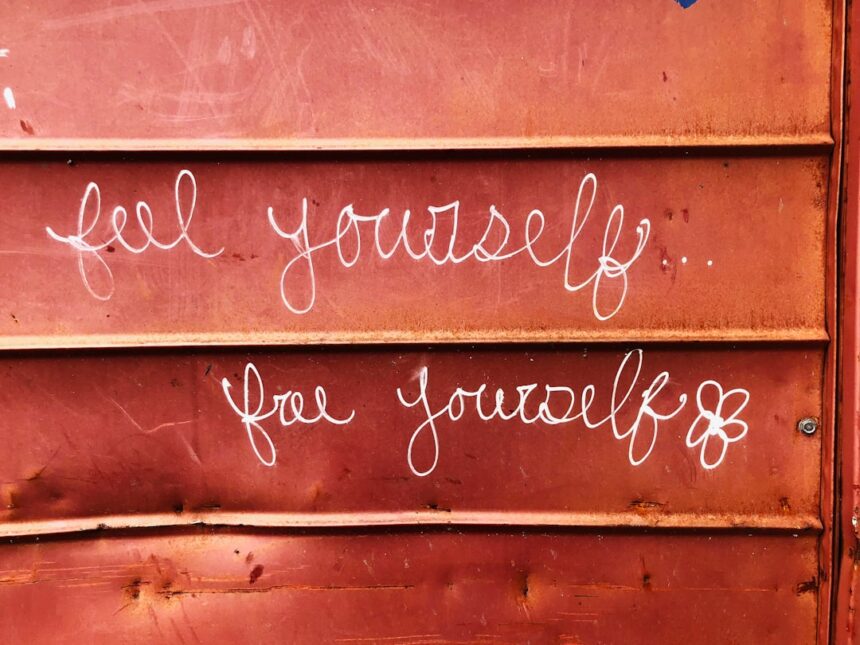
You feel it, don’t you? That subtle hum beneath the surface, the quiet whisper that something is… off. It’s a feeling you’ve become accustomed to, a low-grade thrum of disconnect that you’ve learned to manage, to smooth over, to politely ignore. You’ve built a life, a career, maybe even a family, all the while a part of you has been quietly filing for divorce. You’ve become a master of the performance, adept at wearing the masks that society, your work, and even your loved ones expect you to wear. But lately, those masks feel heavier, more suffocating, and the reflection staring back at you in the mirror feels increasingly like a stranger. This is the moment of rediscovery, the dawning realization that you’ve strayed so far from your own center that it’s time to begin the arduous, yet utterly liberating, journey of reclaiming your authentic self.
This isn’t about dissatisfaction; it’s about a deeper longing. It’s about the recognition that the life you’ve meticulously constructed, while perhaps outwardly successful, lacks the foundational bedrock of your own truth. You’ve been adapting, conforming, and compromising to the point where your original blueprint, your innate essence, has become obscured, perhaps even forgotten. This article is your invitation, your gentle nudge, to embark on a profound quest: the quest to rediscover and reclaim the most genuine version of you.
You might not have a dramatic “aha!” moment. For many, the process of losing touch with your authentic self is a slow drip, a gradual erosion rather than a sudden collapse. You’ve been so busy navigating the world, meeting expectations, and striving for external validation that the inner compass has been steadily recalibrating itself to align with external markers of success and approval.
The Siren Song of External Validation
Think back to the moments when you’ve felt most proud or accomplished. How much of that pride was fueled by your own internal sense of worth, and how much was a direct result of praise, recognition, or the approval of others? It’s natural to seek validation; it’s a fundamental human need. However, when this becomes your primary driver, you begin shaping your actions, your thoughts, and even your personality to fit the mold that you believe will elicit the most positive external feedback.
The Illusion of “Fitting In”
You’ve mastered the art of blending in. You understand the unspoken rules of different social circles, the jargon of your profession, and the acceptable ways to express emotions. While this social adeptness is a valuable skill, it can also be a shield that conceals your true feelings and beliefs. You’ve perhaps suppressed opinions that might cause friction, muted your quirks to avoid judgment, and diluted your passions to be palatable to a wider audience. This constant effort to “fit in” is exhausting and ultimately distances you from the unique qualities that make you, you.
The Erosion of Your Inner Voice
When you prioritize external validation, your inner voice — that intuitive, gut-feeling guidance system — begins to fade. It’s like a muscle that hasn’t been exercised; it weakens and becomes less responsive. You learn to doubt your own instincts, to second-guess your desires, and to defer to the opinions of others. This can manifest as indecisiveness, a constant need for reassurance, or a feeling that you’re perpetually adrift without a clear sense of direction.
The Cost of Silence
What are the things you don’t say? What are the dreams you don’t voice? What are the parts of yourself you keep hidden for fear of being misunderstood or rejected? This silence is a form of self-betrayal. Each unexpressed thought, each suppressed emotion, each stifled desire contributes to the growing chasm between who you are and who you present yourself to be. This can lead to feelings of resentment, frustration, and a pervasive sense of emptiness.
If you’re looking for ways to reconnect with your true self, you might find valuable insights in the article titled “How to Feel Like Yourself Again” on Unplugged Psych. This resource offers practical tips and strategies to help you navigate through feelings of disconnection and rediscover your authentic self. You can read the article here: How to Feel Like Yourself Again.
The Unveiling: Steps Towards Self-Awareness
Reclaiming your authentic self is not a passive process; it requires conscious effort and a willingness to look inward. It starts with cultivating a deeper level of self-awareness, the ability to observe your thoughts, feelings, and behaviors without judgment.
The Practice of Mindful Observation
Mindfulness is the cornerstone of self-awareness. It’s about paying attention to the present moment, non-judgmentally. This means noticing your thoughts as they arise, your emotions as they flicker through you, and your physical sensations without immediately labeling them as “good” or “bad.”
Tuning into Your Physical Sensations
Your body is a constant source of information. When you’re feeling anxious, your chest might tighten. When you’re excited, your palms might sweat. When you’re bored, you might fidget. Learning to recognize these physical cues can provide invaluable insights into your emotional state and your authentic reactions to various situations. Take moments throughout your day to simply check in with your body. What do you feel? Where do you feel it?
Observing Your Thought Patterns
Are you caught in a loop of negative self-talk? Do you frequently replay past conversations or worry excessively about the future? Becoming aware of your dominant thought patterns is crucial. You don’t have to believe every thought that pops into your head, and you certainly don’t have to act on them. Simply observing them as mental events can begin to loosen their hold on you.
Journaling as a Mirror to Your Soul
Journaling is a powerful tool for self-discovery. It provides a private space to explore your thoughts, feelings, and experiences without the filters of social expectation.
The “What If” Exercise
When you’re feeling stuck or disconnected, try posing “what if” questions to yourself in your journal. “What if I pursued that creative passion?” “What if I expressed my true feelings in that situation?” These questions can open up new possibilities and reveal paths you’ve been too afraid to consider.
Tracking Your Energy Levels
Notice what activities, people, or environments energize you and which ones drain you. This simple observation can be incredibly revealing about what aligns with your authentic self and what pulls you away from it. Mark in your journal: “Felt energized after spending time in nature,” or “Felt drained after that meeting.” Over time, a pattern will emerge, guiding you towards choices that nourish your spirit.
Reconnecting with Your Core Values

Your core values are the fundamental beliefs that guide your life. They are your internal compass, dictating what is most important to you. When you’re living in alignment with your values, you experience a sense of purpose, integrity, and fulfillment. When you’re not, you’re likely to feel restless and inauthentic.
Identifying Your Non-Negotiables
This is the heart of reclaiming your authentic self. It’s about identifying what truly matters to you, independent of societal norms or external pressures. What principles do you hold dear? What virtues do you strive to embody?
The “Desert Island” Test
Imagine you were stranded on a desert island and could only bring a handful of principles or values with you. What would they be? This thought experiment forces you to prioritize and identify what is truly essential for your well-being and sense of self. Are things like honesty, kindness, creativity, freedom, or connection at the top of your list?
Reflecting on Moments of Deep Satisfaction
Think back to times when you felt truly alive, deeply satisfied, and at peace. What were you doing? Who were you with? What principles were you embodying? These moments are often rich with clues about your core values. You might realize that a significant portion of your fulfilling experiences involved acts of service, creative expression, or genuine connection.
Aligning Your Actions with Your Values
Once you’ve identified your core values, the next crucial step is to ensure your daily actions reflect them. This is where the real work of transformation begins.
The “Value Audit” of Your Week
At the end of each week, take time to review your activities. Did your actions align with your identified core values? For example, if “creativity” is a core value, did you dedicate time to a creative pursuit? If “connection” is a core value, did you make an effort to foster meaningful relationships? Be honest with yourself.
Making Conscious Choices
Every decision, no matter how small, is an opportunity to act in accordance with your values. If your value is “integrity,” and you’re tempted to cut corners at work, you’ll make a conscious choice to uphold your integrity, even if it’s the harder path. If your value is “health,” you’ll choose nourishing foods and regular exercise.
Reclaiming Your Voice and Boundaries
Part of reclaiming your authentic self involves learning to express yourself honestly and to set healthy boundaries that protect your energy and well-being.
The Power of Assertive Communication
Assertiveness is about expressing your needs, thoughts, and feelings directly and respectfully, without being aggressive or passive. It’s about valuing your own voice as much as the voices of others.
Practicing “I” Statements
Instead of saying, “You never listen to me,” try “I feel unheard when my suggestions are dismissed.” “I” statements focus on your own experience and feelings, making them less confrontational and more conducive to understanding. They allow you to express your truth without blaming or attacking.
Learning to Say “No” Gracefully
Saying “no” is not selfish; it’s an act of self-preservation. It’s about acknowledging your limits and prioritizing your commitments. You don’t need elaborate excuses. A simple, polite “no” is often sufficient. Practice this in low-stakes situations so it becomes easier when more significant requests arise.
Establishing Healthy Boundaries
Boundaries are the invisible lines that define what is acceptable to you and what is not. They protect your emotional, mental, and physical space.
Identifying Your Boundary Violations
What are the recurring situations or behaviors that leave you feeling drained, resentful, or disrespected? These are often indicators of where your boundaries are being crossed. Keep a record of these instances to identify patterns.
Communicating Your Boundaries Clearly
Once you’ve identified your boundaries, it’s essential to communicate them. This can be challenging, especially if you’ve been accustomed to people-pleasing. Start small, and be firm but kind. For example, “I can’t discuss work after 6 PM,” or “I need some quiet time for myself each evening.”
If you’re struggling to reconnect with your true self, exploring various strategies can be incredibly helpful. One insightful resource is an article that discusses practical steps to reclaim your identity and foster a sense of well-being. You can find it in this article, which offers valuable tips on mindfulness and self-reflection. Engaging with such content can provide the guidance you need to feel like yourself again.
Embracing Your Imperfections and Celebrating Your Authenticity
| Metrics | Data |
|---|---|
| Get enough sleep | 7-9 hours per night |
| Exercise | 30 minutes per day |
| Healthy diet | Plenty of fruits and vegetables |
| Practice mindfulness | 10-15 minutes per day |
| Connect with loved ones | Regularly |
| Pursue hobbies | Regularly |
The journey of reclaiming your authentic self is not about striving for perfection; it’s about embracing your imperfections and celebrating the unique, wonderful human being you are.
The Beauty of Imperfection
You’ve likely spent a great deal of energy trying to hide your flaws. But it’s precisely these imperfections that make you human, relatable, and beautifully unique.
Shifting Your Self-Perception
Challenge the internal critic that points out every perceived flaw. Instead, try to view your imperfections with compassion and curiosity. What can you learn from them? How do they contribute to your overall story? Perhaps a perceived insecurity is actually a sign of your sensitivity or a commitment to growth.
Embracing Vulnerability
Vulnerability is not a weakness; it’s a strength. It’s the courage to be seen, fully and honestly, even when it’s uncomfortable. Sharing your struggles and your true feelings can foster deeper connections and allow others to see and appreciate the real you.
Living a Life of Authenticity
The ultimate goal is to live a life that is a true reflection of who you are. This is a continuous process, a lifelong commitment to self-discovery and self-expression.
Making Choices Aligned with Your True Self
From the clothes you wear to the career you pursue, to the relationships you cultivate, make choices that align with your authentic desires and values. This might mean making changes, both big and small, but the freedom and fulfillment it brings are immeasurable.
Sharing Your Authentic Self with the World
As you become more comfortable with who you are, you’ll naturally begin to share your authentic self more freely with the world. This is not about seeking approval, but about expressing your truth and contributing your unique gifts to the world. Your authenticity will inspire others to do the same, creating a ripple effect of genuine connection and self-acceptance.
Rediscovering your authentic self is not about finding a new person; it’s about remembering the one who has always been there, waiting to be heard. It’s a courageous act of self-love, a commitment to living a life that is not just good, but truly, deeply yours. So, listen to those whispers. Embrace the journey. You are worth the rediscovery.

Why You Don’t Feel Like Yourself Anymore
FAQs
What does it mean to feel like yourself again?
Feeling like yourself again means regaining a sense of familiarity and comfort with your own thoughts, emotions, and behaviors. It involves reconnecting with your authentic self and feeling a sense of inner balance and harmony.
What are some common reasons for feeling disconnected from oneself?
Common reasons for feeling disconnected from oneself include stress, trauma, major life changes, mental health issues, relationship problems, and societal pressures. These factors can contribute to feelings of confusion, disorientation, and a loss of identity.
What are some strategies for reconnecting with oneself?
Strategies for reconnecting with oneself include practicing self-care, engaging in activities that bring joy and fulfillment, seeking therapy or counseling, spending time in nature, journaling, practicing mindfulness and meditation, and setting boundaries in relationships.
How can social support help in feeling like oneself again?
Social support can help in feeling like oneself again by providing a sense of belonging, understanding, and validation. Connecting with supportive friends, family members, or support groups can offer encouragement, empathy, and a safe space to express oneself.
When should someone seek professional help to regain a sense of self?
Someone should seek professional help to regain a sense of self if they are experiencing persistent feelings of disconnection, confusion, or distress. Additionally, if their ability to function in daily life is significantly impacted, seeking the guidance of a mental health professional is advisable.