
You stand at a precipice, not of a cliff face, but of your own inner landscape. The whispers begin subtly, not always overt pronouncements but a pervasive hum of expectation, a quiet pressure that molds your thoughts and actions. This is the essence of tribal surveillance, a force that can erode the very foundation of your authentic conscience.
You likely crave connection. It’s a fundamental human need, woven into your very being. Belonging to a group – a family, a community, a shared interest circle – offers comfort, validation, and a sense of purpose. However, when this desire for belonging becomes the primary driver, it can morph into a dangerous allegiance to the prevailing narrative of your tribe.
The Unspoken Rules of Engagement
Within any tribe, explicit rules and laws exist. But more potent, and often more insidious, are the unspoken rules. These are the unspoken expectations of thought, behavior, and even emotional expression. You learn them through observation, through subtle cues, and through the discomfort that arises when you deviate.
The Penalty of Non-Conformity
The penalties for breaking these unspoken rules are rarely physical, though they can feel that way. They manifest as social ostracism, the chilling silence of disapproval, or the sharp sting of exclusion. You might feel a withdrawal of affection, a reevaluation of your worth, or the subtle repositioning of yourself as an outsider. This fear of reprisal, often internalized, dictates your trajectory.
The Glorification of Groupthink
Your tribe, to maintain its cohesion, often elevates a specific worldview. Dissenting opinions are not merely unwelcome; they are often framed as betrayals, as insults to the collective wisdom. You are encouraged to embrace the tribe’s shared beliefs without question, to accept its dogma as gospel.
The Erosion of Critical Inquiry
When critical thinking is discouraged, you lose your most valuable tool for self-governance. Instead of questioning, you conform. Instead of analyzing, you assimilate. The ease of accepting the tribe’s pronouncements is seductive, saving you the arduous process of independent thought. This surrender of inquiry is a fundamental step in the erosion of your authentic conscience.
In exploring the intricate dynamics between tribal surveillance and authentic conscience, one can gain valuable insights from the article found at Unplugged Psychology. This piece delves into the psychological implications of societal pressures and the impact of collective monitoring on individual moral decision-making. By examining how tribal influences can shape our conscience, the article provides a thought-provoking perspective on the balance between social conformity and personal integrity.
The Shifting Sands of Identity
Your sense of self is not static. It is a fluid construct, influenced by your experiences, your relationships, and the environment you inhabit. Within a tribal structure, however, your identity can become inextricably linked to the tribe’s identity, creating a precarious dependency.
The External Definition of Self
When your tribe dictates who you are, your internal compass falters. Your achievements are measured against tribal benchmarks, your values are those espoused by the group, and your worth is contingent on your adherence to the tribal mold. You become a reflection of the tribe, rather than an originator of your own self.
The Loss of Individuality
This external definition of self leads to a profound loss of individuality. Your unique perspectives, your personal passions, and your dissenting thoughts are suppressed because they do not align with the collective. The vibrant tapestry of your singular self begins to fade, replaced by the uniform colors of tribal conformity.
The Pressure to Perform Allegiance
You are not just expected to think like the tribe; you are expected to act like it. This pressure to perform allegiance can compel you to engage in behaviors that feel inauthentic, to express sentiments you do not truly hold, simply to maintain your standing within the group.
The Performance of Approved Emotions
Even your emotional landscape can be policed. Certain emotions are encouraged – loyalty, pride, anger towards outsiders – while others, like doubt, apprehension, or genuine concern for those outside the tribe, are subtly discouraged. You learn to curate your emotional expressions, presenting a facade of tribal harmony.
The Silencing of Dissent
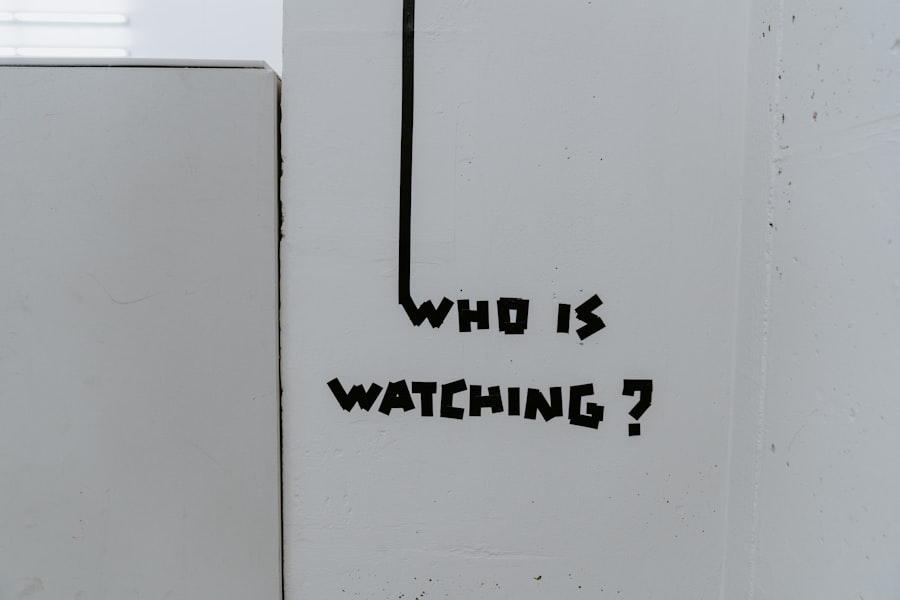
The most insidious aspect of tribal surveillance is its ability to silence dissent before it can even articulate itself. When the mechanisms of social control are deeply ingrained, you learn to self-censor, to stifle your inner voice before it has a chance to speak.
The Fear of Illumination
You may find yourself holding an opinion that clashes with the tribe’s consensus. The immediate instinct might be to remain silent, not out of agreement, but out of a primal fear of the consequences. You anticipate the judgment, the questioning, the potential for being labeled an anomaly.
The Internalized Critic
This fear becomes an internalized critic, a voice within you that preemptively silences any dissenting thought. It’s the voice that whispers, “Don’t say that, they won’t understand,” or “It’s not worth the trouble.” This internal censorship is a powerful tool of tribal surveillance, operating on a subconscious level.
The Weaponization of Social Bonds
The very bonds that give you strength can be turned against you. The people you care about, the people who are part of your tribe, can become agents of surveillance. Their questioning, their disappointment, their subtle manipulations are all expressions of the tribe’s influence.
The Manipulation of Affection
You might experience the withholding of affection or the implied threat of its withdrawal as a powerful lever. This emotional blackmail, however subtle, can compel you to conform. The desire to maintain positive relationships can override your commitment to truthful self-expression.
The Erosion of Moral Autonomy

Your conscience is your internal moral compass, guiding you towards what you perceive as right and wrong. Tribal surveillance threatens this autonomy by imposing an external moral framework that prioritizes group needs or dogma over individual ethical considerations.
The Shifting Moral Landscape
When the tribe’s “right” becomes your only standard, your personal sense of justice can become distorted. Actions that would ordinarily feel wrong might be rationalized if they serve the tribe’s interests. The clear lines of morality begin to blur.
The Justification of Injustice
You might find yourself complicit in or even actively participating in actions that, in isolation, you would condemn. The tribal narrative provides a ready-made justification: “It’s for the good of the group,” or “They deserve it because they are outsiders.” This capacity for self-deception is a direct consequence of relinquishing your moral autonomy.
The Diminished Capacity for Empathy
Tribalism often thrives on an “us versus them” mentality. This fosters a diminished capacity for empathy towards those outside your tribe. Their suffering might seem less significant, their concerns less valid, because they are not part of your designated in-group.
The Othering of Outsiders
This “othering” process is critical. Outsiders are stripped of their humanity, their individuality reduced to a set of negative tribalistic stereotypes. This makes it easier to dehumanize them, to justify actions against them, and to remain indifferent to their plight. Your conscience, which should extend to all sentient beings, becomes tribalized.
In exploring the complex dynamics between tribal surveillance and authentic conscience, one can gain deeper insights by examining related discussions on the topic. For instance, a thought-provoking article on the implications of societal pressures can be found at Unplugged Psych. This resource delves into how collective behaviors can influence individual moral decisions, shedding light on the tension between conforming to group norms and staying true to one’s personal beliefs.
Reclaiming Your Inner Voice
| Metrics | Tribal Surveillance | Authentic Conscience |
|---|---|---|
| Data Collection | Collects data for control and manipulation | Values privacy and ethical data collection |
| Decision Making | Based on groupthink and conformity | Based on individual values and principles |
| Trust | Relies on fear and coercion | Builds trust through transparency and honesty |
| Impact | Creates division and conflict | Promotes unity and understanding |
The journey back to an authentic conscience is not an easy one. It requires conscious effort, courage, and a willingness to confront the discomfort of potential isolation. But it is a necessary journey for genuine selfhood.
Cultivating Independent Thought
The first step is to actively cultivate independent thought. This means actively seeking out diverse perspectives, even those that challenge your ingrained beliefs. Read widely, engage in meaningful dialogue with those who hold different views, and consciously practice forming your own conclusions.
The Practice of Questioning
Make questioning a habit. Ask “why” not just of external authorities, but of yourself. Why do you believe what you believe? Are those beliefs truly yours, or have they been adopted from the tribe? This consistent self-interrogation is vital for dislodging externally imposed notions.
Embracing the Courage of Conviction
Authenticity often demands courage. It requires you to speak your truth, even when it’s unpopular. It means being willing to stand apart, to bear the potential disapproval of the tribe, for the sake of your own integrity.
The Small Acts of Defiance
This doesn’t necessarily mean grand gestures of rebellion. It can be as simple as expressing a dissenting opinion in a quiet conversation, refusing to participate in gossip that demonizes outsiders, or simply holding onto a personal value that clashes with tribal norms. These small acts of defiance are like seeds planted in the barren ground of conformity.
Redefining Belonging
True belonging should not come at the expense of your own identity. You can find connection and community without sacrificing your inner voice. Seek out groups that celebrate individuality and encourage critical discourse.
The Authentic Connection
Prioritize connections that allow for genuine expression, where vulnerability is met with understanding, not judgment. These are the relationships that nourish your authentic self, rather than attempt to reshape it according to a tribal blueprint. The ultimate safeguard against tribal surveillance of your conscience is the robust, independent, and courageous expression of your own moral authority.
FAQs
What is tribal surveillance?
Tribal surveillance refers to the monitoring and control of individuals within a group or community by the leaders or authorities of that group. It often involves the use of social pressure, coercion, and fear to enforce conformity to the group’s norms and values.
What is authentic conscience?
Authentic conscience refers to an individual’s inner sense of right and wrong, independent of external influences. It involves the ability to critically evaluate one’s actions and make moral decisions based on personal values and principles.
How does tribal surveillance impact individuals?
Tribal surveillance can lead to the suppression of individual autonomy and freedom of expression. It can create a culture of fear and conformity, inhibiting personal growth and self-expression. Individuals may feel pressured to conform to the group’s expectations, even if it goes against their authentic conscience.
What are the potential consequences of prioritizing tribal surveillance over authentic conscience?
Prioritizing tribal surveillance over authentic conscience can lead to the erosion of individual autonomy, creativity, and critical thinking. It can also result in the perpetuation of harmful social norms and practices, as individuals may feel compelled to adhere to the group’s expectations, even if it contradicts their authentic conscience.
How can individuals navigate the tension between tribal surveillance and authentic conscience?
Individuals can navigate this tension by cultivating self-awareness, critical thinking, and moral courage. It is important to reflect on personal values and principles, and to make decisions based on authentic conscience rather than succumbing to external pressures. Seeking support from like-minded individuals and fostering open dialogue within the community can also help navigate this tension.