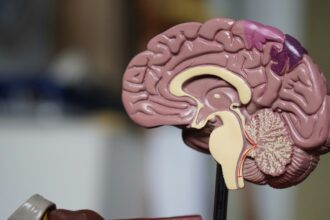
You know that feeling, don’t you? The one where you are absolutely, positively sure you’re right. About anything and everything. And then the world, with its inconvenient facts and shifting landscapes, stubbornly refuses to conform to your unwavering conviction. This isn’t just stubbornness; it’s a deeply ingrained cognitive phenomenon, a hallmark of your brain’s intricate architecture: the certainty bias. Coupled with this, you might find yourself repeatedly navigating the same frustrating circles, experiencing a profound sense of personal stuckness, often unable to articulate precisely why you can’t seem to move forward. This article will delve into the neuroscience behind these interconnected experiences, exploring how your brain’s predisposition towards certainty can inadvertently trap you in patterns of inaction and discontent.
Your brain, at its core, is a prediction machine. It’s constantly working to make sense of the vast, chaotic influx of sensory information, striving for order and predictability. This drive is not born out of a desire for absolute truth, but rather from an evolutionary imperative: reducing cognitive load and facilitating efficient decision-making. Imagine navigating a world where every single experience was entirely novel. It would be exhausting, and ultimately, unsustainable. Your brain, therefore, develops shortcuts, heuristics, and deeply ingrained beliefs that allow it to operate with a degree of confidence. This is where the certainty bias takes root.
The Neural Underpinnings of Conviction
At a fundamental level, the feeling of certainty is tied to the interconnectedness and strength of neural pathways. When you encounter information that aligns with your existing beliefs or understanding of the world, it reinforces those neural connections, making them more robust and readily accessible. This process feels comfortable, familiar, and, well, certain.
Hebbian Learning and Synaptic Plasticity
You’ve likely heard the adage, “neurons that fire together, wire together.” This is the essence of Hebbian learning and synaptic plasticity. When you repeatedly access or process information that supports a particular belief, the synapses between the neurons involved become stronger. This makes it easier and faster for those neurons to communicate in the future, solidifying your conviction and making it feel like an unshakeable truth. It’s like forging a well-trodden path in your mind; the more you travel it, the easier it is to traverse, and the harder it is to deviate.
The Dopamine Reward System and Confirmation
The pleasure you derive from being right has a distinct neurochemical basis. When you confirm your existing beliefs, your brain often releases dopamine, a neurotransmitter associated with reward and pleasure. This creates a positive feedback loop. The act of confirming your certainty feels good, so your brain is motivated to seek out further confirmation, subtly reinforcing the bias. This reward system can make it incredibly appealing to cling to existing beliefs, even when evidence to the contrary emerges.
The Role of the Amygdala in Threat Avoidance
Paradoxically, your brain’s drive for certainty also plays a role in threat avoidance. Uncertainty can activate the amygdala, the brain’s threat detection center, leading to feelings of anxiety, fear, and unease. By holding onto a firm belief, you create a sense of predictability and control, thereby reducing the activation of the amygdala. This can make disconfirming evidence feel like a threat, as it disrupts your carefully constructed sense of security. You might unconsciously resist information that challenges your worldview because it feels safer to remain within the boundaries of what you already believe to be true.
In exploring the intricate relationship between neuroscience and cognitive biases, particularly certainty bias and personal stuckness, a compelling article can be found at Unplugged Psychology. This resource delves into how our brain’s wiring influences our perception of certainty and the tendency to remain entrenched in familiar thought patterns, ultimately affecting decision-making and emotional well-being. By understanding these concepts, we can better navigate the challenges of personal growth and change.
The Dark Side of Certainty: How it Breeds Stuckness
While a degree of certainty is essential for functioning, an overreliance on it can be a significant impediment to personal growth and progress. This is where the phenomenon of personal stuckness emerges, often as a direct consequence of the certainty bias. When you are too convinced of your current understanding of a situation, yourself, or the world, you become less receptive to alternative perspectives and less willing to explore new avenues.
Cognitive Rigidity and the Inflexibility of Thought
The certainty bias fosters cognitive rigidity. When you are absolutely sure about something, your mind becomes less open to considering new information or different interpretations. This inflexibility can prevent you from seeing solutions that lie outside your current framework or from recognizing opportunities for change.
Schema Theory and the Filtering of Information
Your brain operates using schemas – mental frameworks or blueprints that organize information and guide your understanding of the world. When these schemas become overly rigid due to a strong certainty bias, they act as filters, allowing in only information that confirms your pre-existing notions and blocking out anything that contradicts them. This selective filtering ensures that your beliefs remain intact, but at the cost of a broader and more nuanced understanding of reality. Imagine wearing a pair of heavily tinted glasses; you can only see the world in a specific hue, missing out on the full spectrum of colors.
Rehearsal and Reinforcement of Limited Mental Models
The more you think about something in a particular way, the stronger that mental model becomes. The certainty bias encourages this constant rehearsal of existing thoughts and beliefs. You revisit them, reinforce them, and often explain them to yourself and others, solidifying their place in your cognitive landscape. This repeated mental exercise, while it strengthens the conviction, also entrenches limitations. It’s like repeatedly walking the same short loop, never venturing into the wider terrain that exists just beyond.
The Paralysis of Choice: When Certainty Undermines Action
Ironically, being too certain can also lead to inaction. When you are convinced you know the “right” way to do something, you might become hesitant to try anything else, even if the current path isn’t yielding the desired results. This can manifest as a fear of making the “wrong” decision, which ironically stems from the certainty of a single “correct” one.
The “Worst Case Scenario” Trap
Your certainty bias can amplify your anxieties about potential negative outcomes. If you are absolutely certain that a particular action will lead to disaster, or that a certain change will be detrimental, you will likely avoid that action, regardless of any potential benefits. This focus on the imagined disastrous outcome, often a product of your deeply held beliefs, can keep you frozen in place, unwilling to take even calculated risks. Your brain, convinced of the impending doom, triggers avoidance behaviors.
The Illusion of Control and its Counterproductive Effects
The feeling of certainty provides an illusion of control. You believe you understand the situation, its variables, and its likely outcomes. While this can be reassuring, it can also be counterproductive when that understanding is incomplete or inaccurate. When this illusion of control is shattered by reality, the resulting disorientation can be overwhelming, leading to a retreat into even stronger certainty about the next perceived “correct” course of action, perpetuating the cycle.
The Neuroscience of “Being Stuck”: More Than Just Inertia
Personal stuckness is not simply a matter of lacking motivation. It’s a complex interplay of cognitive biases, emotional responses, and neural pathways that create a self-perpetuating loop of inaction. The certainty bias is a significant player in this dynamic.
The Prefrontal Cortex and the Inhibition of Novelty
The prefrontal cortex (PFC) is crucial for executive functions, including planning, decision-making, and cognitive flexibility. When you are operating under a strong certainty bias, certain areas of your PFC might become less active when encountering information that challenges your existing beliefs. This reduced activity can hinder your ability to process novel information effectively and to generate new ideas or solutions.
Reduced Activity in Areas Associated with Cognitive Flexibility
Research has indicated that individuals with strong certainty biases may exhibit reduced activity in brain regions associated with cognitive flexibility, such as the dorsolateral prefrontal cortex. This suggests that the brain is less inclined to engage in tasks that require shifting perspectives or adapting to new information when a strong sense of certainty is present.
The Interplay Between Emotion and Cognition
Your emotions play a significant role in maintaining your certainty bias and thus your stuckness. When challenging information arises, it might trigger negative emotions like anxiety or defensiveness. These emotions, in turn, can further engage the amygdala and the limbic system, making it even more difficult for your PFC to override your ingrained beliefs and consider alternative possibilities. The emotional discomfort associated with changing your mind can be a powerful inhibitor.
The Entorhinal Cortex and Memory Reconsolidation Challenges
The entorhinal cortex is involved in memory formation and retrieval, particularly in spatial navigation and episodic memory. When you are stuck, your memories of past attempts and experiences might be replayed and reinforced in a way that confirms your current belief about being unable to progress. The brain’s process of memory reconsolidation, where memories are updated and modified each time they are recalled, can become biased towards reinforcing the “stuck” narrative.
The Reinforcement of “Failure” Narratives
If you have repeatedly experienced negative outcomes when trying to move forward, your brain may consolidate these memories in a way that strengthens the belief that future attempts will also fail. The certainty bias then rationalizes this by making you absolutely convinced that such attempts are futile. This creates a self-fulfilling prophecy, where your certainty of failure becomes the very reason for your continued failure.
The Difficulty in Accessing Alternative Interpretations of Past Events
When you are stuck, it can be incredibly challenging to access alternative interpretations of your past experiences. Your brain, reinforced by the certainty bias, favors the interpretation that supports your current state of stuckness. This makes it difficult to learn from the past in a way that facilitates change, as you are predisposed to see past events only through the lens of your current limitations.
Breaking Free: The Neuroscience of Shifting Perspective
Fortunately, your brain is not static. While the certainty bias and the resulting stuckness can feel deeply ingrained, neuroplasticity offers a pathway towards change. By understanding the neural mechanisms at play, you can consciously engage in strategies that promote cognitive flexibility and challenge your ingrained beliefs.
Actively Seeking Disconfirming Evidence
The most direct way to combat the certainty bias is to actively seek out information that contradicts your existing beliefs. This is uncomfortable, as it likely triggers those amygdala responses, but it is essential for eroding the foundations of your certainty.
The Importance of Intellectual Humility
Cultivating intellectual humility is key. This involves acknowledging the possibility that you might be wrong and being open to revising your beliefs. It’s about recognizing that your current understanding is not necessarily the absolute truth, but rather a current working model of reality. This mindset makes you more receptive to challenging information.
Engaging with Diverse Perspectives and Counterarguments
Actively engaging with individuals and sources that hold different viewpoints is crucial. Don’t just dismiss them; try to understand their reasoning. This exposes you to alternative interpretations and can help you identify the limitations of your own perspective. Deliberately exposing yourself to counterarguments can exercise those underutilized neural pathways related to cognitive flexibility.
Practicing Mindfulness and Metacognition
Mindfulness and metacognition – thinking about your own thinking – are powerful tools for disrupting the certainty bias and the patterns of stuckness. They allow you to observe your thoughts and biases without judgment, creating space for conscious intervention.
Observing Your Own Certainty Without Attachment
Mindfulness allows you to observe the feeling of certainty as it arises in your mind. Instead of automatically accepting it as truth, you can notice it as a mental event, a neural pattern. This detachment creates an opportunity to question its validity. You can ask yourself, “Why do I feel so sure about this? What evidence supports this feeling, and what evidence might contradict it?”
Identifying and Challenging Your Own Biases
Metacognition involves stepping back and analyzing your own cognitive processes. By becoming aware of your tendency to favor confirming evidence and resist disconfirming evidence, you can actively work to counteract these tendencies. You can ask yourself, “Am I filtering this information? Am I dismissing this idea too quickly because it doesn’t fit my pre-existing narrative?” This self-awareness is the first step towards breaking free from the cognitive loops that keep you stuck.
In exploring the intricate relationship between neuroscience and the phenomenon of certainty bias, one can gain valuable insights into the concept of personal stuckness. This cognitive bias often leads individuals to cling to familiar beliefs and resist change, which can significantly impact decision-making and mental well-being. For a deeper understanding of these dynamics, you may find the article on the neuroscience of decision-making particularly enlightening. It delves into how our brains process certainty and uncertainty, shedding light on why we sometimes feel trapped in our own thoughts. To read more about this fascinating topic, visit this article.
The Path Forward: Embracing the Uncertainty of Growth
| Metrics | Neuroscience of Certainty Bias | Personal Stuckness |
|---|---|---|
| Definition | The tendency of the brain to seek certainty and avoid ambiguity | The feeling of being trapped or unable to make progress in personal or professional life |
| Neurological Basis | Associated with the amygdala and prefrontal cortex | May involve the limbic system and prefrontal cortex |
| Impact on Decision Making | Can lead to overconfidence and resistance to change | Can result in indecision and fear of taking risks |
| Strategies for Overcoming | Mindfulness, cognitive reappraisal, and exposure to uncertainty | Therapy, coaching, and self-reflection |
Embracing a degree of uncertainty is not a sign of weakness; it is a prerequisite for growth and adaptation. The neuroscience of certainty bias and personal stuckness reveals that our brains, while wired for efficiency, can become trapped by their own predilection for the familiar and the confirmed.
The Benefits of Embracing Ambiguity
By intentionally stepping outside the comfort zone of absolute certainty, you open yourself up to new possibilities, learning, and genuine progress. The discomfort of ambiguity is often a sign that you are expanding your mental horizons and developing greater resilience.
Enhanced Problem-Solving Capabilities
When you are less bound by a rigid certainty bias, your problem-solving capabilities increase. You become more adept at considering multiple solutions, thinking creatively, and adapting your approach as circumstances change. The ability to hold multiple possibilities in mind, even conflicting ones, is a hallmark of effective problem-solving.
Increased Adaptability and Resilience
In a rapidly changing world, adaptability is paramount. By loosening the grip of certainty, you become more resilient to setbacks and more capable of navigating unforeseen challenges. Your brain becomes more adept at reconfiguring itself in response to new information and demands.
The Continuous Journey of Learning
The process of challenging your certainty bias and escaping stuckness is not a one-time event but a continuous journey. It requires ongoing self-awareness, a willingness to be wrong, and a commitment to learning and evolving. By understanding the intricate workings of your own brain, you can gain the tools and insights necessary to move forward, embrace the unknown, and ultimately, lead a more dynamic and fulfilling life. This is not about achieving perpetual certainty, but about cultivating the wisdom to navigate the inherent uncertainties with grace and a capacity for genuine growth.
FAQs
What is certainty bias in neuroscience?
Certainty bias in neuroscience refers to the tendency of the brain to prioritize information that confirms existing beliefs or assumptions, while disregarding contradictory evidence. This bias can lead to a sense of certainty or confidence in one’s beliefs, even when they may not be supported by objective evidence.
How does certainty bias contribute to personal stuckness?
Certainty bias can contribute to personal stuckness by reinforcing rigid thinking patterns and limiting openness to new information or perspectives. When individuals are overly confident in their beliefs, they may be less likely to consider alternative viewpoints or explore new possibilities, which can lead to feeling stuck in certain areas of their lives.
What are some examples of certainty bias in everyday life?
Examples of certainty bias in everyday life include individuals seeking out information that confirms their existing beliefs, dismissing contradictory evidence, and resisting change or new ideas. This bias can also manifest in decision-making processes, where individuals may overlook potential risks or alternative options due to a sense of unwavering certainty in their choices.
How can neuroscience help in overcoming certainty bias and personal stuckness?
Neuroscience can help in overcoming certainty bias and personal stuckness by providing insights into the brain’s cognitive processes and offering strategies for challenging rigid thinking patterns. By understanding the neural mechanisms underlying certainty bias, individuals can learn to cultivate greater cognitive flexibility and openness to new information, which can help alleviate feelings of stuckness.
What are some practical steps for addressing certainty bias and personal stuckness?
Practical steps for addressing certainty bias and personal stuckness may include practicing mindfulness to increase awareness of one’s thought patterns, seeking out diverse perspectives and information sources, engaging in cognitive-behavioral therapy to challenge rigid beliefs, and cultivating a growth mindset that embraces learning and adaptation. These approaches can help individuals break free from the constraints of certainty bias and navigate personal stuckness more effectively.