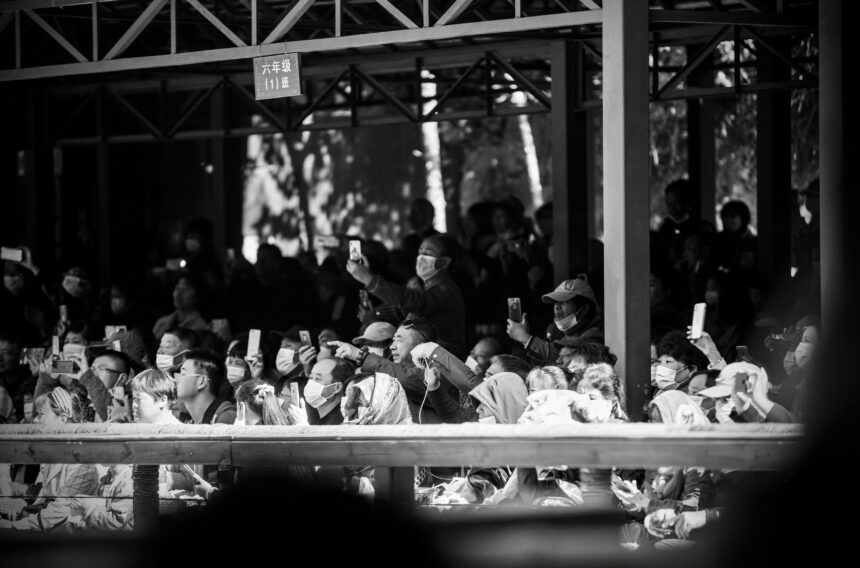
You move through your days, a ghost in your own life. You see the interactions, hear the conversations, feel the events unfolding, yet a part of you remains detached, an invisible specter peering through a frosted window. This is the feeling of being an observer, a pervasive sense of disconnect that can leave you questioning the very fabric of your reality and your place within it. It’s less a deliberate choice and more a subtle shift in perception, a gradual drifting away from the immediate experience.
In this exploration, we will delve into the multifaceted nature of this observational stance, examining its potential origins, its manifestations, and the practical implications it carries for your sense of self and your engagement with the world. You are not alone in this experience, and understanding its dynamics is the first step towards re-establishing a more integrated connection.
You often find yourself on the edge of every scene, like a solitary spectator at a bustling carnival. The laughter, the arguments, the shared anxieties—they all reach you, but as if filtered through a thick pane of glass. This isn’t akin to shyness or introversion, where you might feel a desire to engage but struggle with the act itself. Instead, it’s a more fundamental feeling of not being fully in it, of watching it all play out from a safe, albeit isolating, distance.
The Phenomenology of Observation
You experience this disjuncture on a sensory level. The vibrant colors of a sunset might register, but the awe-inspiring grandeur fails to truly resonate. The warmth of a friend’s embrace might be physically perceived, yet the emotional currents of connection feel muted. It’s as if your senses are delivering the raw data of reality, but the processing unit responsible for subjective interpretation and emotional coloration is operating at a reduced capacity. This internal estrangement can be disorienting, leaving you wondering if your internal compass for feeling is malfunctioning.
- The Sensory Disconnect: You may notice a peculiar flatness to sensory input. Food might taste ordinary, music might sound like mere noise, and physical touch might lack its usual richness. This isn’t a physical impairment of your senses but rather a cognitive dampening of your response to them.
- The Emotional Lag: Emotions, when they do surface, can feel delayed or as if they belong to someone else. You might intellectually understand that a situation warrants sadness or joy, but the corresponding emotional surge is absent or significantly diminished. This creates a chasm between your cognitive processing and your affective state.
- The Cognitive Commentary: Your mind might become a constant narrator, analyzing and dissecting every event and interaction, rather than simply experiencing it. This analytical overlay can prevent genuine immersion. You become a scholar of your own life, meticulously taking notes rather than participating in the lecture.
The Dissociative Tendencies
In some instances, this observational stance can verge on mild dissociation, a defense mechanism the mind employs to protect itself from overwhelming stimuli or trauma. While not necessarily indicative of a clinical disorder, these dissociative tendencies can manifest as a feeling of unreality or emotional blunting, where the world—or parts of it—seems distant or unreal. You might feel disconnected from your body, as if your consciousness is hovering above it, watching the body go through the motions. This can be particularly pronounced during times of stress or significant life changes.
- Depersonalization: This can involve a feeling of being detached from your own thoughts, feelings, memories, or body. You might feel like a robot going through pre-programmed actions, or that your emotions are not truly your own. It’s like observing yourself from a distance, as a character in a play, unable to fully influence the script.
- Derealization: This involves a feeling that the external world is unreal, distant, or distorted. Familiar surroundings may appear strange or dreamlike, and people might seem artificial or puppet-like. The vividness of reality seems to leach away, leaving a hazy, muted landscape.
If you’ve ever wondered why you feel like an observer in your own life, you might find the insights in this article particularly enlightening. It delves into the concept of depersonalization and how it can affect our perception of reality. Understanding these feelings can be crucial for personal growth and emotional well-being. For more information, you can read the article here: Unplugged Psych.
Unearthing the Roots: Potential Causes of Observational Detachment
Understanding why you feel like an observer is a crucial step towards addressing it. Like a detective examining a scene, you need to investigate the circumstances that may have led to this state of sustained observation. These roots can be varied and often intertwined, stemming from both internal psychological processes and external environmental factors.
The Formation of Coping Mechanisms
Early life experiences, particularly those that involved stress, unpredictability, or emotional neglect, can lead the developing mind to adopt observational strategies as a means of self-protection. By stepping back emotionally, you can create a buffer against perceived threats or overwhelming feelings. This was a survival mechanism, a way to navigate turbulent waters by watching from the shore.
- Childhood Adversity: Exposure to trauma, abuse, or abandonment in childhood can condition you to detach as a way to survive. You learn to observe the world rather than fully inhabit it to minimize perceived danger and emotional pain. The constant need to anticipate and adapt can train your mind to be hyper-vigilant and detached.
- Parental Styles: Certain parenting styles, such as those that are overly critical, emotionally distant, or highly demanding, can contribute to the development of observational detachment. Children in such environments may learn to monitor their parents’ moods and reactions from a distance to avoid disapproval or punishment.
The Impact of Modern Life and Societal Pressures
The contemporary world, with its relentless pace, constant digital connectivity, and emphasis on curated self-presentation, can also foster a sense of detachment. The bombardment of information and the pressure to perform can lead to a cognitive overload, prompting a retreat into observation as a form of sanctuary. You are bombarded with endless streams of data, yet the capacity to truly process and integrate it becomes strained.
- Information Overload: The sheer volume of news, social media updates, and notifications can desensitize you to individual events, making it difficult to connect emotionally. Each piece of information becomes just another pebble in an insurmountable pile, too numerous to grasp individually.
- The Cult of Productivity: Modern society often glorifies constant activity and achievement. This can create a fear of “slowness” or vulnerability, leading you to detach from authentic feeling in favor of appearing competent and in control. The constant pressure to be doing can overshadow the need to simply be.
- Digital Escapism: The allure of the digital world offers an accessible avenue for temporary escape. While it can provide connection and novelty, excessive reliance on it can further estrange you from tangible, in-person experiences and the full spectrum of human emotion. The glow of the screen can become a substitute for the warmth of genuine human interaction.
Many people often wonder why they feel like mere observers in their own lives, a phenomenon that can be both unsettling and enlightening. This sensation may stem from various psychological factors, including dissociation or a heightened sense of self-awareness. For those seeking to explore this topic further, a related article can provide valuable insights into the complexities of human perception and consciousness. You can read more about it in this informative piece on psychological experiences that delve into similar feelings and their implications. Understanding these emotions can lead to greater self-awareness and personal growth.
Existential Considerations
At a deeper level, a feeling of being an observer can be linked to existential questions about meaning and purpose. When you grapple with the vastness of existence and the apparent insignificance of individual lives, a sense of detachment can emerge as a way to manage this inherent uncertainty. You are a tiny boat on an immense ocean, and the sheer scale can induce a feeling of being adrift, observing the waves rather than steering the vessel.
- The Search for Meaning: The human drive to find purpose and significance can sometimes lead to a feeling of detachment when confronted with the inherent ambiguity of life. You might step back to analyze the bigger picture, seeking answers that remain elusive.
- Fear of Mortality: The awareness of your own impermanence can also contribute to a feeling of distance. To cope with the inevitability of death, you might adopt an observational stance, as if this life is merely a prologue to something more enduring, or a temporary display observed before the house lights dim.
Manifestations in Daily Life: When Observation Becomes the Norm

The feeling of being an observer isn’t a static state; it’s a dynamic pattern that can weave its way through various aspects of your existence, subtly altering your interactions and your perception of the world. It’s like a recurring theme in a symphony, sometimes subtle, sometimes dominant, but always present.
Interpersonal Relationships: The Ghostly Touch
Your interactions with others can become a stage where your observational tendencies are most evident. You might be present physically, but emotionally distant, leaving loved ones feeling a peculiar lack of genuine connection. It’s as if you’re delivering lines from a script, but the underlying emotion is missing, leaving the audience feeling unfulfilled.
- Conversational Detachment: During conversations, you may find yourself listening intently, offering well-reasoned replies, but without the usual emotional investment. You might be analyzing the subtext, planning your response, or even mentally checking out, rather than being fully present in the exchange. The other person might feel like they are talking to a highly intelligent automaton.
- Empathy in Abeyance: While you can intellectually understand another person’s feelings, the spontaneous surge of empathy—the ability to feel with them—can be dulled. You are capable of offering comfort and advice, but the shared emotional resonance that deepens connection is often absent. You can assess the damage, but you struggle to feel the pain alongside the injured party.
- Intimacy as an Abstract Concept: Genuine intimacy requires vulnerability and a willingness to be seen and felt. For the observer, this can be a daunting prospect. You might find yourself keeping others at arm’s length, protecting a perceived inner self. Romantic relationships, friendships, and family bonds can suffer from this emotional hedging. You can offer a handshake, but you struggle to clasp hands.
Professional and Academic Pursuits: The Disengaged Scholar
In your work or studies, you might be highly competent and intelligent, capable of analytical thought and problem-solving. However, the passion and intrinsic motivation that fuel deep engagement can be elusive. You pursue tasks with a sense of duty or obligation, rather than with genuine fervor.
- Task Completion Without Engagement: You can diligently complete assignments, meet deadlines, and achieve objectives. Yet, the internal drive, the spark of curiosity that makes learning or creating truly fulfilling, may be absent. The project is a thing to be finished, not an opportunity for growth or discovery.
- Performance as an Act: In professional settings, you might excel at presenting yourself as capable and collected. However, this performance can be informed by an observational detachment, a projection of what you believe is expected rather than an authentic expression of your internal state. You are playing a role, and the audience is your colleagues and superiors.
- Innovation Hindered: True innovation often arises from a passionate exploration of possibilities and a willingness to take risks. The observational stance can create a reluctance to venture into uncharted territory, favoring the safety of established patterns and known outcomes. The experimental nature of discovery is replaced by the predictable nature of observation.
Everyday Activities: The Muted Palette of Life
Even in the seemingly mundane moments of your day—a walk in the park, a meal with family, an evening at home—the observational disconnect can persist, rendering daily life a muted experience. The vibrant hues of existence can fade to a series of gray tones.
- Passive Consumption: You might find yourself passively consuming entertainment or information, scrolling through feeds or binge-watching shows without active engagement or critical reflection. The experience is one of absorption, not participation.
- The Routine as a Grid: Daily routines can become a predictable grid, observed and executed flawlessly but lacking the spontaneous moments of joy or unexpected discovery. You follow the lines without deviation, seeing the structure but not the potential for a hidden garden.
- Moments of Disconnect: Even during moments that are often described as joyful or profound—a wedding, a concert, a significant achievement—you might find your mind drifting, observing the scene rather than fully immersing yourself in the experience. You are present, but your spirit is elsewhere, perhaps watching a replay.
Navigating the Disconnect: Reclaiming Your Connection

Recognizing and understanding your observational detachment is a significant stride. The next, more challenging, but ultimately rewarding step is to actively work towards re-establishing a more integrated sense of self and a deeper connection with your experiences. This isn’t about eradicating your observational capacity, which can be valuable, but about recalibrating its dominance. It’s about learning to be both the observer and the participant, the architect and the inhabitant of your life.
Cultivating Present Moment Awareness (Mindfulness)
Mindfulness practices are designed to anchor you firmly in the “now,” drawing your awareness away from the periphery and into the heart of the experience. By consciously directing your attention to your senses, your breath, and your immediate surroundings, you can begin to dismantle the observational barrier.
- Somatic Awareness: Engage your physical senses deliberately. Notice the texture of your clothes, the taste of your food, the sounds around you, the feeling of your feet on the ground. These grounding techniques pull your awareness back into your body and your immediate environment.
- Mindful Breathing: Your breath is a constant, reliable anchor to the present moment. Set aside dedicated time to simply focus on the sensation of inhaling and exhaling. This simple act can interrupt cycles of rumination and observation.
- Observing Thoughts Without Judgment: Mindfulness involves observing your thoughts as transient events, rather than becoming entangled in them. You can acknowledge the urge to observe, note it without judgment, and gently redirect your attention back to the present. It’s about watching the clouds drift across the sky without trying to control their path.
Reconnecting with Emotions: The Art of Feeling
Re-engaging with your emotional landscape requires courage and a willingness to be vulnerable, both with yourself and with others. It’s about learning to interpret the internal signals that have been muted, and to allow yourself to feel them more fully.
- Emotional Labeling: Practice identifying and labeling your emotions as they arise. Even a simple “I am feeling a sense of frustration” or “This is a moment of quiet contentment” can begin to restore emotional clarity. The more you can name them, the more real they become.
- Journaling for Emotional Exploration: Dedicate time to writing about your feelings. Explore the nuances of your emotional experiences, their triggers, and their impact. This can provide a safe space to process emotions that you might otherwise suppress or observe from afar.
- Seeking Therapeutic Support: A therapist can provide invaluable guidance and support in uncovering the roots of your observational detachment and developing strategies for emotional reconnection. They can offer tools and perspectives to help you navigate complex feelings and past experiences.
Active Engagement and Vulnerability
Stepping out of the observational role requires a conscious effort to engage more fully with your life and with others. This often involves a calculated embrace of vulnerability, which can be a powerful catalyst for deeper connection.
- Initiating Interactions: Instead of waiting for others to reach out, take the initiative to connect. Suggest activities, express your interest, and actively participate in conversations. Be the one to extend the hand, not just to feel the handshake.
- Expressing Your Needs and Feelings: Practice articulating your needs and emotions to trusted individuals. This can feel uncomfortable at first, but it is essential for building authentic connection. It’s about moving from a passive recipient of social cues to an active communicator of your inner world.
- Embracing Imperfection: The observational stance often arises from a desire for control and a fear of making mistakes. Embrace the reality that imperfection is inherent to the human experience. Allow yourself to be flawed, to stumble, and to learn from those moments.
Your journey out of the observer’s seat and into the vibrant arena of lived experience is a process, marked by gradual shifts and conscious choices. By understanding the nature of this disconnect, exploring its origins, and actively cultivating presence, emotion, and engagement, you can begin to weave yourself more fully into the tapestry of your own life, experiencing its richness and complexity not as a distant spectator, but as an integral and feeling participant.

WATCH NOW ▶️ SHOCKING: Why Your “Intuition” Is Actually a Prediction Error
FAQs
What does it mean to feel like an observer in your own life?
Feeling like an observer in your own life refers to a sensation of detachment or disconnection from your experiences, as if you are watching events happen rather than actively participating in them. This can be related to psychological states such as dissociation or depersonalization.
What are common causes of feeling like an observer?
Common causes include stress, anxiety, trauma, depression, or certain neurological conditions. It can also occur as a coping mechanism during overwhelming situations or as a symptom of dissociative disorders.
Is feeling like an observer a sign of a mental health issue?
While occasional feelings of detachment can be normal, persistent or intense sensations of observing rather than participating in life may indicate underlying mental health issues such as depersonalization-derealization disorder, anxiety disorders, or depression, and should be evaluated by a professional.
How can someone manage or reduce the feeling of being an observer?
Techniques such as mindfulness meditation, grounding exercises, therapy (especially cognitive-behavioral therapy), stress management, and maintaining social connections can help reduce feelings of detachment and increase engagement with one’s experiences.
When should someone seek professional help for feeling like an observer?
If the feeling of being an observer is frequent, distressing, interferes with daily functioning, or is accompanied by other symptoms like anxiety, depression, or memory problems, it is advisable to seek evaluation and support from a mental health professional.