
You find yourself entangled in a debate, a writhing knot of opposing viewpoints, each thread pulled taut, threatening to snap. The conventional wisdom often dictates that resolution lies in a superior argument, a definitive proof, a vanquishing of one perspective by another. However, this approach, while seemingly logical, often perpetuates the very conflict it seeks to resolve. Instead, consider a paradigm shift: the cessation of the debate itself, not through victory, but through a collective reframing – a re-sculpting of the intellectual landscape until the battle lines themselves fade. This is not about capitulation, but about architectural transformation.
Before you can dismantle the trenches, you must understand why they were dug in the first place. Debates, particularly those that become protracted and acrimonious, are rarely solely about the stated subject matter. They are often proxy wars for deeper, more complex issues.
The Illusion of Objective Reality
You, like many, likely believe in a singular, verifiable truth. However, your perception of this truth is inherently filtered through your own experiences, biases, and cognitive frameworks. Imagine two people standing at opposite ends of a long corridor. Both see the corridor, but their perspectives on its length, its lighting, and its ultimate destination will differ, even if infinitesimally. This personal filter, often unconscious, distorts the “objective reality” and fuels disagreement.
The Primacy of Identity
Your positions in a debate are often intertwined with your identity. To concede a point can feel akin to conceding a part of yourself, a chipping away at your intellectual or even moral edifice. This psychological anchor means that changing your mind is not just a rational exercise but an emotional undertaking, a challenge to your very self-perception.
The Allure of Tribalism
Humans are social creatures, programmed for belonging. Debates often foster a sense of tribalism, where individuals align with groups who share their perspectives. Once you identify with a particular “side,” the victory of that side becomes paramount, even at the expense of genuine understanding or compromise. This tribal loyalty can be a powerful inhibitor to shifting perceptions, creating an echo chamber where dissenting voices are muted or dismissed.
In the quest to end the debate about your perception, it’s essential to explore various perspectives and strategies that can enhance your understanding of self and others. A related article that delves into this topic is available on Unplugged Psych, which offers insights into the psychological aspects of perception and communication. You can read more about it by visiting this link: Unplugged Psych. This resource can provide valuable tools to help clarify your viewpoint and foster more meaningful discussions.
The Art of Cognitive Empathy: Stepping into Another’s Framework
To facilitate a shift in perceptions, you must first master cognitive empathy – the ability to understand another person’s thoughts and feelings as if they were your own, without necessarily adopting them. This is not emotional sympathy, but a mental exercise in perspective-taking.
Mapping the Opponent’s Mental Model
Consider the mental model your counterpart employs. What are their core assumptions, their foundational beliefs, their priorities? Visualize their cognitive architecture. Think of it as attempting to read a map drawn by someone else, using their symbols and legend, not your own. You may not agree with the destination, but you must understand how they charted their course.
Identifying the Underlying Needs and Values
Beneath the surface of expressed opinions lie fundamental human needs and values. A debate about economic policy, for instance, might superficially be about tax rates, but at a deeper level, it could be about security, fairness, opportunity, or individual liberty. By recognizing these deeper currents, you can move beyond the superficial disagreement to a more foundational understanding of motivation.
The Power of “Curiosity over Conviction”
You are often driven by a desire to convince, to prevail. Try instead to cultivate curiosity. Approach the other person’s viewpoint not as something to be dismantled, but as something to be explored. Ask open-ended questions that invite elaboration: “Could you help me understand why you hold that particular view so strongly?” “What experiences led you to this conclusion?” This shift in approach signals a willingness to learn, not just to preach.
Architects of Consensus: Designing Pathways to Shared Understanding
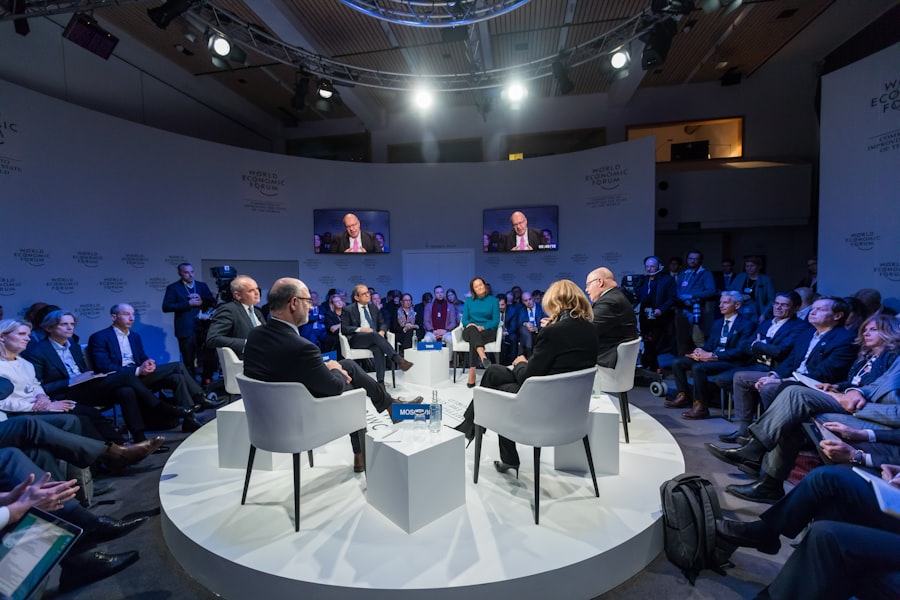
Once you have deconstructed the battlefield and cultivated cognitive empathy, you can begin to architect pathways towards shared understanding, not necessarily shared agreement. The goal is to move from a zero-sum game to a collaborative exploration.
Rephrasing the Problem Statement
The way a problem is framed often dictates the available solutions. If the problem is framed as “Who is right?”, then the only possible resolutions are victory or defeat. Consider reframing it as “How can we address this challenge effectively?” or “What are the various ways to view this situation?” This broader framing allows for a wider array of potential responses, moving beyond rigid binaries.
Unearthing the Common Ground
Even in the most intractable debates, there often exists a substratum of shared values, goals, or concerns. While opinions on the how may differ wildly, the desire for a safer community, a more prosperous future, or a healthier environment can be universal. Identify these commonalities and build upon them. These shared values can serve as anchors in the turbulent waters of disagreement.
The Ladder of Abstraction
When debates become stuck in granular detail, elevate the discussion to a higher level of abstraction. If you are debating the specific wording of a policy, for example, consider the overarching principles it is intended to uphold. Conversely, if the debate is too abstract, bring it down to tangible examples and their practical implications. Moving up and down this “ladder of abstraction” can help you find points of resonance and divergence that were previously obscured.
The Semantic Shift: Remodeling Language for Resolution

Language is not merely a tool for expressing ideas; it shapes them. By consciously remodeling the language used in a debate, you can subtly but profoundly alter the perceptions of all involved.
Neutralizing Loaded Terminology
You will often encounter “loaded” terms – words infused with strong positive or negative connotations designed to elicit an emotional response rather than foster rational discussion. Identify these terms and replace them with more neutral, descriptive language. Instead of “draconian regulations,” for example, consider “new policy adjustments.” This detachment from emotive language allows for a more objective examination.
Shifting from Accusation to Observation
Accusatory language (“You are wrong,” “Your argument is flawed”) instantly triggers defensiveness. Reframe your contributions as observations (“I perceive a different outcome,” “From my perspective, this aspect presents a challenge”). This subtle semantic shift disarms hostility and opens the door for genuine dialogue rather than entrenched position-taking.
The Power of Provisional Language
Absolute statements (“This is the truth,” “It must be done this way”) often signal an unwillingness to consider alternatives. Employ provisional language (“It appears that,” “It could be argued that,” “Perhaps one way to view this is”). This invites collaboration and signifies an openness to ongoing exploration, rather than a declaration of finality.
In the quest to end the debate about your perception, it can be helpful to explore various perspectives and insights that challenge your current views. One such resource is an article that delves into the intricacies of perception and how it shapes our understanding of reality. By examining different viewpoints, you can gain a more comprehensive understanding of your own beliefs. For further reading, you might find this article on perception enlightening: check it out here. Engaging with diverse ideas can ultimately lead to a more nuanced perspective and help resolve any lingering debates.
Cultivating a Post-Debate Mindset: Sustaining Shifting Perceptions
| Metric | Description | Measurement Method | Example Value |
|---|---|---|---|
| Clarity of Communication | How clearly you express your perception to others | Survey rating on a scale of 1-10 | 8 |
| Consistency of Message | Frequency of delivering the same perception without contradictions | Count of consistent statements over time | 95% |
| Active Listening | Degree to which you acknowledge and address opposing views | Number of reflective responses in conversation | 7 per discussion |
| Emotional Control | Ability to remain calm and composed during debate | Self-assessment and observer rating | High |
| Use of Evidence | Incorporation of facts and data to support perception | Number of credible sources cited | 3+ |
| Closing Statement Effectiveness | Impact of final remarks in summarizing and ending debate | Audience feedback and agreement rate | 85% |
Ending a specific debate is one step; cultivating an environment where destructive debates are less likely to arise is another. This requires a sustained commitment to intellectual humility and ongoing evolution.
Embracing Intellectual Humility
Recognize that your own understanding is always incomplete and subject to revision. The world is a complex, ever-changing tapestry, and your intellectual lens is just one thread within it. Cultivate a willingness to be wrong, not as a weakness, but as an opportunity for growth. This humility is the bedrock of open-mindedness.
The Iterative Nature of Understanding
Think of understanding not as a fixed destination, but as a continuous journey. Your perceptions will shift, evolve, and deepen over time as you encounter new information and perspectives. Embrace this iterative process rather than seeking a definitive, unchallengeable endpoint. The “resolution” you achieve today may be the starting point for a refined understanding tomorrow.
Focus on Process Over Outcome
While achieving a specific outcome is often the immediate goal of a debate, consider shifting your focus to the quality of the process. If the dialogue is respectful, empathetic, and intellectually rigorous, even if a definitive “solution” isn’t immediately apparent, you have achieved a valuable outcome in itself. A healthy process lays the groundwork for future collaboration and more effective problem-solving.
In conclusion, you possess the agency to transcend the conventional model of debate as a gladiatorial contest. By meticulously deconstructing its roots, cultivating cognitive empathy, designing pathways to shared understanding, and remodeling language, you can shift perceptions away from inherent conflict and towards generative resolution. This is not about declaring a winner, but about redefining the very nature of the game, transforming adversarial encounters into collaborative explorations on the path to a more nuanced and collectively understood reality. The cessation of the debate, then, is not an act of surrender, but an act of strategic wisdom, an intellectual alchemy that transmutes discord into a shared journey of discovery.

WARNING: Your Empathy Is a Biological Glitch (And They Know It)
FAQs
What does it mean to end the debate about your perception?
Ending the debate about your perception means clarifying or resolving misunderstandings or disagreements regarding how others interpret your thoughts, actions, or intentions.
Why is it important to address differing perceptions?
Addressing differing perceptions is important because it helps improve communication, reduces conflicts, and fosters better relationships by ensuring that others understand your true perspective.
What are effective ways to clarify your perception to others?
Effective ways include clear and honest communication, providing examples or evidence to support your viewpoint, actively listening to others, and asking for feedback to ensure mutual understanding.
Can changing your behavior influence how others perceive you?
Yes, changing your behavior can influence others’ perceptions by aligning your actions with your intended message, which helps reinforce or alter how people interpret your character or intentions.
Is it possible to completely control how others perceive you?
No, it is not possible to completely control others’ perceptions because they are influenced by individual experiences, biases, and interpretations; however, you can manage and influence perceptions through consistent and clear communication.