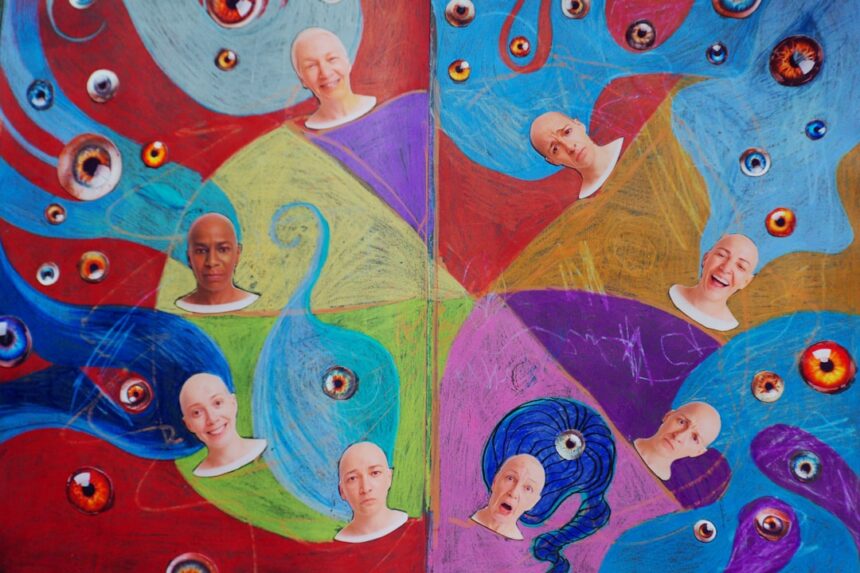
You inhabit a complex machine, one that constantly interprets and constructs your reality: the brain. While often lauded for its processing power and intricate functionalities, this biological marvel is far from infallible. You’ve likely experienced its quirks firsthand, moments where perception deviates from objective reality, or where memory plays tricks – these are what we refer to as glitches. This article will delve into the multifaceted nature of these neural misfires, exploring their origins, manifestations, and implications for your understanding of self and the world around you.
Your brain, for all its sophistication, is an evolutionary patchwork, not a perfectly engineered supercomputer. It’s a system built upon layers of older, more primitive structures, with newer, more complex additions integrated over time. This layered architecture inherently introduces vulnerabilities.
Heuristics and Cognitive Biases: Shortcuts to Misinterpretation
To navigate the overwhelming torrent of information from your senses, your brain employs heuristics – mental shortcuts that simplify decision-making and problem-solving. While generally efficient, these heuristics are prone to systematic errors, known as cognitive biases.
Anchoring Bias: The First Impression Trap
You might encounter this when evaluating a price. The first number you see, even if arbitrary, significantly influences your subsequent judgments. Your brain “anchors” to this initial piece of information, making it difficult to deviate far from it, irrespective of logical arguments. This can lead you to overpay for a product or undervalue a service simply because of the initial figure presented to you.
Confirmation Bias: Seeking Validation, Not Truth
You instinctively gravitate towards information that confirms your existing beliefs and dismiss contradictory evidence. This is a powerful and pervasive glitch. Consider a political debate: you’re more likely to remember and internalize arguments that align with your party’s stance, while actively scrutinizing or forgetting those that challenge it. This creates an echo chamber within your own mind, making it difficult to engage with alternative perspectives.
Availability Heuristic: The Vividness Effect
If an event is easily recalled or particularly vivid in your memory, you tend to overestimate its likelihood. For example, after seeing a news report about a plane crash, you might temporarily perceive air travel as more dangerous than it statistically is. Your brain prioritizes readily available information, even if it’s not representative of the broader reality.
Sensory Illusions: When Perception Deceives You
Your brain doesn’t passively record reality; it actively constructs it based on sensory input and prior expectations. This construction process is fertile ground for illusions.
Optical Illusions: The Eye’s Deception, the Brain’s Interpretation
You’ve undoubtedly encountered famous optical illusions, such as the Müller-Lyer illusion where lines of equal length appear different due to arrowheads. Your visual system attempts to make sense of the incoming data within the context of depth cues and spatial relationships, leading to a misinterpretation. The brain prioritizes creating a coherent, albeit sometimes inaccurate, picture.
Auditory Illusions: Hearing What Isn’t There
Similar to optical illusions, auditory illusions demonstrate how your brain can misinterpret sound. The Tritone Paradox, for instance, presents a sequence of tones that can be perceived as ascending by some listeners and descending by others, depending on their linguistic background and internal auditory schema. Your brain imposes order and meaning onto ambiguous sensory data.
Phantom Limbs: A Ghostly Presence
Perhaps one of the most striking examples of sensory glitching is the phenomenon of phantom limbs. Individuals who have undergone amputation often report feeling sensations, including pain, in the missing limb. Your brain retains a neural map of the body, and even in the absence of physical input from the limb, this map can generate sensory experiences, demonstrating the brain’s capacity to create its own reality irrespective of external stimuli.
The phenomenon of feeling unreal, often referred to as depersonalization or derealization, can be quite disconcerting for those who experience it. For a deeper understanding of this brain glitch, you may find the article on Unplugged Psych particularly insightful. It explores the psychological mechanisms behind these feelings and offers strategies for coping with them. To read more, visit Unplugged Psych.
The Memory Maze: Recalling What Never Was
Your memory is not a perfect recording device, but rather a dynamic and reconstructive process. Each time you retrieve a memory, you effectively “re-edit” it, making it susceptible to distortion and fabrication.
False Memories: Inventing the Past
You are not immune to creating entirely fictitious memories or significantly altering existing ones. This isn’t a sign of deliberate deception, but rather a testament to the reconstructive nature of memory.
Misinformation Effect: Leading Questions Lead to Altered Recall
If you are exposed to misleading information after witnessing an event, your memory of that event can subtly shift to incorporate the false details. For example, if you see a car accident and are later asked if you saw “the broken headlight” (when in fact, the headlight was merely cracked), you might subsequently “remember” a broken headlight. Your brain attempts to integrate new information into existing memory structures.
Imagination Inflation: The Power of Suggestion
Simply imagining an event can increase your confidence that it actually happened. The more vividly you imagine something, especially if others suggest it might have occurred, the more likely your brain is to construct it as a genuine memory. This highlights the fluidity between imagination and memory, demonstrating how your internal world can shape your recollection of the external.
Source Monitoring Errors: Forgetting Where You Heard It
You might remember a piece of information but forget the source of that information. This can lead you to believe you personally experienced something when you merely heard about it, or to mistakenly attribute a statement to one person when another actually said it. Your brain prioritizes the content over its origin, leading to misattributions.
Tip-of-the-Tongue Phenomenon: The Word on the Edge
You’ve almost certainly experienced this frustrating glitch: you know a word, you can almost taste it, but it just won’t surface. Your brain has access to the information, but the neural pathways for retrieval are temporarily blocked or inefficient. This highlights the complex and sometimes temperamental nature of lexical access and retrieval from your vast internal dictionary.
Emotional Overlays: How Feelings Skew Your Reality

Your emotions are not merely reactions; they are powerful architects of your perception, memory, and decision-making. When your brain is under the sway of strong emotions, its typical processing mechanisms can be significantly altered.
Affective Forecasting: Predicting Happiness, Predicting Wrongly
You frequently make predictions about how future events will make you feel. However, your brain is surprisingly poor at affective forecasting. You tend to overestimate the intensity and duration of future emotional responses, both positive and negative. For example, you might believe winning the lottery will bring perpetual happiness, or a breakup will lead to unending despair, often finding reality to be more nuanced. Your brain struggles to accurately simulate future emotional states.
Mood-Congruent Memory: The Lens of Emotion
When you are in a particular mood, you are more likely to recall memories that are consistent with that mood. If you are feeling down, your brain tends to dredge up negative experiences, making you feel even worse. Conversely, when you are happy, positive memories come to the forefront. Your emotional state acts as a filter, highlighting specific types of memories and pushing others into the background.
The Amygdala’s Grip: Fear’s Distorting Lens
The amygdala, your brain’s fear center, can take over in moments of extreme stress or perceived threat. When this happens, your finely tuned cognitive processes can become secondary to survival instincts. You might experience tunnel vision, your perception of time can distort (either speeding up or slowing down), and your memory of the event might be fragmented or inaccurate after the fact due to the overwhelming emotional load. Your brain prioritizes immediate survival over detailed, accurate recording.
Brain Disorders and Neurological Glitches

Beyond the common eccentricities of a healthy brain, various neurological conditions can manifest as profound and persistent glitches, offering stark insights into the brain’s delicate balance.
Hallucinations: Perceptions Without External Stimuli
In conditions like schizophrenia, you might experience hallucinations – sensory perceptions that occur in the absence of an external stimulus. These can be auditory (hearing voices), visual (seeing things that aren’t there), tactile, or even olfactory. Your brain is generating internal experiences and perceiving them as real, highlighting a fundamental breakdown in differentiating between internally generated thoughts and external reality.
Delusions: Unshakeable False Beliefs
Delusions are fixed, false beliefs that are resistant to logic and evidence. You might believe you are a famous historical figure, that you are being persecuted, or that your thoughts are being controlled by external forces. These are profound glitches in the brain’s ability to construct a coherent and reality-based narrative of your self and your place in the world. Your brain creates an internal story that is immune to external correction.
Prosopagnosia: Face Blindness
For individuals with prosopagnosia, you might find it incredibly difficult or impossible to recognize familiar faces, even those of close family members or your own reflection. Your brain’s specific facial recognition circuitry is impaired, leaving you unable to differentiate individuals based on their unique facial features, even while other visual processing remains intact. This demonstrates the highly specialized nature of certain neural functions.
Aphantasia: The Absence of the Mind’s Eye
You likely take your ability to conjure mental images for granted – to “see” a red apple in your mind’s eye without it physically being present. However, individuals with aphantasia lack this capacity. They do not experience voluntary visual imagery. This reveals a spectrum of internal representational abilities and highlights that what you consider a fundamental aspect of thought is not universally shared. Your brain’s internal screen, for them, remains blank.
Many individuals experience a peculiar sensation known as depersonalization, where they feel detached from their own thoughts and body, leading to a sense of unreality. This phenomenon can be unsettling and is often linked to anxiety or stress. For those interested in exploring this topic further, a related article discusses the intricacies of this brain glitch and offers insights into its causes and potential coping strategies. You can read more about it in this informative piece that delves into the psychological aspects of feeling unreal.
Living with the Glitches: Adaption and Awareness
| Metric | Description | Typical Range/Value | Relevance to Feeling Unreal |
|---|---|---|---|
| Prefrontal Cortex Activity | Brain region involved in self-awareness and reality monitoring | Reduced activity during episodes | Lower activity linked to feelings of unreality and depersonalization |
| Temporal-Parietal Junction (TPJ) Activation | Area associated with body perception and self-location | Altered activation patterns | Disruptions may cause out-of-body sensations and derealization |
| Heart Rate Variability (HRV) | Measure of autonomic nervous system balance | Decreased HRV during episodes | Indicates stress response linked to feeling unreal |
| Glutamate Levels | Neurotransmitter involved in excitatory signaling | Elevated or dysregulated in some cases | May contribute to altered perception and cognition |
| Duration of Episodes | Length of time feeling unreal persists | Seconds to hours | Varies widely among individuals |
| Frequency of Episodes | How often feelings of unreality occur | From rare to multiple times daily | Higher frequency linked to clinical depersonalization disorder |
Understanding your brain’s susceptibility to glitches is not a cause for despair, but rather an invitation for greater self-awareness and critical thinking. You are equipped with a powerful, albeit imperfect, instrument.
Metacognition: Thinking About Your Thinking
Developing metacognitive skills – the ability to reflect on your own thoughts and cognitive processes – is crucial. When you catch yourself making a snap judgment or reacting emotionally, pausing to question your own assumptions and biases can help mitigate the impact of your brain’s shortcuts. You can learn to identify when your brain is taking a shortcut that might lead to error.
Critical Evaluation of Information: Questioning Your Inputs
Given your brain’s tendency towards confirmation bias and the misinformation effect, actively seeking out diverse perspectives and critically evaluating information sources becomes paramount. Don’t passively accept incoming data; question its origin, its motivations, and its potential biases. This proactive approach helps to counteract the brain’s natural inclination to reinforce existing beliefs.
Embracing Uncertainty: The Limits of Knowledge
Your brain naturally seeks certainty and coherence. However, true understanding often requires embracing ambiguity and acknowledging the limits of your own knowledge and perception. Recognizing that your internal reality is a constructed interpretation, not an absolute reflection of objective truth, allows for greater intellectual flexibility and humility. Your internal model of the world, while robust, is not perfect.
In conclusion, your brain is a remarkable organ, but it is also a glitch-prone system. From the widespread influence of cognitive biases and sensory illusions to the profound alterations seen in neurological disorders, the instances where your perception and cognition deviate from a pristine reality are numerous. By understanding these intrinsic vulnerabilities, you gain invaluable insight not only into the workings of this complex biological machine but also into the very nature of your reality, consciousness, and self. You are, in essence, a sophisticated bio-computer that occasionally runs on faulty software, and knowing this empowers you to debug your own experience.

WATCH NOW ▶️ WARNING: Your “Healing” Is Actually Avoidance (Stop Hiding)🚨
FAQs
What does the term “feeling unreal” mean in relation to brain function?
“Feeling unreal” refers to a sensation often described as depersonalization or derealization, where individuals perceive themselves or their surroundings as strange, dreamlike, or not real. This experience is linked to temporary disruptions in brain processes that integrate sensory information and self-awareness.
What causes the brain glitch that leads to feeling unreal?
The brain glitch causing feelings of unreality can result from various factors, including stress, anxiety, trauma, neurological conditions, or certain medications. It involves altered activity in brain regions responsible for processing sensory input and maintaining a coherent sense of self.
Is feeling unreal a common experience?
Yes, many people experience brief episodes of feeling unreal at some point in their lives, especially during periods of intense stress or fatigue. However, persistent or severe episodes may indicate an underlying mental health condition requiring professional evaluation.
How does the brain process contribute to the sensation of unreality?
The sensation of unreality arises when the brain’s normal integration of sensory signals and self-perception is disrupted. This can affect areas such as the temporal lobe and prefrontal cortex, leading to a disconnect between perception and emotional response, causing the feeling that the environment or self is unreal.
Can the feeling of unreality be treated or managed?
Yes, treatment depends on the underlying cause. Approaches may include therapy, stress management techniques, medication for anxiety or depression, and lifestyle changes. Understanding and addressing triggers can help reduce the frequency and intensity of these episodes.