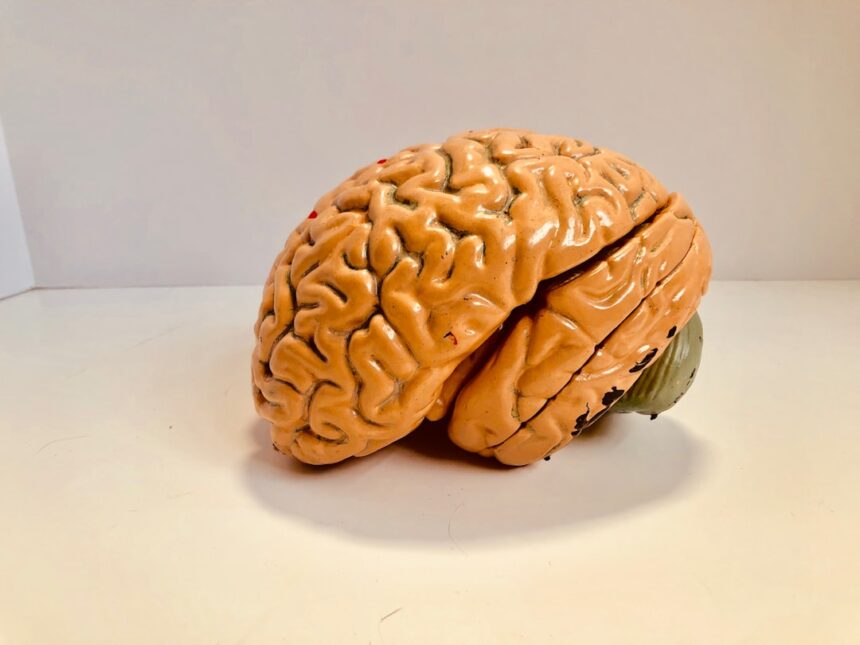
You stand at the precipice of a profound transformation, a journey not into the external world, but into the intricate landscape of your own mind. The concept of “creativity” often evokes images of artistic genius or groundbreaking scientific discoveries, achievements seemingly beyond the reach of ordinary individuals. However, this perception is a misconception. Creativity is an intrinsic human capacity, a fundamental cognitive process that can be cultivated and enhanced. This article will guide you through the mechanisms of your brain and present actionable strategies to unlock and amplify your creative potential, effectively “rewiring” your neural circuitry for innovative thought.
Your brain is not a static entity; it is a dynamic, plastic organ constantly adapting and restructuring itself based on your experiences and actions. This neuroplasticity is the bedrock upon which all creative development rests. To understand how to enhance creativity, you must first grasp the brain regions and networks that underpin it.
The Default Mode Network (DMN)
The Default Mode Network (DMN) is a collection of brain regions that become active when you are not focused on an external task. This network is instrumental in self-reflection, envisioning future scenarios, and mind-wandering – activities often associated with creative incubation. You might dismiss these moments of introspection as unproductive, but they are crucial for nascent ideas to coalesce.
- Role in Idea Generation: The DMN allows for the free association of ideas, connecting seemingly disparate concepts. When you engage in daydreaming or allow your mind to wander, you are essentially providing a fertile ground for novel connections to form.
- Relationship with Working Memory: While the DMN is active during unfocused states, its interaction with working memory, which holds and manipulates information for short periods, is vital. Ideas generated in the DMN often need to be held in working memory for further refinement and elaboration.
The Executive Control Network (ECN)
In contrast to the DMN, the Executive Control Network (ECN) is engaged when you are actively focusing on a task, regulating attention, and making decisions. This network is critical for the deliberate, analytical aspects of creative work, allowing you to evaluate and refine initial ideas.
- Critical Evaluation and Refinement: Once the DMN generates a multitude of ideas, the ECN comes into play, enabling you to select the most promising concepts, identify flaws, and strategize for their implementation. This is where the filtering process occurs, preventing a deluge of unviable ideas from overwhelming you.
- Problem-Solving and Task Initiation: When you encounter a creative block, the ECN assists in formulating strategies to overcome it, breaking down complex problems into manageable components. It also initiates the focused effort required to translate an abstract idea into a tangible outcome.
The Salience Network (SN)
The Salience Network (SN) acts as a switch, modulating the activity between the DMN and the ECN. It identifies relevant internal and external stimuli and directs your attention accordingly. In a creative context, the SN helps you detect novel or significant information that might lead to an innovative breakthrough.
- Shifting Attentional Focus: The SN is responsible for alerting you to unexpected patterns or inconsistencies that could signal a creative opportunity. For instance, if you are brainstorming solutions to a problem, the SN might highlight an unusual connection between two previously unrelated concepts.
- Integrating Information: This network plays a crucial role in integrating information from various sources, both conscious and unconscious. It helps you synthesize diverse data points into a cohesive understanding, often leading to “aha!” moments.
If you’re interested in learning how to rewire your brain for creative thinking, you might find this insightful article on the topic particularly helpful. It delves into various techniques and exercises that can enhance your creative abilities by reshaping your thought processes. For more information, check out the article here: How to Rewire Your Brain for Creative Thinking.
Cultivating Divergent and Convergent Thinking
Creativity is often characterized by two distinct yet complementary modes of thought: divergent and convergent. Understanding and actively engaging both is paramount to unlocking your full creative potential.
Divergent Thinking: Expanding the Possibilities
Divergent thinking involves generating a wide array of ideas, exploring multiple solutions, and thinking “outside the box.” It is characterized by spontaneity, non-conformity, and a willingness to explore unconventional avenues.
- Brainstorming and Mind Mapping: These techniques are classic examples of divergent thought. When you brainstorm, you are encouraged to produce as many ideas as possible, suspending judgment and allowing for free association. Mind mapping visually organizes these ideas, revealing connections you might not have otherwise perceived. You might liken this to casting a wide net into the ocean, hoping to catch a diverse range of fish.
- Lateral Thinking Challenges: Engaging in puzzles or problems that require unconventional solutions helps train your brain to think laterally. These exercises encourage you to abandon traditional approaches and seek alternative perspectives.
- Embracing Ambiguity and Openness: True divergent thinking requires you to tolerate uncertainty and avoid prematurely settling on a single solution. It means being comfortable with not knowing the “right” answer immediately. Think of yourself as an explorer in uncharted territory, where every path is a potential discovery.
Convergent Thinking: Refining the Output
Convergent thinking, on the other hand, involves evaluating and synthesising the generated ideas, narrowing down the possibilities to identify the most effective or appropriate solution. It is analytical, structured, and focused on achieving a specific outcome.
- Critical Analysis and Evaluation: Once you have a plethora of ideas, you must critically assess their feasibility, originality, and potential impact. This involves applying logical reasoning and criteria-based assessment. You are no longer casting a net; you are meticulously sorting your catch.
- Prioritization and Selection: Not all ideas are equally valuable. You must prioritize and select those that align best with your objectives, resources, and constraints. This often involves making difficult choices and sacrificing less promising options.
- Prototyping and Iteration: For tangible creative outputs, convergent thinking guides the process of prototyping and iterating. You build, test, refine, and repeat, progressively improving your chosen solution. This is where the abstract idea begins to take concrete form, like a sculptor refining a block of marble.
Establishing a Creative Ecosystem

Your environment, both physical and mental, profoundly influences your creative output. To consistently generate novel ideas and solutions, you must cultivate an ecosystem that fosters creativity.
Strategic Solitude and Collaboration
While it might seem contradictory, both solitude and collaboration are crucial components of a productive creative ecosystem.
- The Power of Solitude: Periods of uninterrupted solitude allow your DMN to fully engage in mind-wandering and introspection, leading to deeper insights and novel connections. Without external distractions, your subconscious can process information and form new associations. Consider the analogy of tending a quiet garden where seeds can germinate undisturbed.
- The Benefits of Collaboration: Engaging with diverse perspectives through collaboration can spark new ideas and challenge existing assumptions. Constructive feedback and different viewpoints can help you identify blind spots and refine your concepts. This is akin to cross-pollination, where different plants interact to create new, hybridized species.
- Balancing Both: The optimal creative process often involves oscillating between these two states. Solitude for initial exploration, followed by collaborative brainstorming for refinement, and then returning to solitude for deeper development.
Cultivating Curiosity and Continuous Learning
Curiosity is the engine of creativity. A perpetual desire to learn and explore new domains enriches your mental database, providing more raw material for your brain to process and combine in novel ways.
- Interdisciplinary Exploration: Deliberately exposing yourself to knowledge from diverse fields can lead to unexpected analogies and solutions. For example, a biologist might find inspiration for a new drug delivery system by studying architecture.
- Reading Widely and Deeply: Beyond your immediate area of expertise, immerse yourself in books, articles, and documentaries that broaden your horizons. The more information you consume, the more connections your brain can potentially make. Think of your mind as a vast library; the more diverse the books you add, the more potential for new narratives to emerge.
- Asking “Why?” and “What If?”: Cultivate a childlike curiosity, relentlessly questioning assumptions and exploring alternative scenarios. This habit pushes you beyond conventional thinking and into the realm of possibilities.
Overcoming Creative Blocks and Fostering Resilience
Even the most prolific creators encounter moments of stagnation. Understanding the origins of creative blocks and developing strategies to overcome them is a vital skill.
Identifying the Root Cause
Creative blocks are rarely arbitrary; they often stem from underlying psychological or environmental factors. Diagnosing the cause is the first step toward resolution.
- Fear of Failure and Judgment: The apprehension of producing something imperfect or being judged negatively can paralyse your creative impulse. This fear often leads to self-censorship, where nascent ideas are suppressed before they can fully form. Imagine a tightrope walker paralyzed not by a faulty rope, but by the fear of falling.
- Perfectionism: While a desire for quality is commendable, extreme perfectionism can stifle iteration and experimentation. If you are constantly striving for an unattainable ideal, you may never bring any project to fruition. This is like endlessly polishing a stone, fearing that any scratch will render it worthless, rather than appreciating its inherent beauty.
- Burnout and Mental Fatigue: Continuous creative exertion without adequate rest can lead to mental exhaustion, making it difficult to generate new ideas. Your brain, like any muscle, requires periods of recovery to function optimally.
Strategies for Reinvigoration
When faced with a creative impasse, employ conscious strategies to reset your mental state and stimulate new thought patterns.
- Mindfulness and Meditation: Practicing mindfulness can help to quiet the internal critic and reduce anxiety, allowing for greater access to your creative insights. Meditation trains your attention, enabling you to observe thoughts without judgment, thereby reducing the impact of self-sabotaging thoughts. This is like clearing the static from a radio signal, allowing the true broadcast to come through.
- Physical Activity and Nature Exposure: Engaging in physical exercise increases blood flow to the brain, enhancing cognitive function. Spending time in nature has been shown to reduce stress and improve mental clarity, often leading to spontaneous creative breakthroughs. Consider a walk in the woods as a mental palate cleanser, refreshing your senses and allowing new flavors to emerge.
- Seeking Inspiration in Unconventional Places: When your usual sources of inspiration run dry, actively seek exposure to novel experiences or environments. Visiting a museum, attending a concert, or even observing people in a new city can spark unexpected connections. This is like refilling your well from a different spring when your current one has run dry.
- Setting Small, Achievable Goals: Overcoming a large creative block can seem daunting. Break down your creative process into smaller, manageable tasks. Achieving these small victories can build momentum and restore confidence. Each successful step, no matter how small, becomes a building block in your edifice of creation.
To enhance your creative thinking, it’s essential to explore various techniques that can help rewire your brain. One insightful resource on this topic can be found in an article that delves into the science behind creativity and offers practical strategies for fostering innovative thought. By incorporating mindfulness practices and engaging in diverse experiences, you can stimulate your brain’s neural pathways and unlock new ways of thinking. For more information, you can read the article on rewiring your brain for creativity.
Practical Techniques for Brain Rewiring
| Technique | Description | Frequency | Expected Outcome | Supporting Research |
|---|---|---|---|---|
| Mindfulness Meditation | Practice focused attention to increase awareness and reduce mental clutter. | Daily, 10-20 minutes | Improved divergent thinking and cognitive flexibility. | Zeidan et al., 2010; Colzato et al., 2012 |
| Brainstorming Sessions | Generate multiple ideas without judgment to encourage free thinking. | Weekly or as needed | Increased idea fluency and originality. | Osborn, 1953; Nijstad et al., 2010 |
| Learning New Skills | Engage in unfamiliar activities to form new neural connections. | Monthly or ongoing | Enhanced neural plasticity and creative problem-solving. | Draganski et al., 2004; Li et al., 2016 |
| Physical Exercise | Regular aerobic activity to boost brain function and mood. | 3-5 times per week, 30 minutes | Improved executive function and creative thinking. | Colcombe & Kramer, 2003; Oppezzo & Schwartz, 2014 |
| Sleep Optimization | Maintain consistent sleep schedule to support memory and insight. | Nightly, 7-9 hours | Better problem-solving and idea incubation. | Walker & Stickgold, 2010; Cai et al., 2009 |
| Exposure to Diverse Environments | Experience new cultures, places, or perspectives to broaden thinking. | Occasionally, as possible | Increased cognitive flexibility and novel associations. | Maddux & Galinsky, 2009 |
Rewiring your brain for enhanced creativity involves consistently applying specific techniques that strengthen neural pathways associated with innovative thought.
The Power of Brain Games and Puzzles
Engaging in activities that challenge your cognitive abilities directly stimulates the brain regions involved in problem-solving and flexible thinking.
- Lateral Thinking Puzzles: These puzzles, requiring non-obvious solutions, train your brain to think outside established parameters, strengthening your divergent thinking muscles. For example, “A man is driving his car. He turns on the radio and hears that his wife has been murdered. He stops the car and kills himself. How did he know his wife was murdered?” (Answer: He was in a submarine; the radio was playing a recording of the news from the past. The point is to challenge your assumptions about the environment and sequence of events.)
- Chess and Strategy Games: Games that demand strategic planning, anticipation of moves, and adaptive thinking improve your Executive Control Network’s efficiency. They exercise your ability to consider multiple future scenarios and select optimal paths. Think of these as mental workouts for your strategic faculties.
- Learning a New Skill: Acquiring a new skill, especially one that engages different parts of your brain (e.g., playing a musical instrument, learning to code, or mastering a new language), creates new neural connections and enhances overall cognitive flexibility.
Deliberate Practice and Reflection
Intentional effort and metacognitive awareness are crucial for sustained creative development.
- Scheduled “Creative Time”: Allocate specific, uninterrupted blocks of time in your schedule solely for creative exploration. Treat this time with the same importance as any other professional appointment. This dedicates a space for your creative muscles to be consistently exercised.
- Journaling and Idea Capture: Regularly documenting your thoughts, observations, and nascent ideas in a journal or digital notepad prevents promising concepts from slipping away. Reviewing these entries can often reveal unexpected connections or forgotten insights. Your journal acts as an external hard drive for your creative thoughts, allowing for later retrieval and analysis.
- Post-Mortem Analysis of Projects: After completing a creative project, take time to reflect on what worked, what didn’t, and what you learned. This meta-cognitive practice helps you refine your creative process and avoid repeating previous mistakes. This is like a chef meticulously dissecting a successful dish to understand its components and refine the recipe for future creations.
- Seeking Constructive Feedback: Actively solicit feedback from trusted peers or mentors. An external perspective can identify blind spots, offer alternative solutions, and provide valuable insights for refinement. This external validation and critique are essential for growth, much like a mirror reflects imperfections you might otherwise miss.
You possess an incredible capacity for creativity, a deep well of innovation waiting to be tapped. By understanding the intricate workings of your brain, consciously applying techniques to foster both divergent and convergent thinking, cultivating a supportive creative ecosystem, and developing resilience against creative blocks, you are not merely engaging in a hobby; you are actively rewiring your neural pathways. This systematic approach transforms your mental landscape, enabling you to approach challenges with renewed ingenuity and consistently generate original solutions. The journey of unlocking your creativity is not a destination, but a continuous process of exploration, learning, and self-discovery.
FAQs
What does it mean to rewire your brain for creative thinking?
Rewiring your brain for creative thinking involves changing the neural pathways through consistent practice and new experiences, which enhances your ability to generate original ideas and solve problems innovatively.
How can practicing mindfulness help improve creative thinking?
Mindfulness helps improve creative thinking by increasing focus, reducing stress, and promoting a state of open awareness, which allows for better idea generation and the ability to see problems from different perspectives.
What role does neuroplasticity play in developing creativity?
Neuroplasticity is the brain’s ability to reorganize itself by forming new neural connections. This adaptability enables individuals to develop creative thinking skills by learning new techniques and engaging in creative activities.
Are there specific exercises that can help rewire the brain for creativity?
Yes, exercises such as brainstorming, free writing, engaging in diverse hobbies, solving puzzles, and practicing lateral thinking can stimulate the brain and promote creative neural pathways.
How long does it take to rewire the brain for enhanced creative thinking?
The time required varies by individual and practice intensity, but consistent effort over weeks to months is generally needed to form new neural connections that support improved creative thinking.