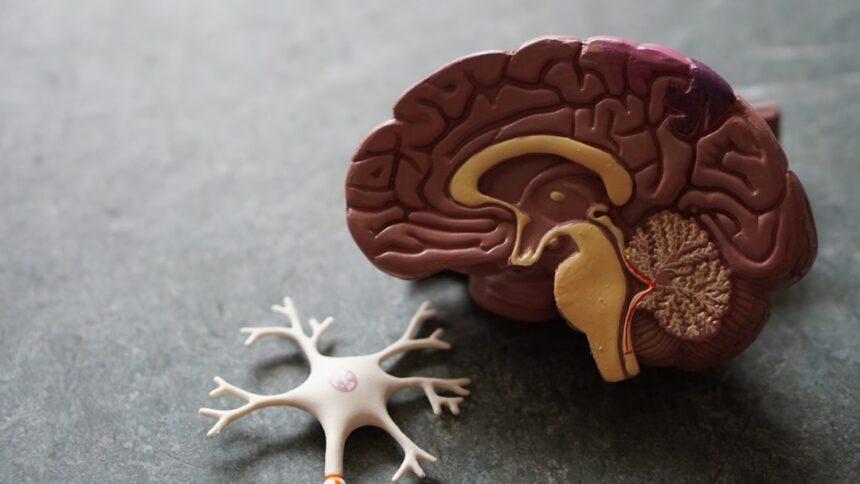
Embarking on a journey into the intricate workings of the human mind, you will find yourself grappling with concepts that fundamentally challenge your understanding of what is real. This exploration focuses on brain buffering and reality distortions, two phenomena that intricately weave together to shape your subjective experience of the world. Far from being mere philosophical musings, these mechanisms are deeply rooted in neurobiology and psychology, influencing your perceptions, memories, and even your sense of self.
Your brain is not a passive recipient of sensory information; it is an active constructor of your reality. Imagine your brain as a sophisticated supercomputer, constantly processing an overwhelming torrent of data from your senses. However, this processing isn’t a straightforward translation. Instead, your brain actively interprets, filters, and even fabricates aspects of your experience to create a coherent and navigable world. This ongoing, dynamic process of reality construction is fundamental to your existence.
Sensory Input and Predictive Processing
At the core of this construction lies sensory input. Your eyes, ears, nose, tongue, and skin are constantly feeding data to your brain. But this data is often ambiguous, noisy, and incomplete. Your brain doesn’t just wait for all the information to arrive; it proactively predicts what it expects to perceive based on prior experiences and learned patterns. This predictive processing is like a highly efficient hypothesis generator, constantly testing and updating its internal models of the world. If there’s a discrepancy between what your brain predicts and what it actually receives, it will adjust its predictions or, in some cases, even override the sensory data with its own expectations.
Internal Models and Cognitive Schemas
To facilitate this predictive processing, your brain develops and maintains an extensive network of internal models and cognitive schemas. Think of these as mental blueprints for how the world works. When you encounter a new situation, your brain quickly accesses relevant schemas to make sense of it. For instance, you have a schema for “chair” that allows you to recognize various forms of chairs, even if you’ve never seen that particular design before. These schemas are not static; they are constantly being refined and updated based on new experiences. They act as shortcuts, allowing your brain to process information more efficiently and conserve cognitive resources.
The Problem of Ambiguity
The world you inhabit is inherently ambiguous. Shadows can be menacing or benign, sounds can be music or noise, and even physical sensations can be interpreted in multiple ways. Your brain, in its quest for coherence, attempts to resolve this ambiguity by imposing meaning. This means that your perception is not a direct photocopy of reality but rather an interpretation, colored by your past experiences, emotional state, and current goals. What one person perceives as a threat, another might perceive as a challenge, simply due to differing internal models.
In exploring the intricate relationship between the brain’s buffering mechanisms and the phenomenon of reality distortions, a fascinating article can be found that delves into these concepts in greater depth. The article discusses how our cognitive processes can sometimes create a filtered perception of reality, leading to various distortions in our understanding and interpretation of the world around us. For more insights on this topic, you can read the full article here: Understanding Brain Buffering and Reality Distortions.
Understanding Brain Buffering
Brain buffering is a crucial mechanism that allows your brain to maintain a stable and cohesive experience of reality despite constant change and potential inconsistencies. Imagine your brain as a film editor, constantly piecing together disparate frames of sensory data into a smooth, continuous narrative. Without this buffering, your experience would be fragmented, jarring, and overwhelming.
Filtering and Prioritization of Information
One of the primary functions of brain buffering is to filter out irrelevant information and prioritize what is most important. You are constantly bombarded with sensory data – the hum of the refrigerator, the texture of your clothes, the faint scent of something cooking. If your brain attended to all of this equally, you would be paralyzed by sensory overload. Buffering mechanisms, often operating unconsciously, select and amplify pertinent information while dampening the salience of trivial details. This allows you to focus your attention efficiently on what matters most for your immediate goals and survival.
Temporal Smoothing and Continuity
Your experience of time is not a series of discrete, disconnected moments. Instead, you perceive a continuous flow. Brain buffering contributes to this by smoothing out temporal discontinuities. For instance, when you blink, your world doesn’t go dark; your brain seamlessly reconstructs the missing visual information, maintaining the illusion of uninterrupted vision. Similarly, during rapid eye movements (saccades), your brain suppresses motion blur and merges the different snapshots into a coherent visual field. This temporal smoothing is essential for a stable and predictable perception of the world.
Cognitive Load Optimization
Maintaining a coherent reality is cognitively demanding. Brain buffering also plays a role in optimizing cognitive load. By anticipating and filling in gaps, and by filtering out irrelevant data, your brain reduces the amount of strenuous processing required. This allows you to conserve mental energy for more complex tasks and decision-making. Think of it as your brain intelligently compressing data, much like a computer algorithm, to ensure efficient processing and storage.
The Role of Prediction in Buffering
Predictive processing, as discussed earlier, is intimately linked with brain buffering. Your brain constantly predicts upcoming sensory events, and these predictions inform the buffering process. If a prediction is accurate, the sensory data is easily integrated into your existing reality model. If there’s a mismatch, your brain might work to minimize the perceived discrepancy, either by adjusting its prediction or by subtly altering your perception to fit the prediction. This constant interplay between prediction and sensory input is a testament to the dynamic nature of your reality construction.
The Spectrum of Reality Distortions
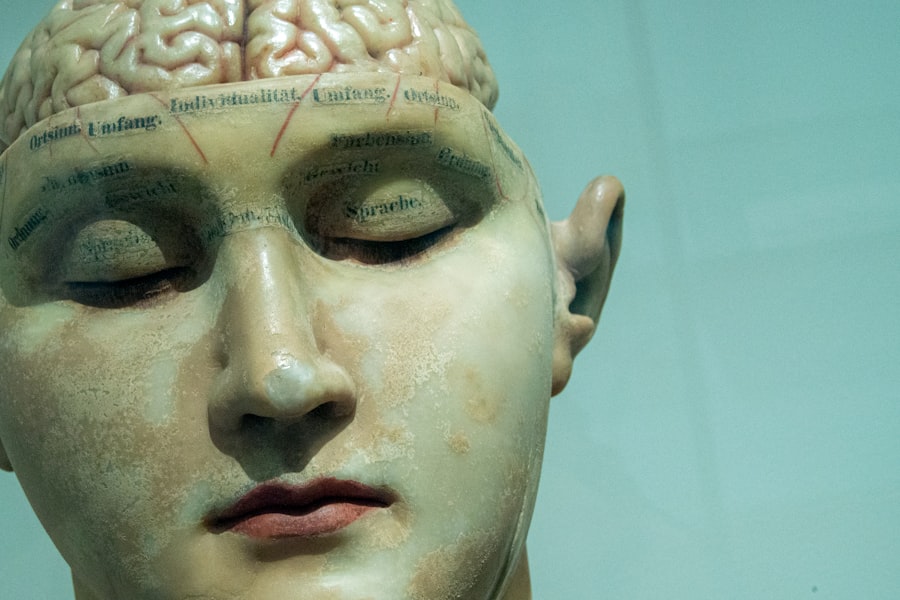
While buffering usually serves to enhance your experience of reality, it can also lead to distortions. These distortions are not necessarily pathological; they are an inherent consequence of your brain’s active construction process. They exist on a spectrum, ranging from everyday perceptual quirks to severe psychiatric conditions.
Perceptual Illusions and Ambiguities
At the benign end of the spectrum are perceptual illusions and ambiguities. These are instances where your brain’s interpretation of sensory data deviates from objective reality, often in predictable ways. Examples include optical illusions like the Müller-Lyer illusion or the Rubin vase. These illustrate how your brain actively imposes structure and meaning on ambiguous stimuli, sometimes leading to inaccurate conclusions. You are not seeing “what is there,” but rather “what your brain believes is there.”
Cognitive Biases and Heuristics
Beyond purely visual phenomena, your brain employs cognitive biases and heuristics as cognitive shortcuts. While these can be efficient for quick decision-making, they can also lead to systematic errors in judgment and perception. Confirmation bias, for example, leads you to selectively attend to information that confirms your existing beliefs, while ignoring contradictory evidence. Availability heuristic causes you to overestimate the likelihood of events based on how easily examples come to mind. These biases represent subtle but pervasive distortions in your understanding of the world.
Memory Distortion and Reconstruction
Your memories are not perfect recordings of past events; they are reconstructions. Each time you retrieve a memory, your brain actively rebuilds it, often incorporating new information or filling in gaps. This reconstructive nature of memory makes it susceptible to distortion. Eyewitness testimonies, for instance, are notoriously unreliable due to the malleability of memory. Your brain, in its effort to create a coherent narrative, can inadvertently alter or even fabricate details of past events, leading to a distorted view of your own history.
The Influence of Emotion and Expectation
Your emotional state and expectations exert a profound influence on your perception. When you are feeling anxious, you might be more prone to interpreting ambiguous stimuli as threatening. Conversely, a positive mood can lead you to perceive the world through rose-colored glasses, downplaying negative aspects. The placebo effect is another powerful demonstration of how expectation can alter your physical and perceptual experience. Your brain, driven by your emotional state and belief system, can literally change what you perceive and feel.
Maladaptive Reality Distortions

While some reality distortions are commonplace and harmless, others can be profoundly disruptive and indicative of underlying neurological or psychological conditions. These maladaptive distortions signify a breakdown in the brain’s buffering and reality construction mechanisms.
Hallucinations and Delusions
At the severe end of the spectrum are hallucinations and delusions, often associated with psychiatric disorders such as schizophrenia. Hallucinations are sensory experiences that occur in the absence of an external stimulus, such as hearing voices or seeing things that aren’t there. Delusions are firmly held false beliefs that are resistant to logical argument or evidence. In these cases, the brain’s internal models and predictive processes become so dominant that they override or severely distort actual sensory input, creating a reality that is fundamentally divergent from objective consensus.
Depersonalization and Derealization
Depersonalization and derealization are dissociative phenomena where you experience a sense of detachment from yourself (depersonalization) or from your surroundings (derealization). These experiences can be profoundly unsettling, making you feel as if you are observing your life from outside your body or that the world around you is unreal or dreamlike. These conditions suggest a disruption in the brain’s ability to seamlessly integrate different aspects of your perception and self-awareness, leading to a fragmented or distant sense of reality.
The Impact of Neurological Damage
Neurological damage, such as stroke or traumatic brain injury, can also lead to significant reality distortions. For example, individuals with specific brain lesions might experience neglect, where they are unaware of one side of their body or visual field, even though their sensory organs are functioning normally. This demonstrates how localized damage can disrupt the intricate neural networks responsible for constructing a unified and coherent perception of reality. The brain’s buffering mechanisms, when compromised, can lead to fundamental alterations in how you experience the world.
In exploring the intricate relationship between the brain and our perception of reality, one fascinating aspect is how buffering can lead to distortions in our understanding of the world around us. This phenomenon is particularly relevant in today’s digital age, where constant information overload can create a disconnect from reality. For a deeper dive into this topic, you might find the article on the Unplugged Psych website insightful, as it discusses the impact of technology on cognitive processes. You can read more about it here.
Navigating Your Constructed Reality
| Metric | Description | Typical Values | Impact on Brain Function |
|---|---|---|---|
| Buffering Duration | Time brain delays processing sensory input to manage overload | 100-300 milliseconds | Short buffering improves focus; prolonged buffering may cause confusion |
| Reality Distortion Frequency | Number of perceptual distortions experienced per hour | 0-2 (normal), 3+ (elevated) | Higher frequency linked to stress, fatigue, or neurological conditions |
| Neural Synchronization | Degree of coordinated activity between brain regions during buffering | 70-90% coherence | High synchronization supports effective buffering and reduces distortions |
| Perceptual Accuracy | Percentage of sensory inputs correctly interpreted | 95-99% | Lower accuracy indicates increased reality distortions |
| Cognitive Load | Amount of mental effort during buffering | Low to High (scale 1-10) | High cognitive load can increase buffering time and distortions |
Understanding brain buffering and reality distortions empowers you to critically examine your own perceptions and experiences. You are not a passive observer of an objective reality; you are an active participant in its construction. This awareness has significant implications for your personal growth, interactions with others, and your overall philosophical outlook.
Developing Metacognitive Awareness
Cultivating metacognitive awareness – the ability to think about your own thinking – is crucial for navigating your constructed reality. By becoming more aware of your cognitive biases, emotional influences, and the inherent malleability of your memory, you can begin to question your own perceptions and assumptions. This involves challenging your immediate interpretations and seeking alternative perspectives, rather than blindly accepting your brain’s initial constructions.
Empathy and Understanding Others’ Realities
Recognizing that others also perceive reality through their own unique “lenses” of brain buffering and internal models fosters empathy. What seems unequivocally true to you might be genuinely perceived differently by someone else, not out of malice or ignorance, but due to the inherent subjectivity of human experience. This understanding can reduce conflict, improve communication, and promote a more tolerant and nuanced view of diverse perspectives.
The Evolving Nature of Reality
Your reality is not static; it is constantly evolving. As you learn new things, experience new situations, and refine your internal models, your perception of the world shifts. Embracing this dynamism allows for intellectual flexibility and a willingness to revise your beliefs in the face of new evidence. Just as your brain continually updates its buffering mechanisms, you too can actively refine your understanding of what is real.
The Continuous Journey of Self-Discovery
Ultimately, exploring brain buffering and reality distortions is a continuous journey of self-discovery. By delving into the mechanisms that shape your experience, you gain a deeper appreciation for the complexity and wonder of your own mind. You begin to see yourself not just as a conscious entity, but as a sophisticated biological system constantly engaged in the breathtaking act of creating and maintaining your subjective world. This knowledge, rather than diminishing reality, enhances your appreciation for its intricate and deeply personal nature.
WARNING: Your Empathy Is a Biological Glitch (And They Know It)
FAQs
What is brain buffering?
Brain buffering refers to the brain’s ability to manage and regulate sensory input and cognitive processes to maintain stable perception and function despite external or internal disturbances.
How do reality distortions occur in the brain?
Reality distortions occur when the brain misinterprets sensory information or internal signals, often due to neurological, psychological, or pharmacological factors, leading to altered perceptions or beliefs that do not align with objective reality.
What are common causes of reality distortions?
Common causes include mental health disorders such as schizophrenia, neurological conditions like epilepsy, the influence of psychoactive substances, sleep deprivation, and extreme stress or trauma.
Can brain buffering prevent reality distortions?
Brain buffering mechanisms can help reduce the likelihood or severity of reality distortions by filtering and integrating sensory information effectively, but they are not always sufficient to prevent distortions, especially in pathological conditions.
How is research on brain buffering and reality distortions useful?
Research helps in understanding the neural mechanisms underlying perception and cognition, improving diagnosis and treatment of mental health disorders, and developing interventions to enhance cognitive resilience and reduce the impact of reality distortions.