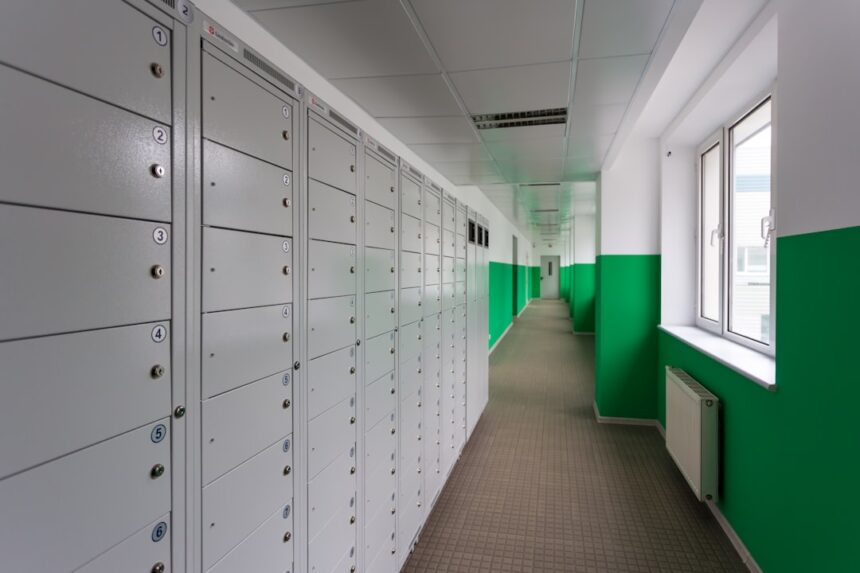
You stand at the threshold, a liminal space often overlooked yet profoundly influential. Your journey through any structure, be it a bustling corporate office or a quiet suburban home, is punctuated by hallways. These conduits, far from being mere utilitarian passages, are precisely engineered environments that subtly dictate your experience. This article meticulously examines the concept of “The Staged Dissociation of Hallways,” a phenomenon where the intentional design and manipulation of these transitional zones subtly detaches you from your immediate surroundings, preparing your psychology for the next architectural encounter. Through strategic visual cues, acoustic alterations, and spatial geometries, hallways become more than just connectors; they become psychological filters, actively shaping your perception and interaction with the spaces they link.
You might intuitively understand what a hallway is, but its origins are more nuanced than you might imagine. The term “hallway” itself is relatively modern, derived from “hall,” an ancient architectural element. Historically, the great hall was the central, communal space in many large dwellings, acting as the heart of social and functional life. As architectural complexity increased and specialization of rooms emerged, the need for dedicated circulation paths became apparent.
Ancient Antecedents: From Courtyards to Corridors
Your understanding of early architecture reveals that direct access between functionally distinct rooms was uncommon. Instead, you would often traverse open courtyards or series of interconnected chambers, each serving multiple purposes. The Roman domus, for example, featured a central atrium and peristyle, functioning as both open-air circulation and light wells. As you move through time, you observe the gradual enclosure of these open-air passages, a critical step towards the modern hallway. Monastic cloisters, with their covered arcades surrounding a central garden, offer an early example of a dedicated, though still open-sided, circulation system. These spaces, while not yet fully enclosed hallways, began to manage the flow of people and define boundaries between different functions.
The Medieval Shift: Specialization and Seclusion
You witness in medieval castles and manors a significant shift. The great hall, once the multi-functional heart, started to shrink in prominence as specialized rooms – dining halls, private chambers, chapels – gained individual importance. This demanded a more efficient and less intrusive way of moving between these distinct zones. Early versions of enclosed corridors began to appear, often narrow and ill-lit, reflecting their secondary status. Your privacy, as an inhabitant, began to be valued more, and these nascent hallways offered a degree of separation previously unknown.
The Renaissance and Beyond: The Rise of the Purpose-Built Passage
The Renaissance, with its emphasis on symmetry, order, and classical ideals, brought about a more deliberate approach to architectural planning. Architects like Andrea Palladio meticulously designed circulation paths, recognizing their role in defining spatial relationships. You see in this era the emergence of the “gallery” – a long, often ornate, room used for display and promenade, yet also serving as a primary connector. While grander than the typical modern hallway, these galleries represent a crucial step in the intentional design of transitional spaces. The industrial revolution, with its need for efficient movement within large factories and multi-story buildings, further solidified the hallway as an indispensable architectural component. Today, you navigate hallways that are products of centuries of architectural evolution, each a silent testament to the changing dynamics of human movement and spatial organization.
Hallways often evoke a sense of staged dissociation, a phenomenon explored in depth in the article “Understanding the Psychology of Space” on Unplugged Psych. This feeling can arise from the sterile, uniform nature of hallways, which can create an unsettling atmosphere that disconnects individuals from their surroundings. The article delves into how architectural design influences our mental state and perception of space, shedding light on why certain environments can trigger feelings of disconnection. For more insights into this intriguing topic, you can read the full article here: Understanding the Psychology of Space.
The Psychology of Transitional Spaces
You might consider a hallway to be merely a functional connector, a void between more significant spaces. However, this perspective overlooks the profound psychological impact these transitional zones exert upon you. Hallways are not neutral; they actively engage your subconscious, guiding your emotional and cognitive state.
Cognitive Load and Mental Preparation
As you enter a hallway, your brain initiates a subtle recalibration. You shed the immediate concerns of the space you’ve left and begin to anticipate the space you are approaching. This process, often unconscious, reduces cognitive load by limiting sensory input related to the previous environment and focusing your attention on the path ahead. The hallway acts as a mental palate cleanser, preparing you for new stimuli. Consider the experience of leaving a noisy, bustling meeting room and entering a quiet, carpeted hallway. Your mind instinctively shifts gears, readying itself for the next encounter. This mental preparation is a crucial aspect of the staged dissociation, as it allows you to fully engage with the subsequent environment without residual psychological baggage.
The Corridor as a Narrative Device
You can view a hallway as a narrative device within the architectural story of a building. It provides a pause, a moment of suspense or anticipation, before the next chapter unfolds. The length of the hallway, its turns, the visual elements you encounter – all contribute to this narrative. A long, straight hallway might imply a direct, purposeful journey, while a winding, dimly lit corridor might suggest mystery or intimacy. Your experience of the space is shaped by this subtle architectural storytelling, influencing your mood and expectations. Think of traversing a long corridor in a museum; each section might have a distinct theme, and the hallway acts as a separator, allowing you to absorb one display before being presented with the next, preventing cognitive overload.
Spatial Encoding and Memory Formation
Your brain actively encodes spatial information as you move through an environment. Hallways, by their very nature, are key to this process. They delineate distinct zones and provide a sequential order to your experience. The unique characteristics of a hallway – its color, texture, lighting, and ambient sounds – become cues that help you recall the rooms it connects. You form a mental map, and the hallways are the arteries of this cognitive representation. This spatial encoding is vital for your navigation and memory of the building, allowing you to recall where specific functions or people are located. Without these distinct transitional experiences, the entire structure might blur into an undifferentiated whole in your mind.
Architectural Techniques for Dissociation
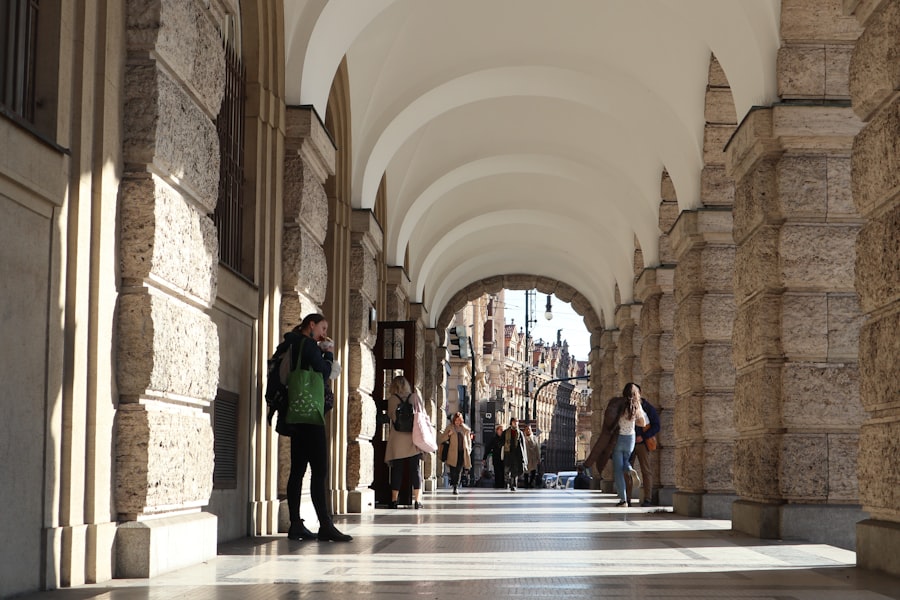
You might not consciously recognize the precise mechanisms at play, but architects employ a range of deliberate techniques to facilitate this staged dissociation. These methods operate on your sensory perceptions, subtly altering your state as you move through the building.
Sensory Stripping: The Visual Field
One of the primary techniques involves the manipulation of your visual field. As you enter a hallway, you often experience a reduction or simplification of complex visual information. Walls are typically monochromatic or adorned with repetitive patterns, minimizing focal points. Windows are often absent or strategically placed to offer only glimpses rather than expansive views.
Narrowed Vistas and Restricted Views
Your peripheral vision is often curtailed in a hallway due to its inherent narrowness. This physical constraint naturally focuses your gaze forward, limiting distractions from the sides. When windows are present, they are often strategically placed at the end of a long corridor or in recessed alcoves, offering a framed “picture” rather than an open expanse. This intentional restriction of your visual scope serves to detach you from the environment you’ve left and primes you for the environment you’re about to enter. You are given a tunnel-vision experience, quite literally.
Repetitive Elements and Lack of Landmark Features
Observe the typical hallway: often, you will find long stretches of plain walls, repetitive lighting fixtures, and uniform flooring materials. This intentional lack of unique landmark features prevents your eye from lingering and your mind from becoming engrossed. Your experience becomes one of continuous, undifferentiated motion, reinforcing the idea that this is a passage, not a destination. Think of a hospital corridor, designed for efficient, almost mechanical passage; it prioritizes function over visual interest to reduce patient anxiety or distraction from the medical routine. This visual monotony streamlines your cognitive processing, allowing you to focus on the act of moving rather than decoding complex visual information.
Acoustic Engineering: Sound as a Separator
Your sense of hearing is equally manipulated within the hallway space. Acoustic design plays a crucial role in creating a distinct aural environment that separates successive spaces.
Sound Absorption and Echo Reduction
You will often notice that hallways employ materials designed to absorb sound. Carpeting, acoustical ceiling tiles, and textured wall coverings are frequently used to dampen noise. This reduces echoes and minimizes the bleed-through of conversations or activities from adjacent rooms. The resulting quietude creates a sense of calm and insulation, allowing you to transition acoustically from one zone to another without being jarringly transported. This dampening effect allows you to mentally “reset” your auditory focus.
Intentional Ambient Noise or Silence
In some instances, the absence of sound is the intentional design choice, creating a palpable sense of quiet introspection. In contrast, certain hallways might incorporate subtle ambient noise, such as filtered white noise or soft background music, to further mask external sounds and create a consistent unvarying aural blanket. This consistent background noise acts as a psychological buffer, reducing the intrusiveness of potentially distracting sounds from adjacent areas and further aiding your dissociation.
Spatial Geometry and Navigational Cues
The architectural form of the hallway itself actively contributes to your staged dissociation. Its geometry is not arbitrary; it is carefully constructed to guide your movement and perception.
Linear vs. Non-linear Paths
You will encounter both linear and non-linear hallway designs. A long, straight corridor explicitly directs your gaze and movement towards a singular endpoint, creating a strong sense of progression. Conversely, a hallway with turns, alcoves, or slight widening might introduce a moment of pause or an element of discovery, subtly influencing your pace and attention. However, even non-linear paths inherently guide you, never allowing you to linger or become truly lost. The visual cues within the space, such as a window at the end of a long perspective or a subtle shift in floor material, all direct your internal compass.
Manipulating Scale and Proportion
Your perception of space can be dramatically altered by the height, width, and length of a hallway. A narrow, low-ceilinged corridor can create a sense of compression or intimacy, while a wide, high-ceilinged hallway can feel grand or expansive. This manipulation of scale can subtly influence your emotional response and how quickly you desire to traverse the space. A deliberately long hallway, for example, can heighten anticipation for what lies at its end, extending the period of dissociation. You are thus being manipulated by the very air and dimensions around you.
Hallways as Psychological Filters

Your journey through a building is, in many ways, a series of filtered experiences, with hallways serving as the crucial psychological filters and chrysalises. They mediate your transition, ensuring that you arrive at each subsequent space in the desired mental and emotional state.
The Transition from Public to Private
Consider the move from a public reception area to a private office suite. You traverse a hallway designed to progressively strip away the open, impersonal feel of the public zone and introduce a sense of increasing privacy and intimacy. This might involve a gradual dimming of lights, a shift from hard to soft surfaces, and a narrowing of the corridor. The hallway acts as a graded filter, preparing you for the different social expectations and personal boundaries of the private space. You are consciously, or unconsciously, shedding your ‘public’ persona in preparation for a ‘private’ interaction.
The Creation of Anticipation and Relief
Hallways are potent tools for building anticipation. A long, winding corridor, perhaps illuminated dramatically, can heighten your expectation for the destination. Conversely, after navigating a complex or stressful environment, a straightforward, well-lit hallway can offer a sense of relief and calm, allowing you to decompress before facing the next challenge. This emotional guidance is a deliberate aspect of the staged dissociation, playing on your innate human responses to progression and completion. You might feel a building tension building as you round a corner, only for it to be released when you enter a brightly lit, expansive room.
Minimizing Distraction and Facilitating Focus
By consciously reducing sensory input and eliminating significant points of interest, hallways minimize distraction. This allows you to focus on the act of moving from point A to point B, or, more profoundly, to clear your mind. In settings like art galleries or museums, the plain hallways between exhibition rooms prevent the visual overload that could occur if distinct displays were directly adjacent. You are given a mental palate cleanser, preparing you for the next artistic or historical narrative. This filtering out of noise, both literal and metaphorical, ensures you can fully immerse yourself in the next intended experience.
Many people experience a sense of staged dissociation when walking through hallways, often feeling as if they are in a scene from a movie rather than a real-life environment. This phenomenon can be linked to the way our brains process familiar spaces, leading to a disconnection from our immediate surroundings. For a deeper understanding of this intriguing topic, you can explore a related article that discusses the psychological aspects of our perception of space and how it influences our emotional state. Check it out here for more insights.
Contemporary Applications and Future Directions
| Metric | Description | Possible Cause | Impact on Perception |
|---|---|---|---|
| Visual Uniformity | Repetitive design elements such as identical doors, lighting, and wall colors | Intentional architectural design for simplicity and cost-efficiency | Creates a sense of monotony leading to feelings of unreality or dissociation |
| Lighting Quality | Use of fluorescent or artificial lighting with minimal natural light | Functional lighting prioritizing visibility over ambiance | Can cause discomfort and a sterile atmosphere, contributing to staged feeling |
| Acoustic Environment | Echoes and lack of ambient noise | Hard surfaces and empty spaces without sound-absorbing materials | Enhances sense of emptiness and detachment from surroundings |
| Spatial Layout | Long, narrow corridors with limited visual landmarks | Design focused on efficient movement rather than experiential quality | Reduces spatial orientation, increasing feelings of dissociation |
| Human Presence | Low or absent foot traffic and interaction | Time of day or building usage patterns | Absence of social cues can make space feel artificial or staged |
You observe that the principles of staged dissociation in hallways are not static. Contemporary architects and designers continue to innovatively apply and redefine these concepts, integrating new technologies and understandings of human psychology.
Biophilic Design in Transitional Zones
You are increasingly seeing biophilic elements integrated into hallways. The introduction of natural light, views of greenery, or even living walls, can soften the dissociative effect while still maintaining the transitional function. This approach aims to reduce stress and improve well-being during passage, offering a gentle mental reset rather than an abrupt disengagement. Imagine a long corridor punctuated by small, internal courtyards or a strip of natural light from above; these elements still guide your journey but offer moments of visual respite and natural connection. You are being “dissociated” more gently, with subtle psychological nudges rather than stark contrasts.
Interactive Hallways and Digital Integration
The advent of digital technology opens new frontiers for hallway design. You may encounter interactive displays, dynamic lighting sequences, or even personalized soundscapes within modern hallways. These elements can be programmed to respond to your presence, guiding you, providing information, or subtly altering your mood. In a corporate environment, for example, a hallway might display project updates or company values, maintaining a sense of connection while still serving its transitional purpose. This allows for a more personalized and adaptive dissociative experience, tailoring the psychological preparation to the individual or the specific context.
The Role of Wayfinding and Cognitive Load Optimization
You can see hallways being designed not just for transition but also for optimized wayfinding. Clear signage, subtle changes in floor patterns, or variations in lighting can all serve as intuitive guides, reducing the cognitive load associated with navigation. By making the path explicit and unambiguous, the hallway allows your mind to focus on the impending space rather than the act of finding it. This optimization of cognitive resources is a crucial aspect of effective staged dissociation, ensuring you arrive at your destination mentally prepared and unburdened by navigational anxiety.
The Sustainable Hallway
As you consider the future, you will also encounter the concept of the sustainable hallway. This involves not only energy-efficient lighting and durable, recycled materials but also designing spaces that promote natural ventilation and thermal regulation. A hallway that subtly changes in temperature or airflow can contribute to the dissociative effect, marking a physical shift between environments without relying solely on artificial means. This integration of sustainability with psychological design highlights a more holistic approach to architectural planning, one where your well-being and the planet’s health are intertwined.
In conclusion, you move through buildings not as an uninterrupted stream of experience, but as a series of carefully modulated psychological states. The hallway, seemingly a passive conduit, is in fact a sophisticated architectural instrument, orchestrating a “staged dissociation.” By manipulating your visual field, acoustic environment, and spatial perception, it subtly detaches you from what was and prepares you for what is to come. Understanding this intricate interplay between architecture and your psychology allows you to perceive these ubiquitous spaces not as voids, but as vital, active participants in your daily existence. You are, in essence, being guided through a series of mental cleansing chambers, ensuring your readiness for the next architectural revelation.

WATCH NOW ▶️ SHOCKING: Why Your World Suddenly Feels Like a Set
FAQs
What does “staged dissociation” mean in the context of hallways?
Staged dissociation refers to the feeling that hallways are deliberately designed or arranged to create a sense of separation or detachment from the surrounding environment, often making the space feel artificial or disconnected.
Why do hallways often feel staged or artificial?
Hallways can feel staged because they are typically narrow, enclosed spaces with repetitive design elements, limited natural light, and minimal decoration, which can create a sense of monotony and detachment from other areas.
How does the design of a hallway contribute to feelings of dissociation?
The design elements such as uniform walls, lack of windows, consistent lighting, and absence of personal or natural touches can make hallways feel impersonal and disconnected, contributing to a psychological sense of dissociation.
Can the feeling of staged dissociation in hallways affect people’s behavior?
Yes, the impersonal and detached atmosphere of hallways can influence mood and behavior, potentially causing feelings of unease, disorientation, or a desire to move quickly through the space rather than linger.
Are there ways to reduce the feeling of staged dissociation in hallways?
Incorporating natural light, varied textures, artwork, plants, and personalized design elements can help make hallways feel more welcoming and connected, reducing the sensation of staged dissociation.