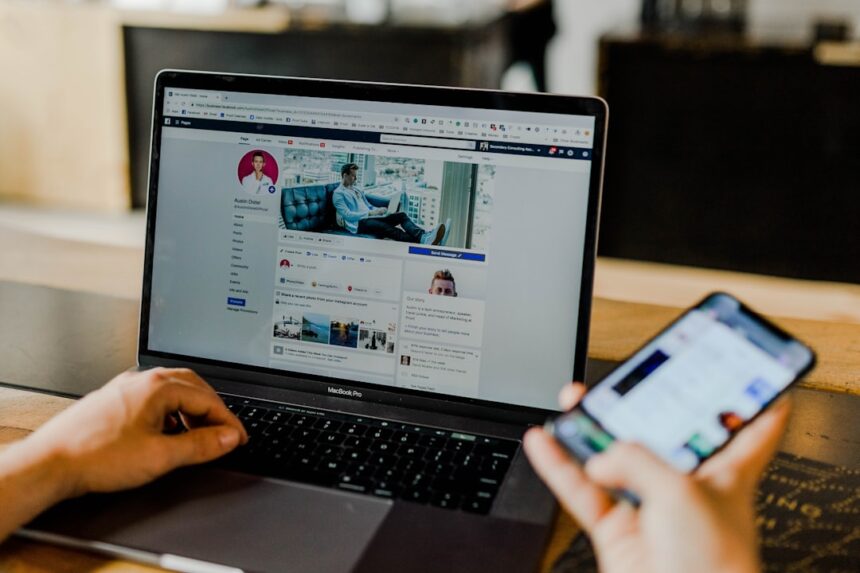
You stand at a precipice. Not one of physical elevation, but of digital immersion, a state you’ve inhabited for years, perhaps even decades, without conscious contemplation. The glowing rectangle in your hand, or the larger screen before you, has become an extension of your senses, a constant conduit to a simulated reality. You scroll, you like, you comment, you share – a relentless cycle of engagement that, until recently, might have felt entirely benign, even necessary. But a growing unease gnaws at you. A subtle dissatisfaction that transcends the fleeting dopamine hits. You’re questioning the very fabric of your digital existence, the constant hum of notifications, the curated perfection of others’ lives, the endless deluge of information. You’re contemplating a radical act: social media abstinence.
The Silent Erosion of Presence
You wake up, and before your eyes are fully adjusted to the dim morning light, your thumb is reaching for your phone. This isn’t a conscious decision; it’s an ingrained reflex. You tell yourself it’s just to check the weather, or see if there are any urgent messages. But you know, deep down, that it’s rarely that simple. You’re immediately pulled into the vortex of feeds, greeted by the manufactured cheerfulness of influencers, the carefully constructed narratives of friends, and the often vitriolic pronouncements of strangers.
The Morning Ritual of Digital Obligation
This ritual, seemingly innocuous, has become an obligation. You feel compelled to participate, to acknowledge the digital world before you’ve even fully acknowledged your own. The quiet contemplation of your own thoughts, the slow awakening of your senses to the tangible world around you, is all but lost. You are instantly bombarded by external stimuli, external validation, external pressures. This isn’t a gentle transition into your day; it’s an abrupt, often jarring, plunge.
The Illusion of Connection in Solitude
You might think you’re connecting with others, that you’re staying informed, that you’re engaged. But are you truly? Or are you merely observing a performance, a meticulously edited highlight reel? The brevity of comments, the anonymity of avatars, the lack of genuine non-verbal cues – these all contribute to a superficial form of connection that can leave you feeling more isolated than ever. You witness moments, but you don’t experience them. You read words, but you don’t hear the tone. You see smiles, but you don’t feel the warmth.
Choosing to forgo social media can be seen as a radical act in today’s hyper-connected world, where online presence often equates to social validation and influence. An insightful article that explores this phenomenon is available at Unplugged Psych, which delves into the psychological implications of stepping away from digital platforms. By opting out of social media, individuals can reclaim their time, enhance their mental well-being, and challenge societal norms that prioritize online engagement over authentic, in-person interactions.
Reclaiming Your Time: The Unseen Cost of Perpetual Engagement
Consider, for a moment, the sheer volume of time you dedicate to social media. You might vaguely track it, a few minutes here, an hour there. But if you were to truly calculate the hours, the days, the weeks, you’d likely be shocked. This isn’t just lost time; it’s time that could have been invested in a thousand other pursuits, pursuits that offer tangible rewards and a sense of genuine accomplishment.
The Infinite Scroll and the Vanishing Hours
The design of these platforms is inherently addictive. The infinite scroll, the gamified interaction, the constant stream of novelty – it’s all engineered to keep you hooked. You tell yourself you’re just looking for something interesting, something to pass the time. But each scroll, each click, is a small expenditure of your most precious resource. And the return on that investment? Often, it’s fleeting, ephemeral, and ultimately unsatisfying.
The Opportunity Cost of Digital Distraction
Think about the skills you’ve always wanted to develop, the hobbies you’ve always wanted to explore, the relationships you’ve wanted to deepen. How much of that has been sidelined by the siren song of the digital feed? The hours spent passively consuming content could have been spent practicing an instrument, learning a new language, writing a book, or simply having a meaningful conversation with a loved one, face-to-face. This is the unseen cost of perpetual engagement: the unlived experiences, the unrealized potential.
The Psychological Toll: Comparison, Anxiety, and the Edited Self
The constant exposure to curated lives on social media is a breeding ground for comparison. You see the filtered vacations, the perfectly staged meals, the effortless successes, and it’s difficult not to measure your own reality against these idealized portrayals. This can lead to a subtle, or not so subtle, erosion of your self-esteem.
The Treadmill of Comparison and Its Consequences
You’re bombarded with images of others’ highlights, and it’s easy to fall into the trap of believing that your own life is somehow lacking. You might question your appearance, your accomplishments, your happiness. This comparison culture can fuel anxiety, inadequacy, and a pervasive sense of not being “enough.” The pressure to present a similarly polished version of yourself can become exhausting, leading to a disconnect between your authentic self and the persona you project online.
The Performance of Authenticity and the Exhaustion It Wreaks
You may feel compelled to perform a certain kind of authenticity, to share vulnerable snippets of your life in a way that feels performative rather than genuine. This can lead to a profound sense of exhaustion. The effort required to maintain a digital façade, to constantly manage your online presence, is draining. You become so focused on how you are perceived by others that you lose touch with your own inner experience.
The Radical Act of Reclaiming Your Focus and Attention
Your attention is a valuable commodity, and social media platforms are experts at capturing it. By stepping away from these platforms, you are not just unplugging; you are actively reclaiming your focus and your attention. This shift can have profound implications for your cognitive abilities and your overall productivity.
The Fragmented Mind: The Impact of Constant Interruption
The constant barrage of notifications, the rapid switching between tasks, the short-form content – all of this contributes to a fragmented attention span. Your ability to concentrate on a single task for an extended period is diminished. You train your brain to crave novelty and instant gratification, making it difficult to engage with deeper, more complex endeavors.
The Renaissance of Deep Work and Deliberate Practice
Social media abstinence allows for the re-emergence of deep work – periods of uninterrupted concentration that lead to significant progress and creativity. You can finally dedicate sustained attention to projects that matter, to learning new skills without the constant interruption of pings and alerts. This can lead to a renewed sense of accomplishment and a deeper engagement with your chosen pursuits. You can engage in deliberate practice, honing your skills with focused intent, rather than passively consuming fleeting content.
In today’s hyper-connected world, opting out of social media can be seen as a radical act that challenges societal norms and expectations. Many individuals find themselves overwhelmed by the constant barrage of information and the pressure to maintain an online presence. This decision to disconnect not only fosters a deeper sense of self but also encourages meaningful real-life interactions. For a deeper exploration of this topic, you can read more in this insightful article on the psychological benefits of unplugging from digital platforms at Unplugged Psychology. By choosing to step away from social media, individuals reclaim their time and mental space, ultimately leading to a more intentional way of living.
The Ripple Effect: Deeper Connections and Enhanced Well-being
The decision to detach from the digital noise isn’t just about personal gain; it has a ripple effect on your relationships and your overall sense of well-being. By reducing your reliance on virtual validation, you open yourself up to more meaningful and authentic human connections.
The Superficiality of Online Interactions vs. the Depth of In-Person Connection
You might have hundreds or even thousands of online “friends,” but how many of them would you feel comfortable calling in a moment of true crisis? The superficiality of many online interactions can leave you feeling disconnected even when surrounded by a digital crowd. Stepping away allows you to invest your energy in the relationships that truly matter, the ones characterized by genuine empathy, shared experiences, and authentic vulnerability.
The Unveiling of Your Inner Landscape and the Cultivation of Contentment
By removing the constant external noise and comparison, you create space for introspection. You begin to understand your own thoughts, your emotions, your desires, without the influence of external validation. This can lead to a profound sense of self-awareness and a cultivation of inner contentment that is not dependent on likes or shares. You are no longer chasing external validation; you are finding it within yourself. The radical act of social media abstinence is not about rejection; it’s about redirection. It is about consciously choosing to invest your most valuable resources – your time, your attention, your emotional energy – in ways that foster genuine growth, authentic connection, and a deeper, more fulfilling experience of life. It is a quiet rebellion against the pervasive digital hum, a reclaiming of your presence in the world, and a profound act of self-care.
FAQs
1. What is considered a radical act in the context of social media?
Choosing to not use social media is considered a radical act because it goes against the societal norm of constant connectivity and sharing personal information online.
2. What are some reasons for choosing to not use social media?
Some reasons for choosing to not use social media include concerns about privacy, mental health, and the impact of social media on society.
3. How does choosing to not use social media impact personal privacy?
Choosing to not use social media can help protect personal privacy by minimizing the amount of personal information that is shared online and reducing the risk of data breaches and identity theft.
4. What are the potential mental health benefits of not using social media?
Not using social media can potentially reduce feelings of anxiety, depression, and FOMO (fear of missing out) by decreasing exposure to curated and often unrealistic portrayals of others’ lives.
5. How can choosing to not use social media be a form of activism?
Choosing to not use social media can be a form of activism by challenging the dominance of social media platforms and promoting alternative ways of connecting and communicating. It can also serve as a statement against the negative impacts of social media on individuals and society.