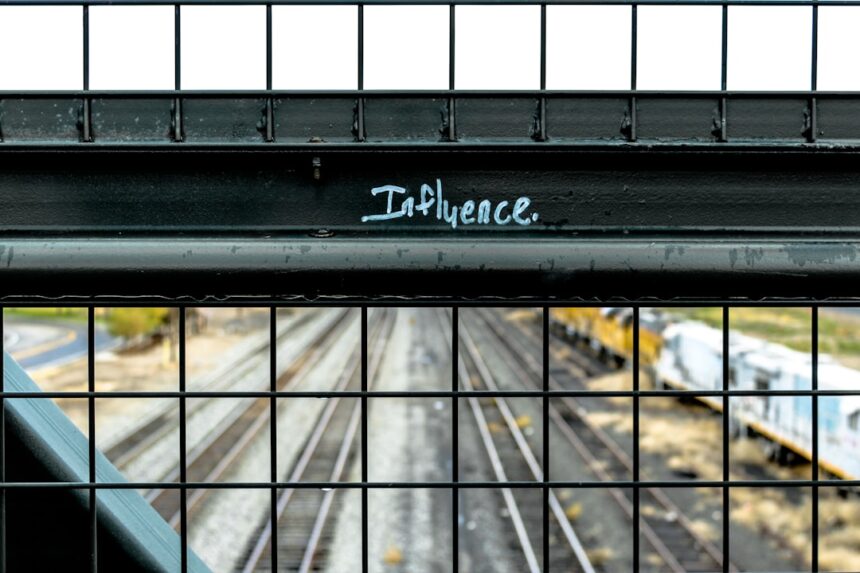
You may be accustomed to thinking of influence as a thunderous pronouncement, a grand gesture designed to sweep others off their feet. But the truth is, a far more potent force often operates in the quiet corners of human interaction: the subtle influence of nuance, suggestion, and consistent, understated action. You wield this power more often than you realize, shaping perceptions, guiding decisions, and fostering change in ways that bypass direct confrontation or overt persuasion. This is the quiet power of subtle influence, a force that, like a gentle tide, reshapes the shore over time rather than smashing against it with brute force.
You often encounter subtle influence without consciously recognizing it. It’s the unseen hand that nudges you towards a particular choice, the pervasive atmosphere that shapes your mood, or the quiet example that inspires your behavior. Unlike hard power, which relies on coercion or brute force, subtle influence operates through attraction, suggestion, and the cultivation of shared understanding. It’s about making your perspective seem not just valid, but desirable, or inherent to the situation. Think of it like a skilled gardener tending to their plants. They don’t uproot them or force them to grow; they provide the right soil, water, and sunlight, patiently waiting for natural growth to occur. Your approach to influence can be equally organic and effective.
Framing and Priming
One of the most fundamental tools in your subtle arsenal is the art of framing. You encounter this when information is presented with a particular slant, guiding your interpretation. For instance, framing a debate as a matter of “security versus freedom” immediately sets up a dichotomy that influences how you weigh the arguments. Similarly, priming involves exposing you to a stimulus that unconsciously affects your response to a subsequent stimulus. Hearing a song associated with a positive memory might subtly uplift your mood before you even realize why. You can use this by presenting information in a way that highlights certain aspects and downplays others, effectively setting the stage for your desired outcome without directly dictating it. This isn’t about deception; it’s about strategically illuminating particular facets of a situation.
The Power of Suggestion
Suggestion, when employed artfully, bypasses your conscious defenses. Instead of commanding, you suggest. Imagine a restaurant menu where certain dishes are described with evocative language, subtly guiding your order towards those options, even if you initially had something else in mind. This is suggestion at work, planting an idea that germinates in your mind. You can employ this by posing questions that lead others towards your conclusions, or by offering observations that highlight the implicit benefits of a particular course of action. Think of it as leaving breadcrumbs on a path, knowing that the traveler will likely follow.
The Halo Effect
The halo effect is a cognitive bias where your overall impression of a person, company, brand, or product influences your feelings and thoughts about their specific character or properties. If you see a charismatic leader, you might unconsciously attribute other positive qualities to them, such as intelligence or competence, even if there’s no direct evidence. You can leverage this by cultivating positive associations. If you consistently demonstrate reliability and competence, others are more likely to view your suggestions favorably, assuming they stem from a place of sound judgment. This creates a positive feedback loop, where your general reputation amplifies the impact of your more specific influences.
In exploring the concept of quiet power and its ability to influence without overt displays, one can refer to an insightful article on the Unplugged Psychology website. This piece delves into the subtleties of how introverted individuals can wield significant influence through their actions and presence rather than through loud proclamations. For further reading, you can check out the article here: Unplugged Psychology. This resource provides valuable perspectives on harnessing quiet strength in various aspects of life.
The Architecture of Persuasion Through Observation
Beyond direct interaction, you are also influenced by what you observe and the patterns you discern. Subtle influence, in this context, is about how you allow others to learn from your actions and the environment you help create. This is less about telling and more about showing, allowing your colleagues or subordinates to draw their own conclusions and adapt their behavior accordingly. It’s like observing a skilled craftsman at work; you learn not just from their instruction, but from their meticulous movements, their problem-solving approach, and the quality of their finished product.
Leading by Example
The most powerful form of subtle influence you can exert is often through direct action. When you embody the values, work ethic, or behaviors you wish to see in others, you create a blueprint for success. If you want your team to be punctual, arriving early yourself sets a powerful, unspoken standard. If you advocate for innovation, demonstrating your willingness to experiment and learn from mistakes by doing so yourself is far more persuasive than any lecture on the topic. This is about demonstrating authenticity and commitment, allowing your actions to speak volumes.
The Ripple Effect of Consistency
Consistency is the bedrock of subtle influence. When your actions, messages, and values remain aligned over time, you build trust and predictability. A person who consistently demonstrates integrity, for example, will find that their pronouncements on ethical matters are taken more seriously than someone whose behavior is erratic. This consistency acts like a slowly wearing stone, gradually shaping the landscape of perception. You establish a reliable presence, and your influence becomes an expected, rather than surprising, element of your interactions.
Cultivating a Culture of Learning
You can subtly influence the learning environment by fostering a culture where curiosity and intellectual exploration are valued. This doesn’t require formal training sessions. It can be as simple as sharing interesting articles, asking open-ended questions that encourage deeper thought, or openly admitting when you don’t know something and then seeking out the answer. By normalizing the process of inquiry and growth, you encourage others to adopt similar habits. You become a quiet catalyst for intellectual development, not through directives, but through the atmosphere you cultivate.
The Art of Facilitation, Not Dictation

Subtle influence often manifests in your ability to guide processes and facilitate outcomes without imposing your will. It’s about creating the conditions for the desired result to emerge organically. You are the conductor of an orchestra, not to force individual notes, but to bring out the harmonious melody from the collective effort. Your role is to orchestrate, to create the space for collaboration and consensus to flourish.
Strategic Questioning
The right question, posed at the right time, can unlock new perspectives and guide decision-making processes more effectively than any declarative statement. Instead of telling someone what to do, you ask them, “What are the potential benefits of approaching this from that angle?” or “What might be some unintended consequences we need to consider?” These questions invite critical thinking and empower the individual to arrive at a conclusion that feels like their own, increasing their buy-in and commitment.
Building Consensus Through Shared Vision
Subtle influence is adept at weaving a shared vision. Instead of imposing a singular objective, you facilitate discussions that allow individuals to contribute to and ultimately embrace a common goal. This might involve highlighting shared interests, framing common challenges in a way that encourages collective problem-solving, or simply ensuring that everyone’s voice feels heard and valued in the process. When people feel they have a stake in the vision, their motivation to achieve it skyrocket.
Empowering Autonomy
Paradoxically, empowering others with a sense of autonomy can be a powerful form of subtle influence. When you delegate effectively, trust individuals with responsibility, and provide them with the necessary resources, you foster a sense of ownership. This ownership, in turn, makes them more invested in the success of the project and more receptive to your guidance, which they now perceive as support rather than control. It’s like giving a gardener good tools and fertile ground; they are more likely to cultivate a thriving garden independently.
The Power of Context and Environment

You are profoundly shaped by your surroundings, and subtle influence often operates by curating the context in which decisions are made. The physical and social environment you inhabit, and the way information is presented within it, can subtly steer your perceptions and choices. Think of a well-organized bookshelf versus a cluttered one; the former makes finding information easier and can foster a sense of order and clarity.
Nudging Through Design
Nudging, a concept popularized by behavioral economics, is the art of subtly altering the environment to encourage desirable behavior without restricting choices. Consider placing healthier food options at eye level in a cafeteria – this is a subtle nudge that influences purchasing decisions. You can apply this by strategically organizing information, making desired actions the path of least resistance, or presenting options in a way that highlights their inherent advantages. This isn’t manipulation; it’s thoughtful design that guides without dictating.
The Influence of Social Norms
You are highly susceptible to the perceived behaviors of others. If you observe that a certain behavior is common and accepted within a group, you are more likely to adopt it yourself. This is the power of social norms. You can subtly influence this by consistently modeling desired behaviors and by highlighting instances where these behaviors are being enacted by others. This creates a reinforcing loop, where the desired actions become increasingly ingrained within the group’s culture.
Creating an Atmosphere of Openness
The emotional climate of an environment can significantly impact how individuals engage and are influenced. An atmosphere of trust, respect, and psychological safety encourages open communication and receptivity to new ideas. You can cultivate this by actively listening to others, demonstrating empathy, and responding to concerns with understanding. When people feel safe and valued, they are more likely to engage thoughtfully with your suggestions and participate constructively in discussions.
In a world that often celebrates loud voices and bold personalities, the concept of quiet power can be a refreshing perspective on influence. This subtle form of leadership emphasizes the ability to inspire and motivate others without the need for grand gestures or overt displays of authority. For those interested in exploring this idea further, a related article discusses the nuances of quiet influence and its impact on personal and professional relationships. You can read more about it in this insightful piece on quiet power. Embracing this approach can lead to deeper connections and a more authentic form of leadership.
The Enduring Impact of Subtle Influence
| Aspect | Description | Impact | Example |
|---|---|---|---|
| Subtlety | Influencing others without overt displays of power or dominance. | Builds trust and respect over time. | Quiet leaders who listen more than they speak. |
| Consistency | Steady actions and behaviors that reinforce credibility. | Creates a reliable and dependable image. | Consistently meeting deadlines without fanfare. |
| Empathy | Understanding and valuing others’ perspectives silently. | Fosters strong relationships and loyalty. | Offering support without seeking recognition. |
| Listening | Active listening to gather information and understand needs. | Enables informed decision-making and influence. | Leaders who ask questions rather than giving orders. |
| Authenticity | Being genuine without the need for external validation. | Encourages others to follow willingly. | Staying true to values in challenging situations. |
| Influence without Show | Power exercised quietly, without overt displays or attention-seeking. | Often more sustainable and respected influence. | Mentors who guide behind the scenes. |
The true power of subtle influence lies in its longevity and its capacity for deep, lasting change. Unlike forceful directives that can breed resentment or can be easily discarded, the shifts brought about by subtle means are often internalized and become part of an individual’s or a group’s natural way of operating. It’s the gradual erosion of a rock face by wind and rain, a process that, over millennia, transforms landscapes far more profoundly than a single earthquake.
Internalized Beliefs and Values
When you influence someone through suggestion, example, or by fostering an environment where certain ideas naturally take root, you are not merely changing their behavior; you are often contributing to the formation of their internalized beliefs and values. This means the change is more likely to be sustained, even in the absence of your direct presence. This is because the individual has, in essence, come to their own conclusions, making the adopted behavior their own.
Sustainable Change and Adaptation
Subtle influence fosters adaptability. Because it encourages critical thinking, collaboration, and a sense of ownership, the changes it instigates are more resilient to external pressures and more capable of evolving as circumstances change. It prepares individuals and groups not just for a specific outcome, but for a continuous process of learning and improvement. You are not just building a bridge; you are teaching them how to build, repair, and adapt bridges for the future.
The Mark of True Leadership
Ultimately, the ability to wield subtle influence is a hallmark of effective leadership. It signifies an understanding of human psychology, a commitment to collaboration, and a recognition that true progress is often incremental and organic. You, by mastering these quiet arts, become a force for positive change that resonates far beyond the immediate moment, leaving a lasting and meaningful impact. It is not about being the loudest voice in the room, but about being the most thoughtfully present, guiding with a whisper that carries the weight of conviction.
FAQs
What does “quiet power” mean in the context of influence?
Quiet power refers to the ability to influence others and effect change without relying on loud, overt, or attention-seeking behaviors. It emphasizes subtlety, calm confidence, and thoughtful actions rather than showy displays.
How can someone demonstrate influence without being loud or showy?
Someone can demonstrate influence quietly by listening actively, leading by example, building trust, communicating thoughtfully, and making consistent, impactful decisions that inspire others without needing to dominate conversations or seek the spotlight.
Why is quiet power considered an effective form of influence?
Quiet power is effective because it fosters genuine respect and trust, encourages collaboration, and often leads to more sustainable and meaningful influence. It avoids resistance that can come from aggressive or attention-seeking tactics.
Can quiet power be developed, or is it an innate trait?
Quiet power can be developed through self-awareness, emotional intelligence, patience, and practice in active listening and thoughtful communication. It is not solely an innate trait but a skill set that can be cultivated over time.
In what settings is quiet power particularly valuable?
Quiet power is valuable in professional environments, leadership roles, personal relationships, and social movements where influence is needed without creating conflict or drawing unnecessary attention. It is especially effective in situations requiring diplomacy, empathy, and long-term relationship building.