In today’s world, there is a growing divide among social groups, characterized by strong in-group loyalty and out-group antagonism. This phenomenon, known as tribal behavior polarization, has deep historical and psychological foundations. Across various domains including politics, religion, and sports, individuals demonstrate increasingly entrenched beliefs.
This polarization often impedes effective communication and mutual understanding, creating challenges for peaceful coexistence among diverse groups. Tribal behavior polarization manifests in multiple forms, ranging from contentious social media exchanges to public confrontations. People increasingly avoid engaging with opposing viewpoints, instead gravitating toward echo chambers that reinforce existing beliefs.
This article examines the key factors driving this polarization, including evolutionary mechanisms, identity development processes, and social media’s influence. Understanding these elements provides insight into navigating the complexities of tribalism and its societal implications.
Key Takeaways
- Tribal behavior is rooted in evolutionary survival mechanisms that emphasize group identity and loyalty.
- Social media amplifies tribal polarization by reinforcing in-group biases and spreading confirmation bias.
- Fear and perceived threats intensify tribalism, deepening divisions between groups.
- Belonging to a tribe fulfills psychological needs but can also limit open-mindedness and empathy.
- Overcoming tribal polarization requires empathy, understanding, and strategies to bridge divides.
The Evolutionary Basis of Tribalism
To comprehend tribal behavior polarization, it is essential to delve into its evolutionary roots. As a species, humans have evolved in small groups where cooperation and social bonds were crucial for survival. In these early communities, belonging to a tribe meant access to resources, protection from threats, and a sense of identity.
You might find it fascinating that this instinct to form tight-knit groups is hardwired into our biology. The need for belonging is so profound that it can override rational thought and lead to behaviors that prioritize group loyalty over individual judgment. This evolutionary perspective helps explain why tribalism persists even in modern societies.
You may notice that individuals often gravitate toward groups that share similar values, beliefs, and experiences. This inclination is not merely a social preference; it is a survival mechanism that has been ingrained in us over millennia. However, while tribalism can foster a sense of community and belonging, it can also lead to exclusionary practices and hostility toward outsiders.
Understanding this duality is crucial as you navigate the complexities of human interaction in an increasingly polarized world. Understanding cognitive dissonance can help explain why people sometimes hold conflicting beliefs.
The Role of Identity in Tribal Behavior
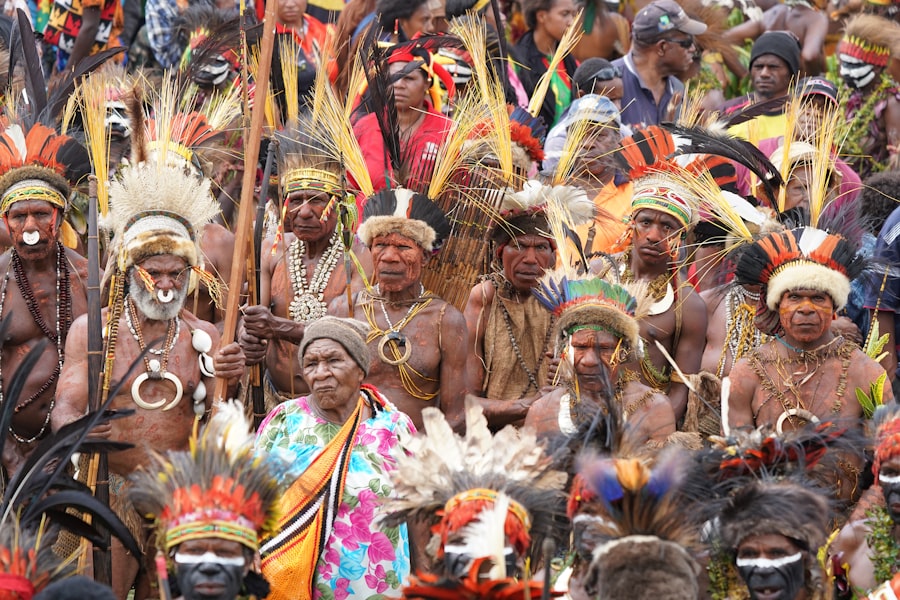
Identity plays a pivotal role in shaping tribal behavior. As you engage with different communities—whether based on ethnicity, religion, or ideology—you may find that your sense of self becomes intertwined with the group’s identity. This connection can be empowering, providing you with a sense of belonging and purpose.
However, it can also lead to an “us versus them” mentality, where loyalty to your group overshadows empathy for others. The stronger your identification with a tribe, the more likely you are to adopt its beliefs and values without question. Moreover, identity is not static; it evolves over time and can be influenced by external factors such as societal changes or personal experiences.
You might find that significant life events—such as moving to a new city or experiencing a major political shift—can alter your sense of identity and your relationship with your tribe. This fluidity can either exacerbate polarization or foster greater understanding among diverse groups. Recognizing the dynamic nature of identity can help you navigate the complexities of tribal behavior and encourage more inclusive interactions.
The Impact of Social Media on Tribal Polarization
In recent years, social media has emerged as a powerful force in shaping tribal behavior polarization. Platforms like Facebook, Twitter, and Instagram allow individuals to connect with like-minded people across the globe, reinforcing existing beliefs and creating echo chambers. As you scroll through your feed, you may notice that algorithms prioritize content that aligns with your interests, further entrenching you in your views.
This digital environment can make it challenging to encounter differing perspectives, leading to a more polarized society. The impact of social media extends beyond mere information sharing; it also influences how you perceive others. Online interactions often lack the nuance of face-to-face communication, making it easier to dehumanize those who hold opposing views.
You might find yourself engaging in heated debates or sharing inflammatory content without fully considering its implications. This phenomenon can create a cycle of polarization where individuals become increasingly entrenched in their beliefs while simultaneously alienating those who think differently. Understanding the role of social media in this context is crucial for fostering healthier dialogues and bridging divides.
The psychology behind in-group versus out-group bias is another critical factor contributing to tribal behavior polarization. As you identify with your group, you may unconsciously develop a preference for its members while harboring negative feelings toward outsiders. This bias can manifest in various ways, from subtle microaggressions to overt discrimination.
You might find yourself justifying the actions of your group while condemning similar behaviors in others, illustrating how tribal loyalty can cloud judgment. This psychological phenomenon is deeply rooted in our evolutionary past, where distinguishing friend from foe was essential for survival. However, in contemporary society, this bias can lead to harmful stereotypes and misconceptions about those who belong to different tribes.
You may encounter situations where individuals are judged solely based on their group affiliation rather than their individual merits. Recognizing this bias within yourself is the first step toward fostering more inclusive attitudes and breaking down the barriers that contribute to polarization.
The Influence of Confirmation Bias on Tribal Polarization
| Metric | Description | Typical Range/Value | Relevance to Tribal Behavior Polarization |
|---|---|---|---|
| In-group Favoritism Score | Measures the degree to which individuals prefer and prioritize their own group over others | 0 to 1 (higher values indicate stronger favoritism) | Higher scores indicate stronger tribal loyalty and contribute to polarization |
| Out-group Hostility Index | Quantifies negative attitudes or behaviors directed toward groups outside one’s own | 0 to 100 (percentage of hostile responses) | Elevated hostility correlates with increased social division and polarization |
| Social Identity Salience | Degree to which group identity is central to an individual’s self-concept | Scale 1-7 (Likert scale) | Higher salience intensifies tribal behavior and group polarization |
| Echo Chamber Exposure | Percentage of information consumed that aligns exclusively with one’s group beliefs | 30% to 90% | Greater exposure reinforces polarization by limiting diverse perspectives |
| Group Polarization Effect Size | Magnitude of attitude shift toward more extreme positions after group discussion | Cohen’s d = 0.3 to 0.8 | Indicates how group interactions amplify tribal attitudes and polarization |
| Conformity Rate | Percentage of individuals who change opinions to align with group norms | 40% to 70% | Higher conformity strengthens group cohesion and polarization |
| Perceived Threat Level | Subjective rating of how much an out-group is seen as a threat | Scale 1-10 | Higher perceived threat intensifies defensive tribal behavior and polarization |
Confirmation bias plays a significant role in perpetuating tribal behavior polarization. As you engage with information that aligns with your beliefs, you may unconsciously filter out contradictory evidence or viewpoints. This cognitive bias reinforces your existing opinions and makes it increasingly difficult to consider alternative perspectives.
You might find yourself gravitating toward news sources or social media accounts that echo your views while dismissing those that challenge them. This tendency can create a feedback loop where your beliefs become more extreme over time. As you consume information that confirms your biases, you may become less open to dialogue and more resistant to change.
This polarization can have far-reaching consequences, affecting not only personal relationships but also societal cohesion as a whole. By recognizing the influence of confirmation bias on your thinking, you can take proactive steps to seek out diverse viewpoints and engage in more constructive conversations.
The Role of Fear and Threat Perception in Tribalism
Fear and threat perception are powerful motivators that can exacerbate tribal behavior polarization. When faced with perceived threats—whether real or imagined—you may instinctively retreat into the safety of your tribe for support and validation. This reaction is rooted in our evolutionary history; when survival was at stake, aligning with one’s group was essential for protection against external dangers.
However, in modern contexts, this instinct can lead to heightened anxiety and hostility toward those perceived as outsiders. You might notice that political rhetoric often exploits fear to galvanize support for particular causes or candidates. By framing issues in terms of “us versus them,” leaders can rally their base while alienating opposing groups.
This manipulation of fear can deepen divisions and make it challenging for individuals to engage in constructive dialogue. Understanding the role of fear in shaping tribal behavior allows you to approach discussions with greater awareness and empathy, fostering an environment where collaboration is possible.
The Psychological Effects of Belonging to a Tribe
Belonging to a tribe can have profound psychological effects on individuals. On one hand, being part of a group provides emotional support, validation, and a sense of purpose. You may find comfort in shared experiences and collective goals, which can enhance your overall well-being.
This sense of belonging can be particularly important during challenging times when social support is crucial for coping with stress. However, the psychological effects of tribalism are not universally positive. While group membership can foster feelings of security and identity, it can also lead to exclusionary practices and negative attitudes toward outsiders.
You might experience pressure to conform to group norms or face ostracism if you express dissenting opinions. This dynamic can stifle individuality and creativity while perpetuating harmful stereotypes about those outside your tribe. Recognizing these psychological effects is essential for fostering healthier group dynamics and promoting inclusivity.
Strategies for Overcoming Tribal Polarization
Overcoming tribal polarization requires intentional effort and commitment from individuals and communities alike. One effective strategy is fostering open dialogue among diverse groups. By creating safe spaces for discussion where differing viewpoints are respected, you can encourage understanding and empathy among individuals from various backgrounds.
Engaging in active listening—where you genuinely seek to understand others’ perspectives—can help bridge divides and promote collaboration. Another strategy involves challenging your own biases and assumptions. You might consider seeking out experiences that expose you to different cultures or ideologies, allowing you to broaden your understanding of the world around you.
Participating in community events or initiatives that promote inclusivity can also help dismantle barriers between tribes. By taking proactive steps toward understanding others, you contribute to a more cohesive society where diverse perspectives are valued.
The Importance of Empathy in Mitigating Tribalism
Empathy serves as a powerful antidote to tribal behavior polarization. When you cultivate empathy—an ability to understand and share the feelings of others—you create opportunities for connection across divides. Empathy allows you to see beyond group labels and recognize the shared humanity that exists within all individuals, regardless of their affiliations.
By practicing empathy in your daily interactions, you contribute to a culture that values understanding over division. Moreover, empathy can help mitigate the negative effects of fear and threat perception associated with tribalism. When faced with differing viewpoints or unfamiliar cultures, approaching these situations with empathy allows you to engage constructively rather than defensively.
The Future of Tribal Behavior Polarization
As you reflect on the complexities of tribal behavior polarization, it becomes clear that this phenomenon is deeply ingrained in human nature yet shaped by contemporary influences such as social media and political rhetoric. While tribalism can foster community and belonging, it also poses significant challenges for societal cohesion and understanding among diverse groups. The future will depend on our collective ability to navigate these challenges through empathy, open dialogue, and a commitment to inclusivity.
By recognizing the factors contributing to tribal polarization—such as identity formation, confirmation bias, and fear—you empower yourself to engage more thoughtfully with others.
Your role in this process is vital; by promoting understanding and empathy within your circles, you contribute to a future where tribal behavior polarization is mitigated rather than exacerbated.
Tribal behavior polarization is a fascinating area of study within psychology, exploring how group identities can influence individual beliefs and actions. A related article that delves deeper into this topic can be found on Unplugged Psychology, which discusses the psychological mechanisms behind group dynamics and polarization. You can read more about it in their article here.
WATCH THIS! 🔑 THE CAGE YOU BUILT: Why Smart People Can’t Escape Toxic Choices (Cognitive Dissonance)
FAQs
What is tribal behavior in psychology?
Tribal behavior in psychology refers to the tendency of individuals to form strong in-group bonds and identify closely with a particular group, often leading to loyalty and favoritism toward that group. This behavior is rooted in evolutionary mechanisms that helped early humans survive by cooperating within small social groups.
How does tribal behavior relate to polarization?
Tribal behavior can contribute to polarization by intensifying group identity and creating an “us versus them” mentality. When people strongly identify with their group, they may view opposing groups negatively, leading to increased social and political divisions.
What psychological factors drive tribal behavior?
Key psychological factors include social identity, conformity, and the need for belonging. People derive self-esteem from their group membership and often conform to group norms to maintain acceptance, which reinforces tribal behavior.
Can tribal behavior be observed in modern society?
Yes, tribal behavior is evident in various aspects of modern society, including politics, sports fandom, cultural affiliations, and social media communities. These groups often exhibit strong loyalty and can become polarized against opposing groups.
What are the consequences of tribal behavior and polarization?
While tribal behavior can promote social cohesion within groups, it can also lead to conflict, misunderstanding, and reduced cooperation between groups. Polarization can hinder constructive dialogue and increase social fragmentation.
How can understanding tribal behavior help reduce polarization?
By recognizing the psychological roots of tribal behavior, individuals and organizations can promote empathy, encourage intergroup dialogue, and create environments that emphasize shared goals and common identities, which can help bridge divides.
Is tribal behavior always negative?
No, tribal behavior is not inherently negative. It can foster strong social support networks and cooperation within groups. Problems arise when it leads to exclusion, prejudice, or hostility toward out-groups.
What role does social media play in tribal behavior and polarization?
Social media can amplify tribal behavior by creating echo chambers where individuals are exposed primarily to like-minded views. This can reinforce group identity and increase polarization by limiting exposure to diverse perspectives.