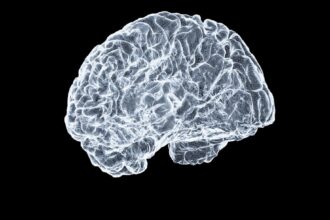
You stand at a crossroads, faced with a decision that defies logical analysis. Data is incomplete, facts are ambiguous, and the path forward is obscured. Yet, a feeling, a subtle yet insistent inclination, nudges you in a particular direction. This is not a random tremor; it is your intuition, a sophisticated cognitive process often dismissed as mere happenstance or an ephemeral ‘gut feeling’. The neuroscience of intuition seeks to illuminate the intricate neural networks and cognitive mechanisms underpinning these seemingly spontaneous insights, revealing a powerful, adaptive, and often accurate form of unconscious intelligence.
To comprehend intuition, you must first grasp the fundamental framework of cognitive processing: the Dual Process Theory. This theory, popularized by psychologists such as Daniel Kahneman, postulates that your mind operates through two distinct systems.
System 1: The Intuitive, Fast, and Automatic
System 1 is your brain’s autopilot. It operates unconsciously, effortlessly, and rapidly, processing information in parallel and generating impressions, feelings, and inclinations. This system is crucial for survival, enabling you to make quick judgments in situations demanding immediate responses, such as recognizing a familiar face or reacting to a sudden loud noise.
- Pattern Recognition: System 1 excels at identifying patterns based on past experiences and learned associations. When you encounter a novel situation, your brain quickly searches for similarities to previously stored information, even if those similarities are not consciously recognized.
- Heuristics and Biases: While efficient, System 1 relies on mental shortcuts, known as heuristics, which can lead to cognitive biases. These biases are systematic errors in thinking that can influence your judgments and decisions, often without your awareness.
- Emotional Tagging: System 1 is deeply intertwined with your emotional centers. It quickly assigns affective valence (positive or negative emotional tags) to stimuli, influencing your immediate reactions and guiding your intuitive choices.
System 2: The Analytical, Slow, and Deliberate
In contrast, System 2 is your brain’s conscious, effortful, and deliberate processor. It is responsible for logical reasoning, complex problem-solving, and thoughtful decision-making. When you engage in deliberate calculation, critical analysis, or hypothesis testing, you are primarily utilizing System 2.
- Executive Function: System 2 encompasses your brain’s executive functions, including working memory, attention control, and inhibitory control. These functions allow you to consciously manipulate information, focus your attention, and suppress impulsive reactions.
- Slower Processing: Compared to System 1, System 2 is significantly slower and requires more cognitive resources. It is not suitable for situations demanding rapid responses but is indispensable for tackling intricate problems that require meticulous evaluation.
- Conscious Awareness: Decisions made through System 2 are typically accompanied by a conscious awareness of the reasoning process, allowing you to articulate the rationale behind your conclusions.
Intuition, in this framework, is largely a product of System 1. It is the rapid, non-conscious output of your brain’s vast storehouse of knowledge and experience, a whisper from your unconscious that guides your initial impressions.
The neuroscience of intuition is a fascinating field that explores how our brain processes information and makes decisions without conscious reasoning. For a deeper understanding of this topic, you can read a related article that delves into the mechanisms behind intuitive thinking and its implications for decision-making. To explore this further, visit this article which provides valuable insights into the interplay between intuition and cognitive processes.
The Brain’s Intuitive Architecture: Where Gut Feelings Reside
Your brain is not a monolithic entity; it is a complex tapestry of specialized regions, each contributing to the intuitive process. Understanding the key players in this neural symphony is paramount to appreciating the scientific basis of your gut feelings.
The Anterior Cingulate Cortex (ACC): The Conflict Monitor
The ACC plays a crucial role in detecting conflicts and errors. When your expectations are violated, or when there is a discrepancy between your current situation and your stored knowledge, the ACC signals this inconsistency.
- Error Detection: Imagine you are driving and suddenly feel a subtle unease about the car accelerating next to you, despite no obvious danger. The ACC might be registering a minute deviation in its pattern of movement based on countless past observations, prompting a cautious intuitive response.
- Uncertainty and Ambiguity: The ACC is highly active in situations characterized by uncertainty and ambiguity, highlighting the brain’s internal monitoring of information discrepancies that often precede intuitive insights.
The Insula: The Somatic Marker Generator
The insula is a deeply embedded cortical structure that integrates visceral sensations with emotional experiences. It acts as a bridge between your body’s physiological state and your subjective feelings, generating what Antonio Damasio termed “somatic markers.”
- Bodily Signals: When you experience a “gut feeling,” it’s often accompanied by tangible physiological changes: a tightening in your stomach, a surge in heart rate, or a slight discomfort. The insula processes these bodily signals and translates them into a conscious emotional experience.
- Risk and Reward Anticipation: The insula is active when you are anticipating rewards or potential dangers. It helps you learn from past experiences by associating certain outcomes with specific bodily feelings, guiding your future intuitive decisions.
The Orbitofrontal Cortex (OFC): Value and Decision Integration
The OFC, located at the front of your brain, is central to evaluating the value and emotional salience of potential choices. It helps you assess the likely consequences of your actions and biases your decisions toward options deemed more favorable.
- Emotional Learning: The OFC is crucial for emotional learning, allowing you to associate specific stimuli with positive or negative outcomes. This learned association forms the bedrock of many intuitive judgments, as you unconsciously lean towards options that have been beneficial in the past.
- Adaptive Decision-Making: By integrating emotional feedback with cognitive information, the OFC facilitates adaptive decision-making, enabling you to quickly choose between options without needing to explicitly analyze every facet.
The Basal Ganglia: Skill Learning and Habit Formation
While often associated with motor control, the basal ganglia play a significant role in implicit learning and habit formation. Through repeated exposure and practice, it can automate complex sequences of actions and thoughts, contributing to intuitive expertise.
- Implicit Knowledge: The basal ganglia help you acquire knowledge without conscious awareness, often referred to as implicit knowledge. This forms the basis of many intuitive skills, such as a master chef knowing precisely when a dish is perfectly cooked without referencing a timer.
- Pattern Matching and Prediction: Through its connections with other brain regions, the basal ganglia contribute to your ability to recognize subtle patterns and subconsciously predict future events based on extensive experience.
The Mechanics of Intuition: How Your Brain Connects Dots Unconsciously
Your brain is a master of pattern recognition, constantly sifting through vast amounts of sensory input and internal data to form connections and anticipate outcomes. Intuition is a highly efficient, often spectacular, manifestation of this fundamental capability.
Associative Learning: The Building Blocks of Insight
Intuition largely operates on principles of associative learning. Your brain continuously forms associations between concepts, experiences, and emotions. Over time, these associations become strengthened, forming mental networks that can be activated instantly and unconsciously.
- Implicit Memory: Intuition draws heavily on your implicit memory, which stores information without conscious awareness. This includes procedural memories (how to do things) and primes (exposure to one stimulus influencing your response to a subsequent stimulus).
- Semantic Networks: Your brain organizes information into complex semantic networks. When you encounter a piece of information, it activates related concepts and ideas within these networks, triggering a cascade of associations that can lead to an intuitive flash of insight.
Subliminal Perception: The Unseen Influences
A significant portion of the information your brain processes never reaches your conscious awareness. Subliminal perception demonstrates that your brain can detect and process stimuli below the threshold of conscious recognition, yet these stimuli can still influence your thoughts and behavior.
- Priming Effects: Exposure to a subtle cue (a word, an image) can subconsciously “prime” your brain to interpret subsequent information in a particular way. This can subtly bias your intuitive judgments without you being aware of the influencing factor.
- Non-Verbal Cues: Your intuition is adept at picking up on non-verbal cues – body language, facial expressions, tone of voice – that you may not consciously register. These subtle signals are processed by System 1 and contribute to your overall intuitive assessment of a person or situation.
Somatic Markers Hypothesis: Feeling Your Way to a Decision
As mentioned earlier, the Somatic Markers Hypothesis, championed by Antonio Damasio, proposes that your brain uses emotional and physiological signals (somatic markers) to guide decision-making, particularly in situations of uncertainty. When you evaluate options, your brain quickly processes past experiences associated with similar scenarios.
- Emotional Pre-computation: Before you consciously arrive at a decision, your brain has already “pre-computed” the emotional consequences of different choices based on past experiences. These pre-computed feelings manifest as gut feelings.
- Adaptive Advantage: This biological mechanism provides an evolutionary advantage by allowing you to make rapid, advantageous decisions in complex environments without having to laboriously analyze every possible outcome.
Developing and Trusting Your Intuition: A Skill, Not a Superpower

While often portrayed as an mystical ability, intuition is a cognitive skill that can be cultivated and refined. You are not simply born with intuitive prowess; it develops through experience, reflection, and practice.
The Role of Expertise: The Intuitive Master
Experts in any field often demonstrate remarkable intuitive abilities. A seasoned firefighter can “smell” danger, an experienced physician can “feel” a diagnosis, and a master chess player can “see” several moves ahead. This is not magic; it’s expertise.
- Pattern Recognition honed: Through countless hours of exposure to specific situations, an expert’s System 1 becomes incredibly adept at recognizing intricate patterns that would be invisible to a novice.
- Automated Knowledge: A vast amount of knowledge, initially acquired through conscious effort (System 2), eventually becomes automatized and integrated into System 1, allowing for rapid, intuitive responses.
- Feedback Loops: Experts receive immediate and frequent feedback on their decisions, allowing their brains to constantly refine and calibrate their intuitive circuits.
Cultivating Mindful Awareness: Listening to Your Inner Voice
To effectively utilize your intuition, you must first learn to recognize its signals. This requires a degree of mindful awareness and self-reflection.
- Pay Attention to Your Body: Your body is a rich source of intuitive signals. Learn to notice subtle physical sensations – tension, relaxation, discomfort – that accompany different choices or situations.
- Journaling and Reflection: Regularly reflecting on your decisions and the feelings that guided them can help you identify patterns in your intuitive responses and understand when your gut feelings are reliable.
- Meditation and Mindfulness: Practices like meditation can enhance your ability to observe your thoughts and feelings without judgment, making you more attuned to the subtle output of your intuitive system.
Balancing Intuition with Deliberate Reasoning: A Synergistic Approach
While powerful, intuition is not infallible. It is susceptible to biases and can be misled by irrelevant information. The most effective decision-makers are those who skillfully integrate intuitive insights with deliberate, analytical reasoning.
- Question Your Gut: When a strong intuition arises, take a moment to critically examine it. Ask yourself: Is this feeling based on genuine expertise, or could it be influenced by a bias or an emotional reaction?
- Seek Additional Information: Use your intuition as a powerful starting point, but don’t let it be the sole determinant. Gather additional data and facts to corroborate or challenge your initial intuitive assessment.
- Reconciling Conflict: If your intuition and your analytical reasoning point in different directions, view this as an opportunity for deeper investigation. This conflict signals that there is more to explore and understand.
The fascinating intersection of neuroscience and intuition is explored in depth in a related article that examines how our brains process gut feelings and instinctual responses. This insightful piece delves into the mechanisms behind intuitive decision-making and how it can sometimes lead us to make better choices than analytical thinking. For those interested in understanding the science behind these phenomena, you can read more about it in this article.
The Future of Intuition Research: Expanding Horizons
| Metric | Description | Typical Findings | Relevant Brain Regions |
|---|---|---|---|
| Reaction Time | Time taken to make a decision based on intuitive judgment | Shorter reaction times compared to analytical decision-making | Prefrontal Cortex, Anterior Cingulate Cortex |
| Accuracy Rate | Percentage of correct decisions made using intuition | Varies by task; often above chance in familiar contexts | Insula, Ventromedial Prefrontal Cortex |
| Neural Activation | Brain activity measured during intuitive tasks (fMRI, EEG) | Increased activation in right hemisphere and limbic areas | Right Hemisphere, Amygdala, Basal Ganglia |
| Heart Rate Variability (HRV) | Physiological marker linked to emotional and intuitive processing | Higher HRV associated with better intuitive accuracy | Autonomic Nervous System |
| Skin Conductance Response (SCR) | Measures emotional arousal during intuitive decision-making | Elevated SCR prior to intuitive insight or “gut feeling” | Sympathetic Nervous System |
The neuroscience of intuition is a dynamic and evolving field, with researchers constantly uncovering new insights into the brain’s remarkable capacity for unconscious intelligence.
Artificial Intelligence and Intuitive Computing: Mimicking the Human Brain
The principles underlying human intuition are inspiring advancements in artificial intelligence. Researchers are developing AI systems that can learn from vast datasets and spontaneously identify patterns, leading to more “intuitive” AI.
- Deep Learning Models: Deep learning, a subset of machine learning, employs neural networks that mimic the structure and function of the human brain, enabling AI to identify complex patterns and make predictions without explicit programming.
- Predictive Analytics: Intuitive AI is being applied in various fields, from financial markets to medical diagnostics, to predict outcomes and identify potential risks based on subtle, seemingly unrelated data points.
The Role of Emotion in Decision-Making: A Deeper Dive
Future research will continue to explore the intricate interplay between emotion, cognition, and intuition. Understanding how different emotional states influence intuitive judgments is critical for improving decision-making in diverse contexts.
- Emotional Regulation: How can you regulate your emotional state to optimize your intuitive responses? Research into this area could lead to practical strategies for enhancing intuitive performance.
- Individual Differences: The strength and reliability of intuition vary significantly among individuals. Future studies will delve into the genetic, developmental, and experiential factors that contribute to these individual differences.
By understanding the neuroscience of intuition, you empower yourself to harness this inherent cognitive strength. It is not a mystical force, but a sophisticated product of your brain’s evolutionary journey, a complex interplay of neural networks, learned associations, and emotional signals. By recognizing its mechanisms, cultivating its development, and judiciously integrating it with your analytical faculties, you can unlock a powerful tool for navigating the complexities of your personal and professional life. Trusting your gut is not about abandoning reason; it’s about valuing the profound intelligence that resides beneath the surface of conscious thought.
FAQs
What is intuition from a neuroscience perspective?
Intuition is understood in neuroscience as the brain’s ability to process information and make decisions rapidly and unconsciously, often based on past experiences and pattern recognition. It involves neural networks that integrate sensory input, memory, and emotional responses without deliberate analytical reasoning.
Which brain areas are involved in intuitive thinking?
Key brain regions involved in intuition include the prefrontal cortex, which is responsible for decision-making and complex thought; the amygdala, which processes emotions; and the basal ganglia, which plays a role in habit formation and procedural learning. These areas work together to generate intuitive insights.
How does intuition differ from analytical thinking in the brain?
Intuition relies on fast, automatic, and unconscious neural processes, often drawing on implicit knowledge and emotional cues. Analytical thinking, by contrast, engages slower, deliberate, and conscious reasoning, primarily involving the prefrontal cortex for logical analysis and problem-solving.
Can intuition be improved or trained according to neuroscience?
Yes, neuroscience suggests that intuition can be enhanced through experience, practice, and exposure to relevant information. Repeated exposure helps the brain develop stronger neural connections and pattern recognition abilities, which improve intuitive decision-making over time.
What role do emotions play in the neuroscience of intuition?
Emotions are integral to intuition, as they provide rapid, subconscious feedback that influences decision-making. The amygdala and other limbic system structures process emotional information, which can guide intuitive judgments by signaling the potential significance or risk of a situation.