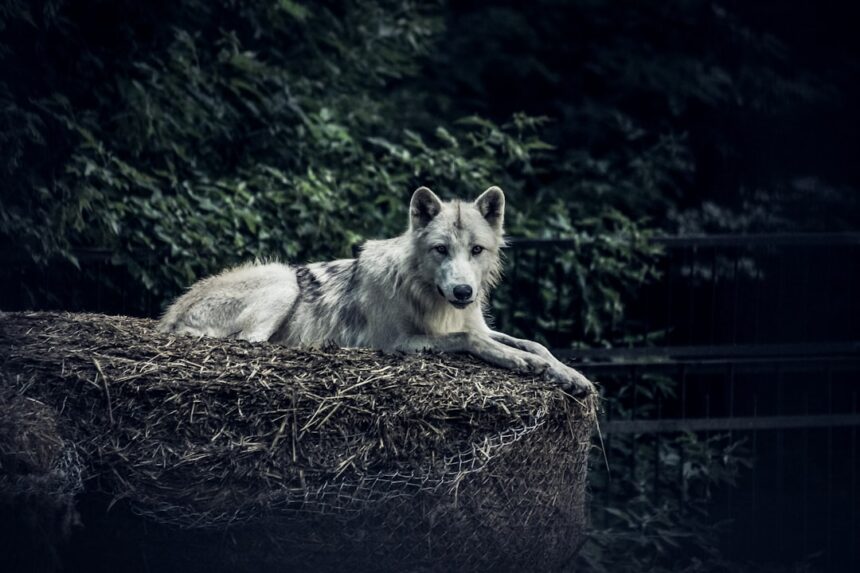
You often find yourself drawn to moments of solitude, perhaps preferring a quiet corner of a busy café to a boisterous gathering. You might feel a deep sense of contentment in your own company, finding external stimulation less crucial than internal reflection. This inclination towards being alone—not necessarily lonely, but choosing solitude—is a characteristic often associated with the “lone wolf” archetype. Understanding the psychology behind these solitary personalities is not about labeling you as an outlier, but about recognizing the multifaceted nature of human interaction and individual wiring. It’s about dismantling the often-negative connotations tied to solitude and appreciating the unique strengths that emerge from a more independent disposition.
The preference for solitude can have roots that extend beyond conscious choice, reaching into your biological makeup. While not a deterministic factor, certain predispositions may subtly guide your social energy levels and your comfort with being alone.
Nature’s Hand: Genetics and Temperament
Research suggests that genetic factors play a role in shaping your personality, including your sociability and introversion levels. You might be predisposed to a nervous system that is more sensitive to external stimuli, making large groups overwhelming and small, intimate interactions more appealing. This is not a flaw; rather, it’s like having an internal dimmer switch for social energy. Some people are designed with a dimmer that naturally sits at a lower setting, finding the “plugged-in” state you might experience in a crowd to be draining. Your temperament, the inherent quality of your moods and reactions, is also a significant player. Are you naturally inclined towards quiet observation, or do you thrive on constant external validation? Your innate temperament acts as the foundation upon which your social preferences are built.
Environmental Echoes: Upbringing and Early Experiences
While biology lays the groundwork, your environment acts as the sculptor, shaping how those predispositions manifest. Your early experiences, including your family dynamics and the social environments you were exposed to, can significantly influence your comfort with solitude. If you grew up in a household that valued independence and provided ample opportunities for solitary exploration, you might have developed a healthy appreciation for your own company. Conversely, if you experienced social pressures or anxieties in your formative years, you might have learned to associate solitude with safety, or perhaps even a form of retreat. It’s like teaching a plant to grow in a particular direction; the initial conditions matter.
The concept of the lone wolf personality in psychology has garnered significant attention, particularly in understanding how such individuals navigate social interactions and relationships. For a deeper exploration of this topic, you can refer to the article on Unplugged Psychology that discusses the traits and behaviors associated with lone wolf personalities. This article provides valuable insights into the psychological underpinnings of solitude and independence in social contexts. To read more, visit Unplugged Psychology.
Navigating the Social Terrain: Your Preferred Modes of Interaction
Your relationship with social interaction defines your approach to connection. For those who lean towards solitude, this navigation is often more strategic and selective, rather than a broad, unfiltered engagement with the social world.
The Art of Selective Engagement: Quality Over Quantity
You likely don’t avoid social interaction altogether, but you approach it with a discerning eye. The concept of “quality over quantity” is a cornerstone of your social strategy. You might invest deeply in a few meaningful relationships rather than spreading your social energy thinly across a wide network. This means that when you do choose to engage, your interactions are often characterized by depth, authenticity, and genuine emotional connection. It’s like a skilled artisan meticulously crafting a single, exquisite piece versus someone mass-producing trinkets; the effort is focused and the outcome is a resonant creation. You value being truly seen and understood, and this is more easily achieved in smaller, more intimate settings.
The Power of Observation: The Silent Witness
Many solitary individuals possess a keen observational ability. You might find yourself naturally inclined to observe social dynamics from the periphery, absorbing information and processing it internally. This allows you to understand social cues and motivations without necessarily being an active participant. You are the quiet observer in the room, the one who notices the subtle shifts in body language, the unspoken tensions, and the underlying currents of conversation. This ability can make you a valuable confidant and a perceptive judge of character, as you’ve had more time to analyze the tableau of human behavior. Think of yourself as a detective, observing the scene before stepping in to solve the mystery.
The Recharge Mechanism: Solitude as Restoration
For you, solitude is not a punishment; it’s a restorative process. While others may feel energized by social engagement, you often find yourself depleted. Returning to a state of solitude is akin to plugging your phone into a charger; it’s a necessary ritual to replenish your social battery. This is a fundamental difference in how your nervous system processes external input. The constant barrage of information and expectations in social settings can be overwhelming, and stepping away allows your mind to quiet down, to process recent experiences, and to prepare for future engagements. Without this dedicated time for self-restoration, you might find yourself feeling irritable, less focused, and more prone to anxiety.
The Inner Landscape: The Richness of Internal Life
Your preference for solitude often correlates with a vibrant and self-sufficient inner world. You are not reliant on external validation to define your sense of self-worth or to generate engagement.
The Cultivation of Inner Worlds: A Universe Within
You possess a rich internal landscape, a universe of thoughts, ideas, and emotions that you actively cultivate. This internal world is a source of constant fascination and exploration for you. Reading, creative pursuits, introspection, and deep contemplation are not just hobbies; they are fundamental ways you engage with yourself and the world. You can spend hours lost in a book, immersed in a creative project, or simply pondering complex ideas without feeling bored or restless. This ability to be self-entertained and self-engaged is a hallmark of a well-developed inner life. Your mind is a garden you tend, and it produces a bounty of thought and creativity.
Self-Reliance and Independence: The Master of Your Own Ship
A deep sense of self-reliance is often a defining characteristic. You are comfortable making decisions independently, tackling challenges on your own, and charting your own course. This doesn’t mean you reject collaboration, but rather that you trust your own judgment and capabilities. You are the captain of your own ship, navigating the seas of life according to your own internal compass. This can be a source of immense strength, allowing you to weather storms and pursue your goals with unwavering determination. You don’t wait for permission or external direction; you forge your own path.
The Depth of Introspection: A Journey Inward
You are often drawn to introspection, the process of examining your own thoughts and feelings. This internal dialogue is a crucial part of your self-understanding and personal growth. You might find yourself analyzing your motivations, reflecting on your decisions, and seeking to understand the nuances of your own emotional responses. This introspective habit allows you to gain clarity, to learn from your experiences, and to develop a profound understanding of who you are. It’s like having a personal philosopher residing within, constantly prompting you to explore the deeper meanings of your existence.
Strengths of the Solitary Soul: Beyond the Stereotype
The “lone wolf” is often misconstrued as aloof or even anti-social. However, the psychological profile of solitary personalities reveals a distinct set of strengths that are invaluable in both personal and professional spheres.
The Power of Focus: Uninterrupted Concentration
Your ability to concentrate for extended periods without external distractions is a significant strength. When you are engaged in a task, you can achieve a state of deep focus, often referred to as “flow, ” where you become completely absorbed. This allows for high-quality work, innovative problem-solving, and the mastery of complex skills. You can enter this state because you are less susceptible to the constant draw of social interruptions. You are like a laser beam, directing all your energy to a single point, achieving precision and intensity. This focused attention is highly prized in many fields.
Independent Problem-Solving: The Lone Strategist
When faced with a challenge, you are less likely to immediately seek group consensus. Instead, you engage in independent problem-solving, meticulously analyzing the situation, exploring various solutions, and devising your own strategies. This can lead to novel and effective outcomes, as you are not bound by the groupthink that can sometimes stifle creativity. You are the architect of your own solutions, meticulously designing and constructing the pathway forward. This independence in thought process can lead to groundbreaking innovations and remarkably efficient resolutions.
Resilience and Self-Sufficiency: Standing Tall
Your reliance on yourself cultivates a profound sense of resilience. When faced with setbacks or difficulties, you are adept at finding your own footing and continuing forward. You possess a deep inner well of fortitude, drawing strength from your own capabilities rather than external support systems. This self-sufficiency makes you robust in the face of adversity, less dependent on others for emotional refueling or practical assistance. You are like a deeply rooted tree, able to withstand storms and draw sustenance from your own core.
The concept of the lone wolf personality has garnered significant attention in psychology, particularly in understanding how individuals who prefer solitude navigate social dynamics. A related article that delves deeper into this topic can be found at Unplugged Psych, where the nuances of introversion and independence are explored. This resource offers valuable insights into the traits and behaviors commonly associated with lone wolves, shedding light on their unique perspectives and coping mechanisms in a predominantly extroverted world.
Embracing Your Nature: Thriving as a Solitary Individual
| Metric | Description | Typical Values/Traits | Psychological Implications |
|---|---|---|---|
| Social Interaction Frequency | Number of social interactions per day/week | Low to moderate | Preference for solitude, may indicate introversion |
| Need for Autonomy | Degree to which individual desires independence | High | Strong self-reliance, resistance to external control |
| Introversion Score | Measured by personality inventories (e.g., Big Five) | High (above average) | Reflects inward focus, energy gained from solitude |
| Agreeableness | Personality trait indicating cooperativeness | Variable, often moderate to low | May prefer limited social bonds, selective trust |
| Emotional Stability | Level of emotional resilience and calmness | Variable | Can influence ability to cope with solitude |
| Self-Efficacy | Belief in one’s ability to succeed | High | Supports independent problem-solving and decision-making |
| Preference for Deep Relationships | Desire for meaningful, close connections over many acquaintances | High | Focus on quality rather than quantity of social bonds |
Understanding the psychology of your solitary nature is not about changing who you are, but about embracing and leveraging your unique disposition. It’s about recognizing the value in your independent spirit and learning to navigate the world in a way that honors your inner needs.
Redefining Social Success: Authenticity Over Popularity
Your definition of social success will likely differ from the conventional. You are not driven by the need for widespread popularity or constant social affirmation. Instead, you seek authentic connections and meaningful interactions. Your success is measured by the depth of your relationships and the genuine understanding you share with those you choose to let into your inner circle. It’s about building a strong, select network that resonates with your core values, rather than accumulating a vast collection of acquaintances.
Setting Boundaries: The Guardians of Your Energy
Learning to set clear boundaries is paramount for your well-being. This involves recognizing your limits for social interaction and being comfortable saying “no” to commitments that will drain your energy. It’s about protecting your valuable internal resources and ensuring that you allocate your social energy to where it will be most beneficial and fulfilling for you. Think of boundaries as fences around your garden, protecting it from external forces while allowing you to cultivate what is most precious within.
Finding Your Tribe: Connection on Your Terms
Even the most solitary individuals crave connection. Your “tribe” may be smaller and more curated than others’, but it is no less significant. Seek out individuals who understand and appreciate your need for independence and solitude. These are the people who understand that your quietness doesn’t mean disinterest, and your need for space doesn’t equate to rejection. They are the ones who can engage with you on your terms, respecting your quiet moments while valuing your presence. It’s about finding kindred spirits who speak the same language of authenticity and mutual respect, even if that language is spoken in hushed tones.
FAQs
What is a lone wolf personality in psychology?
A lone wolf personality refers to an individual who prefers solitude and tends to operate independently rather than within groups. Such individuals often value self-reliance, introspection, and may feel more comfortable working alone.
Are lone wolf personalities introverts?
While many lone wolf personalities exhibit introverted traits, such as enjoying solitude and needing time alone to recharge, not all introverts are lone wolves. The lone wolf personality specifically emphasizes independence and a preference for solitary activities.
What psychological traits are common in lone wolf personalities?
Common traits include high self-reliance, independence, introspection, and sometimes a tendency toward skepticism or mistrust of group dynamics. They may also display strong problem-solving skills and a preference for deep thinking.
Can a lone wolf personality affect social relationships?
Yes, individuals with lone wolf personalities may find it challenging to form or maintain close social relationships due to their preference for solitude and independence. However, this does not mean they lack social skills; they may simply choose selective social interactions.
Is being a lone wolf personality considered a psychological disorder?
No, having a lone wolf personality is not a psychological disorder. It is a personality style or preference. However, if solitude leads to significant distress or impairment in functioning, it may be worth consulting a mental health professional.