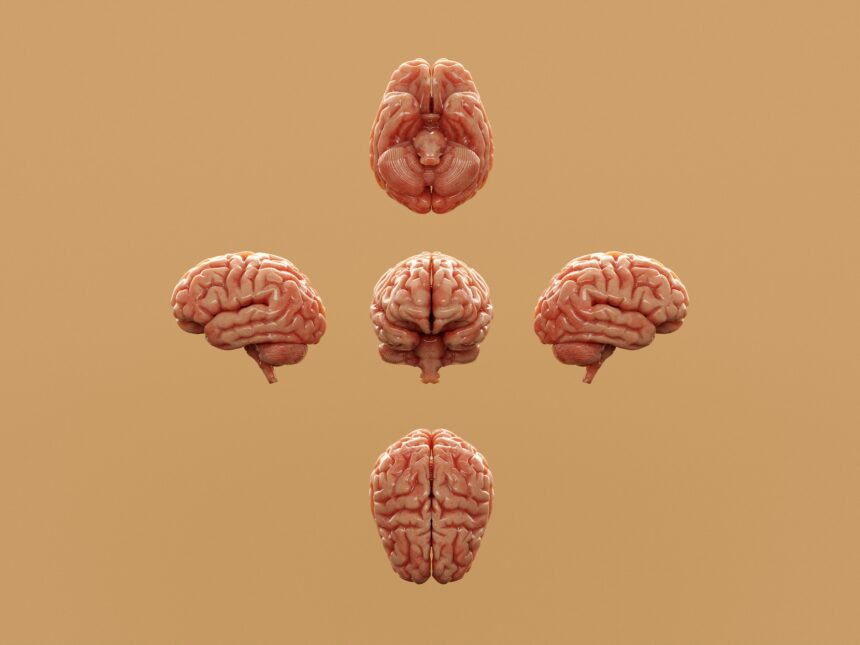
You often find yourself bracing for impact. It’s not a physical impact, necessarily, but a cognitive one, a jolt to your internal equilibrium. Your brain, you’ve come to observe, has a peculiar relationship with surprise, often displaying a more visceral aversion to it than it does to the stark, unvarnished truth. This preference, this ingrained reaction, shapes how you process information, how you form beliefs, and ultimately, how you navigate the world. You might have believed that truth, in its objective form, would always be the ultimate prize, the undisputed champion of your mental landscape. Yet, you often find yourself recoiling not from a falsehood, but from the very unexpectedness of a revelation.
Your brain is a magnificent, albeit somewhat lazy, organ. It thrives on predictability. It has spent years, decades even, building intricate neural pathways that map out your reality. These pathways are efficient, economizing cognitive resources by allowing you to operate on autopilot for many tasks. Surprise, by its very nature, disrupts these established patterns. It’s like a new, uninvited guest barging into your meticulously organized mental filing cabinet, scattering papers and demanding a complete reordering.
The Neural Basis of Predictability
Neuroscience offers some insight into this phenomenon. Your brain is constantly making predictions about what will happen next. This predictive processing is fundamental to everything you do, from walking to understanding language. When your predictions are met, your brain experiences a sense of reward, a subtle but perceptible confirmation that its model of the world is accurate. This reward system, often mediated by dopamine, reinforces these predictive pathways.
Dopamine and the Predictability Reward
When events unfold as expected, your brain releases dopamine in a predictable, measured way. This isn’t the exhilarating surge associated with novelty, but a steady hum of satisfaction. It’s the feeling of competence, of being in control, of having your internal compass pointing true north. This constant, low-level reinforcement makes you actively seek out situations that align with your existing expectations. It’s why you might find comfort in routine, or why you might feel a sense of unease when your daily schedule is unexpectedly upended.
The Cost of Cognitive Dissonance
Surprise often leads to cognitive dissonance, a state of mental discomfort experienced when you hold two or more contradictory beliefs, ideas, or values, or when your new information clashes with existing beliefs. Your brain, inherently seeking consistency, finds this state to be highly aversive. It’s like trying to hold two magnets with the same poles together; there’s an inherent pushback, a need to resolve the conflict.
Resolving Dissonance: The Path of Least Resistance
When faced with surprising information that contradicts your deeply held beliefs, your brain has a few options. It can reject the new information, discredit the source, rationalize the discrepancy, or, in some cases, modify its existing beliefs. The path you choose is often dictated by what requires the least cognitive effort. Dismissing the surprising truth as an anomaly or a misunderstanding is often far easier than undertaking the arduous process of rebuilding your entire belief structure. It’s the mental equivalent of tidying up a small spill rather than repainting the entire room.
The brain’s aversion to surprises, even when they are more palatable than the truth, can be better understood through the insights provided in the article “Why the Brain Hates Surprise More Than Truth.” This article delves into the psychological mechanisms that drive our reactions to unexpected information and how our brains prioritize predictability and stability over the discomfort of surprise. For a deeper exploration of this fascinating topic, you can read the full article here: Why the Brain Hates Surprise More Than Truth.
The Truth That Stings: When Revelation Feels Like Attack
You’ve likely experienced this: a truth revealed, not in a gentle unfolding, but in a sudden, sharp pronouncement. It feels less like enlightenment and more like an accusation. This is where the brain’s dislike of surprise truly comes into play. The truth itself might be factual, objectively verifiable, but the manner of its delivery, its unexpectedness, amplifies its negative impact.
Emotional Responses to Unexpected Truths
When a surprising truth emerges, it bypasses your rational processing centers and often triggers a more primitive, emotional response. Fear, anger, anxiety, or a sense of betrayal can all flood your system. This is because surprise often signals a potential threat. If your reality is suddenly and unexpectedly altered, your brain interprets this as a sign that the world you thought you understood is no longer safe.
The Amygdala’s Role in Threat Detection
Your amygdala, the brain’s alarm system, is highly sensitive to novelty and unexpected stimuli. When confronted with a surprising truth, particularly one that challenges your identity or worldview, the amygdala can go into overdrive, releasing stress hormones and preparing you for a fight-or-flight response. This immediate emotional reaction can overshadow your ability to objectively evaluate the truth itself.
The Ego’s Defense Mechanisms
Your ego, that construct of your self-identity and self-worth, is also a significant player in your aversion to surprising truths. Many of your beliefs are tied to your sense of who you are. When a surprising truth undermines these beliefs, it can feel like a personal attack on your identity.
Protecting the Self-Image
Your brain employs defense mechanisms to protect your ego from perceived threats. These can include:
- Denial: Refusing to accept the reality of the surprising truth. You might simply push it away, pretending it doesn’t exist.
- Rationalization: Creating plausible, but ultimately fabricated, explanations for why the surprising truth isn’t relevant or important.
- Projection: Attributing your own negative feelings or motivations to others who are presenting the surprising truth.
- Intellectualization: Focusing on the abstract or intellectual aspects of the truth to distance yourself from its emotional impact.
These defense mechanisms are not necessarily conscious choices, but automatic, ingrained responses designed to maintain your psychological equilibrium.
The Allure of Falsehoods When They Echo Your Beliefs
You might find yourself drawn to narratives, even demonstrably false ones, if they align with your existing worldview. This is not a sign of your inherent gullibility, but a testament to your brain’s preference for confirmation over correction. Surprising truths, even benevolent ones, can be disorienting. Falsehoods that reinforce what you already believe, however, are a soothing balm.
Confirmation Bias: The Echo Chamber of the Mind
Confirmation bias is your tendency to seek out, interpret, favor, and recall information in a way that confirms your pre-existing beliefs or hypotheses. This bias is incredibly powerful and operates on a subconscious level. When you encounter information that supports your existing views, your brain readily accepts it, often without critical evaluation.
The Flow of Confirmatory Information
This bias manifests in how you consume media, engage in conversations, and even remember past events. You’re more likely to click on articles with headlines that align with your opinions, to surround yourself with people who share your views, and to selectively recall memories that bolster your current perspective. This creates an echo chamber where your beliefs are constantly reinforced, making surprising truths that contradict them feel all the more alien and unwelcome.
The Emotional Dopamine of Agreement
When you encounter information that aligns with your beliefs, even if it’s factually dubious, it can trigger a pleasant emotional response. This is not the same as the dopamine reward for predictability, but a different kind of satisfaction derived from feeling validated and understood. It’s the warmth of belonging, the comfort of shared understanding.
The Social Reinforcement of Beliefs
This is particularly potent in social contexts. When you express a belief and receive positive reinforcement from others, your brain registers this as a social reward. This can make you more resistant to contradictory evidence, as accepting it would mean alienating your social group or admitting you were wrong in a public forum. The potential social cost of accepting a surprising truth can outweigh the intellectual benefit.
Strategies for Navigating the Surprise-Averse Brain

Understanding your brain’s predisposition should not lead to resignation. Instead, it offers you opportunities for intentional adaptation. You can, with effort, cultivate a greater capacity for encountering surprise and accepting truth, even when it’s delivered with an unexpected jolt.
Cultivating Intellectual Humility
Intellectual humility is the recognition that your knowledge is limited and that you are susceptible to error. It’s the willingness to acknowledge that you might be wrong, even about deeply held beliefs. This is a crucial skill for anyone wanting to genuinely engage with new information.
Practicing Active Listening and Open-Mindedness
This involves not just hearing what others say, but actively trying to understand their perspective, even if it differs from your own. It means suspending judgment and being open to the possibility that your current understanding is incomplete or incorrect. When presented with information that challenges your views, try to listen without immediately formulating a rebuttal.
Embracing the Process of Learning
View learning not as a task with a definitive end, but as an ongoing process. Recognize that your understanding of the world is dynamic and subject to change. This reframing can make the disruption caused by surprising truths feel less like a personal failing and more like an expected part of growth.
Seeking Out Diverse Perspectives
Actively expose yourself to viewpoints that challenge your own. Read books and articles from authors with different backgrounds and beliefs. Engage in conversations with people who hold opposing opinions, not to debate, but to understand. This deliberate exposure can desensitize you to the shock of encountering unfamiliar ideas.
Developing Emotional Regulation Skills
The immediate emotional reaction to surprise can be a significant barrier to processing truth. Developing skills to manage these emotions is therefore paramount.
Mindfulness and Self-Awareness
Practicing mindfulness can help you become more aware of your emotional responses in the moment. By observing your feelings without judgment, you can create a space between the stimulus (the surprising truth) and your reaction. This allows your rational brain to engage before your emotional brain takes over.
The brain’s aversion to surprise can be better understood through the insights provided in a related article on the psychology of expectation and perception. This article explores how our minds are wired to prefer predictability, as unexpected events can trigger stress and anxiety responses. For a deeper dive into this fascinating topic, you can read more about it in this informative piece that discusses the implications of our brain’s preferences for truth over surprise. Understanding these mechanisms can help us navigate our emotional responses more effectively.
The Long-Term Benefits of Embracing Difficult Truths
| Reasons | Explanation |
|---|---|
| Neural Efficiency | The brain prefers familiar information as it requires less energy to process. |
| Threat Response | Surprises can trigger the brain’s fight-or-flight response, leading to stress and anxiety. |
| Cognitive Dissonance | Unexpected information can create conflict with existing beliefs, causing discomfort. |
| Pattern Recognition | The brain seeks patterns and predictability, making surprises unsettling. |
While your brain may resist the discomfort, the rewards of actively engaging with surprising truths are substantial. It leads to a more robust and accurate understanding of reality, fostering personal growth and a greater capacity for informed decision-making.
Enhanced Critical Thinking and Problem-Solving Abilities
When you are open to surprising truths, you become a more effective critical thinker. You are less likely to fall prey to misinformation or flawed logic. This allows you to approach problems with a more nuanced and comprehensive understanding, leading to better solutions.
Flexibility in Belief Systems
A willingness to accept surprising truths fosters flexibility in your belief systems. You become less rigid and more adaptable to new information. This is essential in a rapidly changing world where old assumptions may no longer hold true. Your capacity to update your understanding allows you to navigate complexity and uncertainty with greater ease.
Deeper Relationships and a More Nuanced Worldview
When you can accept truths that may be challenging, you foster deeper, more authentic relationships. You become a person that others can trust with difficult feedback, and you are more capable of understanding and empathizing with diverse perspectives. This leads to a richer, more comprehensive understanding of the world and your place within it. Your interactions become less about defending your existing position and more about exploring the multifaceted nature of reality.
You are not inherently flawed for finding surprise jarring or for cherishing the echo of your own beliefs. These are deeply ingrained neurological and psychological tendencies. However, by recognizing these patterns, you gain the agency to consciously alter your responses. The journey towards embracing difficult truths is an ongoing one, marked by stumbles and moments of resistance. But the destination – a more informed, adaptable, and connected self – makes the effort undeniably worthwhile.
FAQs
What is the brain’s response to surprise?
The brain’s response to surprise is to activate the amygdala, which is the part of the brain responsible for processing emotions, particularly fear and anxiety. This activation triggers the body’s fight-or-flight response, leading to increased heart rate, heightened alertness, and a surge of adrenaline.
How does the brain process unexpected information?
When the brain encounters unexpected information, it goes through a process of cognitive dissonance, which is the mental discomfort experienced when holding conflicting beliefs or encountering new information that contradicts existing beliefs. This can lead to feelings of discomfort and a desire to resolve the inconsistency.
Why does the brain dislike surprises more than the truth?
The brain dislikes surprises more than the truth because unexpected information disrupts the brain’s prediction and expectation systems. The brain is constantly making predictions based on past experiences, and when those predictions are proven wrong, it can lead to a sense of uncertainty and discomfort.
What are the potential negative effects of surprise on the brain?
Surprise can have negative effects on the brain, including increased stress and anxiety, decreased cognitive performance, and impaired decision-making. Chronic exposure to unexpected or surprising events can also contribute to mental health issues such as anxiety disorders and PTSD.
How can the brain adapt to handle surprises better?
The brain can adapt to handle surprises better through practices such as mindfulness, which can help individuals become more aware of their reactions to unexpected events and develop strategies for managing their responses. Additionally, building resilience through exposure to controlled levels of surprise or uncertainty can help the brain become more adept at handling unexpected situations.