
You have reached a plateau. For a significant period, your primary objective has been absorption: soaking in knowledge, skills, and experiences like a sponge. You’ve diligently consumed information, diligently practiced techniques, and diligently built a foundational understanding of your chosen domain. This phase is crucial, the bedrock upon which all future mastery is built. However, a skilled artisan doesn’t simply accumulate raw materials; they transform them, shaping them with intent and precision. Now, you stand on the cusp of this transformative leap: transitioning from passive absorption to active, deliberate precision. This is not about discarding what you have learned, but rather about evolving your relationship with it, moving from being a recipient to being a conductor.
The Inertia of Immersion
The phase of absorption is characterized by a certain inertia. You are in a state of high ingest, but often low output. Think of it as filling a reservoir. You are drawing water from various sources, steadily increasing the volume within. This is a vital stage, and resisting it or attempting to rush it would be akin to forcing water uphill. You need that accumulated mass, that depth of understanding, before you can begin to harness its potential energy. The danger lies not in the absorption itself, but in allowing this stage to become a perpetual state, a comfortable but ultimately unproductive rut. You must recognize when the reservoir has reached its capacity, not in terms of volume, but in terms of readiness for action.
The transition from absorption to precision is rarely a sudden, dramatic event. It is more often a gradual awakening, a subtle shift in your internal landscape. You begin to notice recurring patterns, not just in the information you consume, but in your own responses to it. This is your internal compass, a signal that you are ready to move beyond mere comprehension.
Subtleties of Recognition
- The Emergence of Questions: When you were primarily absorbing, your questions were likely focused on clarifying existing information. “What does this mean?” “How does this work?” Now, your questions begin to morph. They become more analytical and comparative: “Why does this work this way, and not another?” “What are the underlying principles that govern these different phenomena?” You are no longer just seeking answers; you are seeking the architecture of knowledge itself.
- The Feeling of Redundancy: You may find yourself encountering information you already understand, not as a fresh revelation, but as a restatement of familiar concepts. This isn’t boredom; it’s a sign of internal assimilation. Your mind is no longer struggling to grasp new concepts; it’s integrating them into your existing framework.
- The Stirring of Application: A nascent desire to do something with this knowledge begins to surface. It might be a vague inclination to test a hypothesis, to experiment with a technique, or to offer a new perspective. This is the early tremor of your creative impulse, waiting for the opportunity to manifest.
The Unspoken Invitation to Engage
This internal shift is an unspoken invitation to engage with your learned material in a more active, discerning way. It is the moment you realize that the tools you have gathered are not meant to remain pristine in their boxes, but to be taken out and put to use. This is where the true work of mastery begins.
In the journey from absorption to precision in understanding cognitive processes, it is essential to explore various strategies that enhance focus and clarity. A related article that delves into this topic is available at Unplugged Psych, which offers insights on how to refine mental engagement and improve overall cognitive performance. You can read more about these techniques by visiting this link: Unplugged Psych.
Deconstructing the Learned: The Art of Dissection
Precision requires a deep understanding of the components that make up the whole. This is where you begin to take the knowledge you have absorbed and break it down into its constituent parts, examining each element with a critical eye. Imagine a skilled mechanic who doesn’t just drive a car, but understands the intricate workings of every piston, gear, and sensor.
Analyzing the Framework
- Identifying Core Principles: Beyond the surface-level information, what are the fundamental laws, theories, or axioms that underpin your subject? For instance, in cooking, beyond learning recipes, you need to understand the Maillard reaction, the principles of leavening, and the balance of flavors. In programming, it’s not just syntax, but algorithms, data structures, and computational complexity.
- Mapping Relationships and Interdependencies: How do these individual components interact with each other? What are the causal links, the feedback loops, and the hierarchical structures? This is akin to understanding the ecosystem of your knowledge domain, where each element plays a role in the larger system.
- Recognizing Variations and Nuances: Within any given concept or technique, there are invariably subtle differences in execution, context, and outcome. Precision lies in recognizing and understanding these variations, not as inconsistencies, but as opportunities for refinement.
The Sculptor’s Touch
This process of deconstruction is like a sculptor examining a block of marble. They don’t just see a mass; they see the potential form within, identifying the veins, the imperfections, and the grain. They understand where to strike, where to chip away, and where to polish to reveal the masterpiece.
Intentional Practice: The Crucible of Refinement
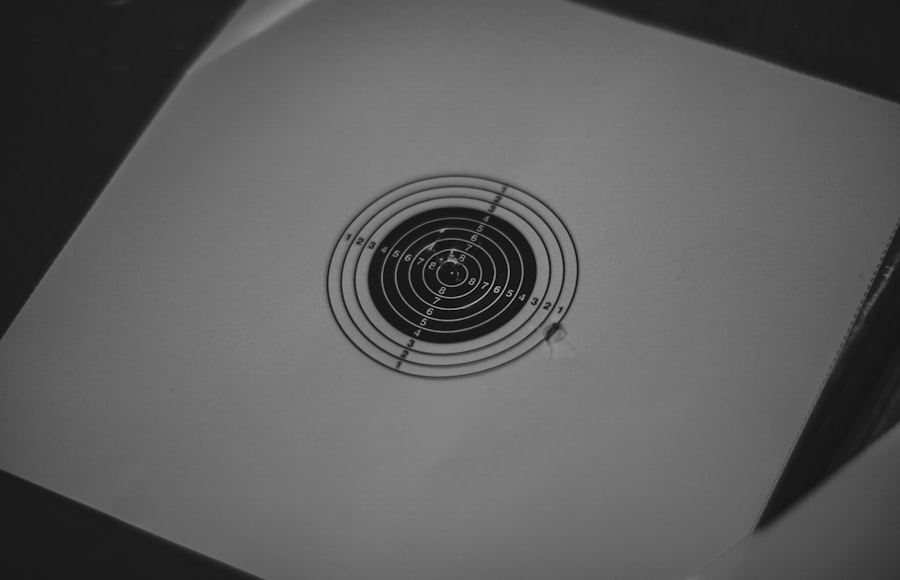
Absorption often involves broad, often undirected practice. You might be repeating a skill until it feels familiar. Intentional practice, however, is about focused, deliberate effort aimed at improving specific aspects of your performance. It’s about moving from “doing” to “doing better.”
Targeting Your Weaknesses
- Pinpointing Areas for Improvement: Based on your deconstruction, you can now identify the specific elements that require attention. This might be a particular technique, a theoretical concept you haven’t fully grasped, or a recurring error. This is like a marksman identifying their flinch, their grip, or their breath control.
- Designing Targeted Exercises: Instead of generic drills, you create exercises that specifically address your identified weaknesses. This could involve breaking down a complex skill into smaller, manageable components and practicing each one in isolation before reintegrating them. For example, instead of just playing a difficult musical passage repeatedly, you might isolate the challenging fingerings or rhythmic patterns.
- Seeking and Incorporating Feedback: Active feedback is crucial here. You actively seek out input from mentors, peers, or even self-assessment tools to gauge your progress and identify blind spots. This feedback is not a judgment; it’s a diagnostic tool that guides your refinement.
The Virtuoso’s Repetition
This is not about mindless repetition, but about the virtuoso’s repetition. The musician practices a difficult chord change not just to hit it, but to hit it flawlessly, with the right tone, the right timing, and the right emotion. The athlete practices a particular movement not just to complete it, but to execute it with maximum efficiency and power.
Cultivating Discernment: The Sharpened Eye

Precision is inextricably linked to discernment. It is your ability to distinguish between the essential and the extraneous, the effective and the suboptimal, the insightful and the superficial. This is a skill that is honed through careful observation and critical evaluation.
The Lens of Criticality
- Evaluating Efficacy: When you encounter a new technique or piece of information, you don’t just accept it; you question its effectiveness. “Does this truly solve the problem?” “Are there more efficient or elegant solutions?” This is about applying a cost-benefit analysis to your knowledge and skills.
- Identifying Underlying Assumptions: Every theory, every method, rests on a foundation of assumptions. Your role is to uncover these assumptions, examine their validity, and understand how they shape the outcome. This is like a detective looking for the hidden motives behind a crime.
- Recognizing and Mitigating Bias: Your own biases, and the biases present in the information you consume, can significantly distort your understanding and application. Cultivating discernment involves actively identifying and seeking to mitigate these biases to arrive at a more objective assessment.
The Judge’s Verdict
Discernment is like a judge’s verdict. It is based on evidence, reasoned argumentation, and a careful weighing of opposing perspectives. It is about moving beyond personal preference or emotional response to arrive at a considered and objective conclusion.
In the journey from absorption to precision, understanding the nuances of cognitive processes can be crucial. A related article that delves into this topic can provide valuable insights and strategies for enhancing focus and clarity in thought. For those interested in exploring this further, you can read more about it in this informative piece on cognitive techniques that facilitate a smoother transition from a broad, immersive mindset to one that is sharply defined and precise.
Iterative Improvement: The Cycle of Mastery
| Stage | Key Focus | Metrics | Actions to Move Forward |
|---|---|---|---|
| Absorption | Understanding and internalizing information |
|
|
| Transition | From general understanding to focused application |
|
|
| Precision | Accurate and efficient application of knowledge |
|
|
The transition to precision is not a destination, but a continuous journey. It is a process of iterative improvement, where you constantly refine your understanding and application based on your experiences and observations. This is the engine that drives true mastery.
Fueling the Engine
- Embracing Failure as Data: Mistakes are not setbacks; they are valuable data points. Each error provides insight into what didn’t work, allowing you to adjust your approach for the next attempt. This is the scientist’s hypothesis testing—a failed experiment is still a source of invaluable information.
- Seeking Novelty and Challenge: To continue evolving, you must actively seek out new challenges and opportunities to apply your skills in different contexts. This pushes the boundaries of your comfort zone and forces you to adapt and innovate.
- Synthesizing and Innovating: As you become more precise, you begin to see connections between disparate ideas and techniques. This allows you to synthesize existing knowledge into new approaches and to innovate within your field. You are no longer just assembling; you are creating.
The Gardener’s Persistence
This iterative process is like a gardener tending to their plants. They don’t just plant a seed and walk away. They water, they weed, they prune, and they observe, constantly making adjustments to ensure the plant thrives and produces its best fruit. This ongoing care, this commitment to refinement, is what transforms potential into enduring excellence. You have moved beyond the initial impulse to simply acquire; you are now actively shaping, refining, and creating, a testament to your transition from absorption to mastery.

▶️ WARNING: Your “Empathy” Is Actually A Fawn Response
FAQs
What does it mean to move from absorption to precision?
Moving from absorption to precision refers to shifting from passively taking in information to actively understanding and applying knowledge with accuracy and clarity.
Why is it important to transition from absorption to precision?
This transition enhances learning effectiveness, improves decision-making, and allows for better problem-solving by focusing on the quality and relevance of information rather than just quantity.
What strategies can help in moving from absorption to precision?
Strategies include active reading, critical thinking, summarizing key points, asking targeted questions, and practicing application of knowledge in real-world scenarios.
How does precision improve learning outcomes?
Precision helps learners focus on essential details, reduces misunderstandings, and promotes deeper comprehension, leading to more efficient and meaningful learning experiences.
Can technology assist in moving from absorption to precision?
Yes, tools like note-taking apps, spaced repetition software, and analytical platforms can help organize information, highlight key concepts, and reinforce precise understanding.