You stand at a crossroads in the modern world, a landscape of constant information influx, escalating demands, and an almost inescapable hum of digital noise. The quest for “inner peace” often feels like an anomaly, a whisper against the roar of your daily life. Yet, as you delve into philosophical thought, you will discover that this pursuit is not a New Age invention but a timeless human endeavor, deeply rooted in the foundational inquiries of ancient thinkers. Philosophy, correctly approached, can serve as a robust framework, a disciplined practice for cultivating a quiet mind. It offers not a magical cure, but a series of tools and perspectives, honed over millennia, to navigate the complexities of your internal and external worlds. You are not seeking an absence of thought, an empty void, but rather a cultivated stillness, a clarity of perception that allows you to engage with existence on your own terms.
Before you can cultivate peace, you must first understand the origins and mechanisms of your disquiet. This introspection is the philosophical starting point.
The Problem of External Validation
You often find yourself swept up in the pursuit of external validation. Your worth, in modern society, is frequently measured by your achievements, possessions, or the approval of others.
- Social Metrics of Success: From employment titles to social media likes, you are constantly bombarded with metrics that define “success.” This creates a dependency, a constant looking outwards for affirmation, which inherently destabilizes your internal equilibrium. When your sense of self relies on fluctuating external factors, your peace becomes equally volatile.
- The Hedonic Treadmill: You experience the phenomenon of the hedonic treadmill, where each new acquisition or achievement brings a fleeting moment of satisfaction, quickly followed by a return to baseline or an increased desire for something more. This perpetual chase is a guaranteed pathway to persistent dissatisfaction and mental unrest. Philosophers like Epicurus warned against this endless pursuit, advocating instead for a moderation of desires.
The Tyranny of Internal Monologue
Your own mind, while a powerful tool, can also be a source of significant unrest. The ceaseless internal monologue, often critical or anxious, can overshadow any potential for serenity.
- Rumination and Worry: You may find yourself trapped in cycles of rumination, replaying past events or worrying about future possibilities. This mental looping consumes your present moment, diverting your attention from what is actually happening. This is a common aspect of the human condition, but philosophy offers methods to address it.
- Cognitive Distortions: Your thoughts are not always accurate reflections of reality. You may fall prey to cognitive distortions – irrational thought patterns that exaggerate negative aspects or catastrophize situations. Identifying these, as cognitive behavioral therapy (CBT) has shown (drawing heavily on Stoic principles), is a crucial step towards mental quiet.
To cultivate a quiet mind through philosophy, one can explore various techniques and insights that encourage mindfulness and self-reflection. A related article that delves into this topic is available at Unplugged Psych, which discusses the intersection of philosophical thought and mental well-being. You can read more about these concepts and practical approaches by visiting Unplugged Psych. This resource offers valuable perspectives on how philosophical practices can help in achieving mental tranquility.
Embracing Stoic Discipline for Mental Fortitude
You will find in Stoicism a particularly potent philosophical school for cultivating inner peace. It offers a practical, robust framework for navigating the vicissitudes of life.
The Dichotomy of Control
At the heart of Stoic philosophy is the fundamental principle of the “dichotomy of control.” This distinction is a cornerstone of mental tranquility.
- Distinguishing Between What You Can and Cannot Control: You are encouraged to meticulously categorize every aspect of your experience: those things truly within your control (your judgments, intentions, actions) and those entirely outside of it (external events, other people’s opinions, health outcomes, the weather). Marcus Aurelius, in his Meditations, repeatedly emphasizes this distinction as the foundation of freedom and peace of mind.
- Focusing Energy on What is Within Your Sphere: When you learn to direct your mental and emotional energy solely towards what is amenable to your influence, you liberate yourself from the frustration and anxiety of attempting to control the uncontrollable. This practice is like focusing a lens, bringing clarity to your actionable choices and allowing everything else to fall out of your immediate concern.
The Practice of Premeditatio Malorum
You might initially resist the idea of dwelling on potential misfortunes, but Stoics viewed this as a vital exercise.
- Anticipating Adversity: Premeditatio malorum (premeditation of evils) involves consciously contemplating potential negative outcomes, not to induce fear, but to prepare your mind. By mentally rehearsing difficulties – loss of possessions, illness, social rejection – you diminish their shock value should they occur. You are building mental resilience, like an athlete training for a difficult race.
- Reducing the Impact of Unforeseen Events: This practice allows you to mentally detach from the fragility of external circumstances. When you consider the impermanence of all things outside your control, you reduce your reliance on them for your happiness, thereby fortifying your inner peace against the vagaries of fortune. Seneca, in his letters, frequently discusses this method as a means of reducing the sting of future suffering.
Cultivating Mindfulness through Buddhist Principles
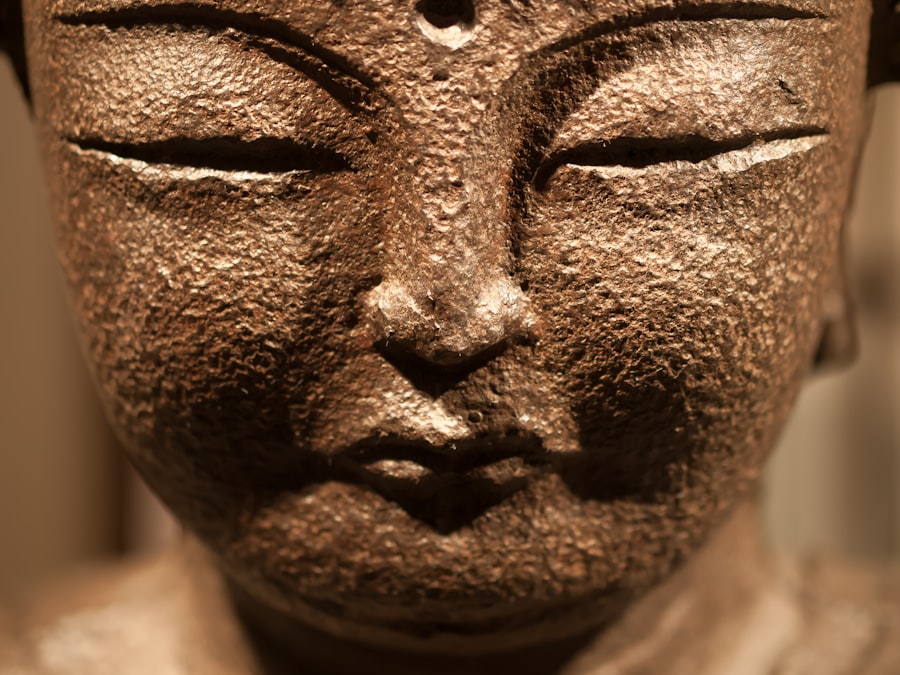
While often considered a spiritual tradition, the philosophical underpinnings of Buddhism offer profound insights into the nature of consciousness and the cultivation of a quiet mind.
The Impermanence of All Phenomena
You will discover the fundamental Buddhist doctrine of anicca (impermanence) to be a powerful antidote to attachment and the resulting suffering.
- Understanding Anicca: Everything in your experience – thoughts, emotions, physical sensations, relationships, possessions – is in a constant state of flux. Nothing is static; everything arises, changes, and passes away. This is not a pessimistic view, but a realistic assessment of existence.
- Detachment from Transient Experiences: When you internalize the truth of impermanence, you begin to loosen your grip on things you attempt to hold onto. Your desire for things to remain fixed or pleasurable, or for unpleasant things to disappear eternally, is the source of much of your internal agitation. By accepting change as an inherent characteristic of reality, you reduce your resistance to it.
The Practice of Vipassana (Insight Meditation)
You may find mindfulness meditation, particularly Vipassana, to be a direct and empirical method for quieting the mind.
- Observing the Breath and Sensations: Vipassana teaches you to observe your breath, bodily sensations, thoughts, and emotions without judgment, simply as they arise and pass away. You are not striving to stop thinking, but rather to change your relationship with your thoughts, seeing them as transient mental events rather than absolute truths. This creates a critical distance, a mental space between you, the observer, and the observed.
- Developing Equanimity: Through consistent practice, you cultivate equanimity – a state of mental calmness and clear-sightedness, especially in difficult situations. You learn to greet both pleasant and unpleasant experiences with a more balanced and accepting attitude, recognizing their ephemeral nature. This detachment from the ebb and flow of subjective experience is a direct pathway to inner calm.
Finding Meaning and Purpose: An Existential Approach
Beyond managing immediate disquiet, a lasting inner peace often requires you to grapple with fundamental questions of meaning and purpose. Existential philosophy, though sometimes confronting, can be immensely liberating.
Confronting Absurdity
You confront the notion that the universe, in itself, may not possess inherent meaning or purpose, and that your own existence, when viewed cosmically, appears small and fleeting. This can initially be unsettling.
- The Absence of Preordained Purpose: Unlike many religious frameworks that provide a ready-made meaning for life, existentialism suggests you are “condemned to be free” (Sartre). There is no divine blueprint, no universal purpose awaiting your discovery. This can feel like a burden, but it is also a tremendous freedom.
- The Burden of Choice: The weight of this freedom lies in the fact that you are solely responsible for creating your own values, your own meaning. This can be a source of anxiety, but it is also the wellspring of your authentic existence. Facing this responsibility, rather than avoiding it, builds a profound sense of self-reliance and peace that comes from owning your life.
Creating Your Own Meaning
You are not left adrift by existential thought; rather, you are empowered to forge your own path.
- Embracing Personal Responsibility: Your peace will often stem from taking full responsibility for your choices and the meaning you ascribe to your life. Viktor Frankl, a Jewish psychiatrist who survived the Nazi concentration camps, observed that those who found meaning in their suffering were more likely to survive. He articulated that you cannot avoid suffering, but you can choose how you respond to it and find meaning in that response.
- Engaging in Authentic Action: Your meaning is not passively received; it is actively created through your commitment to values, projects, and relationships that you deem significant. When your actions align with your deepest values, you experience a sense of congruence and purpose, which is a powerful source of inner peace. This is not about grand pronouncements, but about consistent, meaningful engagement with your life.
Cultivating a quiet mind is a journey that can be greatly enhanced through the insights of philosophy. Engaging with philosophical texts encourages deep reflection and can help individuals navigate the complexities of their thoughts. For those interested in exploring this further, a related article offers practical strategies and philosophical perspectives that can aid in achieving mental tranquility. You can read more about these techniques in this insightful piece on cultivating a quiet mind. By integrating these practices into daily life, one can foster a more peaceful and centered existence.
The Practical Application of Philosophical Principles
| Philosophical Approach | Key Practice | Effect on Mind | Recommended Duration | Example Philosopher |
|---|---|---|---|---|
| Stoicism | Focus on what is within your control | Reduces anxiety and emotional turmoil | Daily reflection (10-15 minutes) | Marcus Aurelius |
| Buddhist Philosophy | Meditation and mindfulness | Enhances present moment awareness and calm | 20-30 minutes per session | Siddhartha Gautama (Buddha) |
| Epicureanism | Pursuit of simple pleasures and avoidance of pain | Promotes tranquility and contentment | Regular lifestyle adjustments | Epicurus |
| Existentialism | Acceptance of uncertainty and personal responsibility | Fosters inner peace through authenticity | Ongoing self-examination | Jean-Paul Sartre |
| Zen Philosophy | Zazen (seated meditation) | Calms the mind by focusing on breath and posture | 15-40 minutes daily | Dogen Zenji |
You are not meant to simply ponder these ideas; you are meant to live them. Philosophy, for the ancients, was a way of life, a practical discipline.
Journaling and Self-Reflection
You can utilize journaling as a direct application of philosophical self-inquiry.
- A Stoic Exercise: Regularly dedicate time to writing down your thoughts, analyzing your reactions to events, identifying your cognitive distortions, and challenging your assumptions. This echoes the Stoic practice of examining your day to measure your progress and identify areas for improvement.
- Clarifying Your Values: Through consistent journaling, you gain clarity on your core values. When you understand what truly matters to you, you can make choices that are more aligned with your authentic self, thereby reducing internal conflict and fostering a sense of peace.
Cultivating a Contemplative Routine
You can actively integrate philosophical principles into your daily life through conscious routines.
- Mindful Presence: Whether you are walking, eating, or performing a mundane task, practice bringing your full attention to the present moment. This is a practical application of Buddhist mindfulness and helps to anchor you in the here and now, lessening the pull of past regrets or future anxieties.
- Regular Philosophical Reading and Discussion: Consistently engage with philosophical texts. This is not merely academic; it is a way to reinforce your perspectives, discover new insights, and challenge your existing assumptions. Discussing these ideas with others can further deepen your understanding and solidify your commitment to these practices. You build a repository of wisdom, a mental toolkit that you can access when faced with challenging situations.
In conclusion, you recognize that finding inner peace is not an escape from reality, but rather a profound engagement with it, guided by wisdom. Philosophy provides a robust framework, a set of time-tested methodologies, for cultivating a quiet mind amidst the clamor of existence. By understanding the nature of your disquiet, embracing Stoic discipline, integrating Buddhist insights, and confronting existential questions with courage, you embark on a transformative journey. You learn to prune the invasive weeds of uncontrolled thought, to construct resilient mental foundations, and to plant the seeds of purposeful action. The quiet mind you seek is not a gift bestowed upon you, but a garden you meticulously cultivate, day by day, through dedicated philosophical practice. This journey is uniquely yours, and the tranquility you earn through disciplined inquiry and application will be a bedrock against the ever-shifting sands of the world.

Michel de Montaigne Philosophy for Anxiety Relief
FAQs
What does it mean to cultivate a quiet mind through philosophy?
Cultivating a quiet mind through philosophy involves using philosophical principles and practices to achieve mental calmness, reduce inner turmoil, and develop clarity of thought. It often includes reflection, mindfulness, and adopting a perspective that minimizes emotional disturbances.
Which philosophical traditions emphasize cultivating a quiet mind?
Several philosophical traditions emphasize a quiet mind, including Stoicism, Buddhism, and certain schools of Eastern philosophy like Taoism. These traditions teach techniques such as meditation, rational analysis, and acceptance to help individuals maintain tranquility.
How can Stoicism help in achieving a quiet mind?
Stoicism teaches the importance of distinguishing between what is within our control and what is not, encouraging acceptance of external events and focusing on personal virtue. This mindset helps reduce anxiety and emotional distress, contributing to a quieter, more peaceful mind.
Are there practical exercises from philosophy to quiet the mind?
Yes, practical exercises include reflective journaling, meditation, mindfulness practices, and cognitive reframing. For example, Stoic journaling involves daily reflection on one’s thoughts and actions, while mindfulness encourages present-moment awareness to reduce mental clutter.
Can cultivating a quiet mind through philosophy improve mental health?
Yes, adopting philosophical approaches to quiet the mind can improve mental health by reducing stress, enhancing emotional regulation, and promoting resilience. These benefits arise from increased self-awareness, acceptance, and a balanced perspective on life’s challenges.