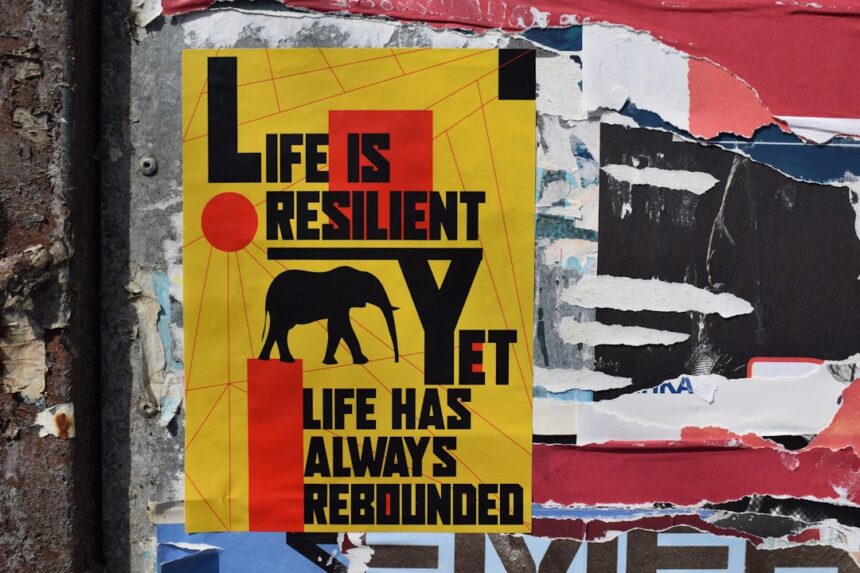
You stand at the precipice of challenge, often without warning. Life, in its relentless current, will undoubtedly toss you into choppy waters, test the strength of your anchor, and sometimes, threaten to capsize your vessel. Building resilience, therefore, isn’t merely a desirable trait; it’s a fundamental practice for navigating these inevitable storms. Philosophers throughout history have grappled with the nature of adversity and the human capacity to endure and even thrive in its wake. This article explores several of these philosophical approaches, offering frameworks for understanding and cultivating your own resilience.
Imagine your mind as a fortress, its walls built not of stone, but of reasoned judgment and acceptance. This is the essence of Stoicism, a Hellenistic philosophy that flourished in ancient Greece and Rome. For the Stoics, resilience stems from the recognition that while external events are beyond your control, your internal response is entirely within your domain.
The Dichotomy of Control
The cornerstone of Stoic resilience lies in the dichotomy of control, a concept most famously articulated by Epictetus. You must rigorously distinguish between what you can influence and what you cannot.
What Lies Within Your Power
Your thoughts, your judgments, your desires, your aversions—these are the reins you hold. They are the inner landscape over which you have absolute sovereignty. Cultivating virtue, practicing wisdom, and acting with justice are all within your direct capacity.
What Lies Outside Your Power
The weather, the opinions of others, your health (in many aspects), economic downturns, the actions of your neighbors, the past—these are external, indifferent things. To fret over them, to allow them to dictate your emotional state, is to surrender your power and invite unnecessary suffering.
The Practice of Memento Mori and Premeditatio Malorum
Stoicism does not advocate for a morbid obsession with death, but rather a clear-eyed contemplation of mortality.
The Reminder of Impermanence (Memento Mori)
Understanding that all things are impermanent, including life itself, can paradoxically imbue you with a profound appreciation for the present moment. When you accept the transient nature of your circumstances, you become less attached to fleeting pleasures and less devastated by inevitable losses. This knowledge acts as an antidote to excessive attachment, a common source of suffering.
The Premeditation of Evils (Premeditatio Malorum)
This is not about inviting disaster, but about intentionally contemplating potential difficulties. By mentally rehearsing how you would respond to hypothetical misfortunes—job loss, illness, betrayal—you diminish their shock value when they actually occur. It’s like a soldier who has practiced drills, making them less flustered when actual combat arises. This mental preparedness softens the blow and allows for a more measured response.
Virtue as the Sole Good
For Stoics like Seneca and Marcus Aurelius, true good resides not in external possessions, wealth, or reputation, but in internal virtue.
The Four Cardinal Virtues
- Wisdom: The ability to discern right from wrong, to understand the nature of things.
- Justice: Treating others with fairness and equity, fulfilling your social duties.
- Courage: Facing challenges and fears with fortitude, acting in accordance with reason.
- Temperance: Exercising self-control and moderation in your desires and actions.
When your primary pursuit is the cultivation of these virtues, your sense of self-worth becomes independent of external validation or the vagaries of fortune. You can face hardship with integrity, knowing that your moral compass remains uncompromised.
Building a resilient mindset is essential for navigating life’s challenges, and philosophy offers valuable insights into this process. For those interested in exploring this topic further, a related article can be found at Unplugged Psych, which delves into the philosophical principles that can help cultivate mental strength and adaptability. By integrating these philosophical concepts into daily life, individuals can enhance their ability to cope with adversity and foster a more resilient outlook.
Existentialism: Embracing Freedom and Responsibility
Imagine your existence as a blank canvas, and you, the artist, are solely responsible for the masterpiece you create. Existentialism, a philosophical movement that gained prominence in the 20th century, places a radical emphasis on individual freedom, choice, and the burden of responsibility in a meaningless universe. This perspective offers a unique path to resilience by reframing adversity not as an imposition, but as an opportunity to assert your liberty.
The Absurdity of Existence
Central to existentialist thought is the concept of the absurd. You are born into a universe devoid of inherent meaning or purpose, a stark contrast to your innate human desire for significance. This realization can be jarring, like waking up in a vast, silent theater with no script.
The Confrontation with Nothingness
The encounter with this lack of preordained meaning is what philosophers like Albert Camus termed “the absurd.” It’s the clash between your rational quest for order and the universe’s irrational silence. This confrontation, while potentially leading to despair, is also the birthplace of true freedom.
Meaning as a Human Creation
Instead of succumbing to the void, existentialism posits that you must actively create your own meaning. This is not a matter of discovering some pre-existing truth, but of imbuing your life with value through your choices and actions. Your life becomes a testament to your will.
Radical Freedom and the Anguish of Choice
You are condemned to be free, as Jean-Paul Sartre famously stated. This means that you are not determined by external forces, genetics, or circumstance. Every decision you make, no matter how small, is an affirmation of your freedom.
The Weight of Responsibility
This radical freedom comes with an immense weight of responsibility. You are not only responsible for yourself but, in a sense, for all of humanity, as your choices contribute to the collective understanding of what it means to be human. This can be a source of anguish, a deep-seated anxiety that arises from recognizing the vastness of your freedom and the gravity of your choices.
Authenticity as the Ethical Imperative
To combat the potential for despair and the temptation to live in “bad faith” (denying your freedom), existentialism emphasizes authenticity. Living authentically means acknowledging your freedom, accepting responsibility for your choices, and living in accordance with your self-created values, even when it is difficult.
Engagement and Project-Building
Resilience, within an existentialist framework, is built through active engagement with the world and the ongoing construction of your life’s “project.”
The Commitment to Action
Given the absence of preordained purpose, your life gains meaning through your commitments and actions. Whether it is pursuing a passion, building relationships, or contributing to society, these deliberate engagements are what define you.
Overcoming Nihilism Through Action
The existentialist approach offers a powerful antidote to nihilism. By choosing to act, to commit, and to create, you actively defy the void. Adversity, therefore, becomes another terrain upon which to exercise your freedom and continue building your unique existence.
Buddhism: The Path of Non-Attachment and Impermanence
Visualize your mind as a calm lake, undisturbed by the ripples of passing thoughts and emotions. Buddhism, an ancient spiritual tradition originating in India, offers profound insights into suffering and its cessation, directly contributing to the cultivation of resilience. Its core teachings center on understanding the nature of reality and cultivating inner peace.
The Four Noble Truths: A Diagnostic Framework
The foundational principles of Buddhism, the Four Noble Truths, provide a comprehensive framework for understanding suffering and its alleviation.
The Truth of Suffering (Dukkha)
Life, in its very nature, involves suffering, dissatisfaction, and unease. This is not a pessimistic outlook, but a realistic assessment of the human condition. From minor discomforts to profound grief, suffering is an intrinsic aspect of existence.
The Truth of the Origin of Suffering (Samudaya)
Suffering arises from craving and attachment. This includes the desire for sensual pleasures, the craving for existence, and the aversion to non-existence. These desires, like an insatiable thirst, fuel our dissatisfaction.
The Truth of the Cessation of Suffering (Nirodha)
Suffering can cease. This cessation is achieved through the eradication of craving and attachment, leading to a state of liberation known as Nirvana.
The Truth of the Path to the Cessation of Suffering (Magga)
The path to the cessation of suffering is the Noble Eightfold Path, a practical guide for ethical conduct, mental discipline, and wisdom.
The Teachings on Impermanence (Anicca) and Non-Self (Anatta)
These two interconnected concepts are crucial for understanding and cultivating resilience.
The Ever-Changing Nature of All Things (Anicca)
Just as a river is never the same twice, so too are all phenomena constantly in flux. Nothing is permanent, not your possessions, not your relationships, not even your physical body or your mental states. Embracing this truth liberates you from the pain of clinging to what is destined to change.
The Absence of a Fixed, Independent Self (Anatta)
The Western conception of a solid, enduring “self” is challenged by the Buddhist doctrine of non-self. There is no permanent, unchanging essence that constitutes your identity. Instead, you are a dynamic interplay of ever-changing physical and mental constituents. Understanding this can help detach you from the ego’s anxieties and insecurities, which often fuel suffering during difficult times.
The Practice of Mindfulness and Meditation
Mindfulness and meditation are the practical tools that allow you to embody these philosophical insights.
Cultivating Present Moment Awareness
Mindfulness is the practice of paying attention to the present moment with non-judgmental awareness. By observing your thoughts, feelings, and sensations as they arise and pass without getting swept away by them, you develop a greater capacity for equanimity. This is like learning to observe the weather without letting the rain soak you to the bone.
Developing Emotional Equanimity
Through meditation, you train your mind to remain calm and centered amidst the flux of experience. This practice helps to weaken the grip of negative emotions and cultivate a more balanced perspective, crucial for navigating the inevitable ups and downs of life.
Absurdism: Finding Meaning in the Face of Meaninglessness

Imagine standing on a vast, empty stage, the spotlight on you, and no script to follow. Absurdism, as explored by writers like Albert Camus, acknowledges the human desire for meaning and rationality in a universe that offers neither. It finds a peculiar form of liberation and resilience in this very paradox.
The Absurd Confrontation
The Absurdist recognizes the fundamental human drive to find meaning, order, and purpose in life. However, they also acknowledge that the universe itself is indifferent and irrational, offering no inherent answers to these profound questions.
The Silence of the Universe
This collision between your innate need for meaning and the universe’s silence is the core of the absurd. It can lead to feelings of alienation and despair, like a sailor lost at sea with no stars to guide them.
Not Despair, But Rebellion
Crucially, Absurdism does not advocate for passively succumbing to despair. Instead, it calls for a rebellion against the absurd. This rebellion is not a violent uprising, but a conscious and continuous act of living fully and passionately in spite of the universe’s meaninglessness.
Embracing the Present and Human Solidarity
The Absurdist finds strength and a form of meaning not in external validation or grand cosmic plans, but in the immediate experience of life and in connection with fellow humans.
The Joy of the Immediate
Since there is no guaranteed afterlife or ultimate purpose, the focus shifts to the present moment. The Absurdist finds value in the sensory experiences of life, in the pursuit of earthly joys, and in the act of living itself. It’s like savoring the last drops of wine in a world where wine may never be made again.
The Solidarity of Struggle
Recognizing that all humans are fellow travelers in this absurd existence fosters a sense of solidarity. The shared struggle against meaninglessness creates a bond, and finding joy and purpose in supporting one another becomes a powerful source of resilience.
Living in Revolt
The Absurdist’s resilience is forged in the fires of their revolt against the meaninglessness. This revolt is not a promise of eternal happiness, but a commitment to live authentically and fully.
The Rejection of False Hope
Absurdism rejects false hopes or comforting illusions that obscure the fundamental lack of inherent meaning. Instead, it encourages an embrace of reality, however stark.
Finding Value in the Struggle Itself
The act of living, of striving, of creating, and of connecting, even in a meaningless universe, becomes its own reward. The resilience of the Absurdist lies in their ability to find value and purpose in the very act of enduring and engaging with life.
Building a resilient mindset can be greatly enhanced by exploring philosophical concepts that encourage deep reflection and personal growth. For those interested in this intersection of philosophy and mental strength, a related article offers valuable insights and practical strategies. By understanding how ancient philosophies can inform our modern challenges, we can cultivate a more robust approach to life’s adversities. You can read more about this in the article available at this link, which delves into the principles that foster resilience through philosophical thinking.
Logotherapy: Finding Meaning in Suffering
| Philosophical Concept | Application to Resilient Mindset | Key Practices | Expected Outcome |
|---|---|---|---|
| Stoicism | Focus on controlling what you can and accepting what you cannot | Daily reflection, journaling, negative visualization | Reduced anxiety, increased emotional control |
| Existentialism | Embrace personal responsibility and find meaning in adversity | Self-inquiry, defining personal values, embracing freedom | Greater purpose, enhanced motivation |
| Buddhism | Practice mindfulness and detachment from suffering | Meditation, mindful breathing, acceptance of impermanence | Improved focus, emotional balance |
| Pragmatism | Focus on practical solutions and adaptability | Problem-solving, flexible thinking, learning from failure | Increased resilience through adaptability |
| Positive Psychology | Build strengths and cultivate optimism | Gratitude journaling, strength identification, positive affirmations | Enhanced well-being and optimism |
Imagine a lighthouse, its beam cutting through the fog, guiding ships through treacherous waters. Logotherapy, a form of psychotherapy developed by psychiatrist Viktor Frankl, posits that the primary motivational force in humans is the will to meaning. Even in the face of immense suffering, you can find purpose and resilience.
The Will to Meaning
Frankl, a Holocaust survivor, observed that those who survived the most horrific conditions were often those who had a strong sense of purpose or meaning in their lives.
Meaning as the Central Drive
Unlike other psychological theories that emphasize pleasure or power, Logotherapy highlights meaning as the fundamental human drive. It is this search for purpose that can sustain you through the darkest of times.
The Meaning of Life is Unique to Each Individual
There is no universal meaning of life waiting to be discovered. Instead, meaning is a personal and unique discovery, an answer you must provide to the questions life poses to you.
Three Avenues to Discovering Meaning
Logotherapy identifies three primary pathways through which you can discover meaning in your life, even amidst adversity.
Creative Values: The Realm of Doing and Creating
This involves finding meaning through your work, your creative endeavors, and your contributions to the world. Whether you are an artist, a scientist, a parent, or a caregiver, the act of creating and contributing can provide a profound sense of purpose. When you pour your energy into something outside yourself, you build a bulwark against despair.
Experiential Values: The Realm of Experiencing and Loving
Meaning can also be found in experiencing something deeply, such as beauty, goodness, or truth, and most importantly, in loving another person. The capacity to love, even in the direst circumstances, can remind you of your humanity and provide an anchor of purpose. It’s like a faint melody that can still be heard through the roar of a storm.
Attitudinal Values: The Realm of Our Attitude Towards Suffering
This is perhaps the most profound insight of Logotherapy regarding resilience. Even when external circumstances are beyond your control, you always retain the freedom to choose your attitude towards your suffering.
The Ultimate Freedom
Frankl argued that the last of the human freedoms is the ability to choose one’s attitude in any given set of circumstances, to choose one’s own way. This is the inner citadel that cannot be breached.
Finding Meaning in Suffering Itself
When faced with unavoidable suffering, you can still find meaning by choosing to face it with courage, dignity, and resilience. This does not mean seeking out suffering, but rather, when it is inescapable, transforming it into an opportunity for growth and self-transcendence. It is through this attitudinal freedom that you can build an unassailable core of resilience.
By exploring these philosophical approaches, you are not seeking a magic bullet to erase challenges, but rather a robust toolkit to equip yourself for the journey. Each perspective, from the Stoic’s reasoned acceptance to the Absurdist’s rebellious embrace of life, offers a distinct lens through which to understand and cultivate your inherent capacity for resilience. You are not a passive recipient of fate, but an active architect of your inner strength.

Michel de Montaigne Philosophy for Anxiety Relief
FAQs
What is a resilient mindset?
A resilient mindset refers to the ability to adapt to challenges, recover from setbacks, and maintain mental strength in the face of adversity. It involves cultivating emotional flexibility, optimism, and perseverance.
How can philosophy help in building a resilient mindset?
Philosophy provides frameworks and teachings that encourage critical thinking, self-reflection, and acceptance of life’s uncertainties. Philosophical approaches like Stoicism emphasize focusing on what is within one’s control and developing inner virtues, which can strengthen resilience.
Which philosophical principles are most effective for resilience?
Principles such as acceptance of fate (amor fati), distinguishing between what can and cannot be controlled, practicing mindfulness, and valuing reason over emotion are effective. Stoicism, Existentialism, and Buddhism offer valuable insights for building resilience.
Can practicing philosophy improve mental health?
Yes, engaging with philosophical ideas can improve mental health by promoting a balanced perspective, reducing anxiety about uncontrollable events, and encouraging purposeful living. This mental clarity supports emotional resilience.
How can someone start applying philosophy to develop resilience?
One can start by studying philosophical texts or summaries, reflecting on key concepts like control and acceptance, journaling thoughts and reactions, and practicing mindfulness or meditation. Applying these ideas consistently helps build a resilient mindset over time.