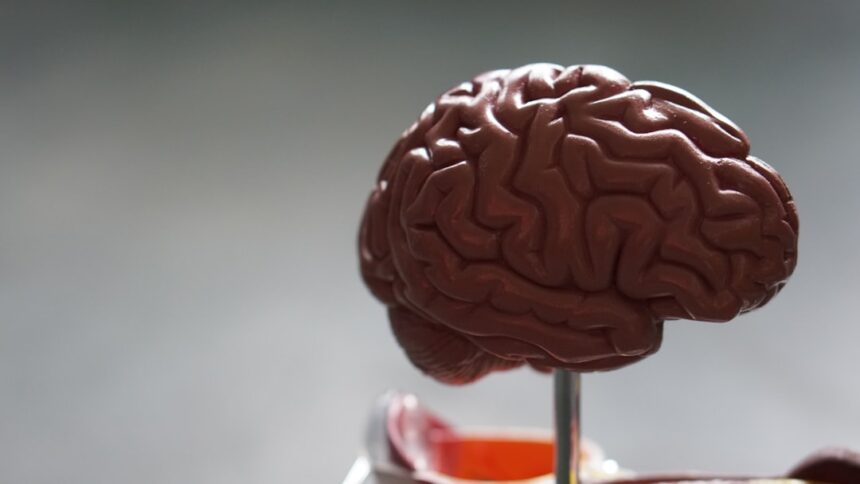
Your brain, a marvel of biological engineering, constantly processes an overwhelming torrent of sensory information. To navigate this complex world efficiently, it doesn’t just react; it actively predicts. Think of your brain as a seasoned navigator on a vast ocean, constantly charting its course not just by the waves it’s in, but by the subtle shifts in the wind and the distant shape of the horizon. This predictive processing is fundamental to your ability to function, react, and learn. However, like any sophisticated system, your predictive abilities can be honed, refined, and essentially, updated. This article will explore the mechanisms behind predictive processing and provide actionable strategies for you to enhance this vital cognitive function.
At its core, your brain operates on a principle of minimizing prediction error. This means that rather than passively receiving information, it generates internal models of the world and makes predictions about what sensory input it expects to receive. When the actual sensory input matches these predictions, the brain efficiently processes this information as expected. When there’s a mismatch – a prediction error – the brain learns and updates its internal models to improve future predictions.
The Hierarchical Nature of Predictions
Predictive processing is not a monolithic process. Instead, it occurs in a hierarchical fashion, with higher levels of the brain making broader, more abstract predictions, and lower levels making more specific, sensory-level predictions.
Top-Down Influences: Guiding the Input
Imagine you’re walking through a familiar forest. Your brain doesn’t meticulously process every single leaf and twig. Instead, higher-level regions of your brain activate generalized expectations about what a forest looks and sounds like. These top-down predictions filter and bias the incoming sensory data, making it easier to process. You’re less likely to be surprised by the sight of trees or the sound of birds, because your brain already anticipates them. This allows for efficient processing, as you’re not starting from scratch with every new piece of information.
Bottom-Up Signals: The Error Correction Mechanism
When something unexpected happens – a sudden rustle in the bushes, a branch falling – these are bottom-up signals. These signals represent the “prediction errors” – the discrepancies between what your brain predicted and what you actually perceived. These errors are then propagated upwards through the hierarchy, triggering the learning and updating processes that refine your internal models. The unexpected rustle, for instance, prompts your brain to update its model of the immediate environment, perhaps leading to a prediction of a nearby animal.
The Bayesian Brain Hypothesis: Quantifying Uncertainty
A prominent framework for understanding predictive processing is the Bayesian Brain Hypothesis. This theory posits that your brain operates like a Bayesian statistician, constantly updating its beliefs (predictions) about the world in light of new evidence (sensory input).
Prior Beliefs and Likelihoods
Your prior beliefs are your existing models and expectations about the world. The likelihood refers to how well new sensory data fits these prior beliefs. Your brain weighs these two factors to generate a posterior belief – an updated, more informed prediction. For example, if you have a strong prior belief that the ground is stable, a slight wobble might not immediately cause alarm (low prediction error). However, if you’ve just experienced an earthquake, that same slight wobble would likely trigger a much larger prediction error, indicating a high likelihood of further seismic activity.
Embodiment and Predictive Control
Predictive processing isn’t confined to abstract thoughts; it’s deeply intertwined with your physical actions and your body’s internal states. This concept is known as embodied cognition and predictive control.
The Sensorimotor Loop
Your brain predicts the sensory consequences of your actions. When you reach for a cup, your brain predicts the visual and tactile sensations you’ll experience. As your hand moves, sensory feedback is compared against these predictions. Any discrepancies inform motor adjustments, ensuring you grasp the cup accurately. This continuous sensorimotor loop is the foundation of your ability to interact with the physical world.
Interoception: The Body’s Internal Predictions
Your brain also makes predictions about your internal bodily states – heart rate, hunger, fatigue. This is called interoception. Mismatches between predicted and actual internal states can signal potential problems, influencing your behavior and well-being. For instance, your brain might predict a certain level of energy, and if your actual energy levels are lower, it might prompt you to rest.
If you’re interested in enhancing your cognitive abilities and learning how to update your predictive brain, you might find the article on Unplugged Psych particularly insightful. It delves into the mechanisms of how our brains process information and adapt to new experiences, providing practical strategies for improving mental flexibility and resilience. To explore this topic further, you can read the article here: How to Update Your Predictive Brain.
Strategies for Updating Your Predictive Abilities
Given that your brain is a prediction machine, you can actively engage in practices that refine its predictive capabilities. This isn’t about magically gaining new abilities, but about optimizing the existing machinery.
1. Actively Seek Novelty and Varied Experiences
One of the most effective ways to update your predictive abilities is to expose yourself to new and diverse inputs. When your brain is constantly challenged with novel information, it is forced to update its internal models and therefore its predictive capacity.
Learning New Skills: A Brain Workout
Learning a new language, musical instrument, or even a complex board game provides rich, multi-faceted training for your predictive brain. These activities demand continuous prediction and adaptation, strengthening the neural pathways involved.
Language Acquisition
When you learn a new language, you’re not just memorizing vocabulary and grammar. You’re building new predictive models for sounds, sentence structures, and cultural nuances. This forces your brain to constantly compare expected meanings with actual utterances and to adjust its understanding accordingly.
Musical Proficiency
Playing a musical instrument requires you to predict the upcoming notes and rhythms, while simultaneously processing the auditory feedback of your performance. The intricate coordination between auditory, motor, and cognitive systems involved in music is a potent way to enhance predictive processing.
Traveling and Exploring New Environments
Stepping outside your familiar surroundings introduces a wealth of new sensory information and experiences. This disrupts established predictions and compels your brain to build more robust and adaptable models of the world.
Cultural Immersion
Engaging with different cultures means encountering new customs, social cues, and ways of thinking. This requires you to constantly update your predictions about social interactions and to learn more nuanced predictive models for human behavior.
To enhance your ability to update your predictive brain, it’s essential to explore various strategies that can help you adapt to new information and experiences. One insightful resource on this topic can be found in an article that discusses the importance of mindfulness and cognitive flexibility in shaping our perceptions. By incorporating these practices into your daily routine, you can significantly improve your mental agility. For more detailed insights, you can check out this informative piece on updating your predictive brain.
2. Engage in Deliberate Practice and Focused Attention
While novelty is important, the quality of your engagement with information is also crucial. Deliberate practice, which involves focused attention and targeted effort, is a powerful tool for refining predictive skills.
Mindfulness and Meditation: Tuning In to Predictions
Mindfulness practices, such as focused meditation, train your ability to observe your thoughts and sensations without judgment, and importantly, to notice when your brain is making predictions. By becoming more aware of your internal predictions, you can then identify and correct erroneous ones.
Noticing Predictive Biases
Through mindfulness, you can begin to recognize how your past experiences and existing beliefs (priors) might be biasing your current predictions. This self-awareness is the first step towards a more objective and accurate predictive process.
Focused Learning and Problem-Solving
Engaging in tasks that require sustained concentration and problem-solving forces your brain to make and test predictions in real-time. This could be anything from solving complex mathematical problems to dissecting a challenging piece of code.
Hypothesizing and Testing
When you approach a problem, you implicitly or explicitly form hypotheses – predictions about potential solutions. The process of testing these hypotheses against evidence is a direct application of predictive processing in action.
3. Embrace and Learn from Prediction Errors
Prediction errors are not failures; they are opportunities for growth. Your brain’s ability to learn is directly proportional to its capacity to acknowledge and analyze these errors.
The Role of Surprise in Learning
Surprise, often stemming from significant prediction errors, is a powerful learning signal. When something unexpected occurs, your brain allocates more resources to processing that information, leading to stronger memory formation and model updates.
Analyzing Past Mistakes
Reflecting on past experiences where your predictions were incorrect can be immensely valuable. Instead of dwelling on the negative outcome, focus on why your prediction was wrong. This analytical process directly refines your predictive models.
Seeking Feedback and Diverse Perspectives
External feedback is another crucial source of information that can highlight your prediction errors. Actively seeking out diverse perspectives can reveal blind spots in your own predictive models.
Constructive Criticism
When you receive constructive criticism, try to view it not as a personal attack, but as valuable data that can help you update your understanding of a situation or your own performance. This requires you to open yourself up to the possibility that your predictions might be flawed.
4. Visualize and Simulate Future Scenarios
Your brain’s predictive capabilities extend beyond immediate sensory input; you can also project yourself into the future through visualization and mental simulation.
Mental Rehearsal: Practicing Without Performing
Mental rehearsal, or visualizing yourself successfully performing a task, can significantly improve your actual performance. This is because your brain is essentially running through the predictive sequences of the action, refining the motor commands and sensory expectations.
Sports Psychology and Performance
Athletes often use mental rehearsal to simulate game situations, imagine successful plays, and anticipate opponent actions. This pre-activity strengthens their predictive models for the actual competition.
Scenario Planning: Preparing for the Unknown
Scenario planning involves creating and exploring multiple plausible future outcomes. This exercise helps you develop more robust predictive models by considering a wider range of possibilities and potential challenges.
Strategic Decision-Making
For leaders and strategists, scenario planning is essential for anticipating market shifts, geopolitical changes, and other complex variables. By considering various “what-if” scenarios, they can develop more adaptable and resilient strategies.
5. Optimize Your Physical and Mental Well-being
Your brain’s predictive prowess is not independent of your overall health. A well-rested, well-nourished brain is a more efficient prediction machine.
The Impact of Sleep on Prediction Error Minimization
During sleep, your brain consolidates memories and strengthens neural connections, which are crucial for updating predictive models. Chronic sleep deprivation impairs your ability to process new information and increases prediction errors.
Memory Consolidation and Model Refinement
Sleep provides a critical window for your brain to replay recent experiences, identify inconsistencies, and adjust its internal models based on prediction errors encountered during wakefulness.
Nutrition and Brain Function
The nutrients you consume directly impact the efficiency of your neural pathways. Omega-3 fatty acids, antioxidants, and B vitamins are particularly important for cognitive function and can support your brain’s predictive capabilities.
Neurotransmitter Regulation
Proper nutrition supports the production and regulation of neurotransmitters, the chemical messengers that facilitate communication between neurons. This communication is the bedrock of all brain functions, including predictive processing.
Stress Management and Cognitive Clarity
Chronic stress can impair cognitive functions, including attention, memory, and decision-making. By managing stress, you create a more conducive environment for your brain to engage in accurate predictive processing.
The Amygdala’s Influence
The amygdala, your brain’s threat detection center, can become overactive under chronic stress, leading to a heightened state of vigilance where your predictive models might become biased towards threats, even in the absence of real danger.
By understanding the fundamental principles of predictive processing and actively engaging in strategies designed to update your predictive abilities, you can enhance your cognitive flexibility, improve your decision-making, and navigate the complexities of life with greater accuracy and resilience. Your brain is a dynamic organ, and with conscious effort, you can continue to refine its most fundamental operation: predicting the future.
FAQs

What is a predictive brain?
A predictive brain refers to the concept that the brain constantly generates and updates models or predictions about the environment to anticipate sensory input and guide behavior efficiently.
Why is it important to update your predictive brain?
Updating your predictive brain is important because it helps improve learning, adaptability, and decision-making by refining your mental models based on new experiences and information.
How can you update your predictive brain?
You can update your predictive brain by exposing yourself to new experiences, challenging existing beliefs, practicing mindfulness, learning new skills, and staying open to feedback and change.
What role does prediction error play in updating the brain?
Prediction error occurs when there is a mismatch between expected and actual outcomes; this error signals the brain to adjust its internal models, leading to updated predictions and improved understanding.
Can updating your predictive brain improve mental health?
Yes, updating your predictive brain can improve mental health by reducing cognitive biases, enhancing emotional regulation, and promoting flexible thinking, which can help manage stress, anxiety, and depression.