
You are about to embark on a journey towards a more focused and productive work life. This article will guide you through the principles and practices of environmental design, specifically tailored to cultivate a deep work environment. Understanding and implementing these strategies can transform your workspace from a breeding ground for distractions into a sanctuary for concentrated effort.
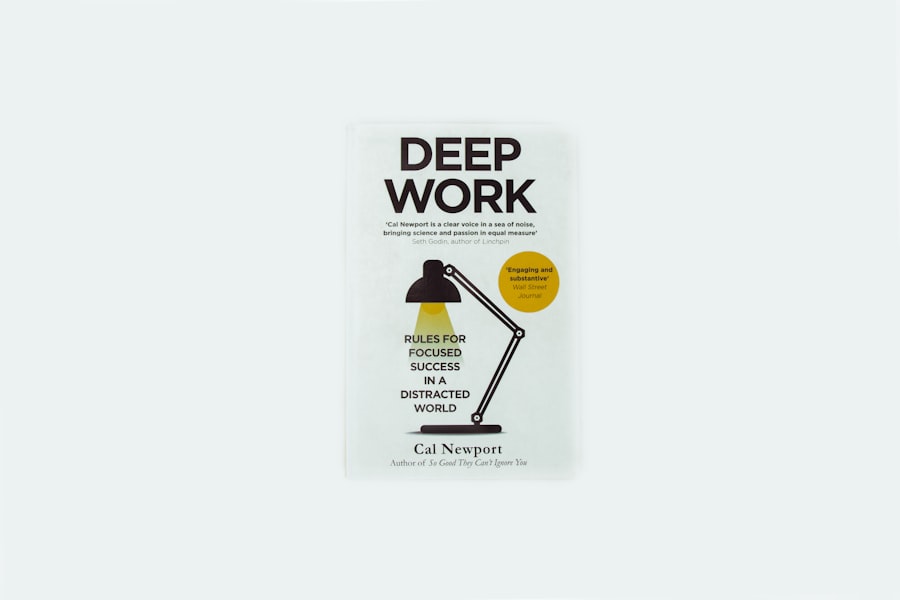
Deep work, a concept popularized by author Cal Newport, refers to professional activities performed in a state of distraction-free concentration that push your cognitive capabilities to their limit. These efforts create new value, improve your skill, and are hard to replicate. In stark contrast, shallow work is non-cognitively demanding, logistical, often performed while distracted, and does not create much new value in the world. Imagine the difference between writing a complex algorithm and responding to routine emails. The former is deep work; the latter, shallow. Discover the fascinating world of brain science through this insightful video.
The Erosion of Deep Work
The modern work landscape, characterized by open-plan offices, constant digital notifications, and the ubiquitous presence of social media, actively erodes opportunities for deep work. You are constantly bombarded with information, pulling your attention in myriad directions. This incessant switching of tasks, even if for a moment, carries a “residue of attention” from the previous task, hindering your ability to fully immerse yourself in the new one. This cognitive switching cost is a silent thief of productivity, stealing precious cognitive resources without your explicit awareness.
The Value Proposition of Deep Work
For individuals, cultivating deep work skills offers a significant competitive advantage. You will be able to master difficult subjects faster and produce at an elite level. For organizations, fostering a culture and environment conducive to deep work leads to innovation, higher quality output, and a more engaged workforce. The ability to perform deep work is, in essence, a superpower in an increasingly distracted world. You are not just doing more; you are doing better.
In exploring the concept of deep work and its relationship to environmental design, a fascinating article can be found on the Unplugged Psychology website. This resource delves into how our surroundings can significantly impact our ability to focus and engage in deep work, offering practical strategies for creating an environment conducive to productivity. For more insights, you can read the article here: Unplugged Psychology.
The Pillars of Environmental Design for Focus
Creating a deep work-focused environment is not merely about tidiness; it’s a deliberate act of shaping your physical and digital surroundings to minimize distractions and maximize concentration. Think of your workspace as a laboratory for your mind, exquisitely designed for optimal performance.
Minimizing Visual Distractions
Visual clutter acts as a constant, albeit often subconscious, drain on your cognitive resources. Each item out of place, each stray document, represents a potential micro-distraction, pulling your attention away from your primary task.
The “Less Is More” Approach
Embrace minimalism. Clear your desk of anything not directly essential to your current task. Consider the “one thing in, one thing out” rule for items in your workspace. This principle helps you maintain a lean and focused environment. Your goal is to create a visual landscape that is calm and uncluttered, a canvas for your thoughts.
Strategic Storage Solutions
Invest in effective storage. Conceal papers, books, and miscellaneous items in drawers, cabinets, or well-organized shelving units. The aim is to remove visual friction, allowing your eyes to glide across a clean surface rather than snagging on peripheral objects. Imagine your workspace as a blank slate, inviting focused attention.
Color Psychology and Aesthetics
The colors in your environment can significantly impact your mood and focus. Opt for calming, neutral tones like whites, grays, and soft blues. These colors are known to promote a sense of tranquility and concentration. Avoid overly stimulating colors like bright reds or yellows, which can be distracting and agitating in a deep work setting. Consider a single, calming piece of art or a plant to introduce a touch of nature and serenity without overwhelming the space.
Optimizing Auditory Environment
Sound is a powerful environmental factor that can either support or sabotage your ability to concentrate. From ambient office chatter to the incessant ping of notifications, auditory distractions are pervasive.
The Power of Silence or Controlled Soundscapes
For some, absolute silence is the optimal auditory environment for deep work. This can be achieved through soundproofing, noise-canceling headphones, or simply choosing a quiet location. However, for others, complete silence can be unsettling. In such cases, consider “pink noise” or ambient instrumental music. Pink noise, similar to white noise but with a lower frequency and deeper pitch, can mask distracting sounds without being intrusive. Experiment to discover what works best for you. Think of these sounds as a gentle auditory blanket, muffling the chaos of the outside world.
Managing Notification Overload
Your digital devices are often the primary culprits of auditory disruption. Turn off all non-essential notifications on your computer, phone, and other smart devices during deep work sessions. Prioritize uninterrupted blocks of time where you are unreachable for anything less than an emergency. Consider using “do not disturb” modes or dedicated focus apps that block distractions. You are taking control of your digital environment, rather than letting it control you.
Communicating Your Focus Periods
If you work in an office or shared space, communicate your deep work periods to colleagues. Use visual cues such as a “do not disturb” sign or scheduling software to indicate when you require uninterrupted focus. Proactive communication can significantly reduce impromptu interruptions.
Leveraging Physical Comfort and Ergonomics

Physical discomfort is a potent and often overlooked distraction. Aches, pains, or awkward postures can pull your attention away from your work and towards your body. Investing in ergonomic solutions is an investment in your focus.
The Importance of a Good Chair
Your office chair is your command center. An ergonomically designed chair provides proper lumbar support, adjustable armrests, and can be customized to your body. This reduces back pain, improves posture, and minimizes discomfort that can steal your focus. Imagine your chair as an extension of your body, supporting your efforts seamlessly.
Optimal Desk Setup
Your desk height should allow your forearms to be parallel to the floor, with your wrists straight. Ensure your monitor is at eye level to prevent neck strain. The keyboard and mouse should be easily accessible without reaching. A standing desk can also be a valuable addition, encouraging movement and preventing prolonged sedentary periods. Your desk is not just a surface; it’s a finely tuned instrument for productivity.
Lighting for Concentration
Natural light is ideal for deep work as it reduces eye strain and can improve mood and energy levels. Position your workspace near a window if possible. If natural light is limited, use a combination of ambient lighting and task lighting. Task lighting, such as a desk lamp, should illuminate your work area without creating glare. Avoid harsh overhead lighting that can cause shadows and visual fatigue. Good lighting is like a spotlight, highlighting your work and receding distractions into shadow.
Structuring Your Time and Digital Environment
Environmental design extends beyond the physical space to encompass the intentional structuring of your time and digital tools. These elements are interconnected, each supporting the other in the pursuit of deep work.
Dedicated Deep Work Blocks
Schedule deep work sessions deliberately. Treat these blocks of time as sacrosanct appointments that cannot be easily broken. Identify your most productive hours and allocate them to your most cognitively demanding tasks. During these blocks, eliminate all sources of distraction. Think of these periods as protected zones, impermeable to external demands.
The “Work in Bursts” Principle
For some, sustained deep work for hours on end can be challenging initially. Consider techniques like the Pomodoro Technique (25 minutes of focused work followed by a 5-minute break) to build your deep work stamina. Gradually increase the duration of your focus blocks as your capacity grows. This structured approach helps you train your focus muscle.
Batching Shallow Work
Consolidate shallow work tasks, such as email replies, administrative duties, and casual communication, into designated time slots. This prevents these low-value activities from interrupting your deep work sessions and fragmenting your attention. Grouping shallow tasks together minimizes context switching.
Digital Workspace Optimization
Your digital environment can be as distracting as your physical one. Taming it is crucial for sustained focus.
Minimalist Desktop and Browser
Keep your computer desktop free of clutter. Use a clean, simple background. Close irrelevant tabs in your web browser. Consider using a session manager or dedicated browser profiles to manage different work contexts. Each open application and tab is a potential pathway to distraction.
Focused Application Use
Utilize tools and applications that promote focus. Many operating systems offer “focus modes” or “do not disturb” settings. Browser extensions can block distracting websites during specified work periods. Evaluate your application usage. Are there tools that actively pull your attention away from your goals? Consider removing or restricting access to them during deep work. You are curating your digital landscape to serve your deepest intentions.
The Digital “End of Day” Ritual
Establish a clear boundary between work and non-work by performing a digital “shutdown” ritual. Close all work-related applications, silence notifications, and put away work devices. This signals to your brain that the work period is over and helps prevent mental spillover into your personal time, fostering better rest and recovery, which in turn enhances your capacity for deep work the following day.
In exploring the concept of deep work and its relationship with environmental design, one can gain valuable insights from a related article that discusses how our surroundings can significantly impact our ability to focus and be productive. This article emphasizes the importance of creating a workspace that minimizes distractions and fosters concentration, aligning perfectly with the principles of deep work. For more information on this topic, you can read the full article here.
Adapting and Maintaining Your Deep Work Environment
| Environmental Factor | Impact on Deep Work Focus | Recommended Design Elements | Supporting Metrics |
|---|---|---|---|
| Noise Level | High noise reduces concentration and increases cognitive load | Soundproofing, white noise machines, quiet zones | Noise above 55 dB reduces focus by 30% |
| Lighting | Proper lighting improves alertness and reduces eye strain | Natural light, adjustable LED lighting, glare reduction | 60% increase in productivity with natural light exposure |
| Workspace Layout | Cluttered spaces increase distractions and stress | Minimalist design, organized desks, private workstations | 30% fewer distractions in private cubicles vs open plan |
| Temperature | Uncomfortable temperatures impair cognitive performance | Maintain 20-22°C (68-72°F), climate control systems | Optimal temp range improves focus by 15% |
| Air Quality | Poor air quality leads to fatigue and reduced attention | Air purifiers, plants, ventilation systems | Improved air quality increases cognitive function by 10% |
| Visual Distractions | Excessive visual stimuli reduce sustained attention | Neutral color schemes, limited wall decorations | Reduced visual clutter improves focus duration by 20% |
Creating a deep work-focused environment is not a one-time event; it’s an ongoing process of adaptation and refinement. Your needs and the nature of your work will evolve, and your environment should evolve with them.
Regular Environmental Audits
Periodically assess your workspace and digital environment for new sources of distraction or areas for improvement. Are you noticing a new visual clutter accumulation? Are certain notifications creeping back in? A regular audit allows you to identify and address these issues proactively. Think of it as a quality control check for your focus.
Experimentation and Personalization
What works for one individual may not work for another. Be willing to experiment with different strategies for noise management, lighting, and workspace configuration. Pay attention to how different elements impact your focus and productivity. Personalize your environment to best suit your unique working style and preferences. Your deep work environment should be a tailor-made suit, perfectly fitted to your cognitive needs.
The Role of Habit Formation
The success of your deep work environment largely depends on the habits you cultivate within it. Consistently adhering to your deep work schedule, managing notifications, and maintaining a clutter-free space will solidify the positive impact of your environmental design. Habits are the invisible architects of your long-term success.
By intentionally designing your physical and digital spaces, you are building a powerful ecosystem for deep work. You are not simply reacting to distractions; you are proactively constructing a sanctuary of focus. This deliberate approach to environmental design empowers you to reclaim your attention, cultivate your cognitive abilities, and ultimately, produce your best work. The power to transform your professional output lies within your ability to sculpt the environment in which you think, create, and innovate.
WATCH THIS! 🔥 **The 5 Science-Backed Rules for Permanent Habit Formation:**
FAQs
What is deep work?
Deep work refers to the state of focused, uninterrupted concentration on cognitively demanding tasks. It allows individuals to produce high-quality work efficiently by minimizing distractions.
How does environmental design influence deep work?
Environmental design shapes the physical and sensory aspects of a workspace, such as lighting, noise levels, and layout, which can either enhance or hinder the ability to maintain deep focus and productivity.
What are common environmental factors that support deep work?
Key factors include quiet or controlled noise environments, comfortable seating, adequate lighting (preferably natural light), minimal visual distractions, and organized workspaces that reduce clutter.
Can technology impact deep work through environmental design?
Yes, technology can both support and disrupt deep work. Tools like noise-canceling headphones and apps that block distracting websites help maintain focus, while constant notifications and open communication channels can interrupt concentration.
How can one design their workspace to promote deep work?
To promote deep work, individuals should create a dedicated, distraction-free area, optimize lighting and ergonomics, limit access to distracting devices, and establish routines that signal the brain to enter a focused state.