
You stand at the precipice of understanding, contemplating the intricate architecture that defines your very existence: the nervous system. From the simplest reflex to the most profound thought, this biological marvel orchestrates every aspect of your being. While neuroscience meticulously maps its physical pathways, a complementary lens—depth psychology—offers a vital, often overlooked, perspective. This article invites you to journey into the depths of your own neurological landscape, unraveling its mysteries not just from a physiological standpoint, but through the rich, symbolic language of the unconscious. You will discover how the interplay between your conscious mind, driven by reason and perception, and the hidden currents of your unconscious, shaped by evolutionary heritage and personal experience, collectively forms the tapestry of your nervous system’s operation.
A factual style, akin to a scientific treatise, will guide you through this exploration. Eschew romantic notions and embrace a clear, analytical approach. The aim is to illuminate the profound connections between the observable functions of the nervous system and the less tangible, yet equally impactful, processes of your psyche. Experience a profound spiritual awakening that transforms your perspective on life.
Your nervous system isn’t merely a static collection of wires; it’s a dynamic, ever-changing landscape. Depth psychology posits that the unconscious plays a significant role in shaping this architecture, influencing not just your behavior but the very formation and strengthening of neural pathways.
Early Experiences and Synaptic Pruning
Consider the foundational period of your early life. Childhood experiences, particularly those laden with emotional significance—be they traumatic or nurturing—act as potent sculptors of your developing brain. The concept of “synaptic pruning,” where unused neural connections are eliminated while frequently used ones are reinforced, gains a deeper context here. From a depth psychology perspective, these early experiences contribute to the formation of complexes – constellations of emotionally charged ideas and images in the unconscious. A child who repeatedly experiences fear in a particular context, for instance, may develop heightened sensitivity in their amygdala and associated fear circuits. This isn’t just a physiological response; it’s a neurobiological manifestation of an emerging fear complex.
Archetypes and Innate Neural Predispositions
Jungian depth psychology introduces the concept of archetypes: primordial images and patterns of thought that are universal and inherited across humanity. You can view these archetypes not as mystical entities, but as innate, neurologically imprinted predispositions. Imagine your brain as a pristine canvas at birth, already bearing faint traces of ancient designs – patterns that predispose it to recognize and respond to certain universal themes, such as the “Mother” or the “Hero.” These archetypal blueprints might influence the development of neural networks that facilitate empathy, bonding, or even the capacity for rational thought, providing a framework upon which your individual experiences are superimposed. The nervous system, therefore, is not a blank slate, but a selectively primed matrix.
The Shadow and Autonomic Regulation
The “shadow” in depth psychology represents those aspects of yourself that you deny, repress, or project onto others. Interestingly, the suppression of these impulses often finds a correlate in the autonomic nervous system. Consider chronic stress or anxiety stemming from unacknowledged emotions. Your fight-or-flight response, governed by the sympathetic nervous system, might remain chronically activated, leading to physiological manifestations like elevated heart rate, digestive issues, or muscle tension. This isn’t merely a random physiological malfunction; it can be interpreted as the nervous system’s physical expression of an unintegrated shadow, a constant internal alarm bell signaling internal conflict.
Depth psychology offers profound insights into the complexities of the human psyche, particularly when examined through the lens of nervous system science. An intriguing article that delves into this intersection is available at Unplugged Psychology, where the author explores how our subconscious influences our physiological responses and emotional well-being. This connection highlights the importance of understanding both psychological and biological factors in achieving holistic mental health.
The Language of the Nerves: Symbolism and Somatic Expression
The nervous system, in its intricate communication, often speaks a symbolic language that depth psychology is uniquely equipped to interpret. Your body, through its neurological responses, communicates what your conscious mind may not fully grasp.
Dreams as Neural Rehearsals
You experience dreams, these nocturnal narratives that often appear illogical and perplexing. From a neuroscientific standpoint, dreams are often associated with REM sleep and brain activity involved in memory consolidation and emotional regulation. Depth psychology adds another layer: dreams are vital messages from the unconscious, often expressed in symbolic form. Your nervous system, during REM, might be engaging in “neural rehearsals,” processing unresolved emotional conflicts, integrating new information, or even preparing for future challenges. The bizarre imagery of a dream, therefore, isn’t arbitrary; it’s the brain’s symbolic representation of these unconscious processes, striving for integration and psychic equilibrium. Think of it as a nightly defragmentation of your mental hard drive, where the fragmentation is not just data, but emotion and meaning.
Psychosomatic Symptoms: The Body’s Metaphors
When you experience medically unexplained physical symptoms, often termed “psychosomatic,” these can be understood as your nervous system communicating underlying psychological distress. A persistent headache, chronic back pain, or digestive issues, when not attributable to organic causes, can be viewed as the body’s symbolic response to unresolved emotional conflicts. The nervous system, through its intricate connection to all bodily systems, literally “somatizes” psychological tension. For instance, chronic tension in the shoulders could symbolize the psychological “burden” you are carrying, mediated by sustained muscle contraction driven by signals from the central nervous system attempting to cope with emotional weight.
The Archetypal Body and Reflexes
Even seemingly simple reflexes can hold deeper, archetypal significance. The startle reflex, for example, is a universal, innate response to sudden stimuli. While neuroscientists trace its pathways through the brainstem, depth psychology can view it through the lens of primal survival archetypes. It’s an ancient, ingrained neurological program, a testament to your evolutionary lineage, reflecting an unconscious preparedness for danger. You are wired, at a fundamental level, to react to the unexpected, a heritage from eons of survival.
Trauma and the Rewiring of Neural Networks

Traumatic experiences leave indelible marks on your psyche and, crucially, on the physical structure and function of your nervous system. Depth psychology offers frameworks for understanding how these psychological wounds manifest neurologically.
The Amygdala Hijack and Repression
When you experience trauma, your amygdala—the brain’s fear center—becomes hyperactive and highly sensitized. This can lead to an “amygdala hijack,” where emotional responses bypass cortical processing, leading to impulsive reactions and difficulty with rational thought. From a depth psychology perspective, trauma often results in repression, where the overwhelming experience is pushed into the unconscious. This repression, however, does not diminish its impact. Instead, the repressed material can exert a constant, subtle influence on the nervous system, keeping the amygdala in a state of hypervigilance. You might subsequently react to seemingly innocuous triggers with disproportionate fear, a neurological echo of the original trauma, fueled by an energetic complex in the unconscious.
Dissociation and Neural Disconnection
One common response to overwhelming trauma is dissociation, a psychological detachment from reality or one’s own identity. Neurologically, dissociation can be characterized by altered connectivity within various brain regions, particularly those involved in emotional processing and self-awareness. The default mode network, crucial for self-referential thought, might show atypical activity. Depth psychology interprets dissociation as a protective mechanism, albeit a maladaptive one in the long term, where the psyche attempts to segment off unbearable experiences. This segmentation, consequently, becomes reflected in your neural pathways, creating a sense of internal fragmentation or disconnection within your own nervous system.
Post-Traumatic Growth and Neural Plasticity
Despite the detrimental effects of trauma, the nervous system also exhibits remarkable neuroplasticity—the ability to reorganize itself. Depth psychology’s concept of post-traumatic growth aligns with this. Through integrative therapeutic work, you can begin to process and assimilate traumatic experiences. This psychological integration has demonstrable neurological correlates: new neural pathways can be formed, existing ones strengthened in a healthier direction, and the hyperactive stress response can be modulated. The nervous system, therefore, is not permanently scarred, but capable of profound repair and re-patterning when the right psychological and neurological conditions are met.
The Interplay of Conscious and Unconscious: A Dialectical Relationship
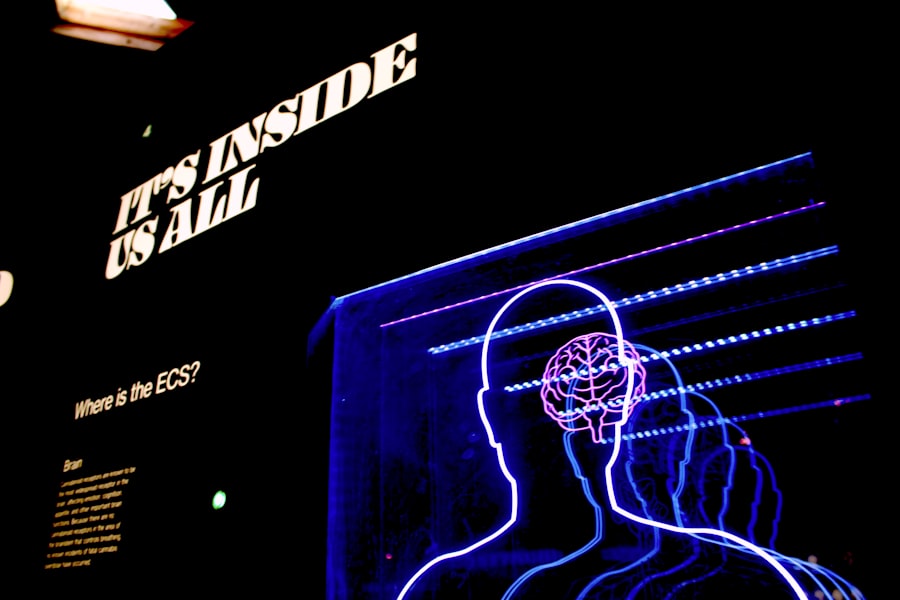
Your conscious mind and unconscious processes are not entirely separate entities; they exist in a dynamic, dialectical relationship, constantly influencing and informing each other. Your nervous system is the physical substrate for this intricate dance.
Ego and Cortical Control
Your ego, in depth psychology, represents the center of your conscious awareness, your sense of self. Neurologically, this largely corresponds to the sophisticated functions of the prefrontal cortex, responsible for planning, decision-making, and conscious control. The strength of your ego directly correlates with your capacity for executive function and your ability to regulate emotional responses originating from deeper, more primitive brain structures. A well-integrated ego, supported by healthy cortical activity, signifies a greater capacity for self-regulation and a coherent sense of self.
Instinctual Drives and Subcortical Structures
Below the sophisticated cortex lie primal subcortical structures like the brainstem and limbic system, which govern your basic instinctual drives—hunger, sex, aggression. Depth psychology acknowledges these as fundamental motivators, often operating outside conscious awareness. You can see how these ancient neural structures are the biological substrate of what Freud called the “id,” the reservoir of instinctual energies. The nervous system’s orchestration of these drives is a constant negotiation between unconscious biological imperatives and conscious societal constraints.
Synchronicity and Neural Coherence
When you experience a “meaningful coincidence”—a synchronicity—it often feels as if the external world is reflecting an internal state. While difficult to quantify neurologically, depth psychology posits that synchronicity speaks to the interconnectedness of psyche and matter. You might interpret these occurrences as moments where your unconscious psychological state achieves a temporary “coherence” with external events. Perhaps this reflects a subtle, yet profound, alignment in your nervous system, allowing for the perception of patterns and connections that would typically remain unnoticed. It’s as if your brain’s antennae, usually focused on the mundane, momentarily tune into a deeper frequency of reality.
Depth psychology offers profound insights into the complexities of the human mind, particularly when examined alongside the latest findings in nervous system science. An intriguing article that explores this intersection can be found at Unplugged Psych, where the relationship between unconscious processes and physiological responses is discussed in detail. This connection highlights how our emotional and psychological states can significantly influence our nervous system, ultimately shaping our overall well-being.
Towards Integration: Unifying Body and Psyche
| Concept | Field | Description | Key Metrics/Indicators | Notable Researchers |
|---|---|---|---|---|
| Depth Psychology | Psychology | Study of unconscious processes influencing behavior and emotions | Dream analysis frequency, unconscious conflict resolution rate | Carl Jung, Sigmund Freud |
| Nervous System | Neuroscience | Complex network transmitting signals between body and brain | Neural firing rate (Hz), synaptic plasticity, nerve conduction velocity (m/s) | Santiago Ramón y Cajal, Charles Sherrington |
| Psychophysiology | Interdisciplinary | Study of relationship between psychological processes and nervous system activity | Heart rate variability (HRV), galvanic skin response (GSR), EEG patterns | John Cacioppo, Robert Ader |
| Autonomic Nervous System (ANS) | Neuroscience | Controls involuntary bodily functions, linked to emotional states | Sympathetic/parasympathetic balance, pupil dilation, cortisol levels | Walter Cannon, Hans Selye |
| Neuropsychology | Psychology/Neuroscience | Studies brain-behavior relationships, including unconscious processes | Reaction time, cognitive task performance, brain imaging metrics | Alexander Luria, Brenda Milner |
The ultimate goal of both depth psychology and a holistic understanding of the nervous system is integration—the harmonization of disparate elements into a unified whole. This means bridging the gap between your conscious awareness and your unconscious depths, and fostering a reciprocal relationship between your mental and physical states.
Active Imagination and Neural Reorganization
Carl Jung’s technique of “active imagination” encourages you to engage consciously with unconscious material, visualizing and interacting with symbolic images from dreams or fantasies. This isn’t merely fanciful play; it’s a profound neurocognitive process. By giving voice and form to unconscious content, you are actively engaging neural circuits involved in imagination, emotion, and cognitive processing. This can lead to a reorganization of neural networks, fostering new connections and integrating previously isolated psychological material into your conscious awareness. It’s akin to intentionally rerouting the neural highways of your mind.
Somatic Therapies: Bridging the Gap
Many somatic therapies, such as Somatic Experiencing or sensorimotor psychotherapy, directly address the nervous system’s role in psychological distress. These approaches guide you to become aware of bodily sensations—the physical manifestations of emotional states—and to gently release chronic patterns of tension or arousal held within the body. From a depth psychology perspective, these therapies are facilitating the conscious processing of somatic complexes—unconscious emotional patterns stored in the body. By attending to your body’s wisdom, you are directly engaging the autonomic nervous system, promoting a shift from chronic sympathetic activation (fight-or-flight) to parasympathetic dominance (rest-and-digest), thereby integrating body and mind.
The Self and Neurological Wholeness
Finally, the concept of the “Self” in depth psychology represents the totality of your being, encompassing both your conscious and unconscious aspects, your individual and collective dimensions. From a neurological perspective, achieving Self-realization can be seen as a state of optimal neural integration and coherence. It’s a state where your prefrontal cortex, limbic system, and brainstem communicate effectively, where your conscious insights are informed by your unconscious wisdom, and where your bodily sensations are in tune with your mental state. You are not striving for a static endpoint, but a dynamic, evolving state of neurological and psychological wholeness, a symphony of your nervous system playing in harmonious accord. You are, in essence, becoming fully yourself, deeply and integrally connected to the magnificent complexity of your own nervous system.
FAQs
What is depth psychology?
Depth psychology is a branch of psychology that explores the unconscious mind and its influence on human behavior. It focuses on understanding the underlying motives, emotions, and conflicts that shape an individual’s thoughts and actions.
How does depth psychology relate to the nervous system?
Depth psychology examines how unconscious processes and emotional experiences are connected to the nervous system. It studies how neural mechanisms influence psychological states and how unconscious factors can affect physiological responses.
What role does the nervous system play in psychological health?
The nervous system regulates bodily functions and processes sensory information, playing a crucial role in emotional regulation, stress response, and overall mental health. Dysregulation in the nervous system can contribute to psychological disorders.
What scientific methods are used to study the nervous system in depth psychology?
Researchers use neuroimaging techniques (such as fMRI and EEG), physiological measurements, and psychophysiological assessments to study the interaction between unconscious psychological processes and nervous system activity.
Can understanding the nervous system improve therapeutic outcomes in depth psychology?
Yes, integrating knowledge of the nervous system can enhance therapeutic approaches by addressing both psychological and physiological aspects of mental health, leading to more effective treatments for emotional and behavioral issues.
Is depth psychology considered a scientific discipline?
Depth psychology combines clinical practice with scientific research. While some of its concepts are theoretical, ongoing neuroscience research increasingly supports its principles by revealing the neural basis of unconscious processes.
What are common applications of depth psychology in relation to the nervous system?
Applications include psychotherapy techniques that focus on trauma, emotional regulation, and unconscious conflicts, often incorporating biofeedback, mindfulness, and somatic therapies to influence nervous system functioning.
How does trauma affect the nervous system according to depth psychology?
Trauma can cause dysregulation in the nervous system, leading to heightened stress responses and emotional disturbances. Depth psychology explores how unconscious memories of trauma impact nervous system activity and psychological well-being.
Are there any risks associated with combining depth psychology and nervous system science?
When conducted by trained professionals, combining these fields is generally safe. However, misinterpretation of nervous system data or untrained application of techniques can lead to ineffective or harmful outcomes.
Where can I learn more about depth psychology and nervous system science?
You can explore academic journals, textbooks on neuropsychology and psychoanalysis, attend workshops, or consult professionals specializing in integrative approaches to psychology and neuroscience.