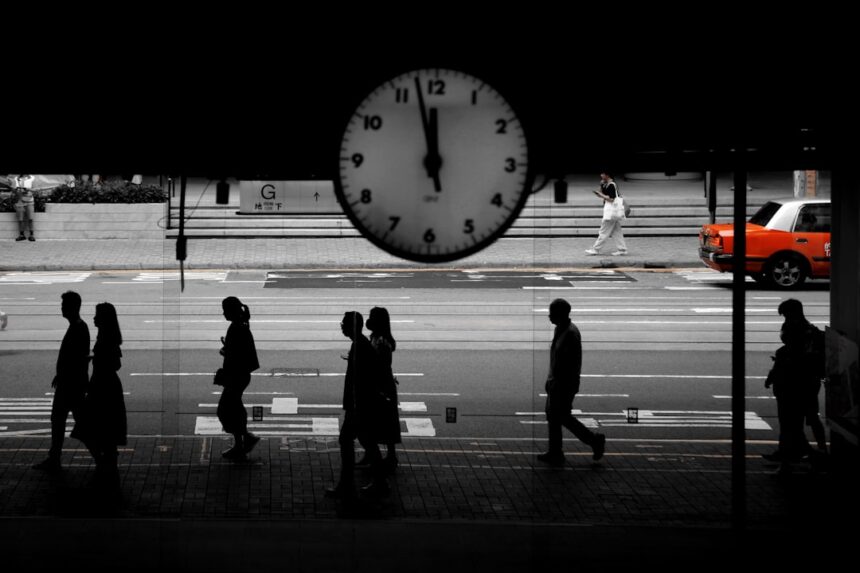
Deja vu is a psychological phenomenon experienced by approximately 60-70% of the population. It manifests as the sensation that a current situation has been experienced before, despite the individual’s knowledge that this is the first occurrence. The term originates from French, literally translating to “already seen.” Episodes typically last between 10-30 seconds and occur most frequently in individuals aged 15-25 years.
Research indicates that deja vu results from neurological processes in the brain’s temporal lobe, particularly involving the hippocampus and surrounding structures responsible for memory formation and recognition. Current scientific theories propose several mechanisms: a delay in neural transmission between different brain regions, temporary dysfunction in the brain’s familiarity detection system, or brief activation of memory circuits without corresponding recollection. Neuroimaging studies have identified increased activity in the rhinal cortex during deja vu experiences, suggesting disrupted communication between memory recognition pathways.
While the exact neurological basis remains under investigation, deja vu is considered a normal cognitive phenomenon rather than a pathological condition, unless it occurs with unusual frequency or duration.
Key Takeaways
- Déjà vu is a complex experience involving a feeling of familiarity with a new situation, linked to cognitive and neurological processes.
- Memory plays a crucial role in déjà vu, often involving mismatches or overlaps between past and present experiences.
- Emotional states and dream experiences can trigger or influence the occurrence of déjà vu.
- Cultural interpretations of déjà vu vary, reflecting diverse beliefs about time, reality, and perception.
- Understanding the neurological basis and mental health connections of déjà vu can help develop coping strategies for those affected.
Theories behind Deja Vu: Exploring the cognitive and neurological explanations
Several theories have emerged to explain the phenomenon of deja vu, each offering a unique perspective on how your brain processes experiences. One prominent cognitive theory posits that deja vu occurs when there is a mismatch between sensory input and memory recall. In this view, your brain may mistakenly interpret a new experience as familiar due to similarities with past events.
For instance, if you visit a new café that resembles one you frequented in your youth, your brain might trigger a sense of familiarity, leading to the sensation of deja vu. Neurologically, researchers have explored the role of the temporal lobe in the experience of deja vu. This area of the brain is responsible for processing memories and emotions, and it has been linked to various forms of memory recall.
Some studies suggest that individuals with temporal lobe epilepsy are more likely to experience deja vu, indicating a potential connection between neurological activity and this phenomenon. When your brain’s memory circuits become activated in unexpected ways, it may create the illusion of having already experienced a moment, resulting in that uncanny feeling of familiarity.
Time Distortion: How does it relate to the experience of Deja Vu?

Time distortion plays a significant role in shaping your experience of deja vu. When you encounter this phenomenon, it often feels as though time has warped, creating an impression that you are reliving a moment from the past. This sensation can be disorienting, as it challenges your understanding of linear time.
You may find yourself questioning whether you are truly experiencing something for the first time or if you have somehow slipped into an alternate reality where time is fluid. The perception of time can be influenced by various factors, including attention and emotional state. When you are fully engaged in an experience, your brain processes information differently than when you are distracted or preoccupied.
In moments of heightened emotion or stress, time may seem to slow down or speed up, further complicating your perception of reality. This interplay between time and perception can contribute to the feeling of deja vu, as your brain attempts to reconcile past memories with present experiences.
The Role of Memory in Deja Vu: Examining the connection between memory and the phenomenon
Memory is at the heart of the deja vu experience, serving as both a catalyst and a framework for understanding this intriguing phenomenon. Your brain’s memory systems are complex and multifaceted, encompassing both explicit memories—those you consciously recall—and implicit memories—those that influence your behavior without your awareness. Deja vu often arises when there is an overlap between these two types of memory, creating a sense of familiarity that feels both strange and compelling.
When you encounter a situation that triggers deja vu, it may be that your brain is accessing implicit memories that you are not consciously aware of. For example, you might walk into a room that resembles one from your childhood, prompting a flood of unrecognized memories that create the illusion of familiarity. This connection between memory and perception highlights the intricate ways in which your brain processes experiences, revealing how past events can shape your present reality.
Deja Vu in Different Cultures: Exploring the cultural interpretations of this perceptual phenomenon
| Metric | Description | Typical Range/Value | Notes |
|---|---|---|---|
| Frequency of Déjà Vu Episodes | Number of déjà vu experiences per week | 0.5 – 3 times/week | Varies widely among individuals |
| Duration of Déjà Vu Episode | Length of time the sensation lasts | 1 – 30 seconds | Usually brief and transient |
| Time Perception Distortion | Subjective alteration in perceived time flow during episode | 5% – 20% slower or faster | Often reported as time “slowing down” or “speeding up” |
| Associated Brain Activity | Regions activated during déjà vu (measured by fMRI/EEG) | Temporal lobe, hippocampus | Linked to memory processing and familiarity |
| Age of Onset | Typical age when déjà vu experiences begin | 15 – 25 years | More common in young adults |
| Emotional Intensity | Subjective rating of emotional impact (scale 1-10) | 3 – 7 | Often mild to moderate feelings of familiarity or eeriness |
Cultural interpretations of deja vu vary widely across different societies, reflecting diverse beliefs about memory, time, and reality.
You may encounter individuals who believe that these moments serve as reminders of unfinished business or lessons yet to be learned from previous existences.
Conversely, other cultures may approach deja vu from a more scientific perspective, attributing it to cognitive processes or neurological phenomena. In these contexts, deja vu is often seen as a curiosity rather than a profound experience. Regardless of cultural interpretation, the shared experience of deja vu underscores its universal nature as a human phenomenon, inviting exploration into how different societies understand and contextualize this intriguing aspect of consciousness.
Deja Vu and the Brain: Investigating the neurological basis of the experience

The neurological basis of deja vu has garnered significant interest among researchers seeking to unravel its mysteries. Studies utilizing neuroimaging techniques have revealed insights into how specific brain regions are activated during episodes of deja vu. The temporal lobe, in particular, has been identified as a key player in this phenomenon due to its role in memory processing and emotional regulation.
When you experience deja vu, it is believed that there may be an unusual synchronization of neural activity within the temporal lobe. This synchronization can lead to heightened feelings of familiarity and recognition, even when encountering something entirely new. Additionally, researchers have explored how neurotransmitters like dopamine may influence the experience of deja vu by modulating neural pathways associated with memory and perception.
Understanding these neurological underpinnings can provide valuable insights into how your brain constructs reality and navigates the complexities of memory.
Deja Vu in Dreams: Exploring the connection between Deja Vu and dream states
The relationship between deja vu and dreams is another intriguing aspect worth exploring. Many individuals report experiencing deja vu in conjunction with dreams they have had previously. You might find yourself in a situation that mirrors a dream you had long ago, leading to an uncanny sense of familiarity that blurs the lines between waking life and dream states.
This connection raises questions about how dreams influence our perceptions and memories. Some researchers propose that dreams serve as a rehearsal for real-life experiences, allowing your brain to process emotions and scenarios in a safe environment. When you encounter similar situations in waking life, it may trigger memories from those dreams, resulting in the sensation of deja vu.
This interplay between dreams and reality highlights the complex ways in which your mind navigates experiences and constructs meaning.
Deja Vu and Emotional Triggers: Understanding how emotions can influence the occurrence of Deja Vu
Emotions play a crucial role in shaping your experiences and perceptions, including those related to deja vu. Certain emotional states can heighten your sensitivity to familiar stimuli, making it more likely for you to experience this phenomenon. For instance, if you are feeling nostalgic or reflective during a particular moment, your brain may be more attuned to recognizing patterns that evoke feelings from the past.
Additionally, intense emotions such as anxiety or excitement can create an environment conducive to experiencing deja vu. When you are emotionally charged, your brain’s processing mechanisms may become more active or erratic, leading to moments where reality feels distorted or familiar in unexpected ways. Understanding this connection between emotions and deja vu can provide valuable insights into how your mental state influences your perception of reality.
Deja Vu and the Perception of Reality: Examining how the phenomenon challenges our understanding of time and reality
Deja vu challenges our conventional understanding of time and reality by blurring the lines between past and present experiences. When you encounter this phenomenon, it raises profound questions about how your mind constructs reality and perceives time as linear or cyclical. The sensation of reliving a moment can lead you to contemplate whether time is truly fixed or if there are dimensions beyond our comprehension.
This challenge to perception invites philosophical inquiries into the nature of existence itself. Are our experiences merely fleeting moments strung together in a linear fashion? Or do they exist simultaneously across different timelines?
Deja Vu and Mental Health: Exploring the potential links between Deja Vu and mental health conditions
The relationship between deja vu and mental health has garnered attention from researchers seeking to understand how this phenomenon may intersect with various psychological conditions. Some studies suggest that individuals with anxiety disorders or post-traumatic stress disorder (PTSD) may be more prone to experiencing deja vu due to heightened sensitivity to familiar stimuli or intrusive memories. For those grappling with mental health challenges, moments of deja vu can evoke feelings of confusion or distress.
You might find yourself questioning your grasp on reality or feeling overwhelmed by emotions tied to past experiences. Understanding these potential links can help inform therapeutic approaches for individuals who frequently encounter deja vu as part of their mental health journey.
Coping with Deja Vu: Strategies for managing and understanding this perceptual phenomenon
If you find yourself experiencing frequent episodes of deja vu, there are strategies you can employ to manage this phenomenon effectively. First and foremost, grounding techniques can help anchor you in the present moment when feelings of disorientation arise. Focusing on your surroundings—what you see, hear, or feel—can help alleviate any anxiety associated with these experiences.
Additionally, keeping a journal to document instances of deja vu can provide valuable insights into patterns or triggers associated with these moments. By reflecting on your experiences over time, you may gain a deeper understanding of how your emotions and memories intersect with this phenomenon. Engaging in mindfulness practices can also enhance your awareness of thoughts and feelings as they arise, allowing you to navigate moments of deja vu with greater ease.
In conclusion, deja vu remains one of life’s most intriguing mysteries—a blend of cognitive processes, emotional states, cultural interpretations, and neurological activity that invites exploration into the nature of consciousness itself. By understanding its complexities and employing coping strategies when necessary, you can navigate this fascinating phenomenon with curiosity rather than confusion.
Deja vu is a fascinating phenomenon that often leads to discussions about time perception and cognitive distortions. For those interested in exploring this topic further, a related article can be found on Unplugged Psych, which delves into the intricacies of how our brains process time and memory. You can read more about it in their article [here](https://www.unpluggedpsych.com/).
FAQs
What is déjà vu?
Déjà vu is a French term meaning “already seen.” It refers to the sensation that a current experience feels eerily familiar, as if it has happened before, even though it is actually new.
How is déjà vu related to time perception distortion?
Déjà vu involves a temporary distortion in the brain’s perception of time and memory, causing a person to feel that the present moment is a repetition of a past event, leading to confusion about when the experience actually occurred.
What causes déjà vu and time perception distortions?
The exact cause of déjà vu is not fully understood, but it is believed to result from a brief misfiring or overlap in brain regions responsible for memory and familiarity, such as the temporal lobe and hippocampus, which can distort the perception of time.
Is déjà vu a sign of a medical condition?
In most cases, déjà vu is a normal phenomenon experienced by healthy individuals. However, frequent or intense déjà vu episodes can sometimes be associated with neurological conditions like temporal lobe epilepsy.
How common is déjà vu?
Déjà vu is a common experience, with studies suggesting that up to 70% of people have experienced it at least once in their lifetime.
Can déjà vu be induced or controlled?
While déjà vu typically occurs spontaneously, some research indicates that certain factors like fatigue, stress, or unfamiliar environments may increase its likelihood. There is currently no reliable method to intentionally induce or control déjà vu.
Does déjà vu affect memory accuracy?
Déjà vu can create a false sense of familiarity, but it does not necessarily affect the accuracy of long-term memory. It is more related to the brain’s processing of current experiences rather than actual recall of past events.
Are there different types of déjà vu?
Yes, researchers identify several types, including déjà vécu (feeling of having lived through the experience), déjà senti (feeling of having felt something before), and déjà visité (feeling of having visited a place before), each involving subtle differences in time perception and memory distortion.