

As you delve into the fascinating realm of non-invasive brain-to-brain interfaces, you may find yourself captivated by the potential of this groundbreaking technology. At its core, a non-invasive brain-to-brain interface (BBI) allows for direct communication between two brains without the need for surgical procedures or implanted devices. This innovative approach leverages external devices, such as electroencephalography (EEG) caps or functional magnetic resonance imaging (fMRI), to capture and interpret neural signals.
By translating these signals into actionable information, researchers aim to facilitate a form of communication that transcends traditional verbal or written methods. The implications of non-invasive BBIs are profound. Imagine a world where thoughts and emotions could be shared seamlessly between individuals, enhancing empathy and understanding.
This technology could revolutionize how we interact with one another, breaking down barriers of language and cultural differences. As you explore this topic further, you will uncover the intricate mechanisms that enable such communication and the myriad possibilities that lie ahead.
Key Takeaways
- Non-invasive brain-to-brain interface allows for communication between brains without the need for invasive procedures.
- The science behind brain-to-brain communication involves the use of neuroimaging and neurostimulation techniques to decode and encode brain signals.
- Advantages of non-invasive brain-to-brain interface include potential for treating neurological disorders and enhancing human communication and collaboration.
- Applications in medical treatments include potential for treating conditions such as epilepsy, depression, and paralysis.
- Ethical considerations in brain-to-brain interface technology include issues of privacy, consent, and potential misuse of the technology.
The Science Behind Brain-to-Brain Communication
To truly appreciate the potential of non-invasive brain-to-brain interfaces, it is essential to understand the underlying science. The human brain operates through a complex network of neurons that communicate via electrical impulses and chemical signals. When you think, feel, or act, your brain generates specific patterns of activity that can be detected and analyzed.
Non-invasive BBIs harness this neural activity by employing advanced technologies to decode these patterns and transmit them to another brain. One of the primary methods used in non-invasive BBIs is EEG, which measures electrical activity in the brain through electrodes placed on the scalp. By analyzing these electrical signals, researchers can identify distinct brainwave patterns associated with specific thoughts or intentions.
In some experiments, participants have successfully transmitted simple messages or commands to one another using this technology. As you consider the implications of this scientific foundation, it becomes clear that the potential for more complex communication is on the horizon.
Advantages of Non-Invasive Brain-to-Brain Interface
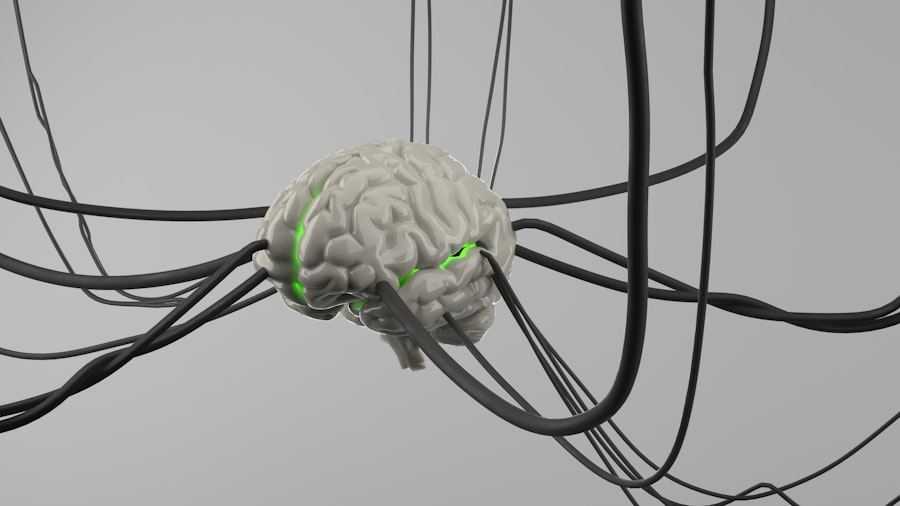
The advantages of non-invasive brain-to-brain interfaces are numerous and compelling. One of the most significant benefits is the elimination of invasive procedures, which often carry risks and complications. By utilizing non-invasive methods, you can engage in brain-to-brain communication without the need for surgery or implanted devices, making it a safer option for individuals interested in exploring this technology.
Additionally, non-invasive BBIs offer a level of accessibility that invasive methods cannot match. With advancements in technology, devices like EEG caps are becoming more affordable and user-friendly, allowing a broader range of individuals to participate in brain-to-brain communication experiments. This democratization of technology opens up new avenues for research and collaboration, enabling diverse groups to explore the potential applications of BBIs in various fields.
Applications in Medical Treatments
| Medical Treatment | Application | Metric |
|---|---|---|
| Cancer Treatment | Chemotherapy | Success Rate |
| Diabetes Management | Insulin Therapy | Blood Sugar Control |
| Cardiovascular Disease | Stent Placement | Artery Blockage Reduction |
| Organ Transplant | Immunosuppressants | Rejection Rate |
The potential applications of non-invasive brain-to-brain interfaces in medical treatments are particularly exciting. Imagine a scenario where patients suffering from neurological disorders could communicate their needs directly to caregivers or medical professionals without relying on traditional methods. This could significantly enhance patient care and improve outcomes for individuals with conditions such as locked-in syndrome or severe speech impairments.
Moreover, non-invasive BBIs could play a crucial role in rehabilitation therapies. For instance, individuals recovering from strokes or traumatic brain injuries may benefit from targeted brain-to-brain communication exercises designed to retrain neural pathways. By facilitating direct communication between patients and therapists, these interfaces could accelerate recovery processes and enhance the effectiveness of therapeutic interventions.
As you consider these applications, it becomes evident that non-invasive BBIs hold immense promise for transforming medical treatments and improving quality of life for countless individuals.
Ethical Considerations in Brain-to-Brain Interface
As with any emerging technology, ethical considerations surrounding non-invasive brain-to-brain interfaces are paramount. One of the primary concerns is the potential for privacy violations. With the ability to access and interpret neural signals, there is a risk that individuals’ thoughts and emotions could be exposed without their consent.
This raises important questions about autonomy and the right to control one’s own mental processes. Furthermore, the prospect of manipulating thoughts or emotions through non-invasive BBIs introduces ethical dilemmas regarding consent and agency. You may find yourself pondering whether it is ethical to influence another person’s mental state or decision-making processes through direct brain communication.
As researchers continue to explore the capabilities of this technology, it is crucial to establish ethical guidelines that prioritize individual rights and ensure responsible use.
Challenges and Limitations of Non-Invasive Brain-to-Brain Interface
Despite the exciting potential of non-invasive brain-to-brain interfaces, several challenges and limitations must be addressed before widespread adoption can occur. One significant hurdle is the complexity of accurately interpreting neural signals. The human brain is an intricate organ with vast individual differences in neural activity patterns.
As a result, decoding these signals into meaningful information can be challenging and may lead to misinterpretations. Additionally, the current technology used in non-invasive BBIs has limitations in terms of range and resolution. While EEG can capture electrical activity from the scalp, it may not provide sufficient detail to decode complex thoughts or emotions accurately.
As you explore this field further, you will discover ongoing research aimed at overcoming these challenges and enhancing the capabilities of non-invasive BBIs.
Innovations in Non-Invasive Brain-to-Brain Interface Technology
Innovation is at the heart of advancing non-invasive brain-to-brain interface technology. Researchers are continually developing new methods and devices to improve signal detection and interpretation.
Moreover, interdisciplinary collaboration is driving innovation in this field. By bringing together experts from neuroscience, engineering, psychology, and computer science, researchers are creating more effective tools for non-invasive BBIs. As you follow these developments, you will witness how innovative approaches are pushing the boundaries of what is possible in brain-to-brain communication.
The Future of Non-Invasive Brain-to-Brain Interface
Looking ahead, the future of non-invasive brain-to-brain interfaces appears promising yet complex. As technology continues to evolve, you may envision a world where seamless communication between individuals becomes commonplace. This could lead to enhanced collaboration in various fields, from education to business, as people share ideas and insights directly through their thoughts.
However, with this potential comes responsibility. As non-invasive BBIs become more integrated into society, it will be essential to establish frameworks that govern their use ethically and responsibly. You may find yourself contemplating how society will navigate the balance between innovation and ethical considerations as this technology matures.
Implications for Communication and Collaboration
The implications of non-invasive brain-to-brain interfaces for communication and collaboration are profound. Imagine being able to share your thoughts directly with colleagues during a brainstorming session or convey complex emotions to loved ones without words. This level of direct communication could foster deeper connections and understanding among individuals.
In professional settings, non-invasive BBIs could revolutionize teamwork by enabling real-time sharing of ideas and feedback. You might envision a future where collaborative projects benefit from enhanced synergy as team members communicate effortlessly through their thoughts. As you consider these possibilities, it becomes clear that non-invasive BBIs have the potential to reshape how we interact with one another on both personal and professional levels.
Potential Risks and Safeguards in Brain-to-Brain Interface
While the potential benefits of non-invasive brain-to-brain interfaces are exciting, it is crucial to acknowledge the potential risks associated with this technology. One significant concern is the possibility of unauthorized access to an individual’s thoughts or emotions. Safeguards must be established to protect users’ privacy and ensure that their mental data remains secure.
Additionally, there is a risk that individuals may misuse non-invasive BBIs for manipulation or coercion. To mitigate these risks, it will be essential to develop robust ethical guidelines and regulatory frameworks governing the use of this technology. You may find yourself reflecting on how society can strike a balance between innovation and safeguarding individual rights as non-invasive BBIs become more prevalent.
Opportunities for Research and Development
The field of non-invasive brain-to-brain interfaces presents numerous opportunities for research and development. As scientists continue to explore the intricacies of neural communication, there is immense potential for breakthroughs that could enhance our understanding of the human brain. You may consider how interdisciplinary collaboration can drive innovation in this area, leading to new applications across various domains.
Furthermore, as public interest in non-invasive BBIs grows, funding opportunities for research initiatives are likely to increase. This influx of resources could accelerate advancements in technology and expand our knowledge of brain function and communication. As you contemplate these opportunities, it becomes evident that the future holds exciting possibilities for those willing to explore the uncharted territory of non-invasive brain-to-brain interfaces.
Recent advancements in non-invasive brain-to-brain interfaces have opened up exciting possibilities for communication and collaboration between individuals. A related article that delves deeper into this topic can be found at Unplugged Psych, where researchers explore the implications and potential applications of these innovative technologies in various fields.
WATCH THIS! The Secret Science of Telepathy: Why Your Brain is Already Connected to Others
FAQs
What is a non-invasive brain-to-brain interface?
A non-invasive brain-to-brain interface is a technology that allows for direct communication between two brains without the need for invasive surgical procedures. This can include the use of non-invasive brain imaging techniques, such as electroencephalography (EEG) or functional magnetic resonance imaging (fMRI), to detect and interpret brain activity, and then transmit that information to another individual’s brain.
How does a non-invasive brain-to-brain interface work?
Non-invasive brain-to-brain interfaces typically involve the use of brain-computer interface (BCI) technology to detect and interpret brain activity in one individual, and then transmit that information to another individual’s brain using techniques such as transcranial magnetic stimulation (TMS) or transcranial direct current stimulation (tDCS). This allows for direct communication or interaction between the two individuals’ brains.
What are the potential applications of non-invasive brain-to-brain interfaces?
Non-invasive brain-to-brain interfaces have the potential to be used in a variety of applications, including communication and collaboration between individuals, enhancing cognitive abilities, and even potentially treating neurological disorders or injuries. However, the technology is still in the early stages of development and further research is needed to fully understand its capabilities and limitations.
Are there any ethical considerations with non-invasive brain-to-brain interfaces?
The development and use of non-invasive brain-to-brain interfaces raise important ethical considerations, particularly in terms of privacy, consent, and potential misuse of the technology. There are also concerns about the potential impact on individual autonomy and the potential for unintended consequences. As the technology continues to advance, it will be important to carefully consider and address these ethical considerations.

