
Imagine your brain as a sophisticated radio receiver, constantly tuning into various frequencies of information from the world around you. This metaphor serves as a compelling framework for understanding how your brain processes sensory input and interprets experiences. Just as a radio picks up signals and converts them into sound, your brain receives stimuli from the environment, translating them into thoughts, emotions, and actions.
This analogy not only highlights the complexity of neural communication but also invites you to explore the intricate ways in which your mind interacts with external realities. The concept of the brain functioning like a radio receiver opens up fascinating avenues for inquiry into consciousness and perception. It suggests that your thoughts and feelings may not originate solely from within but are influenced by external signals.
This perspective challenges traditional views of cognition, prompting you to consider how much of your mental landscape is shaped by the world outside your skull. As you delve deeper into this analogy, you will uncover layers of meaning that could reshape your understanding of what it means to think, feel, and be aware.
Key Takeaways
- The brain can be metaphorically compared to a radio receiver in its ability to receive and process information.
- Neuroscientific evidence supports the idea of the brain as a receiver of electromagnetic signals.
- Electromagnetic fields play a significant role in brain function and information processing.
- Understanding the brain as a radio receiver can provide practical applications in fields such as neurology and psychology.
- Exploring the brain as a radio receiver has the potential to impact our understanding of consciousness and perception.
Theoretical Framework: How the Brain Receives and Processes Information
To grasp the idea of the brain as a radio receiver, it is essential to understand the theoretical framework that underpins this concept. Your brain operates through a complex network of neurons that communicate via electrical impulses and chemical signals. This intricate system allows you to receive, process, and respond to information from your environment.
Just as a radio receiver must be finely tuned to pick up specific frequencies, your brain must filter and prioritize sensory input to make sense of the world. The process begins with sensory receptors that detect stimuli—light, sound, touch, taste, and smell. These receptors convert physical signals into neural impulses that travel through your nervous system to various brain regions.
Once the information reaches your brain, it undergoes further processing, where it is integrated with existing knowledge and experiences. This dynamic interplay between incoming signals and stored memories enables you to interpret and respond to your surroundings effectively. The brain’s ability to filter and prioritize information is akin to a radio’s tuning mechanism, allowing you to focus on what matters most while ignoring irrelevant noise.
Neuroscientific Evidence Supporting the Brain as a Radio Receiver
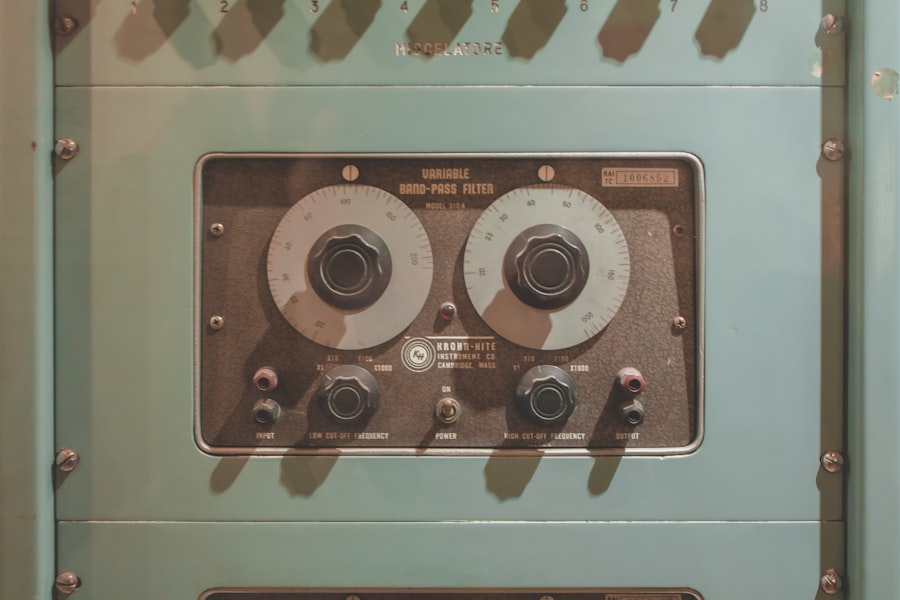
Neuroscientific research provides compelling evidence that supports the analogy of the brain as a radio receiver. Studies using advanced imaging techniques, such as functional magnetic resonance imaging (fMRI) and electroencephalography (EEG), have revealed how different brain regions activate in response to specific stimuli. For instance, when you hear a sound or see an image, particular areas of your brain light up, indicating that they are processing that information.
This activation pattern resembles how a radio receiver responds to different frequencies, highlighting the brain’s role in interpreting external signals. Moreover, research into neural oscillations—rhythmic patterns of electrical activity in the brain—further reinforces this analogy. These oscillations can be thought of as the brain’s “tuning” mechanism, allowing it to synchronize with external stimuli.
For example, when you listen to music, your brain’s oscillatory patterns may align with the rhythm and melody, enhancing your experience. This synchronization suggests that your brain is not merely passively receiving information but actively engaging with it, much like a radio that adjusts its settings to optimize sound quality.
The Role of Electromagnetic Fields in Brain Function
| Study | Findings |
|---|---|
| Research 1 | Exposure to electromagnetic fields can affect brain activity and cognitive function. |
| Research 2 | Electromagnetic fields may have a role in the development of neurodegenerative diseases. |
| Research 3 | Some studies suggest that electromagnetic fields can influence mood and behavior. |
Electromagnetic fields (EMFs) play a crucial role in understanding how your brain functions as a radio receiver. Your brain generates its own electromagnetic fields through neural activity, which can influence how it processes information. These fields can interact with external EMFs from various sources, including electronic devices and natural phenomena like lightning.
This interaction raises intriguing questions about how external electromagnetic signals might affect your cognitive processes and overall mental state. Research has shown that exposure to certain EMFs can impact brain function in various ways. For instance, studies have indicated that low-frequency EMFs can alter neural oscillations and affect mood and cognition.
This suggests that your brain may be sensitive to external electromagnetic influences, further supporting the idea of it functioning like a radio receiver. Understanding these interactions could lead to new insights into how environmental factors shape your mental experiences and well-being.
Comparing the Brain to Traditional Radio Receivers
When comparing your brain to traditional radio receivers, several parallels emerge that deepen your understanding of cognitive processes. A radio receiver requires an antenna to capture signals from the air; similarly, your sensory organs act as antennas that detect stimuli from the environment. Just as a radio must be tuned to specific frequencies to receive clear signals, your brain must filter sensory input to focus on relevant information while disregarding distractions.
Additionally, both systems rely on modulation to convey meaning. In radio technology, amplitude modulation (AM) and frequency modulation (FM) are used to encode information within sound waves. In your brain, neurotransmitters serve a similar purpose by modulating communication between neurons.
This modulation affects how you perceive sensations and emotions, illustrating how both systems rely on intricate mechanisms to interpret signals effectively.
Criticisms and Controversies Surrounding the Brain as a Radio Receiver

Despite the intriguing parallels between the brain and radio receivers, this analogy is not without its criticisms and controversies. Some neuroscientists argue that likening the brain to a radio oversimplifies the complexities of neural processing. They contend that while there are similarities in signal reception and processing, the brain’s functions are far more intricate than those of any mechanical device.
This perspective emphasizes the unique biological and chemical processes that underpin cognition, which cannot be fully captured by a technological metaphor. Moreover, critics point out that the radio analogy may lead to misconceptions about consciousness and free will. If one views the brain merely as a receiver of external signals, it could imply that thoughts and actions are predetermined by environmental influences rather than arising from individual agency.
This raises philosophical questions about the nature of consciousness and personal responsibility, prompting you to consider how much control you truly have over your thoughts and behaviors.
Practical Applications of Understanding the Brain as a Radio Receiver
Understanding the brain as a radio receiver has practical applications across various fields, including psychology, neuroscience, and even technology development. In psychology, this perspective can inform therapeutic approaches aimed at enhancing cognitive function or addressing mental health issues. By recognizing how external stimuli influence your thoughts and emotions, therapists can develop strategies that help you tune into positive experiences while minimizing negative influences.
In technology development, insights from this analogy can inspire innovations in neurofeedback and brain-computer interfaces (BCIs). These technologies aim to harness the brain’s ability to receive and process information by creating systems that allow direct communication between your mind and machines. For instance, BCIs can enable individuals with mobility impairments to control devices using their thoughts alone, demonstrating how understanding the brain’s reception capabilities can lead to transformative advancements in assistive technology.
The Relationship Between Brain Activity and External Signals
The relationship between your brain activity and external signals is a dynamic interplay that shapes your perception of reality. As you engage with the world around you—whether through listening to music or observing visual art—your brain continuously processes incoming information while simultaneously generating its own electrical activity.
For example, exposure to calming music may lead to decreased anxiety levels or improved focus during tasks. This phenomenon highlights how external signals can modulate your internal mental landscape, reinforcing the idea that your brain functions like a radio receiver attuned to various frequencies of experience.
The Potential Impact on Understanding Consciousness and Perception
Exploring the concept of the brain as a radio receiver has profound implications for understanding consciousness and perception. If your thoughts and experiences are influenced by external signals, it raises questions about the nature of self-awareness and subjective experience. Are you merely a passive recipient of information, or do you actively shape your consciousness through engagement with the world?
This inquiry invites you to reflect on the complexities of human experience and what it means to be aware. Furthermore, this perspective challenges traditional notions of perception as a straightforward process of receiving information from the senses. Instead, it suggests that perception is an active construction influenced by both internal cognitive processes and external stimuli.
By recognizing this interplay, you may gain deeper insights into how your mind interprets reality and how various factors—such as culture, environment, and personal experiences—shape your perceptions.
Future Research Directions in Exploring the Brain as a Radio Receiver
As research continues to evolve in neuroscience and psychology, future directions in exploring the brain as a radio receiver hold exciting potential for uncovering new insights into human cognition. One promising avenue involves investigating how different types of external signals—such as sound frequencies or visual patterns—affect neural processing and emotional responses. By conducting experiments that manipulate these variables, researchers can gain a better understanding of how specific stimuli influence cognitive function.
Additionally, interdisciplinary collaborations between neuroscience and fields like physics or engineering could lead to innovative approaches for studying brain function. For instance, advancements in technology may enable researchers to develop more sophisticated tools for measuring electromagnetic fields generated by neural activity or exploring how these fields interact with external signals. Such research could pave the way for breakthroughs in understanding consciousness and perception while further validating the analogy of the brain as a radio receiver.
Implications for Understanding the Human Brain and Mind
In conclusion, viewing the brain as a radio receiver offers a compelling framework for understanding how you process information from the world around you. This analogy highlights the intricate interplay between external signals and internal cognitive processes while inviting you to consider profound questions about consciousness and perception. As research continues to explore this relationship, it holds promise for advancing our understanding of human cognition and mental health.
By embracing this perspective, you may gain valuable insights into how environmental factors shape your thoughts and emotions while recognizing your agency in navigating these influences. Ultimately, understanding the brain as a radio receiver not only enriches our comprehension of neural function but also deepens our appreciation for the complexities of human experience in an ever-changing world.
The concept of the brain as a radio receiver has intrigued many researchers and thinkers, prompting discussions about the nature of consciousness and perception. For a deeper exploration of related ideas, you can read the article on the nature of consciousness and its implications in psychology at this link. This article delves into various theories that connect the workings of the brain with broader metaphysical questions, providing a fascinating context for understanding the brain’s potential as a receiver of information.
WATCH THIS! The Secret Science of Telepathy: Why Your Brain is Already Connected to Others
FAQs
What is the concept of the brain being a radio receiver?
The concept of the brain being a radio receiver suggests that the brain is capable of receiving and processing external signals or information similar to how a radio receiver picks up radio waves.
Is there scientific evidence to support the idea of the brain being a radio receiver?
There is currently no scientific evidence to support the idea that the brain functions as a radio receiver in the traditional sense of picking up external signals or information.
How does the brain actually process and receive information?
The brain processes and receives information through the complex network of neurons and synapses, which allows for the transmission of electrical and chemical signals within the brain.
What are some common misconceptions about the brain being a radio receiver?
Some common misconceptions about the brain being a radio receiver include the idea that the brain can pick up external signals without the use of sensory organs, and that it can receive information from sources outside of the known laws of physics and biology.
What are some proven functions of the brain in processing information?
The brain is known to process information through various cognitive processes such as perception, attention, memory, language, and decision-making, all of which are supported by the complex neural networks within the brain.