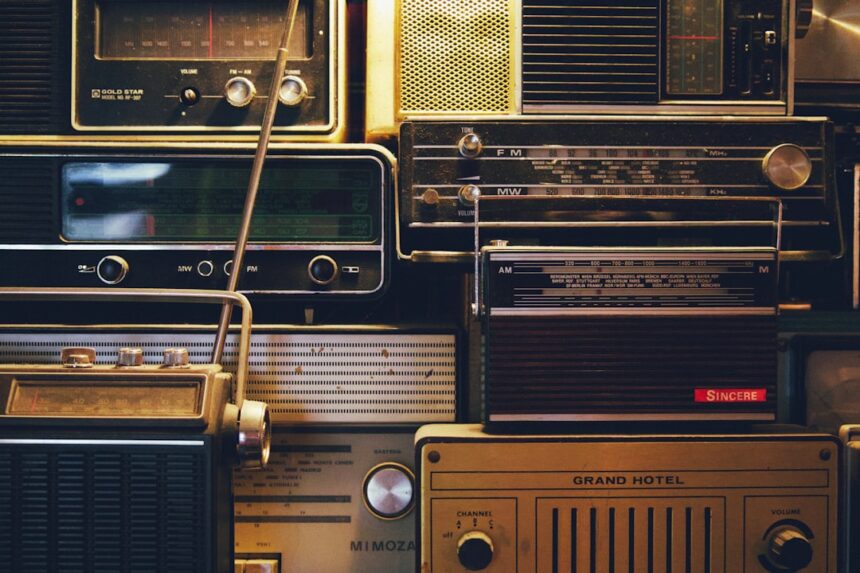
Imagine your brain as a sophisticated radio receiver, constantly tuning into various frequencies and signals that shape your thoughts, emotions, and perceptions. This intriguing analogy invites you to explore the possibility that your brain might not only process information but also receive it from external sources. The concept of the brain functioning as a radio receiver opens up a fascinating dialogue about consciousness, perception, and the nature of reality itself.
As you delve into this idea, you may find yourself questioning the boundaries of human cognition and the potential for unseen influences on your mental processes. The notion that your brain could act as a radio receiver is not merely a whimsical metaphor; it has roots in both scientific inquiry and philosophical speculation. This perspective challenges traditional views of the brain as a closed system, suggesting instead that it may be part of a larger network of information exchange.
By examining this theory, you can gain insights into how your mind interacts with the world around you and consider the implications of such a connection for understanding consciousness and human experience.
Key Takeaways
- The brain has been proposed as a radio receiver, capable of picking up and processing external signals.
- Theoretical framework suggests that the brain could function as a radio receiver through the use of electromagnetic waves and neural oscillations.
- Scientific evidence supporting the brain as a radio receiver includes studies on the effects of electromagnetic fields on brain function.
- Skepticism and criticisms of the brain as a radio receiver theory revolve around the lack of concrete evidence and the complexity of brain function.
- Historical perspectives on the brain as a radio receiver date back to early theories of brain function and the discovery of electromagnetic waves.
Theoretical Framework: How the Brain Could Function as a Radio Receiver
To understand how your brain might function as a radio receiver, it is essential to explore the theoretical framework that supports this idea. At its core, this concept posits that your brain is capable of picking up and interpreting electromagnetic signals, much like a radio picks up sound waves. This theory suggests that your neural networks could be attuned to specific frequencies, allowing you to access information beyond your immediate environment.
Imagine being able to tap into a vast reservoir of knowledge and experiences simply by tuning into the right frequency. This framework draws on principles from quantum physics and neuroscience, proposing that consciousness may not be solely generated by neural activity but could also be influenced by external electromagnetic fields. You might consider how this perspective aligns with various spiritual and metaphysical beliefs that suggest a connection between all living beings.
By viewing your brain as a receiver, you can begin to appreciate the potential for interconnectedness and shared consciousness among individuals, raising profound questions about the nature of reality and your place within it.
Scientific Evidence Supporting the Brain as a Radio Receiver
While the idea of the brain as a radio receiver may seem speculative, there is scientific evidence that lends credence to this theory. Research in fields such as neurobiology and quantum mechanics has uncovered intriguing parallels between brain function and electromagnetic phenomena. For instance, studies have shown that certain brainwaves can be influenced by external electromagnetic fields, suggesting that your brain may indeed be responsive to signals beyond its own internal processes.
Additionally, experiments involving brain-computer interfaces have demonstrated that neural activity can be modulated by external devices, further supporting the notion that your brain can interact with external signals. These findings invite you to consider the implications of such interactions for understanding consciousness and cognition. If your brain can receive and process information from external sources, what does that mean for your perception of reality?
This line of inquiry opens up new avenues for exploration in both science and philosophy.
Skepticism and Criticisms of the Brain as a Radio Receiver Theory
| Source | Skepticism/Criticism |
|---|---|
| Scientific Community | Many scientists argue that the brain does not function like a radio receiver and that the theory lacks empirical evidence. |
| Neuroscientists | Neuroscientists criticize the theory for oversimplifying the complex processes of perception and cognition in the brain. |
| Philosophers | Some philosophers question the plausibility of the brain as a radio receiver, citing the lack of a coherent mechanism for such a process. |
Despite the intriguing possibilities presented by the theory of the brain as a radio receiver, skepticism remains prevalent within the scientific community. Critics argue that there is insufficient empirical evidence to support the idea that your brain can pick up external signals in a meaningful way. They contend that while electromagnetic fields may influence neural activity, this does not equate to the brain functioning as a radio receiver.
Instead, they suggest that any observed effects could be attributed to more conventional neurological processes. Moreover, skeptics point out that the complexity of brain function cannot be reduced to simple analogies with radio technology. Your brain is an intricate organ with numerous interconnected systems, and oversimplifying its functions may lead to misconceptions about how it operates.
As you navigate this debate, it is essential to weigh both sides critically and consider the limitations of current scientific understanding while remaining open to new ideas.
Historical Perspectives on the Brain as a Radio Receiver
The concept of the brain as a radio receiver is not entirely new; it has historical roots in various philosophical and scientific traditions. Throughout history, thinkers have speculated about the nature of consciousness and its relationship to external realities. For instance, ancient philosophies often posited that human beings are connected to a universal consciousness or cosmic intelligence, suggesting that your mind might be capable of tapping into something greater than itself.
In more recent times, figures like Nikola Tesla and Albert Einstein have explored ideas related to energy and frequency in relation to human consciousness. Tesla famously stated, “If you want to find the secrets of the universe, think in terms of energy, frequency, and vibration.” This perspective resonates with the notion that your brain could function as a receiver, attuned to the frequencies of the universe. By examining these historical perspectives, you can appreciate how this idea has evolved over time and consider its relevance in contemporary discussions about consciousness.
Potential Implications of the Brain as a Radio Receiver

If you accept the premise that your brain functions as a radio receiver, the implications are profound and far-reaching. For one, this perspective could revolutionize our understanding of consciousness itself. Rather than viewing consciousness as an isolated phenomenon generated solely by neural activity, you might begin to see it as part of a larger network of information exchange.
This shift in perspective could lead to new approaches in psychology, neuroscience, and even spirituality. Furthermore, recognizing your brain’s potential to receive external signals could have practical applications in fields such as mental health and education. Imagine harnessing this ability to enhance cognitive performance or facilitate healing processes.
Therapies that incorporate techniques for tuning into specific frequencies could emerge, offering innovative solutions for individuals struggling with mental health issues or cognitive impairments. The possibilities are vast, inviting you to envision a future where understanding the brain’s role as a receiver transforms various aspects of human life.
The Role of Frequency and Resonance in Brain Function
Central to the idea of your brain functioning as a radio receiver is the concept of frequency and resonance.
This resonance could play a crucial role in shaping your thoughts, emotions, and overall cognitive experience.
Research has shown that different brainwave patterns correspond to various states of consciousness—such as relaxation, focus, or deep sleep—indicating that frequency plays a significant role in how you experience reality. By exploring how these frequencies interact with external signals, you can gain insights into how your mental state might be influenced by factors beyond your immediate awareness. This understanding could pave the way for new techniques aimed at optimizing cognitive function through frequency modulation.
Comparing the Brain to Other Information Processing Systems
To further understand the concept of your brain as a radio receiver, it can be helpful to compare it to other information processing systems. Computers, for example, rely on input from various sources to process data and generate outputs. Similarly, if your brain functions as a receiver, it may be continuously processing information from both internal and external sources.
This comparison raises intriguing questions about how different systems handle information and what it means for human cognition. While computers operate on binary code and algorithms, your brain’s processing involves complex neural networks influenced by emotions, experiences, and environmental factors. By examining these differences, you can appreciate the unique capabilities of human cognition while considering how external signals might enhance or disrupt this process.
The Search for Extraterrestrial Intelligence and the Brain as a Radio Receiver
The search for extraterrestrial intelligence (SETI) often involves scanning the cosmos for signals that might indicate intelligent life beyond Earth. In this context, considering your brain as a radio receiver takes on new significance.
This question invites you to ponder the potential for human consciousness to connect with extraterrestrial intelligence in ways we have yet to fully understand. As researchers continue their quest for signs of life beyond our planet, exploring the relationship between human cognition and cosmic signals could yield fascinating insights. If your brain is indeed capable of receiving information from external sources, it raises questions about how humanity might respond to contact with extraterrestrial beings.
Would our understanding of consciousness expand in light of such encounters? The implications are vast and warrant further exploration.
Exploring the Connection Between Brainwaves and Radio Frequencies
The connection between brainwaves and radio frequencies is an area ripe for exploration. Your brain generates electrical activity that can be measured through techniques like electroencephalography (EEG). These measurements reveal distinct patterns associated with different mental states—such as alpha waves during relaxation or beta waves during focused attention—suggesting that your brain operates within specific frequency ranges.
By investigating how these brainwave patterns correlate with external radio frequencies, researchers may uncover new insights into how your mind interacts with its environment. This exploration could lead to innovative applications in fields such as neurofeedback therapy or cognitive enhancement techniques aimed at optimizing mental performance through frequency modulation.
Future Research Directions and Unanswered Questions about the Brain as a Radio Receiver
As you contemplate the idea of your brain functioning as a radio receiver, numerous questions remain unanswered, paving the way for future research directions. What specific frequencies might influence cognitive processes? How can we measure these interactions effectively?
What implications would such findings have for our understanding of consciousness? These inquiries invite researchers from diverse fields—neuroscience, physics, psychology—to collaborate in exploring this uncharted territory. Moreover, investigating potential applications stemming from this theory could lead to groundbreaking advancements in mental health treatment or cognitive enhancement strategies.
As you consider these possibilities, it becomes clear that embracing innovative ideas about consciousness may unlock new pathways for understanding both yourself and the universe around you. In conclusion, viewing your brain as a radio receiver opens up an exciting realm of possibilities for understanding consciousness and cognition. While skepticism exists regarding this theory’s validity, exploring its implications can lead to profound insights about human experience and our connection to the cosmos.
As research continues in this area, you may find yourself inspired by the potential for new discoveries that challenge conventional wisdom and expand our understanding of what it means to be human.
The concept of the brain as a radio receiver has sparked intriguing discussions in the field of psychology and neuroscience. For those interested in exploring this idea further, a related article can be found on Unplugged Psych, which delves into the connections between brain function and external stimuli. You can read more about it in their article [here](https://www.unpluggedpsych.com/sample-page/).
WATCH THIS! The Secret Science of Telepathy: Why Your Brain is Already Connected to Others
FAQs
What is the concept of the brain being a radio receiver?
The concept of the brain being a radio receiver suggests that the brain is capable of receiving and processing external signals or information similar to how a radio receiver picks up radio waves.
Is there scientific evidence to support the idea of the brain being a radio receiver?
There is currently no scientific evidence to support the idea that the brain functions as a radio receiver in the traditional sense of picking up external signals or information.
How does the brain actually process and receive information?
The brain processes and receives information through a complex network of neurons and synapses. Sensory organs such as the eyes, ears, and skin gather information from the environment, which is then transmitted to the brain for processing.
What are some common misconceptions about the brain being a radio receiver?
Some common misconceptions about the brain being a radio receiver include the idea that the brain can pick up thoughts or signals from external sources without the use of sensory organs, which is not supported by scientific evidence.
What are some proven functions of the brain in processing information?
The brain is known to process and interpret sensory information, regulate bodily functions, store and retrieve memories, and control voluntary and involuntary movements, among other functions. These processes are well-documented and supported by scientific research.