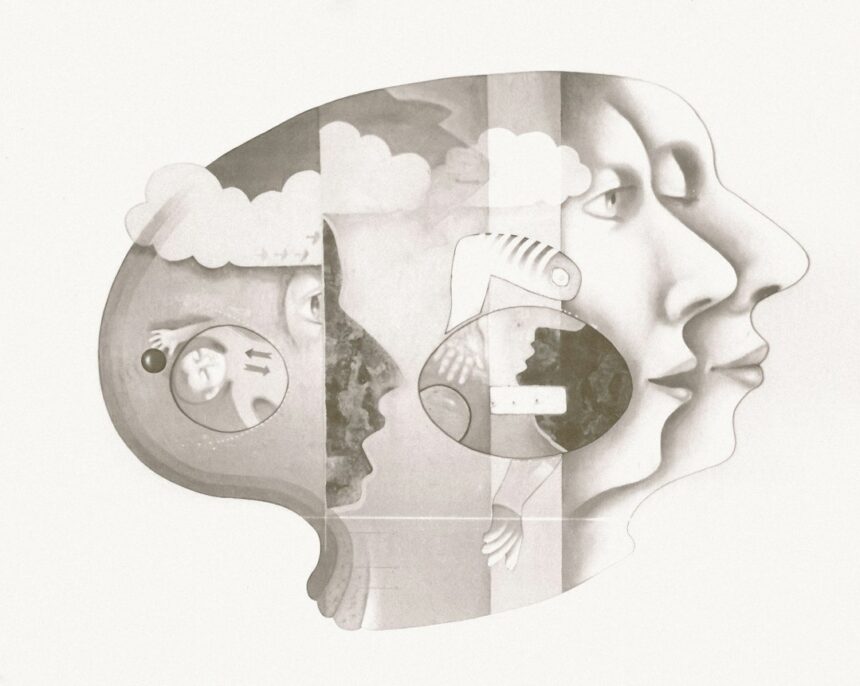
The human mind is a complex and fascinating landscape, and its exploration has often been intertwined with popular understanding that doesn’t always align with rigorous scientific inquiry. Over the years, numerous psychological concepts have entered common parlance, shaping how people perceive themselves and others. However, many of these widely accepted notions are, in fact, myths – oversimplified or entirely fabricated ideas that lack empirical support. This article aims to debunk some of these persistent popular psychology myths, illuminating what the actual scientific evidence reveals about these topics. From the way we use our brains to the nature of personality and the dynamics of relationships, understanding the science behind these concepts can lead to a more accurate and nuanced view of human behavior.
The Myth of the Underutilized Brain
One of the most pervasive myths in popular psychology is the idea that humans only use a small fraction of their brains, often cited as 10%. This notion suggests a vast untapped potential waiting to be unlocked, which has fueled everything from self-help gurus to fictional portrayals of super-intelligent individuals. The reality, however, is far more sophisticated and scientifically grounded.
Brain Imaging Reveals Widespread Activity
Neuroscientific research, particularly advancements in brain imaging techniques like fMRI (functional magnetic resonance imaging) and PET (positron emission tomography) scans, has conclusively demonstrated that most of the brain is active most of the time. Even during simple tasks or periods of rest, various brain regions exhibit neural activity. When a person is thinking, learning, or performing any cognitive function, multiple areas of the brain work in concert. Specific tasks may recruit certain areas more intensely, but the idea of vast, dormant regions is a fallacy. For example, studies have shown that even seemingly simple actions, like blinking, involve numerous interconnected brain circuits. Complex cognitive tasks, such as solving a puzzle or having a conversation, engage even larger and more distributed networks of neurons.
Evolutionary Basis for Full Brain Utilization
From an evolutionary perspective, it would be highly inefficient for organisms to develop and maintain such a metabolically expensive organ as the brain if a significant portion were vestigial and unused. The brain accounts for roughly 20% of the body’s energy consumption, despite making up only about 2% of its weight. This high energy demand underscores its constant and essential functionality. The development of the human brain, with its large cerebral cortex, has been a key factor in our species’ evolutionary success, enabling complex problem-solving, language, and social interaction. The idea of a largely unused brain would contradict this fundamental evolutionary principle.
The Origins of the 10% Myth
The origin of the 10% myth is somewhat murky, with various theories attributing it to misinterpretations of early neuroscience, the work of psychologists like William James (who spoke of untapped mental reserves, not unused brain mass), or even motivational speakers seeking to inspire their audiences. Regardless of its precise genesis, the myth has proven remarkably resilient in popular culture, likely due to its appealing simplicity and the promise of hidden potential. Scientific consensus, however, firmly refutes this idea.
Many popular psychology myths have been widely circulated, often leading to misconceptions about mental health and human behavior. For a deeper understanding of these myths and their debunking, you can explore the article titled “Popular Psychology Myths Debunked” on Unplugged Psych. This resource provides valuable insights into common fallacies, helping readers differentiate between fact and fiction in the realm of psychology. To read the article, visit here.
Debunking the Left-Brain vs. Right-Brain Dichotomy

Another popular misconception is the division of the brain into a “left-brain” and “right-brain,” where individuals are characterized as predominantly logical and analytical (left-brained) or creative and intuitive (right-brained). This simplified model suggests that people have a dominant hemisphere that dictates their personality and cognitive style. Scientific evidence, however, points to a far more integrated and collaborative brain.
Interconnected Brain Hemispheres
While it is true that certain cognitive functions are more strongly associated with one hemisphere than the other (e.g., language processing often localized to the left hemisphere in most individuals), this is a matter of lateralization, not dominance. The two hemispheres are constantly communicating and collaborating through a vast network of nerve fibers called the corpus callosum. For instance, while language production might be primarily handled by the left hemisphere, the right hemisphere plays a crucial role in understanding prosody, humor, and the emotional context of language. Similarly, artistic and creative endeavors often involve complex interactions between both hemispheres.
Evidence from Brain Damage Studies
Studies of individuals with damage to specific brain regions provide further insight. For example, stroke victims with damage to the left hemisphere may experience language difficulties (aphasia), but this does not mean their entire “logical” capacity is gone. Their right hemisphere may compensate to some extent, and the overall impact on their personality and cognitive abilities is far more nuanced than a simple “left-brain” impairment. Similarly, damage to the right hemisphere can affect spatial reasoning and emotional processing, but it doesn’t render a person inherently illogical or uncreative. The integrated nature of brain function is essential for all cognitive processes.
The Nuance of Cognitive Styles
While individuals may have preferences or strengths in certain cognitive styles (e.g., being more detail-oriented or more big-picture oriented), these differences are not dictated by a hemispheric dominance. They are more likely the result of a complex interplay of genetics, environment, learning, and individual experiences. The idea of being strictly “left-brained” or “right-brained” is a reductionist oversimplification of a highly complex and interconnected organ.
The Limits of Memory: Eyewitness Testimony and False Memories
The fallibility of human memory is a significant area where popular psychology often clashes with scientific findings. The common belief that memory is akin to a video recording, accurate and easily retrievable, is a dangerous oversimplification that has serious implications, particularly in legal settings.
Memory as a Reconstructive Process
Psychological research, notably the work of Elizabeth Loftus and others, has demonstrated that memory is not a passive storage system but an active, reconstructive process. Each time a memory is recalled, it is subject to modification, distortion, and influence by new information, beliefs, and suggestions. This means that memories are not always faithful reproductions of past events but rather interpretations that can change over time.
The Power of Suggestion and the Misinformation Effect
The “misinformation effect” is a well-documented phenomenon where exposure to misleading post-event information can alter a person’s memory of an event. Eyewitness testimony, often considered highly reliable, can be particularly susceptible to this effect. Leading questions in interrogations, conversations with others who have different recollections, or even exposure to fictional accounts of an event can subtly, or not so subtly, contaminate a witness’s memory. Studies have shown that eyewitnesses can be remarkably confident in their inaccurate recollections.
The Creation of False Memories
Perhaps one of the most striking findings in memory research is the ease with which false memories can be implanted. Through techniques like the “lost in the mall” experiment, researchers have shown that individuals can be convinced that they have experienced events that never actually occurred. This underscores the malleability of memory and the importance of approaching eyewitness accounts with a critical and scientific perspective. It also highlights the ethical considerations in memory recovery therapies, where the risk of creating false memories must be carefully managed.
Personality: Nature, Nurture, and the Myth of Fixed Traits
The question of what makes us who we are – our personality – is another fertile ground for popular psychology myths. The idea that personality is largely fixed from childhood, determined solely by genetics or upbringing, overlooks the dynamic and complex interplay of factors that shape our traits throughout life.
The Interplay of Genetics and Environment
The scientific consensus is that personality is a product of both genetic predisposition (nature) and environmental influences (nurture). Behavioral genetics research, including twin studies and adoption studies, consistently shows that both genes and environment contribute significantly to individual differences in personality traits. Genes may provide a predisposition or a range of potential, but environmental factors – such as family dynamics, cultural context, education, and life experiences – play a crucial role in shaping how these predispositions are expressed.
The Fluidity of Personality Over Time
While some core personality traits may exhibit a degree of stability, research also indicates that personality can change over the lifespan. Major life events, such as career changes, significant relationships, or personal crises, can lead to shifts in personality. For example, studies have shown increases in conscientiousness and agreeableness with age, while neuroticism may decrease. This suggests that personality is not a static entity but rather a dynamic construct that can evolve as individuals navigate the challenges and opportunities of life.
The Limitations of Personality Tests
While personality tests can be useful tools for self-reflection and understanding broad tendencies, it’s important to recognize their limitations. Many popular personality assessments oversimplify complex human characteristics. Furthermore, personality is not a rigid set of boxes into which people are placed. Individuals are unique, and their personalities are expressed in multifaceted ways. The scientific understanding of personality emphasizes the interaction of various factors and the potential for change, rather than adherence to rigid, pre-determined categories.
Many people hold misconceptions about psychology that can lead to misunderstandings about mental health and behavior. For instance, the belief that we only use 10% of our brains is a popular myth that has been thoroughly debunked by neuroscientific research. To explore more about these common myths and the truths behind them, you can read a related article that delves into various misconceptions in the field of psychology. Check it out here for a comprehensive overview.
The Myth of Unconscious Blockages and Freudian Overreach
| Myth | Claim | Reality | Source/Study |
|---|---|---|---|
| We only use 10% of our brain | Humans use only 10% of their brain capacity | Neuroimaging shows that almost all parts of the brain have some function and are active over a 24-hour period | Scientific American, 2008 |
| Left-brained vs. Right-brained personality | People are either left-brained (logical) or right-brained (creative) | Both hemispheres work together; personality is not determined by brain hemisphere dominance | Neuroscience, 2013 |
| Memory works like a video camera | Memory records events exactly as they happen | Memory is reconstructive and prone to errors and distortions | Elizabeth Loftus, Memory Research |
| People have distinct learning styles | Individuals learn best when taught in their preferred style (visual, auditory, kinesthetic) | Evidence does not support improved learning outcomes based on matching teaching style to learning style | Psychological Science in the Public Interest, 2009 |
| Polygraph tests detect lies accurately | Polygraphs can reliably detect when someone is lying | Polygraphs measure physiological arousal, which can be caused by many factors; accuracy is questionable | National Research Council, 2003 |
Sigmund Freud’s psychoanalytic theories have had a profound and lasting impact on popular culture, often leading to the widespread belief that many of our problems stem from hidden, unconscious desires or unresolved childhood traumas, referred to as “unconscious blockages.” While the concept of the unconscious mind is a valid area of psychological inquiry, the specific interpretations and prevalence of these “blockages” as described by Freud are often overstated and lack robust empirical support.
The Role of Unconscious Processes
Modern psychology acknowledges the existence and influence of unconscious processes. This includes automatic thoughts, implicit biases, and cognitive heuristics that operate outside of conscious awareness and can influence our behavior. However, these are distinct from the elaborate, often sexually charged, repressed conflicts that Freud emphasized. Unconscious processes in contemporary psychology are viewed as more cognitive and less driven by primal, repressed drives.
Limited Empirical Support for Core Freudian Concepts
Many of Freud’s core concepts, such as the Oedipus complex, the specific stages of psychosexual development, and the pervasive influence of repressed sexual desires, have not been consistently supported by empirical research. While his ideas have been influential in shaping therapeutic approaches and our understanding of the mind’s complexity, much of his theoretical framework has been modified or superseded by more evidence-based theories.
The Importance of Conscious Awareness and Cognitive Factors
Contemporary psychotherapies, informed by scientific research, often focus on increasing conscious awareness of problematic thought patterns, behaviors, and emotional responses. Cognitive Behavioral Therapy (CBT), for instance, emphasizes identifying and challenging distorted thinking and developing more adaptive coping mechanisms. While past experiences are acknowledged, the focus is on how current cognitive and behavioral patterns contribute to psychological distress, rather than solely on deciphering deeply buried, unconscious conflicts. The idea that every behavioral quirk is a manifestation of a hidden, unresolved trauma from early childhood is a simplification that can be unhelpful and, in some cases, even detrimental to effective psychological treatment.
The exploration of popular psychology myths reveals a fascinating gap between common beliefs and scientific understanding. From the seemingly limitless potential of our brains to the enduring nature of personality, these myths often offer simplistic explanations for complex human phenomena. By understanding what the actual science says, individuals can cultivate a more accurate and nuanced perspective on themselves and others, leading to more informed decision-making and a deeper appreciation for the intricacies of the human mind. The ongoing work of psychologists and neuroscientists continues to shed light on these areas, constantly refining our understanding and moving us beyond the realm of myth and into the domain of evidence-based knowledge.

The Famous IQ Study That Fooled the World
FAQs
1. Is the myth that we only use 10% of our brains true?
No, this is a popular psychology myth. Research has shown that we use all parts of our brain, and different areas are active during different tasks. The idea that we only use 10% of our brains is simply not accurate.
2. Do people have distinct learning styles, such as visual, auditory, or kinesthetic?
Contrary to popular belief, there is no scientific evidence to support the idea of distinct learning styles. Studies have shown that individuals do not have a preferred learning style, and teaching methods should be varied to cater to different needs and preferences.
3. Can multitasking improve productivity?
No, multitasking does not actually improve productivity. In fact, research has shown that multitasking can decrease efficiency and lead to more errors. Focusing on one task at a time allows for better concentration and overall performance.
4. Is the concept of left-brained and right-brained people accurate?
The idea that people are either left-brained (logical, analytical) or right-brained (creative, intuitive) is a myth. While certain brain functions may be more dominant in one hemisphere, both sides of the brain work together for most tasks. Individuals do not fall neatly into one category or the other.
5. Can listening to classical music make you smarter?
There is no scientific evidence to support the claim that listening to classical music can make you smarter. While music can have a positive impact on mood and cognitive function, it does not have the ability to increase intelligence. Intelligence is a complex trait influenced by various factors, not just music preference.