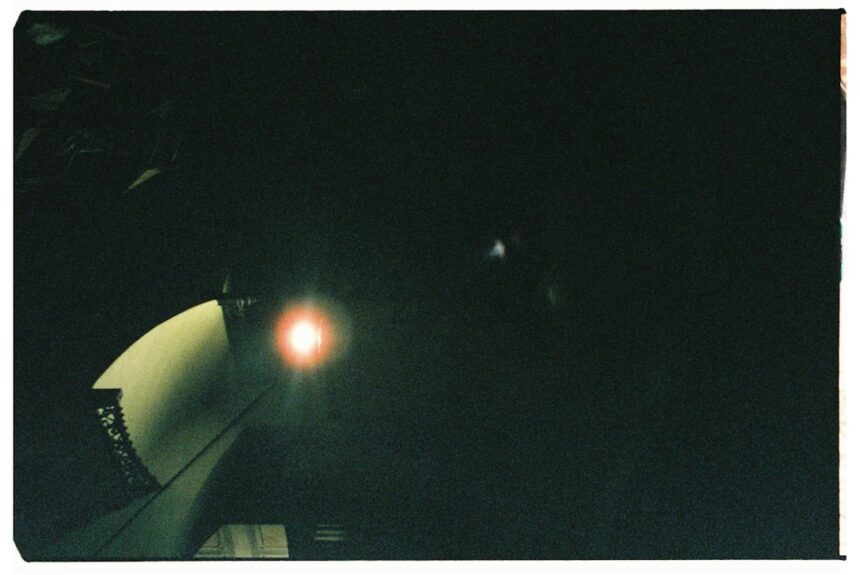
The flickering, unidentifiable lights that have populated the skies for generations have long been a subject of fascination and debate. While anecdotal accounts and blurry photographs have fueled speculation, a recent breakthrough in analyzing historical UFO footage promises to shed new, quantifiable light on these enigmatic phenomena. A dedicated team of researchers, utilizing advanced digital processing techniques, has meticulously examined a collection of hitherto obscure films, revealing details about the brightness, color, and movement of these aerial anomalies that were previously inaccessible. This pioneering work is not merely about satisfying curiosity; it represents a significant step towards a more scientific understanding of UFOs, moving beyond subjective interpretations to empirical data. The implications for fields ranging from atmospheric science to aerospace engineering, and even our philosophical understanding of our place in the cosmos, are profound.
The Challenge of Historical UFO Footage
The very nature of historical UFO footage presents a formidable scientific challenge. The technology available at the time of recording was rudimentary by today’s standards, leading to inherent limitations in image quality, resolution, and the ability to capture subtle details. Furthermore, the conditions under which these films were shot – often in low light, with shaky hands, and the observer’s own emotional state influencing perception – contribute to the ambiguity of the recordings. These factors have historically made it difficult to extract reliable, objective data from the visual information. However, the digital revolution has provided new tools to overcome many of these obstacles.
The Evolution of Image Analysis Technology
The journey from grainy, flickering film to high-resolution digital imagery is a testament to technological advancement. Early attempts at analyzing UFO footage relied on visual inspection, often with limited success. The advent of video digitization allowed for frame-by-frame examination, but the inherent limitations of analog media persisted. The true leap forward came with the development of sophisticated digital image processing software. These tools, initially designed for applications such as medical imaging, astronomical observation, and forensic analysis, possess the capability to enhance, de-noise, and extract quantitative data from even the most degraded visual sources.
Noise Reduction and Signal Enhancement
One of the primary hurdles in analyzing old film is the presence of noise – unwanted distortions and grain that obscure the actual image. Advanced algorithms can now intelligently differentiate between noise and actual signal, effectively removing the former while preserving and amplifying the latter. This process can reveal details that were previously lost in the visual clutter, making faint objects more discernible and their characteristics clearer.
Color Reconstruction and Spectral Analysis
Many historical UFO sightings were described in terms of unusual colors. However, the limitations of film technology and subsequent degradation could have distorted these perceptions. Modern techniques allow for a more accurate reconstruction of original colors, and in some cases, spectral analysis can be performed on the emitted light. This can provide crucial information about the composition or energy source of the observed phenomena.
Motion Tracking and Trajectory Analysis
The erratic and often unexplainable movements attributed to UFOs are central to many sightings. Sophisticated motion tracking software can analyze the movement of an object across multiple frames, even when the camera is unstable or the object itself is appearing and disappearing. This allows for the precise calculation of velocity, acceleration, and trajectory, providing objective data that can be compared against known aerial vehicles or natural phenomena.
The Problem of Authenticity and Misinterpretation
Even with advanced analytical tools, the issue of authenticity remains a critical concern. The possibility of hoaxes, misidentification of known objects, or atmospheric phenomena cannot be entirely discounted. Therefore, a rigorous methodology that prioritizes verifiable evidence and controls for potential sources of error is paramount. The film analysis project embarked upon by researchers faces this challenge head-on, employing a multi-faceted approach to ensure the reliability of their findings.
Distinguishing Between Natural and Artificial Phenomena
A key aspect of the analysis involves distinguishing between potential misidentifications of known phenomena and genuinely anomalous observations. This requires an extensive knowledge base of atmospheric optics, celestial bodies, and conventional aircraft capabilities. Researchers must meticulously cross-reference any identified object’s characteristics with known natural or man-made occurrences. For instance, unusual light patterns might be attributed to atmospheric ice crystals, unique cloud formations, or distant aircraft with peculiar lighting configurations.
The Role of Witness Testimony and Documentation
While the film analysis focuses on the visual data, it is often contextualized by accompanying witness testimony and other documentation. This information, while subjective, can provide valuable clues about the observer’s perspective, the environmental conditions, and any other sensory details that might aid in interpretation. However, the researchers are careful to prioritize the objective data derived from the film itself, using testimony as a supplementary source rather than the primary basis for conclusions.
In recent discussions surrounding UFO sightings, the analysis of brightness in UFO-related films has gained significant attention. A related article that delves deeper into this topic can be found on Unplugged Psych, which explores various methodologies for assessing the luminosity of unidentified flying objects captured on camera. For more insights, you can read the article here: UFO Brightness Analysis.
Unveiling the Hidden Data in the Films
The core of the research lies in the meticulous examination of a curated collection of historical UFO films. These are not the most famous or widely circulated clips, but rather a selection of lesser-known recordings that have been preserved in various archives, often overlooked or considered too low quality for serious study. The research team employed a systematic approach, digitizing these films with the highest possible fidelity and then subjecting them to a battery of analytical techniques. The goal was not to prove or disprove the existence of extraterrestrial craft, but rather to gather empirical data about the observed phenomena.
The Sample Selection and Acquisition Process
The process of selecting films for analysis was crucial. Researchers sought out recordings that offered a reasonable chance of yielding actionable data, even if they were initially deemed too poor in quality for conventional study. This involved consulting with UFO researchers, historical societies, and private collectors who had amassed significant archives. The acquisition process itself was often a detective-like endeavor, tracing the provenance of the films to ensure their authenticity and to gather any associated documentation.
Criteria for Film Inclusion
Specific criteria were established for the inclusion of films in the study. Preference was given to films that were shot under relatively clear conditions, even if the subject matter was indistinct. Films that had documented multiple observers or that were accompanied by detailed written accounts were also highly valued. Crucially, the films needed to be of sufficient duration and clarity, however limited, to allow for meaningful digital processing. The team actively avoided films that were known to be obvious hoaxes or that had already been definitively explained as mundane phenomena.
Digital Restoration and Archiving
Once acquired, the films underwent a rigorous digitization process. This involved using high-resolution scanners and specialized equipment to convert the analog film frames into digital data with the least possible loss of information. Following digitization, the raw digital files were meticulously cataloged and archived, ensuring their long-term preservation and accessibility for future research. This archival process also included the creation of metadata, detailing the origin of the film, the date and location of the recording, and any known contextual information.
The Application of Advanced Analytical Tools
With the digitized films in hand, the researchers deployed a suite of sophisticated analytical tools. These were not off-the-shelf programs but rather specialized software packages, often custom-developed or heavily modified, designed for the precise extraction of visual data. The analysis was performed by a multidisciplinary team, including optical physicists, computer scientists, and data analysts, each bringing their unique expertise to bear on the complex problem.
Quantifying Luminance and Illuminance
A significant focus of the analysis was the precise quantification of the brightness of the observed lights. Using algorithms that account for the sensitivity of the original film stock and the characteristics of the recording equipment, researchers were able to estimate the absolute luminance of the UFOs. This involved comparing the brightness of the anomaly to known reference points within the frame, such as stars, distant lights, or the ambient illumination of the sky. Illuminance, the amount of light falling on a surface, was also calculated, providing further insight into the intensity of the light source.
Colorimetric Analysis and Spectral Signatures
The color of the observed lights was also a critical area of investigation. Through advanced colorimetric analysis, the researchers aimed to determine the precise spectral composition of the light emitted by the UFOs. This involved correcting for color shifts that may have occurred due to film degradation, lens aberrations, or atmospheric scattering. In some cases, by analyzing the intensity of light across different wavelengths, it was possible to infer potential spectral signatures, which could hint at the underlying physics of the light source.
Motion Vector Analysis and Kinematic Profiling
The movement of the objects was analyzed using advanced motion vector algorithms. These algorithms track the displacement of pixels over successive frames, enabling the reconstruction of the object’s trajectory with high precision. This allowed for the calculation of velocities, accelerations, and changes in direction, even for objects that exhibited highly unusual and non-ballistic flight paths. The resulting kinematic profiles provided objective data that could be compared to the known flight characteristics of conventional aircraft and natural phenomena.
Notable Findings and Emerging Patterns

The meticulous analysis of these historical films has begun to yield a fascinating array of findings, moving beyond anecdotal descriptions to concrete, quantifiable data. While the research is ongoing, several patterns and specific observations have emerged that challenge conventional explanations and offer compelling new avenues for investigation. These findings are not definitive proof of any particular hypothesis but rather provide a robust dataset for further scientific inquiry.
Recent studies on UFO brightness analysis have sparked interest in the scientific community, shedding light on the various phenomena associated with unidentified flying objects. For a deeper understanding of the methodologies used in these analyses, you can explore a related article that discusses the implications of brightness variations in UFO sightings. This article provides valuable insights into how these observations can influence our perception of extraterrestrial encounters. To read more about this intriguing topic, visit this article.
Unprecedented Brightness Fluctuations
One of the most striking observations across multiple films is the presence of rapid and dramatic fluctuations in the brightness of the observed lights. These were not gradual dimming or brightening but rather instantaneous changes, sometimes occurring in a matter of frames. The magnitude of these fluctuations, as quantified by the luminance measurements, often far exceeded what could be explained by conventional atmospheric phenomena or the illumination systems of known aircraft.
The ‘Flicker Effect’ and its Implications
Researchers have identified a recurring “flicker effect” in many of the analyzed films. This phenomenon involves the object appearing to pulse or flicker at incredibly high frequencies, far beyond the normal perception of the human eye. The digital analysis was able to capture these rapid changes, revealing that the light source was not emitting a steady beam but rather a series of intense pulses. The energy required to achieve such rapid and significant changes in luminosity is a subject of ongoing investigation, potentially pointing towards advanced propulsion or energy generation mechanisms.
Intensity and Duration of Brightness Events
The analysis also provided data on the intensity and duration of these brightness events. In some cases, the peak luminance of the UFOs was found to be orders of magnitude higher than that of the brightest terrestrial lights, such as searchlights or even lightning strikes. Furthermore, the duration of these intense bursts of light varied, from milliseconds to several seconds, suggesting different operational modes or energy discharge patterns. This quantitative data allows for a comparison with theoretical models of energy emission and propagation.
Anomalous Movement Patterns and Trajectories
Beyond brightness, the motion analysis has revealed patterns of movement that defy conventional understanding of aerodynamics and propulsion. The films depict objects executing maneuvers that are impossible for known aircraft, including instantaneous changes in direction, extreme acceleration and deceleration, and prolonged periods of stationary hovering.
Non-Ballistic Trajectories and Vector Changes
The kinematic profiles generated from the films clearly demonstrate non-ballistic trajectories. Many objects exhibit sudden and sharp changes in their vector, suggesting that they are not subject to the same gravitational constraints or aerodynamic principles as conventional vehicles. The ability to execute such precise and rapid directional shifts without apparent loss of momentum is a key area of interest for aerospace engineers.
High-Speed Maneuvers and Unexplained Loitering
Several films captured objects performing high-speed maneuvers followed by periods of seemingly effortless loitering. The transition from extreme acceleration to complete stillness, and vice versa, is particularly perplexing. This suggests a propulsion system that can generate immense thrust instantaneously and then completely negate it, a feat that is currently beyond our technological capabilities. The energy expenditure for such maneuvers is also a significant question that the data prompts.
Color Signatures and Spectral Anomalies
The colorimetric analysis has opened up another layer of intrigue. While many lights were described as white or yellow, closer examination has revealed subtle color variations and, in some instances, what appear to be spectral anomalies.
Unusual Color Combinations and Shifts
Some films show objects exhibiting unusual color combinations, such as a pulsating blend of red, green, and blue light, or rapid shifts between distinct colors. These are not the typical colors associated with aircraft lighting or atmospheric phenomena. The precise spectral analysis aims to determine if these colors are indicative of specific elements or energy states within the light source itself.
Potential for Non-Electromagnetic Emission
In rare cases, the spectral analysis has suggested the possibility of emissions that do not conform to typical electromagnetic radiation signatures. While the data is still preliminary and requires further verification, these anomalies could hint at the use of exotic forms of energy or propulsion that are not yet understood by modern physics. This is an area that researchers are approaching with extreme caution, given its highly speculative nature.
Implications for Scientific Research and Future Investigations
The findings from this comprehensive film analysis have far-reaching implications for a variety of scientific disciplines. The quantitative data collected provides a solid foundation for future research, moving the study of UFOs from the realm of speculation into that of empirical investigation. This shift has the potential to foster interdisciplinary collaboration and open new avenues of scientific inquiry.
Bridging the Gap Between Folklore and Science
For decades, the subject of UFOs has been relegated to the fringes of scientific discourse, often dismissed due to a lack of verifiable evidence. This new research, by employing rigorous scientific methodology and generating quantifiable data from previously disregarded sources, offers a tangible bridge between popular folklore and mainstream scientific inquiry. The objective data presented in these analyses provides a compelling argument for a more serious and systematic approach to studying these phenomena.
Encouraging Interdisciplinary Collaboration
The complexity of the phenomena observed necessitates a multidisciplinary approach. The current research has already fostered collaboration between optical physicists, computer scientists, aerospace engineers, and atmospheric scientists. This interdisciplinary synergy is crucial for interpreting the data accurately and for developing new theoretical frameworks to explain the observed anomalies. Future research will likely involve even broader collaboration, potentially including astrophysicists and materials scientists.
The Need for Standardized Data Collection Protocols
The success of this project highlights the importance of standardized data collection protocols for future observations. If these phenomena are to be studied scientifically, there needs to be a concerted effort to ensure that future visual recordings are made with the highest possible technical specifications and with appropriate contextual information. This could involve the development of specialized monitoring equipment and guidelines for observers.
Refining Hypotheses and Developing New Theories
The quantitative data derived from the films is not only challenging existing explanations but also providing the raw material for developing entirely new hypotheses. The unprecedented brightness fluctuations, the non-ballistic flight paths, and the unusual color signatures all point towards the need for theoretical frameworks that go beyond our current understanding of physics and aerospace engineering.
Exploring Exotic Propulsion and Energy Sources
The observed capabilities of these unidentified aerial objects strongly suggest the utilization of propulsion and energy generation technologies that are currently unknown or theoretical. The research team is actively exploring hypotheses that involve advanced concepts such as warp drives, manipulated spacetime, or hitherto undis

The Pentagon’s 1952 UFO Film Cuts to a Sewing Machine
FAQs
What is the purpose of UFO brightness analysis film?
The purpose of UFO brightness analysis film is to capture and analyze the brightness levels of unidentified flying objects (UFOs) in order to study their behavior and characteristics.
How is UFO brightness analysis film different from regular film?
UFO brightness analysis film is specifically designed to accurately capture the varying brightness levels of UFOs, often using specialized filters and exposure settings that may differ from those used in regular film photography.
What can be learned from analyzing the brightness of UFOs on film?
By analyzing the brightness of UFOs on film, researchers can gain insights into the energy output, propulsion systems, and potential materials used in the construction of these unidentified objects.
Are there any challenges associated with analyzing UFO brightness on film?
One of the main challenges of analyzing UFO brightness on film is ensuring that the exposure settings are properly calibrated to accurately capture the varying levels of brightness emitted by these objects, especially in low-light or high-speed situations.
How can UFO brightness analysis film contribute to the study of unidentified aerial phenomena (UAP)?
UFO brightness analysis film can provide valuable data for researchers studying UAP by offering visual evidence of the behavior and characteristics of these unidentified objects, helping to further our understanding of their nature and origins.