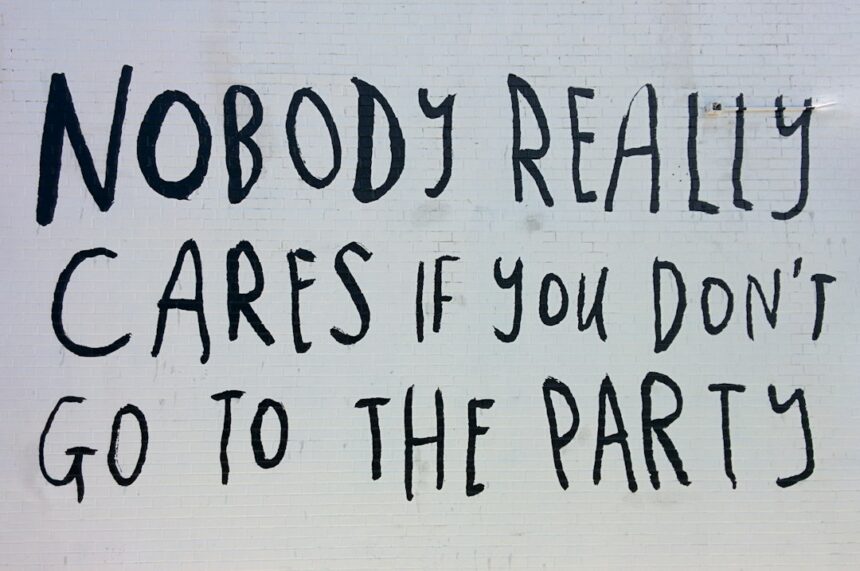
You’ve seen it, perhaps even felt its cold tendrils wrap around your own life. It’s that gnawing discomfort, the silent judgment that seems to emanate from the very air when the topic of friendship, or more specifically, the absence of it, arises. You are friendless. The phrase itself carries a weight, a societal condemnation that whispers of inadequacy, of being somehow deficient. This isn’t merely about a lack of social connections; it’s about the deeply ingrained stigma that attaches itself to being alone, a shame that can be as debilitating as any overt rejection.
Understanding this stigma is crucial, not just for those who experience it directly, but for society as a whole. We live in a culture that lionizes the gregarious, the extroverted, the individuals with sprawling social circles. Friendship is often presented as a badge of honor, a testament to one’s likability, attractiveness, and social prowess. Conversely, friendlessness is frequently interpreted as a personal failing, a sign that something is inherently wrong with you. This article aims to peel back the layers of this pervasive shame, exploring its roots, its manifestations, and the insidious ways it impacts your well-being. You are not alone in this feeling, even if you are alone in your friendships. This is a shared human experience, shrouded in silence and misunderstanding.
The Unspoken Rules of Social Currency
Friendship, in its idealized form, is a beautiful thing. It’s a sanctuary, a source of support, a mirror reflecting back your best self. Yet, our society has transformed it into a form of social currency, a measure of your worth in the grand marketplace of human interaction. You are assessed not just on your achievements or your character, but on the sheer volume and perceived quality of your friendships. This creates an environment where the absence of these supposed accolades can breed profound insecurity and a sense of being perpetually on the outside looking in.
The Myth of the Always-Connected Individual
From the curated feeds of social media to the anecdotal evidence of seemingly effortless social lives, you are bombarded with images of people who are perpetually connected. There are always birthday parties to attend, weekend getaways to plan, and group chats buzzing with activity. This constant display creates a distorted reality, fostering the illusion that everyone else is navigating a seamless social landscape. It’s a narrative that conveniently omits the struggles, the awkward silences, the times when even the most socially adept individuals find themselves on the periphery. You might feel like an outlier, a glitch in the matrix, because your reality doesn’t match this idealized, often manufactured, portrayal. This myth makes your own solitary moments feel like failures rather than the natural ebbs and flows of human connection.
The Societal Valuation of ‘Popularity’
We’ve been conditioned to equate popularity with success. In school, it was the kids with the biggest cliques who seemed to have it all. As adults, this translates into a subtle, yet powerful, emphasis on networking, social events, and being ‘in the know.’ This societal valuation of popularity places an immense burden on individuals. If you’re not actively participating in this social performance, if your calendar isn’t filled with engagements, you can feel like you’re falling behind. This can lead to a deep-seated anxiety that your worth is directly proportional to your social visibility, a notion that is both unfair and untrue. You start to believe that your inherent value is diminished if you don’t have a chorus of friends to validate your existence.
The Quiet Condemnation of Solitude
While solitude can be a deliberate and enriching choice for some, for those experiencing friendlessness, it often feels like a sentence. There’s an unspoken condemnation of being alone, a societal assumption that if you’re not actively seeking out company, there must be something wrong. This is particularly acute in cultures that prioritize collectivism and community. You might face questions, subtle or overt, about why you don’t have more friends. These inquiries, even if well-intentioned, can feel like an accusation, amplifying the shame you already carry. The world seems to be telling you that your solitary state is a red flag, a signal of your own perceived unworthiness.
Feeling ashamed of having no friends is a common experience that many individuals face at different points in their lives. It can stem from societal pressures, personal insecurities, or past experiences that shape our perceptions of friendship. For a deeper understanding of this emotional struggle and strategies to cope with loneliness, you might find the article on Unplugged Psych insightful. It explores the psychological aspects of friendship and offers guidance on how to build meaningful connections. You can read more about it here: Unplugged Psych.
Unpacking the Roots of the Stigma

The shame associated with friendlessness isn’t an inherent human emotion; it’s a learned response, shaped by cultural norms, historical context, and psychological biases. To truly dismantle this shame, you must understand its origins. This involves looking beyond the immediate discomfort and examining the deeper societal narratives that have contributed to the marginalization of the friendless.
Evolutionary Echoes: The Tribe and Survival
From an evolutionary perspective, belonging to a group was paramount for survival. Early humans who were ostracized from their tribes faced significant threats. This deep-seated need for belonging has, in many ways, carried through to modern society. While physical survival is no longer the primary concern, the psychological need for connection remains. The stigma of friendlessness can be seen as an echo of this ancient imperative. Those who are perceived as unable to form bonds might be unconsciously flagged as a potential liability, someone who cannot contribute to the collective. This evolutionary imprint, however, can be harmful when it translates into a judgment of individual worth in a context where group affiliation is no longer a matter of life and death.
The Rise of Individualism and the Paradox of Connection
As societies have become more individualistic, there’s been a paradoxical increase in the emphasis placed on personal relationships, particularly friendships. In an era where individual identity is paramount, friends often become chosen family, pillars of support that shore up our independent lives. However, this very emphasis on chosen connections can also amplify the shame of not having them. If friendship is the ultimate expression of personal choice and self-curation, then lacking friends can be interpreted as a failure in self-curation, a sign that you haven’t ‘chosen’ wisely or that others haven’t ‘chosen’ you. This paradox leaves you in a difficult position, where independence is celebrated, but the lack of a chosen support system is simultaneously scrutinized.
Cultural Narratives: From Romance to Redemption
Cultural narratives, from literature and film to folklore and popular media, have consistently reinforced the idea that friendship is a vital, almost sacred, element of a fulfilling life. Think of the enduring appeal of stories about loyal companions, the power of group solidarity, and the redemptive arc that often involves finding true friends. These narratives, while often inspiring, can also create a standard that is difficult for many to meet. They implicitly suggest that a life devoid of deep friendships is somehow incomplete, less valuable. You are subtly taught that your story is missing a crucial chapter if it doesn’t feature a cast of supportive friends.
The Internal Landscape of Shame

The external stigma of friendlessness often seeps inward, shaping your self-perception and fueling an internal dialogue of self-criticism. This internalized shame can be far more damaging than any external judgment, leading to a pervasive sense of inadequacy and a reluctance to seek out the very connections you crave.
The Voice of the Inner Critic: “What’s Wrong With Me?”
When you find yourself consistently alone, it’s easy for the voice of the inner critic to become deafening. Questions like, “What’s wrong with me?” “Why doesn’t anyone want to be my friend?” and “Am I fundamentally unlikeable?” can loop endlessly in your mind. This internal dialogue is fueled by the external stigma, but it takes on a life of its own, creating a cycle of negative self-talk that erodes your self-esteem. You begin to believe the harsh judgments of your inner critic, internalizing the societal message that your friendlessness is a reflection of your inherent flaws. This can lead to a desperate desire to please, to change yourself to fit an imagined ideal, or, conversely, to withdraw further, convinced that any attempt at connection will only lead to rejection.
Fear of Rejection: A Self-Fulfilling Prophecy
The shame associated with friendlessness often breeds a profound fear of rejection. You anticipate judgment, awkwardness, and ultimately, being turned away. This fear can be so potent that it actively prevents you from taking steps to build friendships. You might avoid social situations, hesitate to initiate conversations, or interpret neutral interactions as evidence of dislike. This avoidance, while seemingly protective in the short term, becomes a self-fulfilling prophecy. By not putting yourself out there, you reinforce your friendlessness, which in turn amplifies your fear and shame. The cycle becomes incredibly difficult to break, as the very condition you wish to escape is perpetuated by your attempts to avoid it.
The Erosion of Self-Esteem: A Constant Comparison
When you perceive yourself as friendless, you are often engaging in a constant, often unconscious, comparison with others. You see their social interactions, their shared laughter, their inside jokes, and you feel the stark contrast with your own reality. This comparison inevitably leads to a significant erosion of your self-esteem. You begin to feel less worthy, less interesting, and less deserving of connection. The shame isn’t just about not having friends; it’s about feeling like you are deficient in a fundamental aspect of human experience, a deficiency that makes you less valuable than others. This constant internal grading system can be incredibly damaging, leaving you feeling perpetually inadequate.
Navigating the Social Maze: Strategies for Change
While the stigma of friendlessness is deeply ingrained, it is not insurmountable. You have the power to challenge these societal narratives and, more importantly, to reshape your own internal landscape. This requires a conscious effort to reframe your understanding of friendship and to adopt strategies that foster genuine connection, even in the face of past hurt and present anxieties.
Reframing Friendship: Beyond the Numbers Game
The first step in dismantling the shame is to reframe your understanding of friendship. It’s not about collecting a certain number of friends or achieving a specific level of popularity. True friendship is about quality, not quantity. It’s about finding individuals with whom you can be your authentic self, who offer genuine support, and with whom you can share meaningful experiences. You need to let go of the societal pressure to have a large social circle and focus instead on cultivating deeper, more authentic connections. This shift in perspective can be liberating, allowing you to appreciate the value of even one or two close friends over a multitude of superficial acquaintances. It’s about recognizing that a few truly supportive relationships can be more fulfilling than a hundred fleeting ones.
Cultivating Self-Compassion: A Foundation for Connection
Before you can truly connect with others, you must cultivate compassion for yourself. The shame you’ve experienced has likely left you with a harsh inner critic. Self-compassion involves treating yourself with the same kindness, understanding, and acceptance you would offer to a dear friend who is struggling. This means acknowledging your feelings of loneliness and shame without judgment, recognizing that these are human experiences, and offering yourself comfort and reassurance. When you are kinder to yourself, you become more open to allowing others to be kind to you. This internal shift is foundational to building healthy external relationships. It allows you to approach potential friendships from a place of self-acceptance rather than desperate need.
Taking Small, Intentional Steps: The Power of Proximity and Shared Interests
Building friendships often starts with small, intentional steps. You don’t need to jump into a crowded social event or strike up a deep conversation with a stranger. Begin by identifying areas where you naturally encounter people who share your interests. This could be a book club, a hiking group, a volunteer organization, or even a class you’re taking. The key is to find environments where you have a shared starting point, a natural topic of conversation. Once you are in these spaces, focus on small, consistent interactions. Smile, offer a compliment, ask an open-ended question related to the shared activity. These seemingly minor gestures can pave the way for deeper connections. Remember, proximity and shared interests are powerful catalysts for friendship. You are looking for opportunities to create micro-connections that can blossom over time.
Feeling ashamed of having no friends is a common struggle that many people face, often leading to feelings of isolation and self-doubt. Understanding the underlying reasons for this shame can be enlightening, as it allows individuals to confront their emotions and work towards building meaningful connections. For those seeking guidance on this topic, a related article can be found at Unplugged Psych, which explores the psychological aspects of loneliness and offers strategies for overcoming these feelings. By addressing these issues, individuals can begin to foster a more positive self-image and cultivate friendships that enrich their lives.
Redefining Your Social Landscape: The Long Game of Connection
| Reason | Description | Impact on Self-esteem | Common Feelings |
|---|---|---|---|
| Social Norms | Society often values friendships as a sign of social success. | Can lead to feelings of inadequacy or failure. | Embarrassment, shame, loneliness |
| Fear of Judgment | Worry about how others perceive one’s social life. | Increases anxiety and self-consciousness. | Self-doubt, insecurity |
| Internalized Stigma | Belief that having no friends means something is wrong with oneself. | Lowered self-worth and negative self-image. | Shame, guilt |
| Comparison to Others | Comparing oneself to peers who have active social lives. | Feelings of envy and decreased happiness. | Jealousy, sadness |
| Lack of Social Skills | Difficulty in making or maintaining friendships. | Frustration and self-blame. | Embarrassment, isolation |
Building a fulfilling social life is not an overnight endeavor. It’s a process that requires patience, persistence, and a willingness to adapt. The shame of friendlessness can make this journey feel daunting, but by reframing your perspective and employing strategic approaches, you can gradually reshape your social landscape and cultivate the meaningful connections you deserve.
Embracing Vulnerability: The Gateway to Intimacy
True intimacy in friendships is built on vulnerability. This means being willing to share your thoughts, feelings, and experiences, even when it feels risky. It’s about allowing others to see your authentic self, flaws and all. While the fear of rejection might make you want to keep your guard up, it’s precisely by lowering that guard that you create opportunities for deeper connection. Start by sharing something small and personal with someone you feel a nascent sense of trust with. Observe their reaction. If they respond with empathy and understanding, it’s a sign that you are on the right path. Gradually increasing your vulnerability as trust grows will allow friendships to deepen and evolve into something truly meaningful.
Finding Your Tribe: The Importance of Shared Values
Beyond shared interests, finding individuals who resonate with your core values is crucial for lasting friendships. When you connect with people who share your worldview, your ethical compass, and your aspirations, the foundation for a strong bond is laid. These connections are often more resilient in the face of challenges and offer a deeper sense of belonging. Seek out communities or groups that align with your personal values, whether it’s through activism, spiritual practices, or shared life philosophies. When you find your tribe, you discover a sense of understanding and acceptance that can profoundly alleviate the shame of friendlessness, as you realize you are not alone in your way of seeing the world.
The Ongoing Journey: Resilience and Reconnection
The journey of building friendships is an ongoing one, and there will inevitably be moments of setback or disappointment. People may move away, relationships may change, and you may still experience periods of loneliness. The key to navigating this is to cultivate resilience. Understand that rejection is not a reflection of your ultimate worth, and that the absence of a particular friendship doesn’t negate the possibility of future connections. Practice self-compassion during these times, and remind yourself of the progress you have already made. Continue to put yourself out there, to nurture the relationships you have, and to remain open to new possibilities. The ability to reconnect with yourself and with the potential for friendship, even after facing adversity, is a testament to your strength and your inherent worth. You are not defined by your current social circle, but by your capacity for growth, for connection, and for resilience. The shame of friendlessness is a shadow that can be dispelled by the light of self-acceptance and intentional connection.

Why “Any Plans This Weekend?” Feels So Hard to Answer
FAQs
1. Why do some people feel ashamed of having no friends?
Some individuals may feel ashamed of having no friends due to societal pressures and stigmas surrounding social connections and relationships. They may fear judgment or rejection from others.
2. Is it common to feel ashamed of having no friends?
Feeling ashamed of having no friends is a common experience for many people, as social connections are often seen as a measure of one’s worth or likability. However, it is important to remember that everyone’s social needs and preferences are different.
3. How can feeling ashamed of having no friends impact a person’s mental health?
Feeling ashamed of having no friends can contribute to feelings of loneliness, low self-esteem, and depression. It may also lead to social withdrawal and isolation, further exacerbating these negative emotions.
4. What are some ways to cope with feeling ashamed of having no friends?
Some ways to cope with feeling ashamed of having no friends include seeking support from a therapist or counselor, engaging in activities that bring joy and fulfillment, and building connections through shared interests or hobbies.
5. Is it okay to have no friends?
It is okay to have no friends, as social connections do not define a person’s worth or value. It is important to prioritize self-acceptance, self-care, and building relationships that are meaningful and fulfilling, rather than focusing on societal expectations.