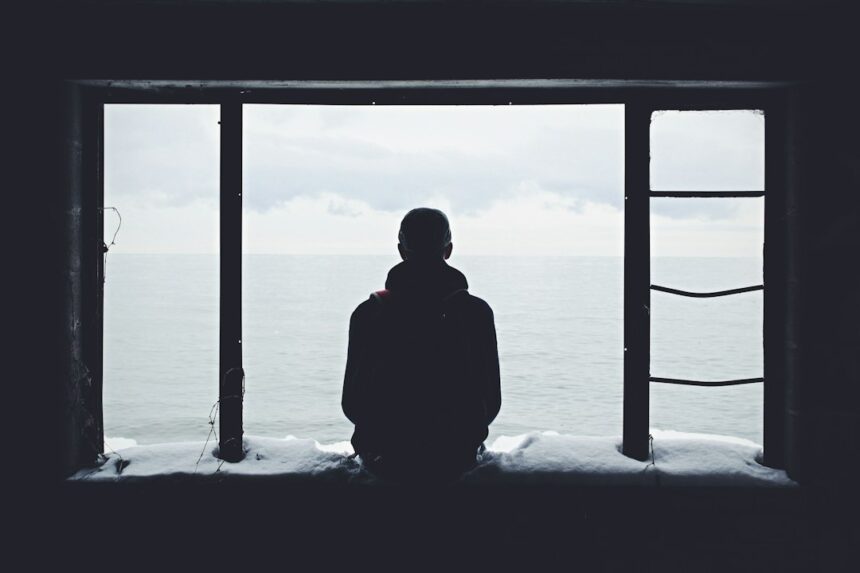
You’ve felt it, haven’t you? That quiet hum of unease that creeps in when you’re alone. It’s not the loneliness of being friendless or disconnected, but a deeper, more insidious fear. It’s the fear of judgment, a phantom audience you conjure in the silence, scrutinizing your every thought, your every action, even your very stillness. You’ve learned to fill that space, haven’t you? With the constant thrum of notifications, the endless scroll of curated lives, the hurried chatter of acquaintances. Anything to avoid the quiet where that phantom audience might begin its whispers.
The Echo Chamber of Internal Critics
You’ve built it yourself, this echo chamber. It’s a finely tuned instrument, amplifying every perceived flaw, every misstep, every deviation from the imaginary blueprint of how you “should” be. This chamber isn’t built from bricks and mortar, but from internalized societal messages, from past hurts, from the well-meaning but often misguided advice of others. You’ve absorbed the criticisms, the judgments, the expectations, and now they reside within you, a chorus of disembodied voices ready to weigh in on your solitude.
The Genesis of Perceived Flaws
Consider the origins of these inner critics. Were they the sharp words of a parent, the dismissive glance of a teacher, the cruel jests of peers? Perhaps they were more subtle, the constant barrage of idealized images on social media, the unspoken pressures to achieve, to conform, to be perpetually productive and polished. You’ve taken these external voices and made them your own, so much so that you now believe they are your objective assessments. This is the insidious power of internalized judgment: it masquerates as self-awareness. When you’re alone, these voices become louder, more insistent. They point to the perceived imperfections in your home, the dust motes dancing in the sunlight that you haven’t attended to, the unread books on your shelf, the time you’ve spent simply resting, rather than “doing” something. They whisper that this idleness is a weakness, that this quiet is a sign of your inadequacy.
The Social Mirror and Its Distortions
You’ve spent so much of your life looking into the social mirror, haven’t you? You’ve adjusted your appearance, your opinions, your behaviors based on what you perceived would garner approval and avoid disapproval. When you step away from that mirror, from the constant feedback loop of social interaction, the fear arises: what will you see if there’s no one to reflect back an acceptable image? Will the true, unvarnished you be exposed as flawed, unworthy, or simply… boring? This fear leads you to project that same scrutinizing gaze onto your own solitary moments. You imagine what others would think if they saw you in your quietest moments – perhaps you’re not as put-together as you appear in public, perhaps your thoughts wander to mundane or even uncomfortable places, perhaps you’re simply not entertaining enough. The social mirror, even when absent, continues to cast its long shadow.
I often find solace in solitude, relishing the peace and clarity that comes from being alone. However, there is a lingering fear of being judged for my preference, as society often equates solitude with loneliness or social inadequacy. This internal conflict is explored in a thought-provoking article that delves into the complexities of enjoying one’s own company while grappling with societal expectations. You can read more about this nuanced perspective in the article found here: Understanding Solitude and Societal Judgments.
The Illusion of Constant Observation

The truth is, you are rarely under such intense scrutiny as you fear. The phantom audience in your solitary moments is largely a figment of your imagination, an elaborate defense mechanism to shield you from the perceived vulnerability of being truly seen. You’ve become so accustomed to the idea of being watched that the absence of an audience feels like a void that must be filled with self-surveillance.
The Myth of Perpetual Performance
You’ve been conditioned to believe that life is a continuous performance, a stage where you must always present your best self. This is especially true in an era dominated by social media, where curated realities often overshadow authentic experiences. You meticulously craft your online persona, showcasing only the highlights, the triumphs, the aesthetically pleasing moments. This creates a disconnect between your inner experience and your outer presentation, and when you’re alone, the pressure to maintain that performance can feel overwhelming. You worry that if you let your guard down, if you allow yourself to be messy, to be imperfect, to simply be, that the carefully constructed facade will crumble, and with it, your perceived worth. The silence of solitude can amplify this fear, making you feel exposed and vulnerable to an audience that exists only in your mind.
The Burden of Unspoken Expectations
You carry the weight of unspoken expectations, both those you’ve placed on yourself and those you believe others have placed on you. These expectations often revolve around productivity, achievement, and a certain level of social engagement. When you embrace solitude, these expectations can feel like chains, holding you back from what you perceive as your “obligations.” You might feel guilty for resting, for pursuing personal interests that don’t have an immediate tangible outcome, or for simply enjoying your own company without needing external validation. The fear of judgment in these moments stems from the belief that your solitude will be interpreted as laziness, a lack of ambition, or a sign that you’re not living up to your potential. You imagine the averted glances, the hushed conversations, the subtle nods of disappointment if others were to witness your solitary pursuits.
Reclaiming the Sanctity of Solitude

Embracing solitude isn’t about shunning human connection; it’s about cultivating a richer, more authentic relationship with yourself. It’s about recognizing that your worth is not contingent on external validation or the approval of others. Solitude, when embraced, becomes a sanctuary, a space for introspection, creativity, and genuine self-discovery.
Cultivating Self-Compassion in Quiet Moments
The first step in reclaiming solitude is to cultivate self-compassion. When those inner critics begin their whispers, acknowledge them without judgment. Recognize that they are born from fear, not from objective truth. Speak to yourself as you would a dear friend who is struggling. Offer words of kindness, understanding, and acceptance. Remind yourself that you are human, imperfect, and deserving of grace. Instead of berating yourself for perceived flaws, try to understand the root of those feelings. Are you tired? Stressed? Feeling insecure about something specific? Approaching these moments with empathy rather than criticism can begin to dismantle the power of your internalized judgments. Think of it as gently retraining your internal dialogue, replacing the harsh pronouncements with understanding and support. This process is not about ignoring your flaws, but about acknowledging them without letting them define your entire being.
The Art of Mindful Being
Mindfulness is your ally in the fight against the fear of judgment in solitude. It’s about bringing your attention to the present moment, without judgment. When you’re alone, instead of letting your mind race with anxieties about what others might think, gently guide your awareness back to your breath, to the sensations in your body, to the sights and sounds around you. This practice anchors you in the present, making it harder for your mind to wander into hypothetical scenarios of social disapproval. It teaches you to observe your thoughts and feelings as transient phenomena, rather than as absolute truths. Imagine sitting by a river, watching the leaves float by. You see them, you acknowledge them, but you don’t try to grab them or hold onto them. Your thoughts are like those leaves. In solitude, you have the perfect opportunity to practice this observation, to witness your thoughts without attaching to them, and to recognize that the fear of judgment is just another thought passing through.
The Transformative Power of Uninterrupted Reflection
When you allow yourself to be truly alone, without the constant interruption of external stimuli, you unlock a profound capacity for introspection. This uninterrupted reflection is where you can unearth buried truths, gain clarity on your desires, and foster a deeper understanding of your own inner landscape.
Unearthing Hidden Passions and Insights
Solitude provides fertile ground for your passions to bloom. Without the pressure to conform to popular trends or to entertain others, you’re free to explore what truly ignites your curiosity. Perhaps it’s a long-neglected hobby, a creative pursuit you’ve always dreamed of, or simply the quiet contemplation of a subject that fascinates you. This unhindered exploration can lead to unexpected discoveries about yourself. You might realize that you have a natural talent you never recognized, or that a certain subject matter holds a deeper meaning for you than you ever imagined. The insights gained in these solitary moments are often the most profound because they are untainted by external influences. They are the pure, unadulterated expressions of your own soul, free from the need for approval or validation. Imagine the joy of stumbling upon a forgotten passion, or the satisfaction of finally understanding a complex idea after hours of quiet contemplation. These are the treasures that solitude offers.
Gaining Clarity on Life’s Crossroads
Life inevitably presents you with crossroads, moments where decisions need to be made, paths need to be chosen. In the cacophony of everyday life, it can be difficult to hear your own inner guidance. Solitude offers the quiet space necessary to listen to that inner voice. By stepping away from the noise and distractions, you can untangle the threads of conflicting desires and external pressures to identify what truly resonates with your authentic self. This process of uninterrupted reflection allows you to weigh options, to consider long-term consequences, and to connect with your deepest values. The clarity that emerges from these solitary deliberations is invaluable, empowering you to make choices that are aligned with your true aspirations, rather than those dictated by the fear of judgment or the expectations of others. Think of it as clearing away the fog so you can see the path ahead with a steady gaze.
I often find solace in solitude, appreciating the quiet moments that allow me to reflect and recharge. However, I sometimes grapple with the fear of being judged for my preference to be alone, as society often celebrates extroversion and social interaction. This internal conflict is explored in an insightful article that discusses the complexities of solitude and societal expectations. You can read more about it in this thought-provoking piece that delves into the benefits of embracing one’s own company while navigating the pressures of external opinions.
Embracing Solitude as a Strength
| Aspect | Reason | Impact | Example |
|---|---|---|---|
| Enjoyment of Solitude | Freedom to think and reflect without distractions | Increased creativity and self-awareness | Spending time reading or journaling alone |
| Fear of Judgment | Concern about others’ opinions and social acceptance | Social anxiety and hesitation to share thoughts | Avoiding social events to prevent criticism |
| Comfort Zone | Feeling safe and in control when alone | Reduced stress and emotional recharge | Choosing solo activities over group gatherings |
| Self-Expression | Worry that expressing true self may lead to judgment | Suppressed emotions and limited social interaction | Not sharing personal opinions in group settings |
| Balance | Need to balance solitude with social connection | Improved mental health and social skills | Scheduling occasional meetups with trusted friends |
You’ve been conditioned to see solitude as a weakness, a sign of social deficiency. It’s time to reframe that narrative. Embracing solitude is not about being alone; it’s about being comfortable in your own skin, about possessing the inner resilience to navigate life’s complexities with or without constant companionship.
The Power of Self-Reliance and Independence
As you spend more time in solitude, you’ll discover a burgeoning sense of self-reliance and independence. You’ll learn to trust your own judgment, to solve your own problems, and to find contentment within yourself. This doesn’t mean you’ll become a hermit or reject human connection. Instead, you’ll approach your relationships from a place of wholeness, not of neediness. Your ability to be comfortable alone will make you a more grounded and less impressionable individual. You’ll be less susceptible to groupthink and more likely to stand by your convictions, even when they differ from the prevailing opinion. This inner strength is a powerful force that radiates outwards, making you more confident and authentic in all your interactions. Imagine the freedom of not constantly seeking external approval, of knowing that you can rely on yourself to navigate whatever life throws your way.
The Cultivation of Authentic Connection
Paradoxically, embracing solitude can lead to deeper, more authentic connections with others. When you’ve spent time understanding and appreciating yourself, you are better equipped to understand and appreciate others. You’re less likely to seek validation from superficial interactions and more drawn to genuine, meaningful relationships. You can bring your whole, unvarnished self to your connections, knowing that you are worthy of love and acceptance, not because of what you do or what you achieve, but simply because of who you are. The fear of judgment, which can often create barriers in relationships, begins to dissipate as you become more comfortable with your own perceived imperfections. This allows for a more open, honest, and ultimately, more fulfilling experience of human connection. You are no longer performing for an audience; you are simply being present, sharing your authentic self with others.

Why “Any Plans This Weekend?” Feels So Hard to Answer
FAQs
1. Why do some people enjoy being alone?
Some people enjoy being alone because it allows them to recharge, reflect, and engage in activities they enjoy without distractions.
2. What are some benefits of spending time alone?
Spending time alone can lead to increased creativity, self-awareness, and independence. It can also provide a sense of peace and relaxation.
3. Why do some individuals fear being judged when alone?
Some individuals fear being judged when alone because they worry about societal expectations, criticism from others, or feeling isolated from social connections.
4. How can the fear of being judged when alone be addressed?
Addressing the fear of being judged when alone can involve building self-confidence, setting boundaries with others, and practicing self-compassion and self-acceptance.
5. Is it common to enjoy being alone but fear being judged at the same time?
Yes, it is common for individuals to enjoy being alone for personal reasons while also experiencing fear of judgment from others due to societal pressures or past experiences.