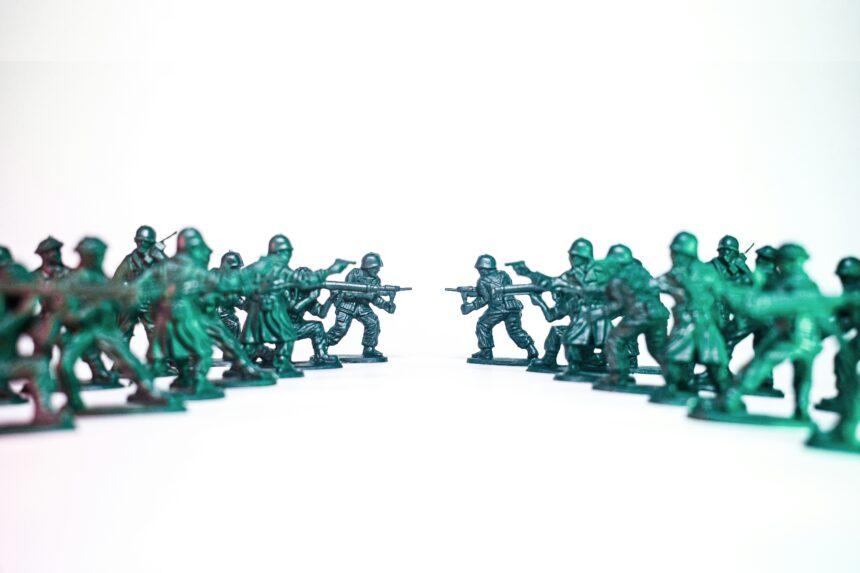
Understanding Realistic Group Conflict Theory
Realistic Group Conflict Theory, a foundational concept in social psychology, offers a compelling explanation for the origins and dynamics of intergroup hostility. It posits that conflict between groups arises not from inherent prejudices or psychological dispositions, but from actual competition for scarce resources. This theory, championed by Muzafer Sherif and his colleagues through their influential Robbers Cave Experiment, provides a robust framework for understanding why groups engage in conflict, how that conflict escalates, and what conditions are necessary for its resolution. Its implications stretch across various domains, from international relations and political science to organizational behavior and even interpersonal conflicts within communities.
This article delves into the core tenets of Realistic Group Conflict Theory, exploring its historical context, key postulates, and the empirical evidence that supports it. It will also examine the various factors that influence the manifestation and intensity of intergroup conflict, and discuss practical strategies for mitigating and resolving such conflicts, drawing on the theoretical underpinnings of Sherif’s groundbreaking work.
The development of Realistic Group Conflict Theory (RGCT) was significantly shaped by the social and political climate of the mid-20th century, a period marked by widespread social unrest and a burgeoning interest in understanding the roots of prejudice and intergroup animosity. Prior to Sherif’s work, dominant theories of prejudice often focused on individual psychological factors, such as authoritarian personality traits or innate biases. While these perspectives offered valuable insights, they struggled to adequately explain the pervasive and often intense nature of intergroup conflict observed in societies.
Early Explanations of Prejudice and Intergroup Hostility
Early psychological explanations for prejudice often pointed to individual-level pathologies. The concept of the “authoritarian personality,” developed by Adorno and colleagues, suggested that individuals with rigid, conventional attitudes and a tendency to defer to authority were more likely to be prejudiced. While influential, this approach was criticized for its deterministic nature and its limited ability to account for widespread societal prejudice. Other theories focused on scapegoating, the tendency to blame an outgroup for one’s own problems, or on the role of social learning and the transmission of prejudiced attitudes from one generation to the next.
Muzafer Sherif and the Robbers Cave Experiment
Muzafer Sherif, a Turkish-American social psychologist, sought to move beyond purely psychological explanations and investigate the role of situational factors and intergroup dynamics. His seminal research, conducted at the Robbers Cave State Park in Oklahoma between 1954 and 1956, provided compelling empirical support for RGCT. The experiment involved two groups of 11-12-year-old boys who were unaware of each other’s existence and were brought together at a summer camp. The experiment was meticulously designed to systematically introduce and manipulate intergroup relations.
The first phase involved allowing the boys to form distinct groups, the “Rattlers” and the “Eagles,” and develop their own internal norms and identities. In the second phase, the two groups were made aware of each other’s presence and introduced into situations of direct competition for limited resources, such as prizes and privileges. This phase saw the rapid emergence of hostility, prejudice, and discriminatory behavior between the groups. The Rattlers and Eagles engaged in name-calling, property damage, physical altercations, and the formation of negative stereotypes about the opposing group. The third phase focused on reducing this hostility through the introduction of superordinate goals – tasks that required the cooperation of both groups to achieve.
Core Tenets of Realistic Group Conflict Theory
RGCT is built upon several fundamental postulates that distinguish it from other theories of intergroup conflict. These tenets emphasize the objective, observable nature of the conflict’s origins rather than abstract psychological constructs.
Scarcity of Resources as the Primary Driver
The most central tenet of RGCT is that conflict arises from competition over scarce resources. These resources can be tangible, such as land, money, jobs, or desirable goods, or intangible, such as power, status, or prestige. When two or more groups perceive that their ability to obtain these desired resources is threatened by another group, hostility and conflict are likely to ensue. The scarcity does not need to be absolute; a perceived scarcity is often sufficient to trigger intergroup tension. This perception is shaped by the groups’ awareness of each other’s existence and their perceived stake in the contested resources.
Ingroup Favoritism and Outgroup Derogation
RGCT predicts that competition for scarce resources will lead to the development of ingroup favoritism and outgroup derogation. To strengthen their own group’s position and morale in the face of competition, group members tend to view their own group more positively and the outgroup more negatively. This can involve exaggerating the positive qualities of ingroup members and the negative qualities of outgroup members, leading to the formation of stereotypes and prejudiced attitudes. This psychological process serves to justify the group’s competitive stance and to foster solidarity among ingroup members.
The Emergence of Intergroup Hostility
The direct competition for scarce resources creates an environment conducive to the emergence of intergroup hostility. This hostility can manifest in various forms, ranging from verbal aggression and name-calling to physical confrontations and systemic discrimination. The intensity of the hostility is often directly proportional to the perceived scarcity of the resources and the importance of those resources to the groups involved. The Robbers Cave Experiment vividly demonstrated this phenomenon, with the introduction of competition quickly transforming friendly interactions into aggressive ones.
Realistic group conflict theory posits that intergroup conflict arises from competition over limited resources, leading to prejudice and discrimination between groups. A related article that delves deeper into this concept is available at Unplugged Psychology, which explores various case studies and applications of the theory in contemporary society. For more insights, you can read the article here: Unplugged Psychology.
The Dynamics of Intergroup Conflict
Realistic Group Conflict Theory outlines a dynamic process through which intergroup conflict develops, escalates, and can potentially be resolved. Understanding these stages is crucial for developing effective intervention strategies.
Stages of Conflict Development
The development of conflict, according to RGCT, is not a sudden event but rather a gradual process that can be traced through several discernible stages.
Initial Perceptions and Awareness
The first stage involves the initial perception by groups that their interests are at odds with those of another group. This awareness often arises from shared proximity, shared activities, or information about the existence of another group with whom competition is possible. The perception of shared interests and goals within the ingroup solidifies, while the perception of conflicting interests with the outgroup begins to form.
Escalation of Competition
Once the perception of conflicting interests is established, the competition for scarce resources begins to escalate. This escalation can be driven by a desire to secure more resources for the ingroup, to prevent the outgroup from acquiring them, or to retaliate for perceived aggressions. The initial competition might be relatively benign, but it can quickly become more intense as groups mobilize their resources and members become more invested in the outcome.
Formation of Negative Stereotypes and Prejudice
As competition intensifies, groups begin to develop negative stereotypes and prejudiced attitudes towards the outgroup. These cognitive biases serve to justify the competitive actions and to dehumanize the outgroup, making it easier to engage in hostile behavior. The ingroup is increasingly seen as virtuous and deserving, while the outgroup is viewed as a threat and an obstacle. This process reinforces ingroup solidarity and commitment to the intergroup struggle.
Manifestation of Hostility and Discrimination
The culmination of these stages is the overt manifestation of hostility and discrimination. This can range from verbal insults and social exclusion to physical violence and organized conflict. The boundaries between groups become more rigid, and interactions between members of different groups are characterized by suspicion, distrust, and animosity.
The Role of Superordinate Goals in Conflict Resolution
A crucial insight from RGCT is that the resolution of intergroup conflict is not simply achieved by reducing competition or fostering positive contact. Instead, Sherif and his colleagues demonstrated the efficacy of superordinate goals in mitigating hostility.
Defining Superordinate Goals
Superordinate goals are objectives that are so compelling and important to both groups that they must cooperate to achieve them. These goals transcend the individual interests of each group and require a unified effort. Examples from the Robbers Cave Experiment included fixing a blocked water supply and pooling money to rent a movie, both of which were essential for the well-being and enjoyment of all the campers.
The Mechanism of Cooperation
The introduction of superordinate goals works by shifting the focus from intergroup competition to intergroup cooperation. When groups are forced to work together towards a common, desirable outcome, they begin to see members of the other group not as rivals, but as necessary partners. This shared experience of working towards a mutually beneficial goal can break down existing negative stereotypes and foster a sense of interdependence.
Fostering Interdependence and Empathy
By working collaboratively, group members are exposed to the skills, perspectives, and humanity of individuals from the outgroup. This exposure can foster interdependence, as each group realizes it cannot achieve the goal without the other. It also cultivates empathy, as individuals begin to understand the motivations and challenges faced by members of the opposing group. This shared experience of overcoming adversity together can lay the foundation for more positive and enduring intergroup relations.
Empirical Evidence Supporting Realistic Group Conflict Theory

The theoretical framework of RGCT is strongly supported by a wealth of empirical research, most notably the groundbreaking Robbers Cave Experiment. However, subsequent studies in various contexts have further validated its core principles.
The Robbers Cave Experiment Revisited
The Robbers Cave Experiment remains the cornerstone of empirical evidence for RGCT. The experiment’s design allowed Sherif and his team to systematically manipulate the conditions that lead to conflict and its resolution.
Phase 1: Group Formation and Norm Development
In the initial phase, the boys were allowed to form their own groups organically. This phase demonstrated the natural tendency for individuals to form in-groups, develop distinct identities, and establish internal norms and hierarchies. This period of relative harmony served as a baseline against which the impact of competition could be measured.
Phase 2: Intergroup Competition and Hostility Emergence
The introduction of competitive activities, such as tug-of-war, baseball games, and scavenger hunts for prizes, quickly ignited intergroup hostility. The boys developed derogatory names for the opposing group, engaged in fights, raided each other’s cabins, and expressed strong negative attitudes. This phase provided direct evidence for the theory’s central claim that competition for scarce resources (in this case, prizes and status) leads to conflict.
Phase 3: Conflict Resolution Through Superordinate Goals
The introduction of superordinate goals, such as the task of raising money for a movie, proved highly effective in reducing intergroup hostility. The boys from both groups had to work together to achieve these goals, leading to a significant decrease in aggression and the development of more positive intergroup attitudes. This phase demonstrated the power of shared goals in overcoming entrenched animosity.
Beyond Robbers Cave: Further Empirical Support
While the Robbers Cave Experiment is iconic, numerous other studies have corroborated the principles of RGCT in diverse settings.
Intergroup Competition in Laboratory Settings
Laboratory experiments have replicated the core findings of RGCT under controlled conditions. Studies involving minimal groups, where participants are arbitrarily assigned to groups, have shown that even in the absence of prior history or significant differences, the introduction of a zero-sum competition for points or rewards can lead to ingroup favoritism and outgroup discrimination. These studies highlight the powerful situational influences on intergroup behavior, independent of pre-existing biases.
Real-World Applications and Case Studies
RGCT has also been applied to understand and analyze real-world conflicts, ranging from ethnic disputes and international wars to workplace disputes and community tensions. For example, the theory can help explain the historical conflicts between different ethnic groups over land or economic opportunities. Similarly, it can illuminate tensions within organizations when departments compete for limited budgets or promotions. Case studies of historical events often reveal underlying patterns of competition for resources that align with RGCT’s predictions.
The Impact of Perceived Scarcity
Research has emphasized the importance of perceived scarcity. Even when resources are not objectively scarce, if groups believe they are in competition and that their access to resources is threatened, conflict is likely to arise. This highlights the subjective nature of intergroup relations and the role of cognitive processes in shaping intergroup outcomes. Propaganda, media narratives, and political rhetoric can all contribute to the perception of scarcity and the instigation of conflict.
Factors Influencing the Manifestation of Conflict

While competition for scarce resources is the primary driver, several other factors can influence how intergroup conflict manifests and its overall intensity. Understanding these moderating variables is crucial for a comprehensive grasp of RGCT.
Group Size and Cohesion
The size and cohesion of the competing groups can significantly impact the dynamics of conflict. Larger groups may have more resources and potential for mobilization, but they can also be more difficult to coordinate. Highly cohesive groups, characterized by strong ingroup loyalty and shared norms, may be more unified in their pursuit of resources and more resistant to external influence, potentially leading to more intense conflict.
The Role of Leadership
The presence and nature of leadership within each group can play a critical role. Effective leaders can mobilize group members, strategize for resource acquisition, and intensify or de-escalate conflict. Leaders who promote a win-lose mentality and encourage hostility can exacerbate conflict, while leaders who are open to negotiation and cooperation may be instrumental in its resolution.
The Nature of the Scarce Resources
The type and perceived value of the scarce resource also matter. Competition for essential resources like food or water is likely to lead to more intense and potentially violent conflict than competition for less critical resources like status symbols. The perceived zero-sum nature of the competition – the belief that one group’s gain is another group’s loss – is a key factor in driving conflict.
Intergroup Contact and Communication
The nature and frequency of contact between groups can moderate conflict. While RGCT suggests that increased contact in a competitive environment will increase hostility, contact under conditions of cooperation or shared goals can have the opposite effect. The quality of communication between groups is also vital. Miscommunication, distrust, and a lack of open dialogue can fuel misunderstandings and escalate tensions.
The Influence of Social Identity
Social identity theory, which often complements RGCT, suggests that group membership and the resulting social identity can powerfully influence intergroup behavior. When individuals strongly identify with their ingroup, they are more likely to favor their ingroup and view the outgroup negatively, especially in situations of perceived competition. This social identity can amplify the effects of resource competition.
External Threats and Environmental Factors
External threats or changes in the broader environment can also influence intergroup conflict. For example, a perceived threat from a third party or a shared environmental crisis could either unite groups against a common enemy or exacerbate existing tensions if groups blame each other for the predicament. Economic downturns or political instability can often create a climate of scarcity and increase the likelihood of intergroup conflict.
Realistic group conflict theory provides a compelling framework for understanding intergroup relations and the dynamics of competition over scarce resources. For those interested in exploring this concept further, a related article discusses the implications of this theory in contemporary society and its relevance to various social issues. You can read more about it in this insightful piece on Unplugged Psych, which delves into how competition can lead to prejudice and conflict between groups.
Strategies for Mitigating and Resolving Intergroup Conflict
| Metric | Description | Example | Relevance to Realistic Group Conflict Theory |
|---|---|---|---|
| Intergroup Competition | Degree to which groups compete for limited resources | Two ethnic groups competing for jobs in a region | Central to the theory; competition leads to conflict and prejudice |
| Resource Scarcity | Availability of essential resources (e.g., jobs, land, money) | Economic downturn reducing available employment opportunities | Scarcity increases perceived threat and intergroup hostility |
| Ingroup Favoritism | Preference for members of one’s own group over outsiders | Hiring preference for members of the dominant ethnic group | Arises as a result of competition and perceived threats |
| Outgroup Hostility | Negative attitudes and behaviors directed at rival groups | Discrimination or violence against minority groups | Manifestation of conflict driven by competition for resources |
| Perceived Threat | Belief that another group endangers one’s own group’s interests | Fear that immigrants will take jobs from native workers | Motivates intergroup conflict and prejudice |
| Conflict Resolution | Strategies to reduce intergroup tension and competition | Cooperative projects requiring joint group efforts | Can reduce conflict by creating superordinate goals |
Based on the principles of Realistic Group Conflict Theory, several strategies can be employed to mitigate and resolve intergroup conflict. These strategies often involve modifying the conditions that give rise to conflict and promoting cooperative interactions.
Promoting Superordinate Goals
As demonstrated by the Robbers Cave Experiment, the most effective strategy for conflict resolution identified by RGCT is the establishment and pursuit of superordinate goals.
Identifying and Framing Shared Objectives
This involves identifying common interests and objectives that transcend group boundaries and are important to all parties involved. These goals need to be clearly articulated and framed in a way that emphasizes the necessity of cooperation for their achievement. This requires skilled facilitation and communication to ensure all groups understand the mutual benefits.
Creating Opportunities for Collaborative Action
Once superordinate goals are identified, it is crucial to create structured opportunities for groups to work together collaboratively. This could involve joint projects, shared problem-solving initiatives, or collaborative decision-making processes. The key is to design these activities so that success is contingent on the contributions of all groups.
Changing the Conditions of Competition
Another approach involves altering the nature of the competition or providing alternative avenues for resource acquisition.
Shifting from Zero-Sum to Positive-Sum Competition
Where possible, efforts should be made to reframe competition from a zero-sum game (where one group’s gain is another’s loss) to a positive-sum game (where all groups can benefit). This might involve expanding the available resources or finding innovative solutions that create mutual gains.
Establishing Fair and Equitable Resource Allocation Mechanisms
If competition for scarce resources is unavoidable, establishing transparent, fair, and equitable mechanisms for resource allocation can help to reduce resentment and perceived injustice. This might involve impartial arbitration, negotiation, or community-based decision-making processes.
Facilitating Intergroup Contact and Communication
While not sufficient on its own, strategic intergroup contact and improved communication can play a supportive role in conflict resolution.
Promoting Positive and Cooperative Contact
Contact between groups should be structured to facilitate positive and cooperative interactions, ideally in the context of working towards superordinate goals. This allows individuals to challenge negative stereotypes and develop more nuanced understandings of the outgroup.
Enhancing Communication and Understanding
Encouraging open and honest communication channels between groups is essential. This can involve mediation, facilitated dialogues, and the establishment of platforms for addressing grievances and misunderstandings. The goal is to foster a climate of mutual respect and understanding, even in the face of disagreement.
Critiques and Limitations of Realistic Group Conflict Theory
Despite its significant contributions, Realistic Group Conflict Theory is not without its critiques and limitations. Acknowledging these helps to provide a more nuanced understanding of intergroup dynamics.
The Role of Cognitive Factors and Ideology
Critics argue that RGCT may underestimate the role of cognitive factors, such as deeply ingrained prejudices, ideologies, and historical narratives, in driving conflict. While resource competition can be a catalyst, existing beliefs and perceptions can shape how groups interpret situations and respond to perceived threats.
Prejudice Beyond Competition
Some forms of prejudice and discrimination may exist independently of any direct competition for resources. For instance, historical animosities, deeply embedded cultural biases, or the propagation of discriminatory ideologies can fuel intergroup hostility even when tangible resources are not the immediate issue.
The Influence of Power Dynamics
RGCT primarily focuses on competition for scarce resources. However, conflicts can also arise from power imbalances and the struggle for dominance, where the objective is not necessarily to acquire resources but to exert control and influence over another group. Theories that emphasize power dynamics may offer a more comprehensive explanation in such cases.
Situational vs. Dispositional Factors
While RGCT emphasizes situational factors (resource competition), critics sometimes point to the importance of dispositional factors (individual psychological traits) in understanding why certain individuals or groups are more prone to engaging in conflict. However, RGCT proponents argue that even these dispositional tendencies are often activated and amplified by situational pressures.
The Limits of Superordinate Goals
While superordinate goals are effective, their application can be challenging. Identifying truly superordinate goals that are perceived as equally important and beneficial by all parties can be difficult. Furthermore, the effects of superordinate goals may be temporary if the underlying conditions of resource competition are not addressed.
The Complexity of Real-World Conflicts
Real-world conflicts are often multifaceted and influenced by a complex interplay of factors, including historical grievances, political motivations, economic inequalities, and social identities. RGCT, by focusing primarily on resource competition, may not fully capture the intricate web of causes and consequences present in many protracted conflicts.
Overlapping and Interacting Theories
It is important to recognize that RGCT often works in conjunction with other theories of intergroup relations, such as Social Identity Theory and Relative Deprivation Theory. Each theory offers a unique perspective, and a comprehensive understanding of intergroup conflict often requires integrating insights from multiple theoretical frameworks.
Conclusion
Realistic Group Conflict Theory provides a powerful and enduring framework for understanding the origins and dynamics of intergroup hostility. Its central tenet, that competition for scarce resources is a primary driver of conflict, has been supported by extensive empirical research, most notably the seminal Robbers Cave Experiment. The theory highlights how competition can foster ingroup favoritism, outgroup derogation, and the escalation of animosity.
However, RGCT is not without its limitations. Acknowledging the role of cognitive factors, ideologies, power dynamics, and the complexity of real-world conflicts allows for a more nuanced and comprehensive understanding of intergroup relations. Despite these critiques, the core principles of RGCT remain highly relevant. Strategies for conflict mitigation and resolution, such as the implementation of superordinate goals and the modification of competitive conditions, offer practical pathways towards fostering more peaceful and cooperative intergroup interactions. By understanding the roots of conflict as explained by Realistic Group Conflict Theory, societies can better equip themselves to address and ultimately overcome intergroup animosity, paving the way for a more harmonious future.

How 22 Boys Were Turned Into Enemies
FAQs
What is realistic group conflict theory?
Realistic group conflict theory is a social psychological theory that explains intergroup conflict as arising from competition over limited resources, such as power, money, or territory.
What are the key components of realistic group conflict theory?
The key components of realistic group conflict theory include intergroup competition, perceived threat, and negative stereotypes or prejudices towards out-group members.
How does realistic group conflict theory explain intergroup conflict?
Realistic group conflict theory posits that intergroup conflict arises when groups compete for scarce resources, leading to feelings of threat and hostility towards the out-group. This can result in discrimination, prejudice, and conflict between groups.
What are some real-world examples of realistic group conflict theory in action?
Examples of realistic group conflict theory in action include conflicts between different racial or ethnic groups, political parties, or religious groups competing for power, resources, or influence.
How can realistic group conflict theory be applied to reduce intergroup conflict?
To reduce intergroup conflict based on realistic group conflict theory, interventions can focus on promoting cooperation, increasing contact between groups, challenging negative stereotypes, and addressing underlying issues of inequality and resource distribution.