
The Robbers Cave Experiment stands as a landmark study in the field of social psychology, offering profound insights into the dynamics of group conflict, prejudice, and intergroup relations. Conducted in the early 1950s by Muzafer Sherif and his colleagues, this series of experiments, famously carried out at the Robbers Cave State Park in Oklahoma, provided a stark and impactful demonstration of how easily hostility can arise between groups and, more optimistically, how it can be mitigated. The experiment’s enduring legacy lies not only in its dramatic findings but also in its clear methodological approach, which allowed for the observation of group behavior in a controlled, yet realistic, setting. At its core, the Robbers Cave Experiment sought to understand the fundamental conditions that foster intergroup conflict and to explore potential pathways toward reducing such animosity.
The Robbers Cave Experiment was born out of a desire to move beyond purely theoretical understandings of prejudice and intergroup conflict. Prior to this research, much of the discourse centered on individual prejudices and the societal factors that might contribute to them. Sherif, however, was interested in the situational factors that could create and sustain conflict between groups. He theorized that conflict wasn’t necessarily an inherent feature of group interaction but rather a product of specific circumstances, particularly competition for scarce resources and the development of distinct group identities. The primary objectives of the experiment were to:
Understanding the Roots of Intergroup Conflict
One of the central aims was to identify the psychological and sociological mechanisms that lead to the formation of negative stereotypes and discriminatory behaviors between groups. Sherif hypothesized that it wasn’t pre-existing animosity but rather the competition and the resulting formation of in-group favoritism and out-group derogation that would drive conflict.
Exploring the Dynamics of Group Formation and Identity
The experiment also aimed to observe how groups, once formed, develop their own unique norms, values, and internal structures. This included understanding how leadership emerges, how cohesion is built within a group, and how a collective identity solidifies.
Investigating the Escalation of Conflict
A key objective was to document the stages through which intergroup conflict typically progresses, from initial friction to outright hostility and violence. This involved observing how perceptions of the other group change and how attitudes harden over time.
Testing Strategies for Conflict Resolution
Perhaps the most impactful objective was to test the effectiveness of different strategies for reducing intergroup conflict. Sherif was not content with merely demonstrating the existence of conflict; he sought practical solutions that could be applied in real-world scenarios.
One of the most famous psychology experiments related to group conflict is the Robbers Cave Experiment, conducted by Muzafer Sherif in the 1950s. This study demonstrated how intergroup conflict can arise from competition for limited resources and how it can be mitigated through cooperative goals. For a deeper understanding of group dynamics and conflict resolution, you can explore a related article on this topic at Unplugged Psychology.
The Experimental Design: A Naturalistic Approach
The Robbers Cave Experiment was remarkable for its innovative and largely naturalistic design. Unlike many laboratory experiments that rely on artificial scenarios, Sherif and his team aimed to create a situation that mirrored real-world group dynamics as closely as possible, while still maintaining scientific control. This involved recruiting participants who were unaware of the true nature of the study, thus minimizing the impact of demand characteristics. The experiment was meticulously structured into distinct phases, each designed to elicit specific types of group behavior.
Participant Selection and Baseline Assessment
The participants were 22 eleven-year-old boys from similar middle-class, Protestant backgrounds, who had no prior knowledge of each other. This homogeneity was crucial to ensure that differences in background or personality were not confounding factors. Before the experiment began, the boys were individually assessed to ensure they were psychologically well-adjusted and did not have pre-existing prejudices. They were then randomly assigned to one of two groups, each containing 11 boys.
Phase 1: Group Formation and Bonding (The In-group Phase)
The initial phase focused on fostering strong group identity and cohesion within each of the two groups, which were named the “Rattlers” and the “Eagles.” The boys were housed in separate cabins, miles apart, and engaged in a series of activities designed to promote teamwork and shared experiences. These included camping, hiking, swimming, and communal meals. During this phase, leaders emerged within each group, norms and rules were established, and a strong sense of “us” versus “them” began to develop implicitly, though without any direct interaction with the other group. This phase was critical in establishing a robust in-group identity, which Sherif believed was a prerequisite for later intergroup conflict.
Phase 2: Intergroup Competition (The Friction Phase)
Once strong in-group bonds were established, the experiment moved into its most dramatic phase: direct competition between the Rattlers and the Eagles. The boys were informed about the existence of the other group, and a series of competitive events were organized. These included tug-of-war, baseball games, scavenger hunts, and even a talent show, with valuable prizes or privileges awarded to the winning group. This phase was designed to create a situation of scarcity – the prizes and the status of being the “winner.” The competition was deliberately structured to foster zero-sum outcomes, where one group’s gain was necessarily the other group’s loss.
The Emergence of Conflict and Prejudice

The introduction of competition had a swift and predictable impact on the boys’ attitudes and behaviors towards each other. The initial curiosity and tentative interactions quickly devolved into hostility and animosity. This phase provided compelling evidence for Sherif’s Realistic Conflict Theory.
In-group Favoritism and Out-group Derogation
As the competition intensified, both the Rattlers and the Eagles began to exhibit strong in-group favoritism. Members of each group perceived their own group members more positively, attributing to them desirable qualities. Conversely, they began to view members of the opposing group with suspicion, distrust, and negativity. This led to the development of derogatory nicknames for the rival group and an overall hostile perception.
Stereotyping and Prejudice Formation
The boys quickly developed negative stereotypes about the members of the opposing group. They began to attribute shared negative traits to all members of the other group, such as being cheats, bullies, or cowards. These stereotypes were often exaggerated and inaccurate, serving to justify their own group’s aggressive actions and to dehumanize the out-group. This demonstrated how easily prejudice can be manufactured in the crucible of intergroup competition.
Escalation of Hostilities
The competition escalated beyond verbal taunts and name-calling. The Rattlers and Eagles engaged in physical altercations, raided each other’s cabins, stole belongings, and even destroyed property. The researchers observed a clear pattern of retaliatory actions, where an act of aggression by one group would be met with a more severe response from the other. This demonstrated the self-perpetuating nature of intergroup conflict when unchecked.
Strategies for Conflict Resolution: The Superordinate Goals Phase

Recognizing the escalating hostility, Sherif and his team then introduced a new phase designed to test potential solutions for reducing intergroup conflict. This involved introducing “superordinate goals” – tasks that could only be achieved through the cooperation of both groups. The aim was to shift the focus from intergroup competition to intergroup collaboration.
Introducing Superordinate Goals
Several carefully crafted situations were introduced to the boys. One such scenario involved a breakdown in the camp’s water supply, requiring both groups to work together to repair a pipeline. Another involved a series of staged “emergencies,” such as a blocked road that prevented their bus from leaving the park, or a need to pool resources for a movie. These scenarios were designed to be compelling and to require the joint effort of individuals from both the Rattlers and the Eagles to resolve.
The Impact of Collaboration
The introduction of superordinate goals had a remarkable effect. Initially, the boys were reluctant to cooperate. However, as they were forced to work together to achieve these common objectives, their attitudes began to change. They discovered that by collaborating, they could achieve outcomes that were beneficial to everyone. The shared effort fostered a sense of camaraderie and interdependence, which gradually eroded the previous animosity.
Reduction of Prejudice and Hostility
As the boys worked together towards common goals, they began to see members of the other group not as enemies, but as valuable contributors. Friendships began to form across group lines, and the negative stereotypes and prejudices that had been so prevalent during the friction phase started to dissipate. The boys began to share food and resources, and the frequency of aggressive behavior diminished significantly. This phase provided strong empirical support for the idea that cooperation towards shared goals is a powerful antidote to intergroup conflict.
One of the most famous psychology experiments that explores group conflict is the Robbers Cave Experiment, which highlights how competition can lead to hostility between groups. For a deeper understanding of this topic and its implications in real-world scenarios, you can read a related article that discusses the dynamics of group behavior and conflict resolution strategies. This insightful piece can be found here, offering valuable perspectives on how to foster cooperation and understanding among diverse groups.
Implications and Criticisms of the Robbers Cave Experiment
| Experiment | Researcher(s) | Year | Objective | Method | Key Findings |
|---|---|---|---|---|---|
| Robbers Cave Experiment | Muzafer Sherif | 1954 | To study intergroup conflict and cooperation | Two groups of boys at a summer camp were separated and competed in activities, then introduced to cooperative tasks | Group identity and competition led to conflict; superordinate goals reduced hostility and promoted cooperation |
| Minimal Group Paradigm | Henri Tajfel | 1971 | To investigate the minimal conditions required for discrimination between groups | Participants assigned to arbitrary groups and asked to allocate rewards | Even arbitrary group assignment led to in-group favoritism and out-group discrimination |
| Blue Eyes/Brown Eyes Exercise | Jane Elliott | 1968 | To demonstrate the effects of discrimination and prejudice | School children divided by eye color and treated differently to simulate discrimination | Children quickly adopted discriminatory behaviors and attitudes based on group membership |
The Robbers Cave Experiment has had a profound and lasting impact on our understanding of group dynamics, prejudice, and conflict resolution. Its findings have been influential in fields ranging from social psychology and sociology to political science and education. However, like any groundbreaking study, it has also faced its share of criticisms.
Theoretical Contributions
The experiment provided compelling empirical support for Realistic Conflict Theory, which posits that intergroup conflict arises from competition for scarce resources. It also highlighted the importance of social identity theory, which suggests that individuals derive part of their self-concept from the groups to which they belong, leading to in-group favoritism and out-group derogation. The study vividly demonstrated the power of situational factors in shaping intergroup relations, challenging earlier theories that emphasized individual dispositions.
Practical Applications
The findings of the Robbers Cave Experiment have had significant practical applications. They have informed strategies for conflict resolution in schools, communities, and even international relations. The concept of superordinate goals has been adopted in various settings to foster cooperation and reduce tensions between different groups. The experiment also underscores the importance of promoting positive intergroup contact and understanding in diverse societies.
Ethical Considerations and Criticisms
Despite its significant contributions, the Robbers Cave Experiment has also been subject to ethical scrutiny. The deception involved in not fully informing the boys about the study’s purpose, the deliberate creation of conflict, and the potential for psychological distress among the participants have all been raised as concerns. Critics argue that the experiment may have inflicted unnecessary stress on the young boys and that such methods might not be considered ethically permissible by today’s standards. Furthermore, some researchers have questioned the generalizability of the findings to different age groups, cultural contexts, or more complex social situations. The boys were relatively homogenous in background, which might limit the applicability of the findings to more diverse populations.
In conclusion, the Robbers Cave Experiment remains a cornerstone of social psychology, offering invaluable insights into the origins and resolution of group conflict. While acknowledging its ethical complexities, the experiment’s methodological rigor and its dramatic, yet clear, findings continue to illuminate the intricate dance of human interaction within groups and between them. It serves as a powerful reminder of how easily animosity can arise and, crucially, how intentional efforts towards cooperation can bridge divides and foster understanding.
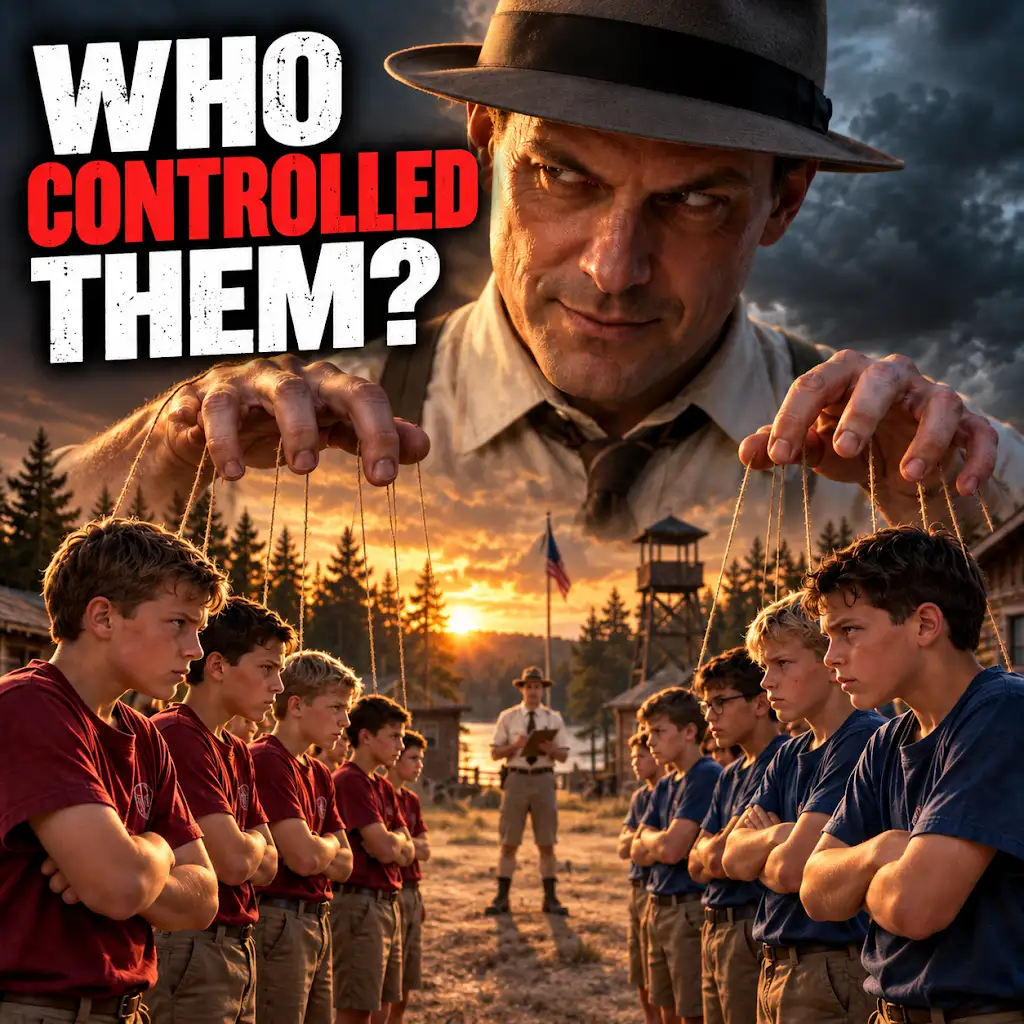
How 22 Boys Were Turned Into Enemies
FAQs
What is the famous psychology experiment about group conflict?
The famous psychology experiment about group conflict is known as the Robbers Cave Experiment conducted by social psychologist Muzafer Sherif in 1954.
What was the purpose of the Robbers Cave Experiment?
The purpose of the Robbers Cave Experiment was to study intergroup conflict and competition. The experiment aimed to understand how group dynamics, competition, and cooperation influence intergroup relations.
How was the Robbers Cave Experiment conducted?
The Robbers Cave Experiment involved dividing a group of boys into two separate groups and creating a sense of competition and conflict between them through various activities and challenges.
What were the key findings of the Robbers Cave Experiment?
The key findings of the Robbers Cave Experiment included the emergence of in-group favoritism, out-group hostility, and the escalation of conflict between the two groups. The study also highlighted the importance of superordinate goals in reducing intergroup conflict.
What are the implications of the Robbers Cave Experiment in understanding group conflict?
The Robbers Cave Experiment has important implications for understanding group conflict, social identity, and intergroup relations. It demonstrates how competition and perceived differences can lead to conflict, but also how cooperation towards common goals can help reduce intergroup tensions.