Classical conditioning, a fundamental concept in behavioral psychology, describes a learning process where a neutral stimulus becomes associated with an unconditioned stimulus that naturally produces a behavior. This association leads to the neutral stimulus eliciting a similar response. The history of this influential theory is a fascinating journey, marked by keen observation, rigorous experimentation, and the gradual refinement of our understanding of how organisms learn through involuntary associations. While often attributed to a single pivotal figure, its roots can be traced to earlier philosophical inquiries and its development has been shaped by numerous scientists and their groundbreaking work.
Classical conditioning, a fundamental concept in behavioral psychology, has a rich history that traces back to the experiments of Ivan Pavlov in the early 20th century. For those interested in exploring this topic further, a related article can be found at Unplugged Psychology, which delves into the principles and applications of classical conditioning, as well as its impact on modern psychological practices. This resource provides valuable insights into how classical conditioning has shaped our understanding of learning and behavior.
Early Stirrings: Precursors to a Scientific Inquiry
Before the formal establishment of classical conditioning as a scientific discipline, the idea that organisms could learn through association was present in philosophical thought for centuries. The human mind’s propensity to connect events and form habits was a subject of contemplation long before empirical methodologies were applied to its study.
Philosophical Roots of Associationism
Ancient Greek philosophers, such as Aristotle, laid the groundwork for associationist thinking. Aristotle, in his treatise On the Soul, discussed the principles of contiguity, similarity, and contrast as mechanisms by which ideas or memories are linked. These principles, though not framed in a behavioral context, highlighted the natural tendency of the mind to form connections between perceived events.
Later, Enlightenment thinkers continued to explore the nature of learning and association. John Locke, an influential English philosopher, proposed that the mind at birth is a tabula rasa (blank slate) and that all knowledge and ideas are acquired through experience and sensory input. He emphasized the role of association in forming complex ideas from simpler ones. David Hume, another prominent empiricist, further developed these ideas, suggesting that our understanding of cause and effect arises from the repeated observation of events occurring together. These philosophical explorations, while abstract, provided a conceptual foundation for understanding how external events might influence internal states and behaviors.
Early Physiological Observations
Parallel to philosophical inquiries, early physiological investigations also offered glimpses into the mechanisms that would later be understood as classical conditioning. While not directly studying learning, these scientists observed reflexes and involuntary responses, laying the groundwork for understanding how the body reacts to stimuli.
Investigating Reflexes and Innate Responses
Scientists like Ivan Sechenov, a Russian physiologist working in the late 19th century, conducted experiments on reflexes. Sechenov observed that external stimuli could inhibit or facilitate involuntary reflexes. He proposed that all complex behaviors, including those considered voluntary, could ultimately be explained in terms of reflexes, suggesting a mechanistic view of the nervous system. His work on “psychic reflexes” hinted at the possibility that external events could elicit responses that appeared to be internally generated. He argued that even seemingly complex mental processes could be understood as elaborations of basic reflex arcs. His seminal work, Reflexes of the Brain, published in 1863, explored how environmental stimuli could influence the nervous system and ultimately behavior. While Sechenov did not explicitly detail a conditioning paradigm, his emphasis on the role of external stimuli in shaping physiological and behavioral responses was a crucial precursor.
The Paving Stone: Ivan Pavlov’s Serendipitous Discovery

The most significant and direct precursor to the formal study of classical conditioning is undoubtedly the work of the Russian physiologist Ivan Pavlov. His groundbreaking research, initially focused on digestion, inadvertently led to the discovery of what is now known as Pavlovian conditioning.
Pavlov’s Research on Digestion
Ivan Pavlov (1849-1936) was a Nobel Prize-winning physiologist renowned for his work on the digestive system of dogs. His experiments involved surgically creating fistulas in the salivary glands of dogs to collect and measure saliva production in response to various stimuli. He observed that the dogs began to salivate not only when food was presented but also at the sight of the experimenter, the sound of their footsteps, or the tinkling of a bell that often preceded feeding.
The Phenomenon of “Psychic Secretions”
Pavlov initially considered these anticipatory salivations as a nuisance, a distraction from his primary research. He termed these “psychic secretions” and initially attributed them to the dogs’ mental states or perhaps learned associations that were not amenable to scientific study. However, his meticulous scientific mind recognized the regularity and predictability of these responses. He began to systematically investigate these “psychic secretions,” realizing they represented a significant and measurable form of learning.
The Experimental Paradigm: Salivation as a Measurable Response
Pavlov shifted his focus from digestion to understanding the mechanisms behind these anticipatory salivations. He devised a controlled experimental setup to study this phenomenon.
Unconditioned Stimulus and Unconditioned Response
He identified the unconditioned stimulus (US) as food, which naturally and automatically elicits a response. The unconditioned response (UR) was the salivation that occurred in direct response to the presence of food. This is a reflexive, innate behavior that does not require any prior learning.
Introduction of the Conditioned Stimulus
Pavlov then introduced a neutral stimulus (NS) that, when presented alone, did not elicit salivation. Common neutral stimuli he employed included the ringing of a bell, the clicking of a metronome, or the presentation of a light. This neutral stimulus was paired repeatedly with the unconditioned stimulus.
The Process of Conditioning
Through repeated pairings, where the neutral stimulus was presented immediately before or simultaneously with the unconditioned stimulus, the dogs began to associate the two. The neutral stimulus, after these pairings, started to elicit the salivation response.
The Conditioned Stimulus and Conditioned Response
Once the neutral stimulus consistently elicited salivation, it was reclassified as a conditioned stimulus (CS). The salivation elicited by the conditioned stimulus was then termed the conditioned response (CR). The CR, while similar to the UR, was now a learned response triggered by a stimulus that was previously neutral. Pavlov’s systematic research demonstrated that this association was formed through repeated pairings and followed predictable laws.
The Dissemination and Expansion: Bridging Continents and Disciplines

Pavlov’s work, though initially conducted in Russia, had a profound impact on psychology worldwide. Its dissemination and subsequent expansion were crucial in establishing classical conditioning as a cornerstone of behavioral science.
The Influence on American Psychology
The early 20th century saw a burgeoning of psychological research in the United States, and Pavlov’s findings resonated strongly with emerging theories of behaviorism.
John B. Watson and the Birth of Behaviorism
John B. Watson (1878-1958), often considered the father of American behaviorism, was deeply influenced by Pavlov’s work. Watson advocated for a scientific approach to psychology that focused solely on observable behavior, rejecting introspection as a valid research method. He saw Pavlov’s conditioning experiments as a powerful demonstration of how environmental stimuli could shape behavior through observable associations.
Watson famously applied Pavlovian principles in his controversial “Little Albert” experiment. In this study, he conditioned a young boy to fear a white rat by pairing the rat with a loud, startling noise. This demonstrated that emotional responses, such as fear, could also be conditioned. Watson’s embrace and popularization of Pavlovian conditioning were instrumental in establishing it as a key concept within the behaviorist movement. He argued that all human behavior, from simple reflexes to complex emotions and habits, could be explained by the principles of conditioning.
Other American Behaviorists
Beyond Watson, other American psychologists continued to explore and extend Pavlovian principles. Edward Thorndike, with his Law of Effect, which focused on the role of consequences in learning, provided a complementary perspective on how behavior is learned. While Thorndike’s work focused on operant conditioning (learning through voluntary responses and their consequences), the general emphasis on observable learning processes aligned with Pavlovian ideas. Clark L. Hull, another prominent behaviorist, attempted to formalize learning principles into a mathematical system, incorporating aspects of conditioning.
Extensions to Human Behavior and Clinical Applications
The principles of classical conditioning, initially demonstrated with animal subjects, were soon recognized as applicable to understanding a wide range of human behaviors, including maladaptive ones.
Conditioning of Emotional Responses
Researchers began to explore how emotional responses, such as fear, phobias, and anxieties, could be learned through classical conditioning. The “Little Albert” experiment by Watson and Rayner was an early, albeit ethically questionable, demonstration of this. Later, researchers like Mary Cover Jones, a student of Watson, demonstrated how conditioned fears could be de-conditioned through systematic desensitization, a therapeutic technique that involves gradually exposing individuals to their feared stimuli while teaching them relaxation techniques. This marked an early foray into the clinical applications of classical conditioning.
Therapeutic Interventions
The understanding of how associations are formed and how they can be modified led to the development of various therapeutic interventions. Techniques like aversion therapy, used to treat addiction and paraphilias, involve pairing an undesirable behavior with an aversive stimulus. Conversely, counter-conditioning, as demonstrated by Jones, aims to replace a negative conditioned response with a positive one. These applications highlighted the practical utility of classical conditioning beyond purely academic research.
Classical conditioning, a fundamental concept in behavioral psychology, has a rich history that traces back to the experiments of Ivan Pavlov. His work laid the groundwork for understanding how associative learning occurs through the pairing of stimuli. For those interested in exploring this topic further, a related article can provide deeper insights into the mechanisms and implications of classical conditioning. You can read more about it in this informative piece on psychology at Unplugged Psychology, which delves into various aspects of learning theories and their applications.
The Refinement of Principles: Laws and Nuances of Conditioning
| Year | Researcher | Contribution | Key Experiment | Significance |
|---|---|---|---|---|
| 1890s | Ivan Pavlov | Discovery of classical conditioning | Salivation response in dogs to a bell paired with food | Established the basic principles of associative learning |
| 1903 | Ivan Pavlov | Published detailed findings on conditioned reflexes | Systematic study of conditioned salivary responses | Provided scientific foundation for behaviorism |
| 1920s | John B. Watson | Applied classical conditioning to human behavior | Little Albert experiment (fear conditioning) | Demonstrated emotional conditioning in humans |
| 1930s | Clark L. Hull | Theoretical models of conditioning | Mathematical models explaining stimulus-response learning | Advanced understanding of learning mechanisms |
| 1950s | Robert Rescorla | Refined classical conditioning theory | Rescorla-Wagner model development | Explained the role of predictability in conditioning |
As research progressed, scientists began to identify the underlying principles and laws that govern the process of classical conditioning. These principles helped to explain the nuances of how associations are formed, strengthened, weakened, and generalized.
Acquisition: The Building of Associations
Acquisition refers to the process by which the conditioned response is learned. This is the phase where the neutral stimulus is paired with the unconditioned stimulus.
Timing and Contingency
Pavlov observed that the timing of the stimulus presentation was crucial. The most effective conditioning occurred when the conditioned stimulus preceded the unconditioned stimulus by a short interval (typically a few seconds). This temporal contiguity allowed the organism to establish a predictive relationship between the two stimuli. Furthermore, the contingency, or the degree to which the CS reliably predicted the US, was also important. If the US occurred randomly or in the absence of the CS, conditioning would be weak or absent.
Strength of the US and CS
The intensity of both the unconditioned stimulus and the conditioned stimulus also played a role. Stronger USs generally led to faster and stronger conditioning. Similarly, a more salient or distinctive CS was more likely to become associated with the US.
Extinction: The Fading of Associations
Extinction occurs when the conditioned stimulus is repeatedly presented without the unconditioned stimulus.
The Process of Extinction
Over time, the conditioned response will gradually weaken and eventually disappear. This is not the same as forgetting, as the learned association is not erased but rather suppressed. If conditioning is re-established, the previously conditioned response can reappear more quickly than it did initially.
Spontaneous Recovery
A fascinating phenomenon associated with extinction is spontaneous recovery. After a period of rest following extinction, the conditioned response may reappear when the conditioned stimulus is presented again, albeit at a weaker level than before. This suggests that the underlying association has not been entirely eliminated.
Generalization and Discrimination: The Breadth of Learned Responses
Once a conditioned response is established, organisms may exhibit similar responses to stimuli that are similar to the original conditioned stimulus.
Stimulus Generalization
Stimulus generalization occurs when the conditioned response is elicited by stimuli that are similar to the original conditioned stimulus, even if they were not directly involved in the conditioning process. For example, if a dog is conditioned to salivate to the sound of a specific bell, it might also salivate to other bells of similar pitch or tone. The degree of generalization depends on the similarity between the original CS and the new stimulus.
Stimulus Discrimination
Conversely, stimulus discrimination is the ability to distinguish between the conditioned stimulus and other similar stimuli that do not predict the unconditioned stimulus. Through repeated exposure, an organism can learn to respond only to the specific conditioned stimulus and not to similar, but irrelevant, stimuli. This allows for more precise behavioral responses.
Modern Perspectives and Enduring Legacy
While behaviorism’s dominance waned with the rise of cognitive psychology, classical conditioning remains a vital concept in understanding learning and behavior. Its principles have been integrated into various fields of study.
Integration with Cognitive Psychology
While classical conditioning was initially the domain of behaviorists, its principles have been integrated into modern cognitive psychology. Researchers now acknowledge that internal mental processes, such as attention, expectation, and memory, can influence the conditioning process.
Role of Expectancy and Prediction
Contemporary research emphasizes the role of expectancy and prediction in classical conditioning. Organisms are seen as active learners who form expectancies about when and whether the unconditioned stimulus will occur. The strength of the conditioned response is influenced by how surprising or unexpected the unconditioned stimulus is, given the presence of the conditioned stimulus.
Cognitive Processes in Conditioning
Cognitive models suggest that conditioning involves the formation of cognitive representations of the relationship between stimuli. For instance, an organism might form a mental representation that “bell means food.” This cognitive understanding then drives the conditioned response.
Applications Beyond Psychology
The principles of classical conditioning have transcended the boundaries of psychology, finding applications in diverse fields.
Marketing and Advertising
The advertising industry heavily relies on classical conditioning principles to associate products with desirable emotions, images, and lifestyles. For example, a soft drink company might pair its product with images of happy, energetic people enjoying outdoor activities, thereby conditioning a positive emotional response to the brand.
Education and Therapy
In educational settings, teachers may use conditioned stimuli to elicit desired behaviors, such as associating a specific signal with quiet during class. In therapeutic contexts, beyond the early deconditioning techniques, understanding phobias, anxieties, and even some aspects of addiction often involves analyzing and modifying conditioned responses.
Animal Training
Classical conditioning is a fundamental technique in animal training, used to teach animals specific behaviors and responses. From service animals to pets, many of the commands and cues animals respond to are established through careful application of conditioning principles.
Conclusion: An Enduring Framework for Understanding Learning
The history of classical conditioning is a testament to the power of scientific inquiry, beginning with philosophical ponderings and evolving through rigorous experimentation and theoretical refinement. From Ivan Pavlov’s serendipitous observations of “psychic secretions” to the sophisticated cognitive models of today, classical conditioning has provided an enduring framework for understanding how involuntary associations shape our behavior and emotional responses. Its principles continue to be relevant, offering valuable insights into learning, adaptation, and the development of both adaptive and maladaptive behaviors across the animal kingdom, including our own. The legacy of classical conditioning lies not only in its historical significance but also in its ongoing contribution to our understanding of the fundamental mechanisms of learning and its pervasive influence on our daily lives.
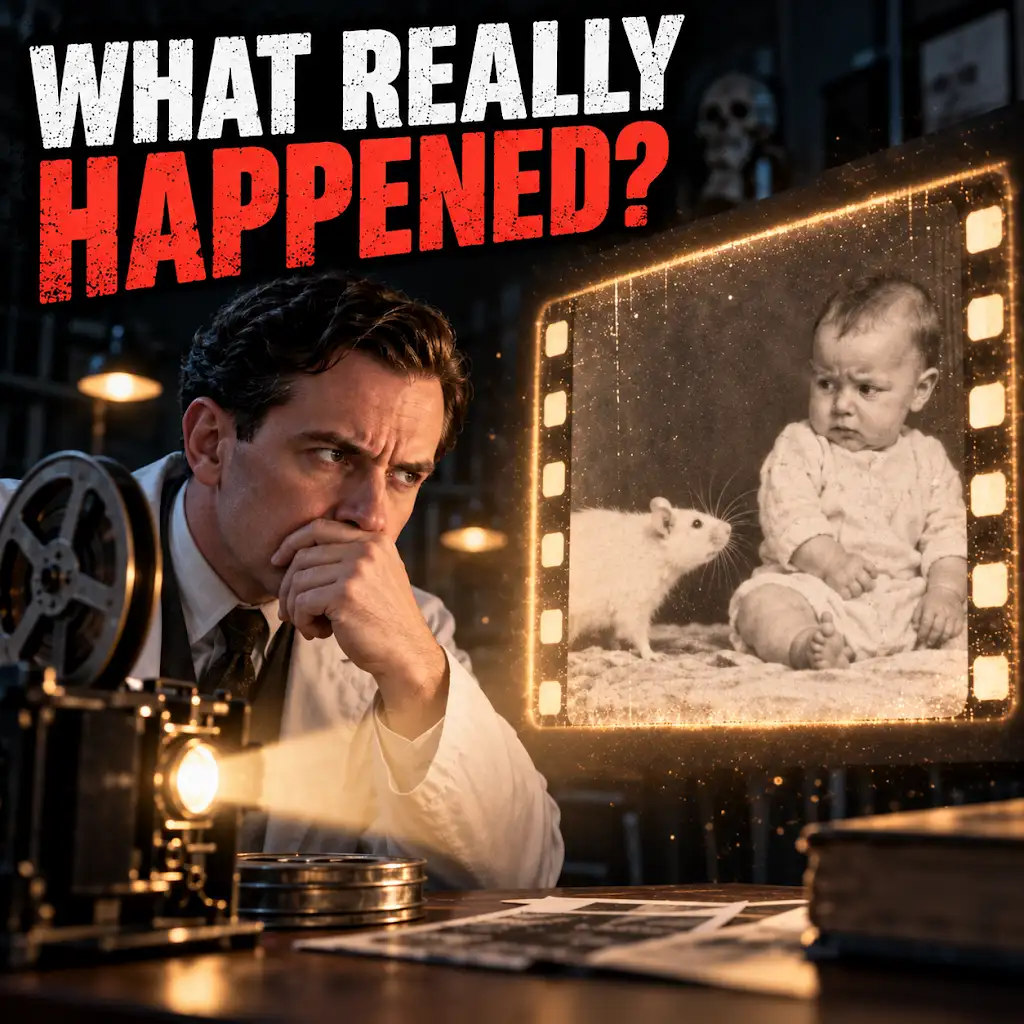
The Little Albert Experiment May Not Have Worked
FAQs
What is classical conditioning?
Classical conditioning is a type of learning in which a neutral stimulus comes to elicit a response after being paired with a stimulus that naturally brings about that response.
Who is Ivan Pavlov and what is his role in the history of classical conditioning?
Ivan Pavlov was a Russian physiologist known for his research on classical conditioning. His famous experiment with dogs demonstrated how associations could be formed between a neutral stimulus (like a bell) and a reflex response (like salivation).
How did Pavlov’s work influence the field of psychology?
Pavlov’s work laid the foundation for behaviorism, a school of psychology that focuses on observable behaviors and the role of the environment in shaping behavior. His research on classical conditioning has had a lasting impact on the field of psychology.
What are some real-world applications of classical conditioning?
Classical conditioning has been used in various settings, such as education, therapy, and advertising. For example, it is used in behavior modification programs, phobia treatments, and marketing strategies to influence consumer behavior.
Are there any criticisms of classical conditioning as a theory of learning?
While classical conditioning has been influential in understanding certain types of learning, critics argue that it oversimplifies the complexity of human behavior and cognition. Some researchers believe that other factors, such as cognitive processes, play a significant role in learning and behavior.