
Psychology textbooks often introduce the concept of classical conditioning as a cornerstone of behavioral psychology, a foundational theory that attempts to explain how learned associations shape our responses to the world. This process, famously demonstrated by Ivan Pavlov and his salivating dogs, is elegantly simple yet profoundly influential in understanding a wide range of human and animal behaviors, from phobias and cravings to the development of preferences and even therapeutic interventions. Delving into how textbooks present this intricate mechanism reveals the layered approach educators take to ensure comprehension.
At its core, classical conditioning, also known as Pavlovian conditioning, is a learning process where a naturally occurring stimulus is paired with a neutral stimulus. Over time, the neutral stimulus comes to elicit a response that was originally elicited by the naturally occurring stimulus. Textbooks typically begin by recounting the groundbreaking work of Ivan Pavlov, a Russian physiologist, not a psychologist, whose accidental discovery revolutionized the understanding of learning.
Pavlov’s Canine Inquiry: A Serendipitous Observation
Pavlov’s primary research focused on the digestive system of dogs. He observed that his canine subjects began to salivate not only when food was presented, but also at the sight of the lab assistant who brought them their food, or even at the sound of the assistant’s footsteps. This observation sparked his curiosity, leading him to systematically investigate the phenomenon of associative learning. Textbooks emphasize that this was not a planned psychological experiment but a serendipitous finding that opened up an entirely new field of inquiry.
Isolating the Variables: Unconditioned and Conditioned Stimuli and Responses
To dissect this learning process, textbooks meticulously break down the key components. Understanding these elements is crucial for grasping the mechanics of classical conditioning.
The Unconditioned Stimulus (UCS): The Natural Elicitor
The Unconditioned Stimulus (UCS) is any stimulus that naturally and automatically triggers a response without prior learning. In Pavlov’s experiments, the food (meat powder) was the UCS. It directly and reliably elicited salivation because it is biologically relevant to a dog’s survival and well-being. Textbooks use clear examples to illustrate this point, ensuring that students understand that the UCS is inherently potent and does not require any conditioning.
The Unconditioned Response (UCR): The Innate Reaction
The Unconditioned Response (UCR) is the unlearned, naturally occurring reaction to the UCS. In Pavlov’s case, salivation in response to food was the UCR. It is an automatic, reflexive response. Textbooks highlight that the UCR is the natural consequence of the UCS and serves as the baseline response that will eventually be elicited by a conditioned stimulus. The link between UCS and UCR is biological and immediate.
The Neutral Stimulus (NS): The Blank Slate
The Neutral Stimulus (NS) is a stimulus that, at the outset of the conditioning process, does not elicit any particular response relevant to the study. Pavlov used a bell as his NS. Initially, the sound of the bell did not cause the dogs to salivate. It was simply a stimulus that was present but had no learned association with food. Textbooks often explain that the NS is essentially a “blank slate” that can be transformed into a conditioned stimulus through its association with the UCS.
The Conditioning Process: Forging the Association
The magic of classical conditioning lies in the repeated pairing of the neutral stimulus with the unconditioned stimulus. Textbooks dedicate significant space to detailing this critical phase of learning.
Acquisition: The Pairing Phase
Acquisition refers to the period during which the NS is repeatedly paired with the UCS. The goal is to establish an association between the two. In Pavlov’s experiment, the bell (NS) was rung just before the food (UCS) was presented. This pairing was done multiple times. Textbooks emphasize that the timing and contiguity of the stimuli are important for successful acquisition. The closer the NS and UCS are presented in time, the stronger the association is likely to be.
The Emergence of the Conditioned Stimulus (CS)
As the NS is repeatedly paired with the UCS, it gradually begins to elicit a response on its own. The NS transforms into the Conditioned Stimulus (CS). In Pavlov’s study, after numerous pairings, the sound of the bell alone began to trigger salivation. Textbooks explain that the CS is now a learned stimulus capable of evoking a response that was originally only produced by the UCS. This is the key outcome of the conditioning process.
The Conditioned Response (CR): The Learned Reaction
The Conditioned Response (CR) is the learned response to the CS. In essence, it is the UCR that is now elicited by the CS. When the dogs salivated to the sound of the bell, this was the CR. Textbooks clarify that the CR is often similar to the UCR, but it is triggered by a stimulus that was initially neutral. The strength and magnitude of the CR can vary depending on the effectiveness of the conditioning.
In exploring the principles of classical conditioning, a foundational concept in psychology, you may find it beneficial to read the article on Unplugged Psychology that delves deeper into this topic. The article provides a comprehensive overview of how classical conditioning works, its historical context, and its applications in various fields. For more insights, you can visit the article here: Unplugged Psychology.
Beyond Pavlov: Real-World Applications and Examples
While Pavlov’s dogs provide a clear and foundational illustration, psychology textbooks are keen to demonstrate the pervasive influence of classical conditioning in everyday life and various psychological phenomena. They move beyond the laboratory to showcase its practical implications.
Everyday Encounters with Classical Conditioning
The principles of classical conditioning are at play in countless daily experiences, often without our conscious awareness.
Food Aversions and Cravings
Textbooks often cite the development of food aversions as a classic example. If someone experiences nausea or illness after eating a particular food (UCS), and that food (NS) was associated with the illness, they may develop an aversion to that food (CS) and experience nausea (CR) simply at the thought or sight of it. Conversely, positive associations can lead to cravings. For instance, associating a particular restaurant with a pleasurable experience (UCS) can lead to a craving (CR) for that restaurant’s food (CS).
Advertising and Marketing Strategies
The advertising industry heavily relies on classical conditioning to influence consumer behavior. Marketers often pair their products (NS) with attractive stimuli, such as beautiful people, exciting music, or desirable lifestyles (UCS). Over time, the product (CS) itself can elicit positive feelings and desires (CR) in consumers, leading to increased purchasing behavior. Textbooks analyze how commercials strategically create these associations to build brand loyalty and drive sales.
Phobias and Fears: A Learned Association
One of the most significant applications of classical conditioning in psychology is in understanding the development of phobias. A phobia is an intense, irrational fear of a specific object or situation. Textbooks explain that phobias can arise when a neutral object or situation (NS) becomes associated with a traumatic or frightening experience (UCS). For example, if a child is bitten by a dog (UCS) while playing with a red ball (NS), they may develop a fear of red balls (CS), experiencing anxiety (CR) whenever they encounter one.
Beyond the Simple Pairings: Nuances of Conditioning
Textbooks understand that classical conditioning is not always a straightforward, one-to-one pairing. They explore the complexities and variations that can influence the conditioning process.
Stimulus Generalization: Broadening the Response
Stimulus generalization occurs when a learned response is elicited by stimuli that are similar to the original CS, but not identical. In the context of phobias, if someone develops a fear of a specific breed of dog (CS), they might also experience fear when encountering other breeds of dogs that share similar characteristics (generalized stimuli). Textbooks explain this as the organism’s tendency to respond to a range of similar stimuli after conditioning has occurred.
Stimulus Discrimination: Refining the Response
Stimulus discrimination is the opposite of generalization. It is the ability to differentiate between the CS and other stimuli that are not paired with the UCS. Through discrimination, the organism learns to respond only to the specific CS and not to similar stimuli. In the advertising example, a consumer might learn to discriminate between two similar products and prefer the one that has been consistently associated with positive experiences. Textbooks highlight that discrimination is crucial for fine-tuning learned responses.
Extinction: Fading the Association
Extinction occurs when the CS is repeatedly presented without the UCS. Over time, the learned association weakens, and the CR diminishes. If the bell (CS) is rung many times without food (UCS), the dogs will eventually stop salivating to the bell. Textbooks emphasize that extinction is not the same as forgetting; the learned association is still present but has been inhibited. It is a crucial concept for therapeutic interventions aimed at reducing unwanted conditioned responses.
Spontaneous Recovery: The Resurgence of the Response
Sometimes, after extinction has occurred, the CR can reappear after a period of rest. This phenomenon is known as spontaneous recovery. Textbooks explain that this suggests that the learned association is not entirely erased but rather suppressed, and it can resurface under certain conditions. This highlights the resilience of learned associations.
Ethical Considerations and Applications in Therapy

The power of classical conditioning, particularly in understanding and treating psychological disorders, necessitates a discussion of ethical considerations and therapeutic applications. Textbooks address this critical aspect of the theory.
Therapeutic Interventions: Harnessing the Principles
Understanding classical conditioning provides a framework for developing effective therapeutic interventions.
Systematic Desensitization: Counteracting Phobias
Systematic desensitization is a therapeutic technique that utilizes the principles of classical conditioning to treat phobias. It involves gradually exposing individuals to their feared stimuli (CS) while teaching them relaxation techniques. By pairing the feared stimulus with relaxation (a pleasant UCR), the individual learns to associate the stimulus with a state of calm rather than anxiety. Textbooks detail how this process aims to extinguish the conditioned fear response.
Aversion Therapy: Undoing Undesirable Behaviors
Aversion therapy uses classical conditioning to reduce or eliminate undesirable behaviors by pairing them with an unpleasant stimulus (UCS). For example, in treating smoking, a person might be given a mild electric shock (UCS) whenever they smoke a cigarette (CS). The goal is to create a negative association with smoking, leading to a decrease in the behavior. Textbooks discuss the ethical debates surrounding aversion therapy due to its potential for discomfort.
Flooding: Overwhelming the Fear Response
Flooding is another technique that aims to extinguish conditioned fear responses. It involves exposing individuals to their feared stimulus (CS) at full intensity for an extended period, without allowing them to escape. The idea is that the individual will eventually realize that the feared stimulus does not pose a real threat, and the conditioned fear response will be extinguished. This method requires careful ethical consideration and is often used in conjunction with other therapeutic approaches.
Ethical Dilemmas and Responsibilities
The application of classical conditioning in therapeutic settings also raises important ethical questions.
Informed Consent and Client Autonomy
Textbooks stress the paramount importance of informed consent. Clients must fully understand the nature of the therapy, its potential benefits and risks, and have the autonomy to agree or refuse treatment. This is especially critical when employing techniques like aversion therapy, which can be perceived as coercive.
Potential for Misuse and Unintended Consequences
The power of classical conditioning means it can be misused. Textbooks caution against manipulative advertising or coercive conditioning techniques. Understanding these principles also necessitates an awareness of potential unintended consequences of conditioning, such as the generalization of fear to unrelated stimuli.
The Neurobiological Underpinnings: What Happens in the Brain?

While classical conditioning is often explained through observable behaviors, modern psychology textbooks also delve into the neurobiological mechanisms that underpin this learning process. Understanding the brain’s role provides a more comprehensive picture.
Neural Pathways and Synaptic Plasticity
Textbooks explain that classical conditioning involves changes in neural pathways within the brain.
The Amygdala and Emotional Learning
The amygdala, a region of the brain involved in processing emotions, plays a crucial role in fear conditioning. When a neutral stimulus becomes associated with a fear-inducing event, the amygdala becomes activated, strengthening the neural connections between the two. This explains why fear-based conditioning is so potent.
The Hippocampus and Memory Formation
The hippocampus is essential for forming new memories. During conditioning, the hippocampus helps to consolidate the association between the CS and the UCS, creating a lasting memory of the learned connection.
Synaptic Strengthening and Long-Term Potentiation
At a cellular level, classical conditioning involves synaptic plasticity, the ability of synapses to strengthen or weaken over time. Long-term potentiation (LTP), a persistent strengthening of synapses based on recent patterns of activity, is a key mechanism underlying learning and memory, including classical conditioning.
Neurotransmitters and Their Roles
Various neurotransmitters are involved in the complex cascade of events that constitute classical conditioning.
Dopamine and Reward Pathways
Dopamine is a neurotransmitter associated with reward and motivation. In some forms of classical conditioning, particularly those involving reward, dopamine plays a significant role in strengthening the learned association.
Glutamate and Learning
Glutamate is the primary excitatory neurotransmitter in the brain and is crucial for learning and memory. It is involved in synaptic plasticity and the strengthening of neural connections during conditioning.
Classical conditioning is a fundamental concept in psychology that explains how certain stimuli can evoke specific responses through associative learning. For a deeper understanding of this topic, you might find the article on Unplugged Psychology particularly insightful, as it explores various experiments and applications of classical conditioning in real-life scenarios. This resource can enhance your grasp of the subject and provide practical examples of how these principles operate in everyday life. You can read more about it in this article.
Critiques and Limitations of Classical Conditioning
| Metric | Description | Example |
|---|---|---|
| Unconditioned Stimulus (US) | A stimulus that naturally and automatically triggers a response without prior learning. | Food causing salivation in dogs |
| Unconditioned Response (UR) | The unlearned, naturally occurring response to the unconditioned stimulus. | Salivation in response to food |
| Conditioned Stimulus (CS) | A previously neutral stimulus that, after association with the unconditioned stimulus, triggers a conditioned response. | Bell sound paired with food |
| Conditioned Response (CR) | The learned response to the conditioned stimulus. | Salivation in response to bell sound |
| Acquisition | The initial stage of learning when the association between the CS and US is being established. | Repeated pairing of bell and food |
| Extinction | The diminishing of a conditioned response when the CS is no longer paired with the US. | Bell ringing without food leads to reduced salivation |
| Spontaneous Recovery | The reappearance of a weakened conditioned response after a pause following extinction. | Salivation returns briefly after bell rings post-extinction |
| Generalization | The tendency to respond to stimuli similar to the conditioned stimulus. | Salivating to a tone similar to the bell |
| Discrimination | The learned ability to distinguish between the conditioned stimulus and other stimuli. | Salivating only to the specific bell tone |
While immensely influential, classical conditioning is not without its critics and limitations. Psychology textbooks typically present a balanced view, acknowledging the areas where the theory falls short.
Biological Predispositions and Cognitive Factors
Modern psychology acknowledges that behavior is not solely a product of environmental conditioning.
Preparedness and Phobia Development
The concept of “preparedness” suggests that some phobias are more easily acquired than others due to evolutionary predispositions. For example, it is easier to condition a fear of snakes than a fear of flowers, as snakes have historically posed a threat to human survival. This suggests that not all associations are equally likely to be learned.
Cognitive Interpretations of Conditioning
Cognitive psychologists argue that classical conditioning alone does not fully explain learning. They emphasize the role of internal mental processes, such as expectations, beliefs, and interpretations, in shaping responses. For instance, an individual’s expectation that a particular stimulus will be followed by a reward can influence their conditioned response.
Oversimplification of Complex Behaviors
Critics argue that classical conditioning can oversimplify complex human behaviors, such as language acquisition or problem-solving, which involve more intricate cognitive processes. While classical conditioning might play a role in some aspects, it is not a sufficient explanation for these sophisticated behaviors.
The Role of Voluntary Behavior
Classical conditioning primarily explains involuntary, reflexive responses. It does not adequately account for voluntary behaviors, which are better explained by theories like operant conditioning, where behavior is shaped by its consequences.
In conclusion, psychology textbooks present classical conditioning as a fundamental and powerful learning mechanism, illustrated by Pavlov’s seminal work. They meticulously break down its components, provide numerous real-world examples, and explore its therapeutic applications. Furthermore, they offer insights into the neurobiological underpinnings and acknowledge the theory’s limitations, providing students with a comprehensive and nuanced understanding of this essential psychological concept. The journey from Pavlov’s lab to understanding human fears, cravings, and therapeutic interventions underscores the enduring significance of classical conditioning in the field of psychology.
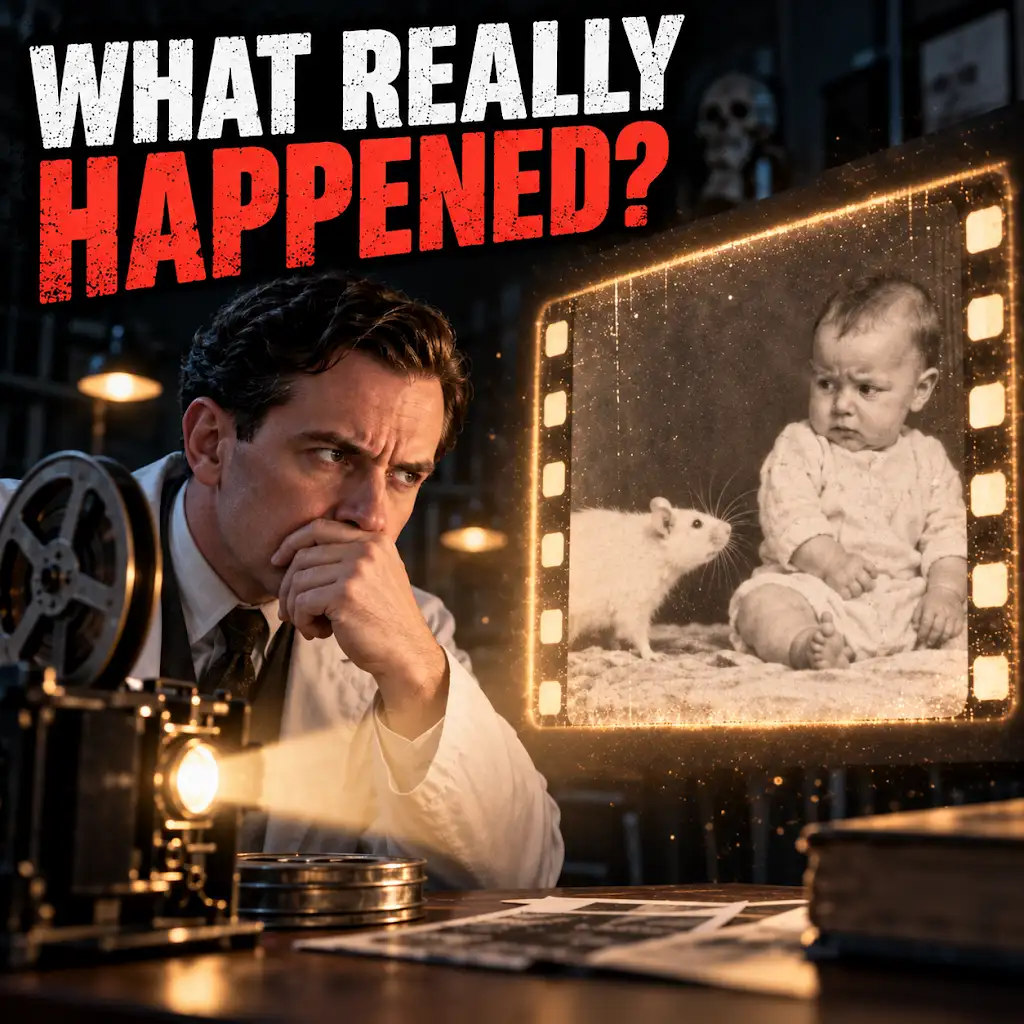
The Little Albert Experiment May Not Have Worked
FAQs
What is classical conditioning in psychology?
Classical conditioning is a type of learning in which a neutral stimulus comes to elicit a response after being paired with a stimulus that naturally brings about that response.
Who is associated with the development of classical conditioning?
Classical conditioning was first described by Ivan Pavlov, a Russian physiologist, in the early 20th century through his famous experiments with dogs.
What are the key components of classical conditioning?
The key components of classical conditioning include an unconditioned stimulus (UCS), an unconditioned response (UCR), a conditioned stimulus (CS), and a conditioned response (CR).
Can classical conditioning be applied in real-life situations?
Yes, classical conditioning is often used in various real-life situations, such as in advertising, therapy, and education, to modify behavior and elicit specific responses.
What are some examples of classical conditioning in everyday life?
Examples of classical conditioning in everyday life include associating the smell of food with feeling hungry, feeling anxious when hearing a certain song, and feeling happy when seeing a particular logo.