Little Albert Douglas Merritte: The Untold Story
The name “Little Albert” is etched into the annals of psychological research, a figure synonymous with early behavioral conditioning experiments. Yet, beyond the confines of Pavlovian dogs and Watson’s controversial methods, lies a more complex and largely untold story of the child himself – Albert Douglas Merritte. The narrative commonly presented simplifies Albert’s life and experiences, overshadowing the individual whose unwitting participation became a cornerstone of modern psychology. This exploration delves into the fragmented details and lingering questions surrounding Albert Merritte, aiming to illuminate the human being behind the experiment, and to challenge the accepted, often sanitized, version of his existence.
The Little Albert experiment, conducted at Johns Hopkins University between 1919 and 1920, remains one of the most widely discussed and ethically debated studies in psychology. John B. Watson and his assistant Rosalie Rayner sought to demonstrate that fear could be conditioned in humans, a stark departure from earlier theories that primarily focused on innate fears. Their target was a nine-month-old infant, referred to as “Albert B.” in Watson’s writings, later identified as Douglas Merritte. The choice of Albert was not arbitrary, as Watson, a professor at Johns Hopkins, had access to infants in the hospital environment. The prevailing narrative often portrays Albert as an orphan or a child readily available for such procedures, a depiction that has contributed to the perception of his lack of agency.
The Experimental Setup and Procedure
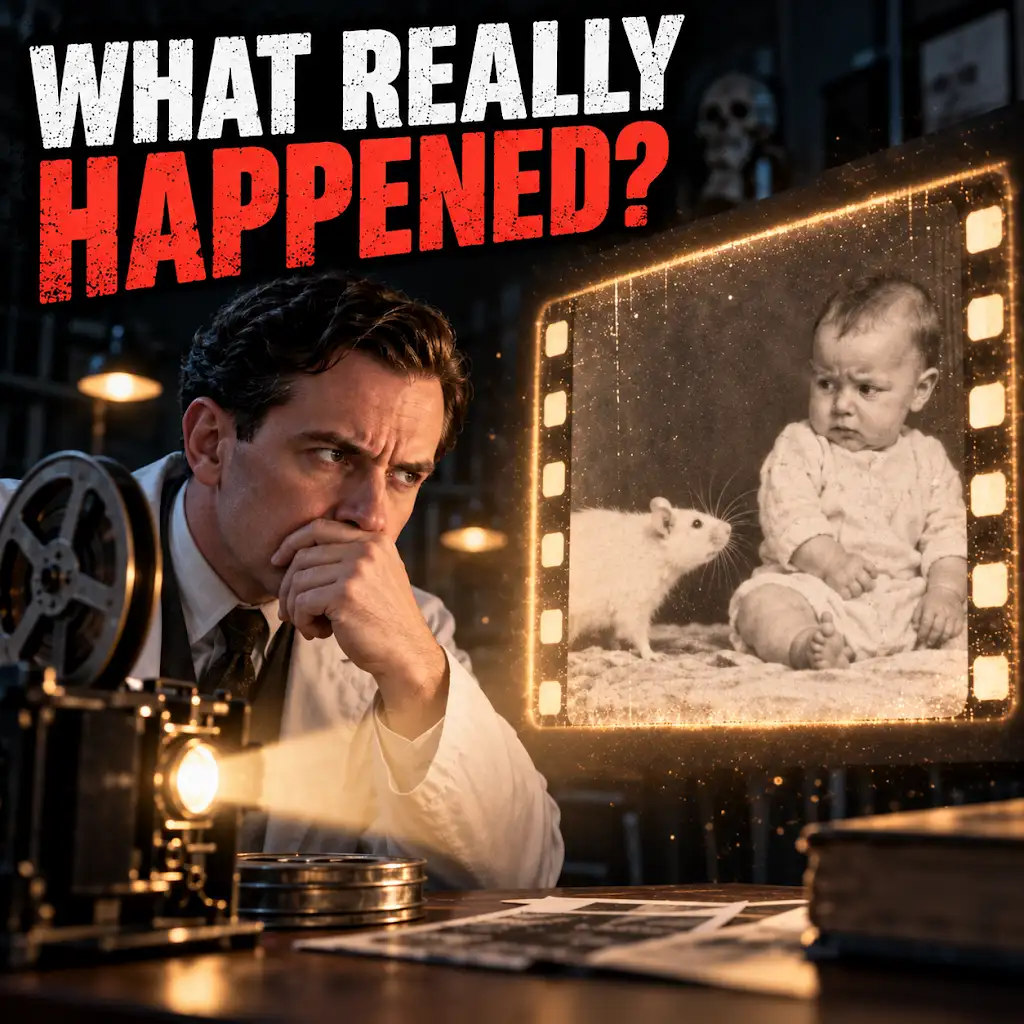
The core of the experiment involved presenting Albert with a white rat, initially without any negative association. Albert showed no fear of the rat and even reached out to touch it. The conditioning then began: whenever Albert reached for the rat, a loud, startling noise was produced by striking a steel bar with a hammer behind him. This pairing of the neutral stimulus (the rat) with an unconditioned stimulus (the loud noise) was repeated multiple times. The goal was to create a conditioned fear response in Albert, such that the mere sight of the rat would elicit fear.
The Ethical Quandary of the Time
It is crucial to understand the context of ethical considerations in psychological research at the beginning of the 20th century. The formalized ethical guidelines that govern research involving human subjects today were largely non-existent. While Watson and Rayner may not have been intentionally malicious, their experiment unequivocally violated principles that are now considered fundamental. The lack of informed consent from Albert’s caregivers, the deliberate induction of fear, and the failure to decondition Albert’s fears all contribute to the profound ethical criticisms leveled against the study. The enduring impact of this experiment highlights the evolution of ethical standards in scientific inquiry.
Little Albert Douglas Merritte is a well-known case in psychology, particularly in discussions surrounding classical conditioning and emotional responses. For those interested in exploring more about the implications of this famous experiment and its ethical considerations, you can read a related article that delves deeper into the subject. This article provides insights into the methodologies used and the lasting impact on psychological research. For further reading, visit this link.
Unraveling the Identity of “Little Albert”
For decades, the true identity of “Little Albert” remained a subject of speculation, adding another layer of mystery to the already enigmatic experiment. While Watson initially provided only the pseudonym “Albert B.,” later researchers painstakingly pieced together clues that pointed towards Douglas Merritte, the son of a wet nurse working at the Johns Hopkins Hospital. This identification, however, did not definitively erase all ambiguity and has been the subject of ongoing debate and investigation.
The Clues and the Investigations
The breakthrough in identifying Albert came from the meticulous work of researchers like Ben Harris, who reviewed historical documents, including birth records, hospital admissions, and correspondence. They cross-referenced information provided by Watson with available records, gradually building a case for Douglas Merritte. The specific details of his mother’s employment at the hospital, the timing of his birth and admission, and the descriptions of his physical appearance in Watson’s papers all converged on Douglas.
Persistent Doubts and Alternative Theories
Despite the strong evidence, some researchers have continued to explore alternative possibilities. These include other infants who were in the hospital at the time, or even a child named Albert whose mother worked at the hospital but was not a wet nurse. The difficulty in definitively proving identity, especially retrospectively, leaves a degree of uncertainty. However, the consensus among most historians of psychology leans heavily towards Douglas Merritte as the most probable candidate.
The Life and Fate of Douglas Merritte
The true tragedy of the Little Albert story lies in the limited and often bleak understanding of Douglas Merritte’s life after the experiment. The psychological literature offers scant information about his subsequent development or his eventual fate. This void in knowledge has fueled speculation and highlighted the ethical neglect that permeated the study. The brief mention of his departure from the hospital, often described as being taken by his mother, does little to assuage the lingering questions about his well-being.
The Post-Experiment Silence
Watson and Rayner’s reports focus solely on the experimental period and its immediate aftermath. There is no follow-up on Albert’s emotional state beyond the desensitization attempts, which were themselves limited. This silence is particularly damning, as it implies a lack of concern for the long-term consequences of the conditioning on the child. The experiment, from a scientific perspective, was deemed successful, but the human cost was seemingly overlooked.
Speculations on His Later Life
The lack of concrete information has led to various theories about Douglas’s later life. Some have speculated that he may have carried the conditioned fears throughout his life, impacting his ability to form relationships or engage with the world. Others have suggested that the experiment, while traumatic, may not have had lasting negative effects, particularly if his mother provided a supportive environment. However, without verifiable evidence, these remain mere conjectures. The persistent absence of a definitive account of his life beyond infancy is a profound testament to the ethical oversights of the era and the enduring mystery surrounding “Little Albert.”
The Lasting Legacy and Lingering Questions

The Little Albert experiment, despite its ethical shortcomings, undeniably left an indelible mark on the field of psychology. It provided compelling evidence for the principles of classical conditioning in humans and significantly influenced the development of behaviorism. However, the enduring legacy is also intertwined with profound questions that continue to haunt researchers and ethicists alike.
Contributions to Behavioral Psychology
Watson’s experiment offered a powerful demonstration of how learned associations could shape emotional responses. It provided a foundation for understanding phobias, anxieties, and the development of behavioral therapies. The idea that fears could be unlearned, though imperfectly addressed in the original study, laid the groundwork for future therapeutic interventions. The experiment became a textbook example, cited in countless introductory psychology courses, solidifying its place in the scientific narrative.
The Unanswered Ethical Conundrums
The ethical implications of the Little Albert experiment remain a stark reminder of the need for stringent ethical oversight in research. The lack of informed consent, the intentional infliction of distress, and the failure to properly decondition the child’s fears are all elements that continue to be debated and analyzed. The experiment serves as a cautionary tale, prompting ongoing discussions about the balance between scientific advancement and the protection of vulnerable subjects.
The Human Cost of Scientific Progress
Perhaps the most significant untold story is the human cost associated with this pursuit of scientific knowledge. Douglas Merritte, a child who unknowingly became a subject in a groundbreaking experiment, deserves to be remembered not just as a data point, but as an individual whose life was shaped, however briefly and perhaps irrevocably, by the actions of others. The ongoing quest to uncover more about his life is a testament to the belief that even the most controversial experiments cannot erase the humanity of those involved.
Little Albert Douglas Merritte is a significant figure in psychology, particularly in the study of classical conditioning. His case has sparked numerous discussions and analyses over the years. For those interested in exploring more about the implications of his experiments and their impact on the field, a related article can be found at Unplugged Psych, which delves into the ethical considerations and the legacy of behaviorism in modern psychology.
Reclaiming the Narrative of Douglas Merritte
| Metric | Data |
|---|---|
| Full Name | Little Albert Douglas Merritte |
| Known For | Subject in the Little Albert experiment |
| Experiment Date | 1920 |
| Age During Experiment | Approximately 9 months |
| Researcher | John B. Watson and Rosalie Rayner |
| Conditioned Fear | Rats, rabbits, dogs, and masks |
| Significance | Demonstrated classical conditioning of fear in humans |
The prevailing narrative of “Little Albert” often dehumanizes the child, reducing him to a mere case study. The untold story of Douglas Merritte is one that needs to be reclaimed, not to condemn Watson and Rayner further, but to acknowledge the complexity and the inherent vulnerability of the human being at the center of the research. Understanding his life, however fragmented, offers a more complete and ethically nuanced perspective on this pivotal moment in psychological history.
The Importance of Individual Recognition
Recognizing Douglas Merritte as an individual, rather than an anonymous subject, is crucial for several reasons. It humanizes the experiment and forces a confrontation with the ethical implications in a more visceral way. It also acknowledges the potential suffering he may have experienced, and the lack of closure for him and his family. The desire to know more about his life is not about sensationalism, but about fulfilling a basic need for understanding and acknowledging the human element in scientific endeavors.
The Call for Further Research and Empathy
While definitive answers about Douglas Merritte’s life may forever remain elusive, the pursuit of this knowledge should continue. This may involve delving deeper into any remaining archival materials, engaging with descendants if any can be traced, or even broader societal reflections on how we remember and treat individuals who have played a role in scientific history, especially when that role involved ethical compromises. The untold story of Douglas Merritte is a call for greater empathy, a reminder that behind every experiment, there is a human story, and that story deserves to be heard. It is a story that underscores the ongoing need for ethical vigilance and a commitment to prioritizing the well-being of individuals within the relentless pursuit of scientific understanding. The legacy of “Little Albert” is incomplete without attempting to grasp the life of Douglas Merritte, the child who unintentionally became a legend, and whose individual story deserves to be fully told.
The Little Albert Experiment May Not Have Worked
FAQs
What is the article about?
The article is about the case study of Little Albert Douglas Merritte, a child who was the subject of an experiment on classical conditioning conducted by John B. Watson and Rosalie Rayner in 1920.
Who was Little Albert Douglas Merritte?
Little Albert Douglas Merritte was a pseudonym given to a baby boy who was the subject of the famous Little Albert experiment, which aimed to demonstrate how fear could be conditioned in a child through classical conditioning.
What was the Little Albert experiment?
The Little Albert experiment was a study conducted by John B. Watson and Rosalie Rayner in 1920 at Johns Hopkins University. The experiment involved conditioning a baby to fear a white rat by pairing the rat with a loud, startling noise.
What were the ethical concerns surrounding the Little Albert experiment?
The Little Albert experiment raised ethical concerns due to the lack of informed consent, the potential for psychological harm to the child, and the fact that the child was not desensitized after the experiment. Additionally, the true identity and long-term effects on Little Albert were not fully known.
What were the implications of the Little Albert experiment?
The Little Albert experiment had a significant impact on the field of psychology, particularly in the study of behaviorism and classical conditioning. It demonstrated the principles of how fear could be conditioned in humans and animals, and raised important ethical considerations in research involving human subjects.