
The Little Albert Experiment: A Textbook Tale
The annals of psychology are peppered with studies that, for better or worse, have etched themselves into the collective memory of the discipline. Among these, the Little Albert experiment stands as a particularly potent and enduring example, a story frequently recounted in textbooks and lectures to illustrate fundamental principles of classical conditioning. While its ethical ramifications are now widely condemned, the experiment’s historical significance in shaping our understanding of learning, fear acquisition, and the power of association remains undeniable. This article delves into the story of Little Albert, dissecting the methodology, the controversial findings, the enduring legacy, and the crucial ethical lessons it imparts.
The early 20th century was a fertile ground for groundbreaking psychological research, driven by a desire to understand the human mind through scientific observation and experimentation. John B. Watson, a leading figure in the burgeoning field of behaviorism, championed the idea that psychology should focus solely on observable behaviors, eschewing the subjective introspection that had dominated earlier psychological thought. Watson believed that all human behavior, including emotions like fear, could be learned through environmental interactions. He sought to prove this hypothesis through a controlled experiment, and in 1920, with the assistance of his graduate student Rosalie Rayner, he embarked on what would become known as the Little Albert experiment.
John B. Watson and the Rise of Behaviorism
Watson’s radical approach to psychology, behaviorism, posited that the mind was a “black box” and that the only scientifically valid subject of study was what could be directly observed and measured: behavior. He argued that complex human traits and behaviors were not innate but rather a product of conditioning, the process by which an organism learns to associate stimuli with specific responses. This deterministic view suggested that with enough control over an individual’s environment, their behavior could be predicted and manipulated. The Little Albert experiment was conceived as a direct demonstration of this principle, aiming to show that a complex emotional response, like fear, could be artificially instilled in an infant.
The story of Little Albert, a landmark experiment in psychology conducted by John B. Watson and Rosalie Rayner, highlights the principles of classical conditioning and its implications for understanding emotional responses. For a deeper exploration of this topic, you can refer to a related article that discusses the ethical considerations and lasting impact of the Little Albert experiment on the field of psychology. To read more, visit this article.
The Search for a Suitable Subject
Finding a participant for such an experiment presented a significant challenge. Watson and Rayner required an infant who exhibited no pre-existing fear of the stimuli they intended to use. They eventually identified an infant, whom they pseudonymously named “Albert B.” or “Little Albert,” residing in the Phipps Clinic at Johns Hopkins Hospital. Albert was reportedly an orphan or had parents who were willing to allow him to participate in the study. Crucially, Albert was observed to be a relatively fearless child, showing no fear of loud noises, the white rat, or other potentially startling stimuli, making him, in their view, an ideal candidate to demonstrate the creation of a conditioned fear response.
The Ethical Landscape of Early Psychology
It is imperative to contextualize the Little Albert experiment within the ethical standards of its time. While undeniably appalling by modern ethical guidelines, the research practices of the early 20th century were considerably less regulated. The concept of informed consent, particularly with infant participants, was nascent, and the potential for psychological harm was not fully understood or prioritized to the extent it is today. Watson and Rayner operated within a scientific community that, while valuing rigor, did not have the robust ethical review boards and protocols that govern research today. This historical context, while not
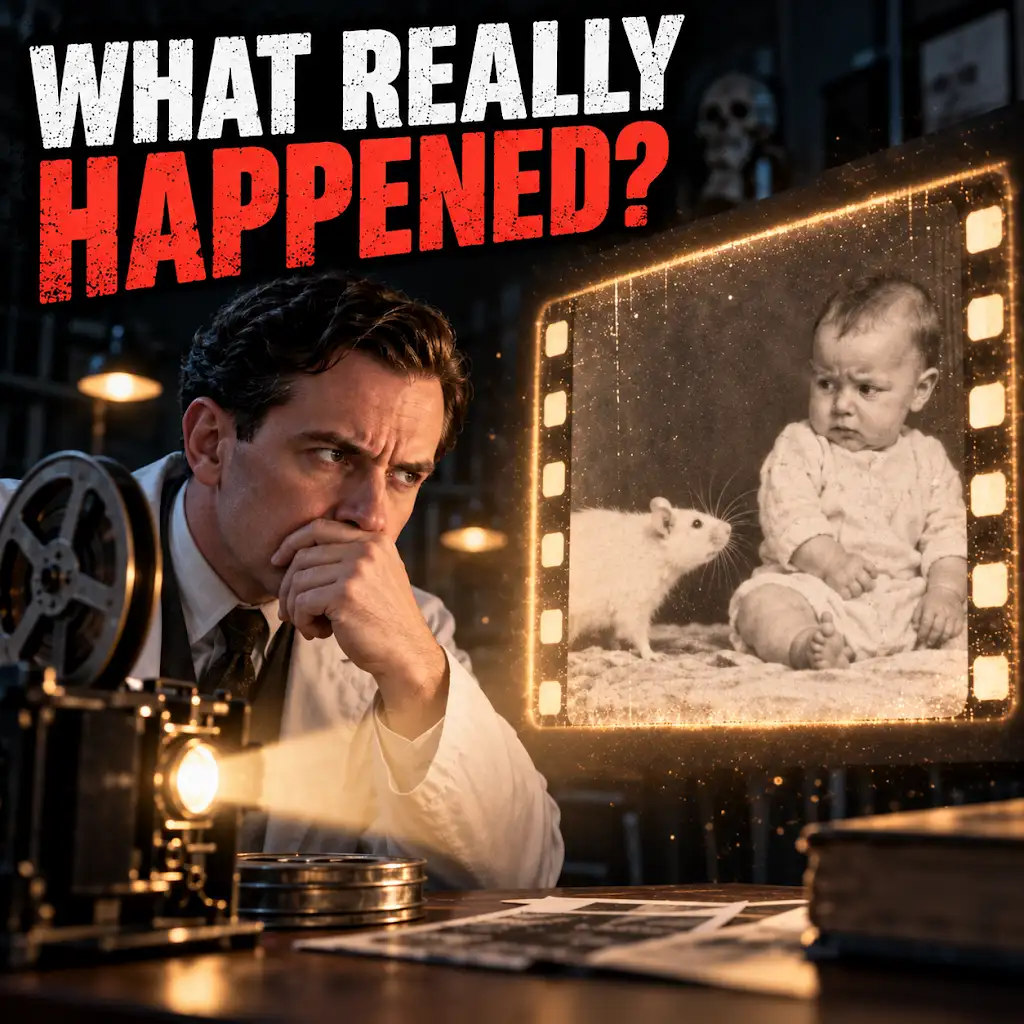
The Little Albert Experiment May Not Have Worked
FAQs
What is the Little Albert textbook story about?
The Little Albert textbook story is a famous psychological experiment conducted by John B. Watson and Rosalie Rayner in 1920. It involved conditioning a young boy named Albert to fear a white rat by pairing its presence with a loud, startling noise.
Who was Little Albert in the textbook story?
Little Albert was the pseudonym given to the young boy who participated in the experiment. His real identity was later revealed to be Douglas Merritte.
What was the purpose of the Little Albert experiment?
The purpose of the Little Albert experiment was to demonstrate how classical conditioning could be used to induce a fear response in a child. The researchers wanted to show that fears could be learned through association.
What were the ethical concerns surrounding the Little Albert experiment?
The Little Albert experiment raised ethical concerns due to the emotional distress caused to the child participant. Critics argued that the experiment lacked informed consent, inflicted unnecessary harm, and did not prioritize the well-being of the child.
What impact did the Little Albert experiment have on the field of psychology?
The Little Albert experiment is considered a landmark study in the field of psychology as it demonstrated the principles of classical conditioning. It influenced the development of behaviorism and ethical guidelines for conducting research involving human subjects.